Herb · Rutaceae
Rue
Ruta graveolens
Give it full sun and lean, dry soil, and rue will hold its blue-green shape for years, no fuss needed.
Full sun
Every 7–14 days
80–120 days
USDA 4–9
Overview
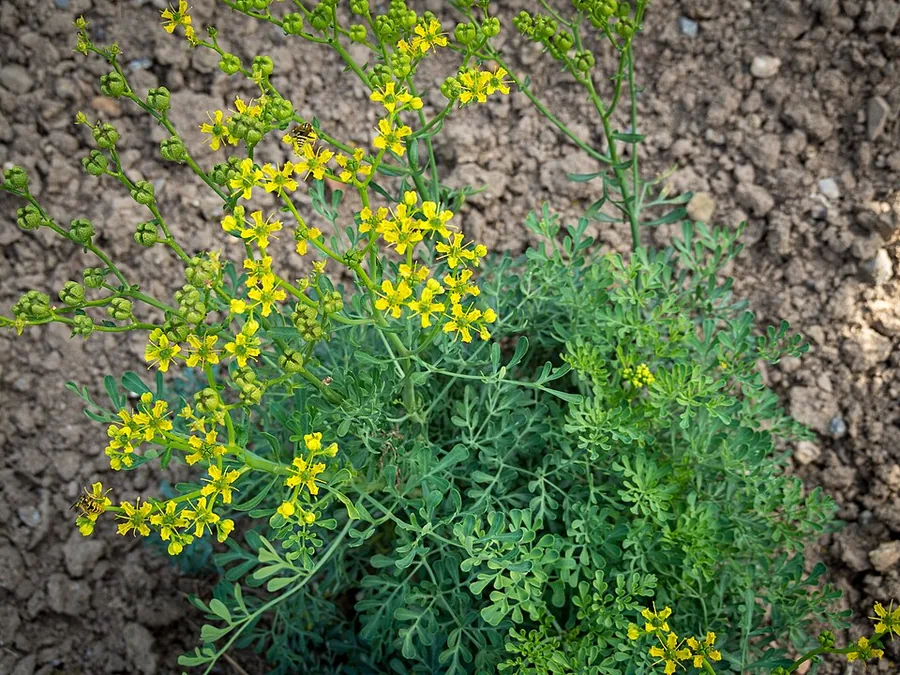
Rue is a tough little evergreen herb that's been hanging around old gardens and apothecaries for ages. It grows as a woody perennial, gets to about 2 to 3 feet (60 to 90 cm) tall, and puts out small mustard-yellow flowers all summer. Folks used to cook with it, but these days? It's really just grown for looks and as a favorite hangout for swallowtail butterflies.
Here's the funny thing about rue: the stuff that makes it easy is the same stuff people get wrong. It just wants lean, sharply drained soil and full sun, and it laughs off drought and cold right down to 5°F (-15°C). So don't baby it. Rich soil and constant watering are exactly what it doesn't want, and soggy roots will do it in faster than any dry spell.
There's one thing you can't be casual about, though, and that's the sap. Rue is packed with furanocoumarins, so if the sap gets on your skin and then you head into the sun, you can end up with painful, blistering burns. It's still an easy plant to live with. Just pull on gloves and long sleeves before handling it, keep it away from pets and kids, and leave it out of the kitchen.
Care
The short version: rue wants full sun, lean and sharply drained soil, and a good deep drink only once the top half of the soil's dried out. Cut it back hard every spring, go easy on the feeding or skip it, and keep gloves nearby whenever you handle it.
Light
Rue's a sun-lover, plain and simple, so give it full sun and lots of it. That bright light is what keeps its tidy blue-green shape. It'll put up with a little afternoon shade, but a shaded plant tends to stretch, flop, and go thin, so why risk it?
Water
Easy does it with the watering. Give it a good soak only every 7 to 14 days, and let the top half of the soil dry out before you go again. Rue handles drought like a champ once it's established, but it really hates wet feet, so soggy ground is the quickest way to rot the roots.
Soil
Plant it in lean, sharply drained soil, sandy or loamy, the kind most herbs just barely tolerate. Any pH from 6.0 to 7.8 works fine. And here's the nice part: poor soil actually helps, keeping the growth nice and compact instead of loose.
Temperature
Rue is genuinely tough, taking heat up to 95°F (35°C) and cold all the way down to 5°F (-15°C). That's exactly why it keeps coming back year after year in zones 4 through 9, without you having to fuss over it in winter.
Humidity
It likes things on the dry side, somewhere around 30% to 50%, which makes sense given its Mediterranean roots. The one thing to dodge is damp, stagnant air, since that just invites the rot rue's already a bit prone to.
Feeding
Feed it lightly in spring, or honestly, don't bother at all. Rue thrives in poor soil, and piling on the fertilizer just gives you weak, floppy stems that flop open and lose that neat shape.
Pruning
Cut rue back hard in early spring to clear out the old woody bits and get fresh, compact growth going, then tidy it up after it flowers. Always wear gloves and long sleeves, and pick a cloudy day, because sap on your skin plus sun means blistering burns.
Repotting
If it's in a pot, rue only needs bumping up every 2 to 3 years. Repot it when the roots start circling or poking out the drainage holes, when water just runs straight through, or when new growth turns sparse and stunted.
Size & spacing
Rue makes a rounded little shrub, about 2 to 3 feet (60 to 90 cm) tall and 18 to 24 inches (45 to 60 cm) across. Give each plant that much elbow room so air moves through and the leaves stay dry.
When to plant
Rue's a hardy perennial, but it's in no hurry to get going. Start the seed indoors in late winter, pop the young plants outside in spring once frost's out of the way, and then just wait for those mustard-yellow flowers to show up all summer, roughly June into August.
Northern hemisphere
Southern hemisphere
Typical months for a temperate climate: start earlier in warm zones, later where spring frosts linger.
- Sow: 6-8 weeks before last spring frost
- Plant: spring, after danger of frost has passed
- Harvest: Mustard-yellow flowers in summer (roughly June-August); grown ornamentally - do NOT harvest the foliage for eating due to toxicity and phototoxic sap.
Hardiness
USDA hardiness zones: 4–9
Temperature: down to -34°C
Troubleshooting
Good news: once rue settles in, it's pretty easygoing, and almost everything that goes wrong comes back to too much water or a prune you skipped. Catch the signs early and you can usually fix things with a small change of habit instead of a full rescue. Find what matches your plant below, then sort it out before the roots or the shape get away from you.
Wilting, yellowing, and a plant that's slowly giving up
If rue's wilting, yellowing, and slowly caving in, you're almost certainly looking at root rot from wet feet. It really can't stand soggy ground, so heavy clay or too much watering quietly rots the roots from below. Back off the water right away, mix some grit or sand into the bed to help it drain, and pull out anything whose roots have already gone brown and mushy.
Fix:
- Reduce watering immediately and allow soil to dry
- Improve drainage by amending with grit or sand, or relocate to a raised/well-drained site
- Remove and discard severely rotted plants
Bare woody stems with leaves only at the tips
When a plant goes unpruned and leggy, the base turns woody and drops its lower leaves, so you're left with green only at the ends. Not enough light? That just makes it stretch and look worse. Cut it back hard in early spring and rue bounces back with fresh, compact shoots, but give it full sun or it'll stretch right out again.
Fix:
- Cut back hard in early spring to encourage compact new shoots
- Ensure the plant receives full sun
Blue-green leaves chewed up by caterpillars
Those green-and-black banded caterpillars? They're swallowtail butterfly larvae, and rue's one of their all-time favorite host plants. Most gardeners just let them munch and treat the chewed leaves as the trade-off for a garden full of butterflies. But if the damage really gets to you, pick the caterpillars off and move them somewhere else, and skip the broad sprays that'd just kill them.
Fix:
- Tolerate the caterpillars where butterflies are desired, as rue is a valued host plant
- Hand-pick and relocate caterpillars if damage is unacceptable
Toxicity
Think of rue as look-but-don't-touch, and definitely don't taste. Its sap carries furanocoumarins that cause nasty, sun-triggered skin burns, and the leaves are toxic to cats, dogs, horses, and grazing animals if they eat them. None of it's safe to eat, so wear gloves when you handle it and give it a home well away from pets and kids.
Toxic to
Cats · Dogs · Horses · Rabbits · Livestock · Birds · People
Cats Moderate
If a cat nibbles rue or brushes the sap, it'll usually start drooling, throwing up, and getting loose stools, then go quiet and kind of withdrawn. Those same oils can leave its skin red and sore, too.
Dogs Moderate
After a dog chews the leaves, keep an eye out for drooling, vomiting, and diarrhea, and often some low energy plus a patch of irritated skin wherever the sap landed.
Horses Moderate
Rue tends to upset a horse's stomach if it grazes on it, and the sap can blister or inflame the skin, especially on pale, sun-exposed spots like the muzzle and legs.
Rabbits Toxic
Just keep rabbits away from it, honestly. The furanocoumarins make the leaves unsafe to eat, and a curious rabbit can wind up with a sore tummy and irritated skin.
Livestock Toxic
Grazing animals that eat rue can end up with an upset gut and photosensitization, where their sun-exposed skin reddens and blisters once the plant builds up in their system.
Birds Caution
Birds don't have much reason to peck at the bitter leaves anyway, and since those same phototoxic compounds are in there, it's a plant to keep out of reach rather than offer.
People Caution
No part of rue is a casual snack, and the real catch is your skin: brush the sap, step into the sun, and you're in for painful, blistering burns. So wear gloves and long sleeves anytime you handle or prune it.
Always handle rue with gloves and long sleeves, and avoid contact on sunny days, because sap on skin followed by sunlight causes painful blistering burns (worse than parsley or celery). The plant must NOT be eaten by people or animals and is not used as a modern culinary herb.
Helpline numbers

United States
ASPCA Animal Poison Control: (888) 426-4435 (fee applies)
Poison Control: (800) 222-1222



Canada
Poison Centres: 1-844-764-7669
Varieties
There are really only two named forms you'll run into, and both are grown for their leaves rather than any change in how they're used. Here's what sets them apart.
'Jackman's Blue'
It's a compact form grown for its extra-deep blue-green leaves, which keep that color going all season long.
'Variegata'
Its leaves come splashed and edged with creamy white, so the whole plant takes on a softer, mottled look.
How to propagate
Want more rue? Seed and cuttings both work fine, as long as you've got a bit of patience and, for the cuttings, a pair of gloves.
SeedModerate
Start indoors 6-8 weeks before last frost, or sow outdoors in spring; germination can be slow · Several weeks to germinate and a full season to establish
You can start rue from seed indoors 6 to 8 weeks before your last frost, or just sow it straight into the spring garden. Don't bury the seed, though. Press it onto the surface, since a bit of light helps it sprout, and keep the soil evenly moist until the seedlings pop up. And be patient, because germination's slow and the plant takes a whole season to really settle in.
Stem cuttingsModerate
Take softwood or semi-ripe cuttings in late spring to summer · 4-8 weeks to root
Take softwood or semi-ripe cuttings anytime from late spring through summer and root them in a gritty, well-drained mix, where they'll take hold in 4 to 8 weeks. Just keep those gloves on while you cut and handle the stems, since the sap can burn skin in the sun.
Myths
Rue is a safe culinary herb you can cook with as freely as any other Mediterranean herb.
Sure, old recipes called for it, but modern advice doesn't treat rue as food anymore. It's toxic to eat, and its sap brings on serious sun-triggered skin reactions, so nowadays it belongs in the garden as an ornamental and historical herb, not a kitchen one.