Ornamental · Poaceae
Northern Sea Oats
Chasmanthium latifolium
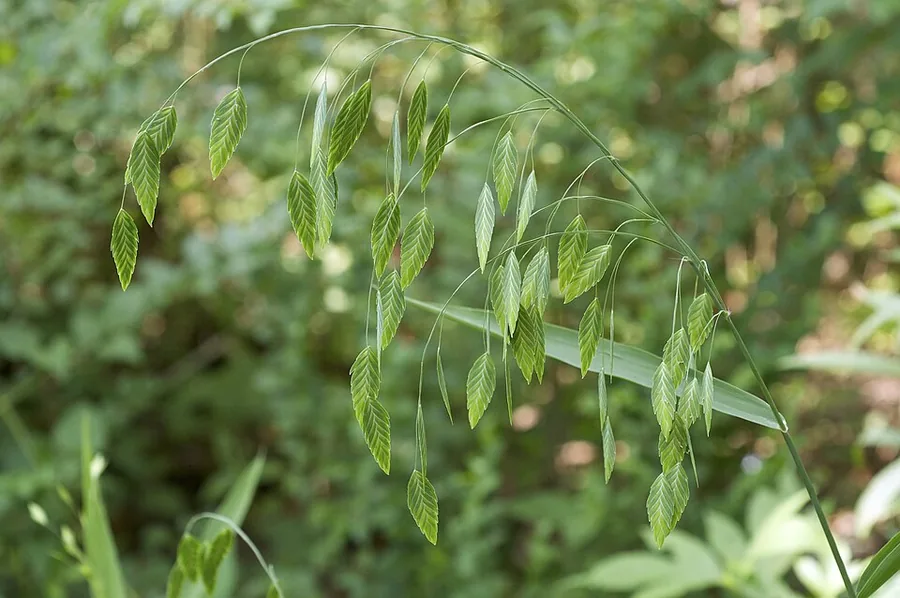
An easygoing native grass that's fine in shade where others sulk, then dangles flat oat-like seed heads from summer into winter.
Partial shade
Every 3–7 days
USDA 3–9
2–5 ft · 0.6–1.5 m
Overview
Got a shady, damp corner that's got you stumped? Northern sea oats might be just the thing. It's a clumping native grass that's perfectly content in the dappled shade of a woodland edge, right where a lot of grasses would throw in the towel. The real showstopper is the seed head, a flat, layered spikelet that looks a lot like a squashed oat and hangs off arching stems. They start out green in summer, turn a coppery bronze, then go tan and stick around well into winter.
Here's the nice part: it's about as easy as grasses get. It'll grow in anything from full sun to full shade, and it doesn't mind clay, sand, wet ground, or even a spot that floods for a bit, so it fits in across most of the country. All it really asks for is moisture. Let a sunny spot dry out and you'll see the leaf edges brown, so that's your cue to water.
That toughness comes with a flip side, though: it likes to spread. It self-sows like crazy and creeps along on short rhizomes, so one clump can turn into a whole patch in just a few years. If you've got room for it, great. If not, just clip the seed heads off before they ripen and you'll keep it right where you want it.
Care
The short version: it's happiest in part shade with steady moisture, but honestly it'll put up with almost any light and soil. Cut the clump down in late winter, and if you'd rather it didn't wander, snip off the seed heads before they drop.
Light
This one's flexible, handling full sun to full shade, which is honestly kind of rare. Part shade is where it's happiest, with the leaves at their greenest and the whole plant looking its best. Stick it in full sun and it'll need more water, or the foliage starts to scorch.
Water
The big thing is keeping the soil moist, and if anything, err on the wet side. It's totally fine with damp ground and even short bouts of flooding, so that soggy low spot? Not a problem at all. Just remember that plants in full sun dry out quicker, so give those a drink more often.
Soil
Soil's not something it's picky about, and it'll grow in clay, loam, sand, or even boggy ground that stops other plants cold. Average to moist, fertile, well-drained dirt gets you the best results, but it'll make do with a lot less. And pH? Doesn't care one bit.
Temperature
It's a tough cookie, comfortable anywhere from about -40°F to 100°F (-40°C to 38°C), which covers just about everywhere. Cold winters won't bother it, and it'll pop right back up every spring like clockwork.
Humidity
Whatever humidity you've got outside is plenty, so there's nothing to fuss over there. What actually matters is keeping those roots moist when summer heats up.
Feeding
It's a light feeder that hardly ever needs a hand. A little balanced fertilizer or compost in spring is optional and more than enough, and piling on more just makes it spread even harder, which you probably don't want.
Pruning
Once a year, cut the whole clump down to the ground in late winter to early spring, before the new growth shows up. Want to slow down all that reseeding? Just snip off and toss the seed heads before they ripen and scatter.
Repotting
This is a garden grass, not a houseplant, so there's no pot to deal with. The closest thing is dividing the clump every few years, usually once the middle starts thinning out or a crowded clump loses its pep.
Size & spacing
Figure on clumps hitting 2 to 5 feet (60 to 152 cm) tall and 12 to 30 inches (30 to 76 cm) wide. Give each one a bit of elbow room to arch out, and know that it'll always try to sneak past whatever space you give it.
When to plant
Timing's pretty forgiving here. Sow the seed in late winter to spring after it's had a cold, moist chill, pop plants into the ground in spring once the frost's gone or again in fall, and then just sit back while those seed heads keep the show going from late summer all the way through winter.
Northern hemisphere
Southern hemisphere
Typical months for a temperate climate: start earlier in warm zones, later where spring frosts linger.
- Sow: Late winter to early spring; seed benefits from cold-moist stratification before sowing
- Plant: Spring after frost, or fall
- Harvest: Flowers August to September; showy flat oat-like seed heads emerge green in summer, turn coppery-bronze then tan and persist into winter
Hardiness
USDA hardiness zones: 3–9
Temperature: down to -40°C
Troubleshooting
Good news first: northern sea oats doesn't really get bothered by pests or diseases. So the only two things you'll likely run into are the ones it does to itself, spreading too far and browning out in dry sun. Find what matches below and jump on it early, while it's still an easy fix.
Seedlings turning up all over the place
What's going on? It's a champion self-seeder, and those flat oat-like heads toss ripe seed way past the original clump. On top of that, short rhizomes push the clump wider, quickest in moist, fertile soil with a bit of sun. Cut off and clear away the seed heads before they ripen, pull the little volunteers while they're young and easy to yank, and split the clump now and then to keep it in line.
Fix:
- Cut and remove the seed heads before they ripen and drop to stop new seed
- Pull or dig out unwanted volunteer seedlings while young; they pull easily
- Divide and reduce the clump to contain rhizomatous spread
- Keep stalks cut down low to gradually starve out an established colony
Leaves going brown or bleached come midsummer
That's leaf scorch, and it usually means a hot, dry, full-sun spot without enough water down at the roots. Notice how plants in part shade with steady moisture barely show it? That's the clue. Water your sun-grown clumps more often and deeper, throw down some mulch to hold the moisture, and move the really unhappy ones into some dappled shade.
Fix:
- Provide more frequent, deeper watering for sun-grown plants
- Apply mulch to conserve soil moisture
- Site or transplant into part shade with moist soil for best appearance
Toxicity
If you've got pets or little kids underfoot, you can breathe easy, because this grass is not poisonous. There's nothing in it that'll hurt cats, dogs, horses, livestock, birds, or people. The only small stuff worth knowing? A pet that scarfs down a bunch of foliage might get a quick tummy upset, same as with any grass, and grass pollen can be a nuisance if you're prone to allergies.
Safe for
People · Cats · Dogs · Horses · Rabbits · Livestock · Birds
Cats None
Totally safe for cats. If one chomps down a bunch of the foliage it might throw it back up, but that's just the harmless thing any grass can do.
Dogs None
No worries with dogs, it's not poisonous. A dog that gulps down a big mouthful might get a bit of vomiting, but it's nothing worse than munching on the lawn.
Horses Safe
Horses are fine with it too, since there's nothing toxic in it if they nibble a bit out in the pasture.
Rabbits Safe
Rabbits can chew on the leaves no problem. Like with any new green though, ease them into it so their tummies can adjust.
Livestock Safe
Cattle, goats, and sheep can graze it all they like, because there's nothing in it that'd give them any trouble.
Birds Safe
Backyard birds are perfectly fine around it, and a lot of them will pick at the ripe seed heads for the little grain tucked inside.
People Safe
It's no danger to people either. The one catch? Grass pollen, which can kick up allergies if you're the sensitive type.
As with any grass, pets that nibble a lot of foliage may vomit or have mild stomach upset, and grass pollen can be an allergen for sensitive people; the plant itself is not poisonous.
Varieties
Most folks just grow the regular species, and it's a great pick, but there's one named type that's worth a look.
River Mist
It's a white-variegated cultivar, so the leaves run with vertical white and green stripes and the seed heads come out whitish, which is a nice switch from the plain species and its solid blue-green leaves and green heads.
How to propagate
There are two easy ways to get more of it, and the plant pretty much takes care of the first one on its own.
SeedEasy
Sow in late winter to spring; cold-moist stratification improves germination · One to two growing seasons
Sow the seed in late winter to spring, but give it a cold, moist chill first to snap it out of dormancy. Honestly, though, this grass self-sows so eagerly that the easiest move is just to dig up the volunteer seedlings that show up on their own and plant them where you want. A young one fills out over one to two growing seasons.
DivisionEasy
Spring or early fall · One growing season
Dig up an established clump and split it in spring or early fall. It's a handy two-for-one, since you get more plants and keep a spreading clump in check at the same time, and each piece settles in within a single growing season.
Myths
Northern sea oats is that protected beach grass you're not allowed to pick.
Nope, they just happen to share a name. This shade-garden grass is Chasmanthium latifolium, and it grows along inland streambanks and in the woods. The protected one at the beach is a totally different, unrelated plant, true sea oats (Uniola paniculata), a dune stabilizer that plenty of coastal states make it illegal to pick. So growing the inland kind in your yard? Completely fine.