Herb · Lamiaceae
Shiso
Perilla frutescens
Keep pinching and you'll have tender, fragrant leaves all summer for pickles, garnishes, and wraps.
Full sun
Every 2–4 days
59–86°F · 15–30°C
70–90 days
Overview
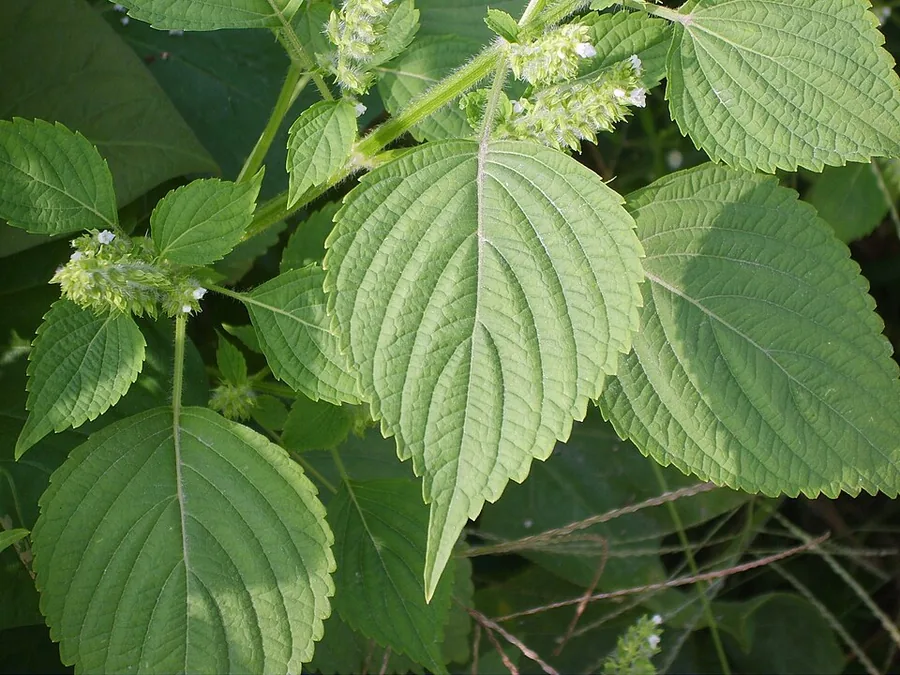
So what is shiso? It's a member of the mint family that's grown for its fragrant leaves rather than any flowers. It's a warm-season annual, which just means it does its whole life in one season, going from seed to a leafy, knee-high plant by midsummer. Cooks in Japan, Korea, and Vietnam use it all the time, fresh, pickled, and wrapped around just about anything.
It comes in red, green, and ruffled bicolor types, and each one's got its thing in the kitchen. Red shiso goes into pickles for color and flavor, while the green kind's happiest fresh on the plate as a herb and garnish. Worried about learning three different plants? Don't be, because they all grow the same easy way.
Here's the thing though: shiso's got two habits you'll want to stay on top of. Let it flower and it'll bolt and turn bitter, so picking often keeps the leaves nice and tender. And it self-sows like crazy, enough to slip right out of the garden, plus the same plant is a proven poison to grazing cattle and horses, so where you put it really does matter.
Care
The short version: give it full sun or a little shade, keep the soil evenly moist, and pinch it often so you get tender leaves instead of flowers.
Light
Shiso's happiest in full sun, but it'll put up with partial shade just fine, which is handy in hot spots where afternoon sun would scorch the leaves. Want the best color and the strongest aroma? Give it lots of light.
Water
Keep the soil evenly moist but not soggy, which usually works out to watering every 2 to 4 days when it's warm. The leaves wilt quick in dry heat, and if it gets too thirsty it'll bolt early, and that's the end of good leaves for a while.
Soil
Plant it in rich, well-drained loam with plenty of organic matter mixed in. It likes things a touch acidic, so aim for a pH somewhere between 5.5 and 6.5.
Temperature
Shiso's happy anywhere from 59°F to 86°F (15°C to 30°C) and honestly loves the summer heat. Frost, though? No chance, so hold off until the cold's well and truly gone before putting plants outside.
Humidity
Regular humidity around 40% to 60% keeps it comfy, which is pretty much what most summers give you outside anyway. Good airflow around the leaves matters way more than hitting some exact number.
Feeding
Feed it once a month through spring and summer with a balanced fertilizer or a watered-down liquid feed. Just go easy on the nitrogen, because too much and you get loads of leaves that don't smell like much.
Pruning
Pinch those growing tips often and you'll get bushier growth and a fresh batch of tender leaves. See a flower spike starting? Snap it off right away to hold off bolting and keep the leaves coming.
Repotting
Since you grow shiso fresh from seed every year, it's not really a repotting kind of plant. If a potted one starts showing circling roots, fast wilting, or early bolting, it's run out of room and it's time to swap it out or bump it up a size.
Size & spacing
Shiso gets to about 18 to 35 inches (45 to 90 cm) tall and spreads 12 to 18 inches (30 to 45 cm) wide. Give each plant that much space so air can move around and the leaves stay clean.
When to plant
Shiso loves warmth and hates frost, so don't rush it. Start the seeds indoors 6 to 8 weeks before your last frost, wait until the cold's gone and the soil's warmed up to move them outside, then keep picking leaves all summer while you nip off flower spikes to stretch things out.
Northern hemisphere
Southern hemisphere
Typical months for a temperate climate: start earlier in warm zones, later where spring frosts linger.
- Sow: 6 to 8 weeks before the last spring frost; surface-sow and do not cover, as seed needs light to germinate
- Plant: After all danger of frost has passed and soil has warmed in late spring
- Harvest: Harvest leaves through summer once plants are established; pinch flower spikes to prolong harvest. Late-summer flowering and seeding is when perilla-ketone concentration and livestock-poisoning risk peak.
Hardiness
USDA hardiness zones: 2–11
Temperature: down to -46°C
Troubleshooting
Most shiso hiccups turn up on the leaves, either something's been chewing them or the plant's trying to flower and they've gone small and bitter. Catch it early and a quick fix usually does the trick. Just find what matches below and deal with it while it still counts.
Flower spikes going up while the leaves get small and tough
What's happening is bolting, where shiso switches from making leaves to making flowers once the days get shorter or heat and stress push it along. The new leaves come in small, tough, and pretty flavorless. Pinch those flower spikes off as soon as you spot them, pick more often to keep fresh growth going, and sow another batch so you've always got tender leaves ready.
Fix:
- Pinch out flower spikes as soon as they appear
- Harvest leaves more frequently to encourage vegetative growth
- Make successional sowings for a continuous supply of tender leaves
Seedlings turning up all over, miles from where you planted
Let it flower and set seed and shiso turns into a self-sowing weed, dropping volunteers all over the garden and well past it. It's actually naturalized into pastures and woodland edges in parts of the country, so the spread reaches a lot further than your own beds. Cut the flower spikes before the seed's ripe, pull the young volunteers while they're easy, and don't ever compost or dump seeding plants where they could take off in the wild.
Fix:
- Remove flower spikes before seed set
- Pull volunteer seedlings while young
- Do not compost or dump seeding plants where they can naturalize
Little shot-hole pits dotted all over the new leaves
That's flea beetles for you, tiny dark beetles that hop off the second you get close. They love soft new growth, so it's always the youngest leaves that cop it worst. Throw a row cover over seedlings until they toughen up, clear out any weeds nearby, and keep the plants growing strong so they just outpace the nibbling.
Fix:
- Cover young plants with floating row cover until established
- Remove nearby weed hosts
- Apply an approved insecticidal product only if damage is severe and the crop is not being harvested for food within the label interval
Chewed, ragged edges and shiny trails after a wet spell
This one's slugs and snails, and they come out at night to chew the leaf edges into ragged scallops. How do you know it's them? Look for the dried slime trails glinting on the leaves and soil in the morning. Head out after dark and pick them off, pull back any thick mulch around the base, and ease off the water so the ground dries out a bit between drinks.
Fix:
- Hand-pick at night
- Set out shallow traps and remove mulch harboring slugs
- Use iron-phosphate baits where appropriate
Toxicity
Good news first: the leaves are a safe, much-loved kitchen herb, so there's nothing to worry about at dinner. Grazing animals are a whole different story, though. Perilla frutescens has perilla ketone in it, a lung toxin that can cause severe, often deadly breathing trouble in horses and cattle that eat it, and it's worst in late summer. Keep it well away from pastures, hay, and any grazing animals.
Toxic to
Cats · Dogs · Horses · Rabbits · Livestock · Birds
Safe for
People
Cats Mild
If a cat nibbles a leaf, you might see a little drool or a brief upset tummy, but nothing serious is likely. Keep an eye on a cat that's chewing the plant and make sure there's fresh water around.
Dogs Mild
A dog that chews a leaf might drool a bit or have a loose stool that sorts itself out. Just steer a curious dog away from the plant and it'll be fine.
Horses Toxic
Here's where it gets serious: a horse that grazes perilla can end up in severe respiratory distress, breathing fast and hard with its mouth open as fluid fills its lungs. It hits hard and it's often fatal, so keep horses well away from the plant, especially once it flowers and seeds in late summer.
Rabbits Caution
Since perilla ketone is a lung toxin for grazing mammals, a rabbit nibbling the leaves is a real risk, not a treat. Leave it off the menu and stick to greens you know are safe.
Livestock Severe
Cattle, goats, and sheep that graze perilla mint can come down with acute respiratory distress, open-mouthed panting, and atypical interstitial pneumonia as the perilla ketone floods their lungs. It's at its worst in late summer while the plant's flowering and seeding, and sadly it's often fatal. Get it out of pastures and hay before the animals can reach it.
Birds Caution
There isn't much on the books about birds specifically, but the same lung toxin makes shiso a poor pick around poultry or pet birds. Keep them away from the leaves and seed heads just to be safe.
People Leaves safe
Shiso leaves are a kitchen staple all over East Asia, eaten fresh, pickled, and as a garnish, and they're perfectly safe for people. The toxin that harms grazing animals is a pasture problem, not something on your plate.
Safe to handle and harvest for cooking; the concern is ingestion by grazing livestock, not skin contact.
Helpline numbers

United States
ASPCA Animal Poison Control: (888) 426-4435 (fee applies)

United Kingdom
Animal PoisonLine: 01202 509000 (fee applies)

Australia
Animal Poisons Helpline: 1300 869 738
Varieties
Shiso comes in a few different forms, and which one you go for really just depends on whether you're after color for the pickle jar or fresh leaves for the plate.
Red/Purple shiso (akajiso)
Its deep red-purple leaves are packed with anthocyanins, and that's exactly why cooks grab it to color and flavor pickles like umeboshi.
Green shiso (aojiso)
The bright green flat leaves have a milder citrus-anise note, so they go straight onto the plate fresh as a herb and garnish.
Bicolor / ruffled (chirimen) types
These crinkled, two-toned leaves are green on top and purple underneath, which is why they end up in the kitchen and the flower bed alike.
How to propagate
Shiso's dead easy to grow from seed, and once it's happy where it is, it'll go ahead and sow next year's batch for you, sometimes a bit too enthusiastically.
SeedEasy
Start indoors 6 to 8 weeks before last frost, or direct-sow after the soil warms in late spring · 2 to 3 weeks to germinate and several more weeks to reach harvestable size
Shiso grows from seed without much fuss, whether you start it indoors 6 to 8 weeks before the last frost or just sow it straight into warm soil in late spring. Press the seed onto the surface and leave it uncovered, since it needs light to sprout, and a cold spell beforehand actually helps it along. Give it 2 to 3 weeks to come up and a few more to get big enough to pick, and once it's settled, it'll keep sowing itself for years.
Myths
People eat shiso, so surely the whole plant is safe for every animal.
The leaves really are fine for cooking, but Perilla frutescens carries perilla ketone, which is a documented cause of fatal lung poisoning in grazing cattle and horses. What's safe on your plate isn't safe out in a pasture.
Shiso just stays where you plant it.
Not quite, since it self-sows hard and has naturalized as an invasive weed across the southeastern and central United States, working its way into pastures and woodlands. Want to keep it in bounds? Cut the flower spikes before the seed sets.