Ornamental · Plantaginaceae
Snapdragon
Antirrhinum majus
Looking for easy cool-weather color? Snapdragons keep pushing out fresh flower spikes right through spring and fall.
Full sun
USDA 7–10
0–3 ft · 0.2–0.9 m
Overview
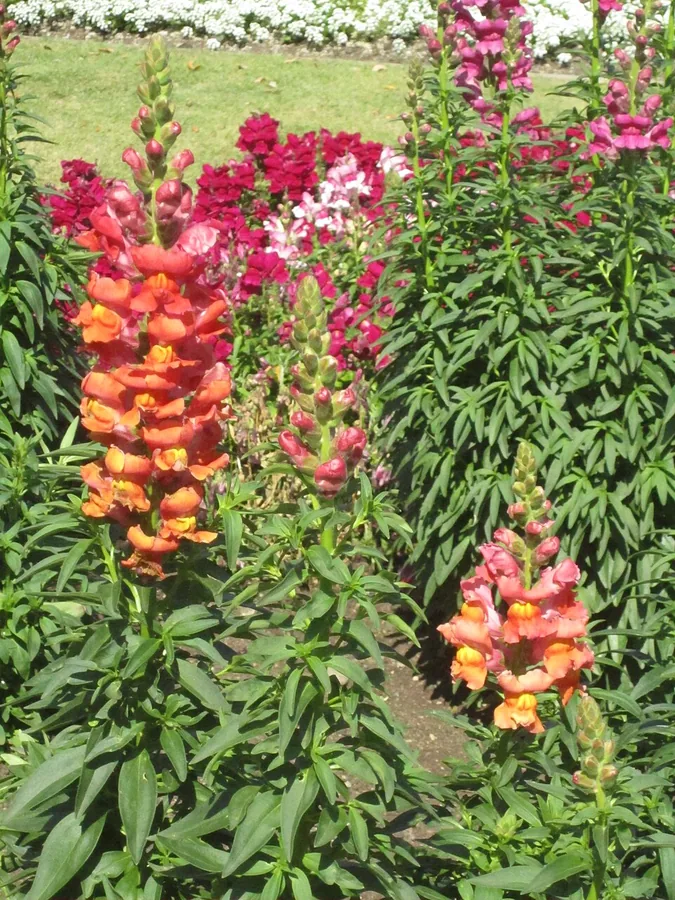
Ever pinched the side of a snapdragon flower and watched it pop open like a little mouth? That is the trick behind the name, and it has kept kids entertained in gardens forever. These plants belong to the genus Antirrhinum, and they send up tall spikes loaded with blooms in just about every color except true blue. They are a cool-season kind of plant, so they are at their happiest in the mild days of spring and fall.
Here is the catch, though: snapdragon does not stick around for years. It is really a tender perennial, but most folks just grow it as an annual, since it only survives winter in mild spots around USDA zone 7 and warmer. Sizes are all over the map too, from tiny ankle-high types to tall ones that hit your waist, so there is one for the front of a bed, the middle of a border, or a vase on the table.
Give it full sun and rich soil that stays evenly moist, and it will not ask for much beyond a bit of deadheading. The best part? The flowers are totally safe for pets and people, and you can even eat them, so it is a no-stress pick for a family garden. The one thing that trips it up is heat, which puts the blooms on pause until things cool off again.
Care
The short version: snapdragons want full sun, rich soil that stays evenly moist but drains well, and a little deadheading to keep the flowers coming. Grow them for spring or fall, because summer heat pretty much stops the show.
Light
Snapdragons really want full sun to flower their best. Stick them in shade and they will get leggy and bloom thinly, so pick a bright, open spot and the spikes will stay sturdy and full of color.
Water
Try to keep the soil evenly moist, because snapdragons do not handle drought well and hate drying out. Water down at the base and keep the leaves dry, and you will go a long way toward keeping rust and Botrytis away.
Soil
They like rich, well-drained soil with a pH close to neutral. Loose ground that holds moisture but does not stay soggy is exactly what the roots are after.
Humidity
Average
Feeding
Just feed them once with an all-purpose fertilizer in spring as they get going. One seasonal feeding is plenty for these cool-weather plants, so there is no need to fuss with more.
Pruning
Deadhead the spent flowers and you will keep new spikes coming and stretch out the bloom. While you are there, snip off any damaged or diseased bits to keep the plant looking clean and open.
Size & spacing
Depending on the type, these run anywhere from 6 to 36 inches (15 to 91 cm) tall. Give them about 6 to 10 inches (15 to 25 cm) between plants so air can move through, which makes it harder for disease to settle in.
When to plant
Snapdragons are all about cool weather, not heat. Pop them in the ground in early spring once the last frost is behind you, or plant in fall if your winters stay mild around USDA zone 8 and warmer. Either way, they will bloom through the cool parts of spring and autumn until the heat tells them to slow down.
Northern hemisphere
Southern hemisphere
Typical months for a temperate climate: start earlier in warm zones, later where spring frosts linger.
- Plant: Early spring after the last frost, or in fall in mild zones (about USDA zone 8 and warmer)
- Harvest: Blooms in cool weather of spring and fall (and summer in cool climates); flowering slows in summer heat
Hardiness
USDA hardiness zones: 7–10
Temperature: down to -18°C
Troubleshooting
Most of the time, snapdragon trouble comes down to damp, crowded leaves or just the wrong season. So keep an eye on the lower leaves and stems, since that is where rust and mold usually show up first. Spot your issue below and jump on it early before it works its way up the plant.
Yellow flecks on top, dusty dark spots underneath
That is snapdragon rust, the disease this plant is famous for, and it takes off when the leaves stay wet for 6 to 8 hours in cool 55°F to 70°F (13°C to 21°C) weather. The good news? Heat above 80°F (27°C) actually shuts it down. Pick off and bag the spotted leaves, keep water off the foliage, and go for rust-resistant cultivars next time around.
Fix:
- Remove and bag affected leaves
- Apply a labeled systemic fungicide if severe
Twisted yellow leaves with gray fuzz below
Downy mildew usually shows up on infected plugs, so those warped, yellowing leaves with gray fuzz underneath are often something that came home with the plant. Sadly there is no fixing it, so pull the plant and toss it. Give anything new a good look before it goes in the bed, skip the overhead watering, and leave some breathing room for airflow.
Fix:
- Remove and destroy infected plants
Tan cankers on the stems when things get crowded
This one is Botrytis gray mold, and it moves in when the air is humid and stagnant around plants that are packed too tight. Just cut out the infected stems and any mushy tissue, then loosen up the planting so air can get through. And water at the base instead of overhead, since dry leaves really slow the mold down.
Fix:
- Remove and destroy infected plant parts
- Improve air circulation
Flowers just stop once it gets hot
Snapdragons are cool-season plants that do not love heat or drought, so the blooms slow down or quit once it stays above about 80°F (27°C). This is not a disease, just the wrong weather, so do not panic. Cut the plants back, keep them watered, and a lot of them will flower again once fall cools things off.
Fix:
- Cut plants back and keep them watered; they may rebloom as temperatures cool
Toxicity
Good news if you have pets running around: garden snapdragon is non-toxic to cats, dogs, and horses, and the ASPCA says so. The flowers are even fair game for people to eat. So plant it wherever the animals or the kids might wander, no worries.
Safe for
People · Cats · Dogs · Horses · Rabbits · Livestock · Birds
Cats Safe
The ASPCA lists garden snapdragon as non-toxic to cats, so a curious chew is not going to hurt one.
Dogs Safe
Snapdragon is fine for dogs, and a nibbled leaf or flower is nothing to sweat, though wolfing down any plant can upset a stomach for a day.
Horses Safe
Horses can graze right next to snapdragons without any trouble, since the ASPCA does not flag it as toxic to them.
Rabbits Safe
Rabbits are not going to get poisoned by snapdragon leaves, so a stray plant in their reach is no big deal.
Livestock Safe
Cattle, goats, and sheep do just fine with snapdragon, and there is no known toxin in it for grazing animals.
Birds Safe
Birds pecking at the blooms or seed are perfectly safe, since snapdragon poses no threat to them.
People Safe
People can eat the flowers, and they often turn up as a garnish, though they can taste a little bitter, and the plant is safe to have around kids.
Varieties
Snapdragons are mostly grouped by how tall they get, from little edgers to tall cut-flower types. Here are the main ones to know before you start sowing.
Dwarf (such as Floral Showers, Snapshot)
These little guys stay around 6 to 10 inches tall, which makes them perfect for edging a path or tucking into a container.
Medium (such as Liberty Classic, Snaptastic)
The in-between types hit about 12 to 22 inches and fit right into the middle of a bed or border.
Tall or Rocket (such as Rocket, Potomac, Madame Butterfly)
Grown mostly for cutting, these tall spikes shoot up from 24 to 60 inches and give you nice long stems for the vase.
Trailing (such as Candy Showers)
With a cascading habit that rises about 6 inches and spills to roughly 12 inches, these are made to tumble out of a hanging basket.
How to propagate
Snapdragons are almost always grown from seed, started in cool weather for a spring or fall show.
SeedModerate
Sow in cool weather for spring or fall display · Several weeks from germination to transplant size
Almost all snapdragons start out as seed, sown in cool weather for a spring or fall display. The seedlings need several weeks to grow to transplant size, so it pays to start early. And once the little plants are up, pinch the tips to get bushier, branchier growth and even more flower spikes.
Myths
Snapdragons are dependable perennials that show up again every year.
Not quite. Antirrhinum majus is really a short-lived tender perennial, and most people just grow it as an annual. It only comes back in mild climates, roughly USDA zone 7 and warmer, where the winters stay easy enough on the crown.
Snapdragons will make your pets sick.
Nope. The ASPCA lists garden snapdragon as non-toxic to cats, dogs, and horses. So you can plant it where the animals hang out without stressing over a chewed leaf, and the flowers are even edible for people.
Snapdragons flower best when it is hot out.
Actually they are cool-season bloomers, at their best in spring and fall. Once summer heat kicks in, the flowers slow down or stop until the weather turns mild again.