Houseplant · Asparagaceae
Spider Plant
Chlorophytum comosum
Hand it bright indirect light and a drink when the soil dries, and the spider plant grows fast while staying safe around your pets.
Bright indirect
Every 7–10 days
55–75°F · 13–24°C
USDA 9–11
Overview
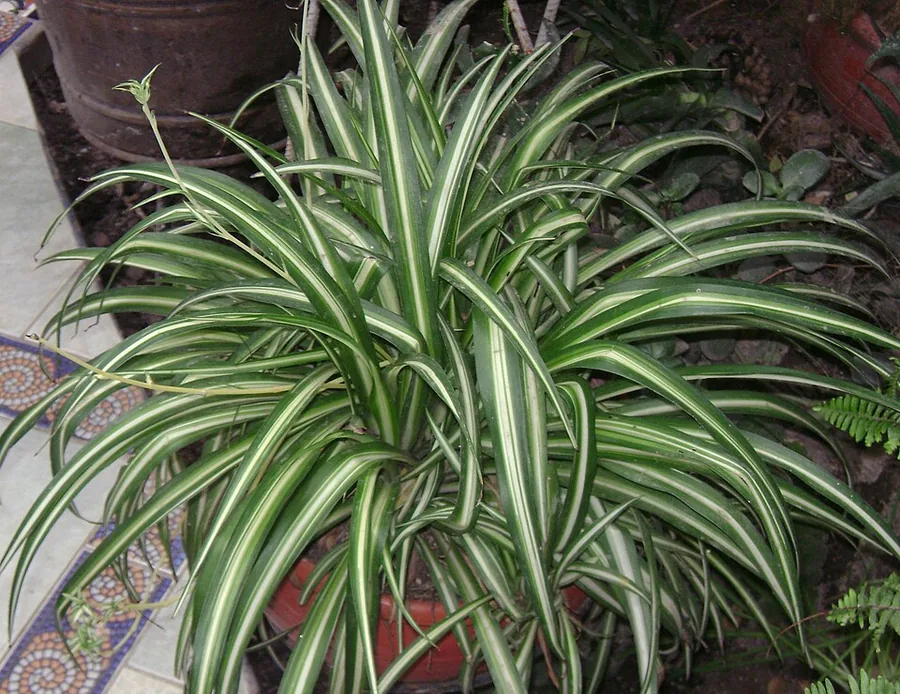
Honestly, not many houseplants are this easygoing. The spider plant hails from the woodlands of southern Africa, where it lives under dappled shade, and that backstory is the reason it does just fine tucked into a dim corner of your place. Its arching, ribbon-shaped leaves tumble over the rim of a pot, which is why it is such a hit on a shelf or in a hanging basket.
The real charm, though, is the babies. Once a plant matures, it pushes out long, wiry stems capped with little plantlets, also known as spiderettes, that hang in midair like tiny spiders on a strand. Each of these takes root in next to no time, so one plant can become an entire shelf of freebies to share around.
For plenty of households, the clincher is how safe it is. Because the spider plant is non-toxic to cats and dogs, a pet that paws at those swaying leaves walks away unharmed. Offer it indirect light and a drink once the soil dries, and it grows quickly while letting almost every rookie slip-up slide.
Care
The short version: put it in bright indirect light with no direct sun, give it water every 7 to 10 days once the top half of the soil has dried out, pot it in a mix that drains well, and keep the room somewhere between 55°F and 75°F (13°C to 24°C).
Light
Set the spider plant where it gets bright indirect light, and keep direct sun off it, because that sun fades and burns the leaves. It will also cope in medium light, in shade, or even in a low-light nook, though the colors look their best in bright, filtered light. Want the ideal spot? A window dressed with a sheer curtain is hard to beat.
Water
Wait until the top half of the soil dries out before watering, which tends to land around every 7 to 10 days. Ease off in winter, when the plant slows down and the soil holds its moisture for longer. Since the chunky roots stash away water, this plant copes with a forgotten drink far better than it copes with sitting in a swamp.
Soil
Pot it in a well-draining general-purpose potting mix so water slips through rather than gathering around the roots. It does not care much about acidity and is happy anywhere across a pH of 6.0 to 8.0. Really, the one job the mix has to nail is drainage, since water that just sits there invites root rot.
Temperature
Everyday room warmth suits it nicely, and it is happiest somewhere between 55°F and 75°F (13°C to 24°C). Steer it clear of chilly drafts and any corner that dips toward freezing, because deep down this is a tender plant. Beyond that, steady indoor temperatures are pretty much all it wants.
Humidity
Regular household humidity works fine, so there is no figure you need to hit. That said, dry winter air can crisp up the leaf tips, and that is also when a spider mite is most tempted to move in. If your air gets really parched, a quick leaf rinse or a tray of water nearby will take the edge off.
Feeding
Only feed it through the spring and summer growing season, and put the bottle away once fall and winter arrive. A half-strength balanced houseplant fertilizer now and then does the trick. Keep a light hand, though, since piling it on scorches the leaf tips brown and trims back the very plantlets you are hoping for.
Pruning
There is barely anything to prune on a spider plant beyond a little tidying. Trim browned leaf tips on an angle so the leaf keeps its natural shape, and clip off spent flower stems once they have faded. You can pluck plantlets too, whether you want to pot them up or just keep the plant looking neat.
Repotting
Aim to repot it every 1 to 2 years, or sooner if it turns rootbound. The tells are easy to read: roots crowding or splitting the pot, the fleshy tubers shoving the soil upward, or the plant drying out quickly and easing off on plantlets. When that happens, bump it up one pot size and give it fresh mix.
Size & spacing
A spider plant reaches roughly 12 to 24 inches (30 to 60 cm) tall and spreads out from 12 to 35 inches (30 to 90 cm) once its leaves arch over and the babies start dangling. Leave it space to cascade, because a shelf edge or a hanging basket really shows it off. And since it grows fast, it can fill a pot in a single season.
Troubleshooting
Spider plant troubles tend to surface in the foliage first, with brown tips topping the list. Once you can spot these early hints, a tiny hiccup is easy to handle before it grows into something bigger. Find what matches your plant below, then step in while it still does some good.
Yellow leaves above soft, mushy roots
Yellowing leaves on top of waterlogged soil usually mean root rot from overwatering, and this is the one problem that can go downhill quickly. Lift the plant out, snip off whatever roots have gone brown and soft, and settle it into fresh mix that drains well. From then on, water a bit less and pick a pot that lets the excess escape.
Fix:
- Unpot and trim rotten roots
- Repot in fresh well-draining mix
- Reduce watering
Faded, pale patches where the leaves used to be green
When the foliage looks faded and scorched, the culprit is usually too much direct sun landing on it. This plant likes bright indirect light, so a hot windowsill ends up burning the leaves instead. Slide it back from the glass, or hang a sheer curtain, and the harsh noon rays will stop reaching it.
Fix:
- Move to bright indirect light
- Shield from midday sun
Tiny brown lumps that won't budge from the foliage
See little brown bumps that will not brush off, plus a sticky patch nearby? That is scale insects, and the stickiness is the honeydew they produce. Rub the bumps away with a cloth, then go over the plant with horticultural oil or insecticidal soap. And give any newcomer a once-over before it sits next to the others.
Fix:
- Wipe off scales
- Apply horticultural oil or insecticidal soap
Little white cottony blobs hiding where the leaves meet
Those fuzzy white clumps wedged where the leaves meet are mealybugs, one more sap drinker that leaves a tacky film behind. Touch each clump with a cotton swab dipped in rubbing alcohol, then come back over the plant with insecticidal soap. Keep fresh arrivals off to the side until you are sure they are pest-free.
Fix:
- Dab with rubbing alcohol
- Apply insecticidal soap
Delicate webs plus a grainy, speckled finish on the foliage
Thin webbing paired with a speckled, dusty look on the leaves points to spider mites, and they thrive when the air indoors goes dry. Hose the foliage off under the tap, hit it with insecticidal soap or a miticide, and bump up the moisture in the air around it. Once things feel damp, the leaves stop being a comfortable spot for them.
Fix:
- Rinse foliage
- Apply insecticidal soap or miticide
- Raise humidity
Leaf tips going brown and crunchy at the ends
Here is the question almost every spider plant owner asks, and the answer is reassuring: the plant is fine. What you are seeing is fluoride, chlorine, and salt building up from tap water, sometimes with a hand from dry air or a heavy feed. Swap to distilled or rainwater, rinse the pot through every so often, and trim the dry ends back on an angle.
Fix:
- Water with distilled or rainwater
- Flush pot to leach salts
- Trim browned tips
- Ease off fertilizer
Little bugs bunching up on the newest, softest growth
Little soft bugs piling onto the tender new growth, with a sticky film around them, are aphids. Give them a firm blast under the tap and most will wash off the first time around. If they wander back, treat with insecticidal soap, and keep watching the fresh growth where they like to gather.
Fix:
- Rinse off with water
- Apply insecticidal soap
A happy-looking plant that just won't make any babies
A thriving plant that refuses to make pups is usually just too young or too cozy in its pot. These plants like to start throwing babies once they have filled out and gotten a touch potbound. So back off the feeding, let it grow up, and hand it short days with long, unbroken dark nights for around 3 weeks to kick things off.
Fix:
- Let plant mature and become slightly potbound
- Reduce fertilizer
- Give short days and long uninterrupted nights ~3 weeks
Toxicity
You can breathe easy with this one, since it is a houseplant there is no need to fuss over. The spider plant is non-toxic to cats, dogs, and people, so nothing has to live up on a high shelf or behind a closed door. A pet that gnaws on a leaf faces no danger, and that peace of mind is a big reason so many homes keep one around.
Safe for
People · Cats · Dogs · Horses · Rabbits · Livestock · Birds
Cats Safe
Your cat can swat and chew the dangling leaves and stay perfectly fine. Overdo it and the worst you might see is a mild tummy ache, and that is it.
Dogs Safe
A dog can munch the foliage and be none the worse for it. As leafy plants go, this is about as worry-free as it gets for a nosy pup.
Horses Safe
Horses are in the clear here too. If one leans in for a curious bite, no harm comes of it.
Rabbits Safe
Rabbits can nibble it without any risk, but remember leafy greens ought to stay a small slice of what they eat.
Livestock Safe
Grazing animals have nothing to fear from it. There is no poisoning risk for cattle, goats, or sheep.
Birds Safe
Pet birds and poultry are fine around it. A pecked leaf will not do them any harm.
People Safe
It is harmless and fine to have around kids, which is why it is such a favorite in homes with poking, curious toddlers.
Varieties
A few named cultivars of the spider plant show up here and there, told apart by the way their leaves stripe or curl. Below are the ones you have the best odds of spotting by name.
'Vittatum'
When folks picture a spider plant, this is usually it, sporting a soft cream stripe straight down the center of every green leaf.
'Variegatum'
Here the colors swap places, with crisp white running along the leaf edges rather than down a central line.
'Bonnie'
A smaller choice whose variegated foliage twists and bends into loose curls instead of sweeping out straight.
'Milky Way'
Most of this one is a wide cream-to-white heart, with just a slim green stripe hanging on at the edges.
'Mandaianum'
A little dwarf with deep green leaves marked by yellow stripes, compact enough to tuck onto a shelf or a snug corner.
How to propagate
Few plants are simpler to multiply than the spider plant, and those dangling babies handle most of the effort themselves. You can root the plantlets, divide an overcrowded clump, or, if you do not mind waiting, sow some seed.
Offsets & pupsEasy
Anytime plantlets present · 2-4 weeks
This is the best part, and far and away the simplest route to more plants. Take a plantlet, which some people call a spiderette, and rest it on a pot of damp soil while it is still hooked to the parent, or pop it in a glass of water until roots appear and then move it into soil. Either approach has it rooting in roughly 2 to 4 weeks, at which point you cut it loose to grow on its own.
DivisionEasy
At repotting or spring · Few weeks
Got a fat clump bursting out of its pot? You can divide it instead. During a repot, or come spring, ease the plant free and tease that fleshy, tuberous root ball apart into chunks, making sure each one keeps both leaves and roots. Plant the chunks separately and they will find their feet within a few weeks.
SeedModerate
Spring · Several weeks
Starting from seed is the patient route, and not one many people bother with. Sow it in spring and allow the seedlings several weeks to get going. Just know that seedlings can wander from the parent, so a variegated mom might surprise you with plain green offspring.
Myths
Keeping a spider plant around scrubs your indoor air clean.
That air-purifying reputation traces back to a sealed test chamber, not the room you actually live in. When researchers reviewed it, they found a potted plant pulls a tiny amount from the air next to what a cracked window does. So crack a window if you want cleaner air, and keep the plant simply because you enjoy it.
Once the tips go brown, the plant is on its way out.
Brown tips can be unsettling to look at, yet the plant itself is normally doing just fine. Nine times out of ten the reason is fluoride, chlorine, and salts in tap water, or air that has gone dry, not a plant on its way out. Move to distilled or rainwater and the leaves that grow in next will look clean.
Spider plants need bright direct sun.
If anything, direct sun is the thing this plant truly dislikes, since it washes the color right out of the leaves. What it really wants is bright indirect light, and it will happily cope with shade and even low light. Keep it off a scorching sill and you will get that lovely, even green.
Spider plants aren't safe around dogs or cats.
This old fear keeps a wonderful plant out of pet households for nothing. In fact, the ASPCA lists the spider plant as non-toxic to both cats and dogs, and honestly that is its strongest selling point. A pet that takes a bite of a leaf is in no danger whatsoever.
More plant food means more spiderette babies.
Loading on the fertilizer actually backfires when babies are what you are after. Too much food means fewer plantlets and leaf tips that scorch brown. A modest balanced feed across spring and summer, plus a slightly potbound plant, is the real recipe for pups.
Tap water is fine for spider plants.
Ordinary tap water is the usual reason those leaf tips end up crispy. Over time the fluoride and chlorine inside it pile up and burn the ends brown. Reach for distilled or rainwater instead, and run water through the pot occasionally to rinse the salts away.
Sources
- ASPCA
- NC State Extension Gardener Plant Toolbox
- University of Wisconsin-Madison Horticulture Extension
- Clemson Cooperative Extension HGIC
- Missouri Botanical Garden Plant Finder
- South Dakota State University Extension
- Royal Horticultural Society
- Journal of Exposure Science & Environmental Epidemiology (Cummings & Waring 2020)
- Drexel University