Vegetable · Amaranthaceae
Spinach
Spinacia oleracea
Keep it cool, water it regularly, and grab it young, and spinach gives back tender leaves in about six weeks.
Full sun
Every 2–4 days
32–77°F · 0–25°C
40–50 days
Overview
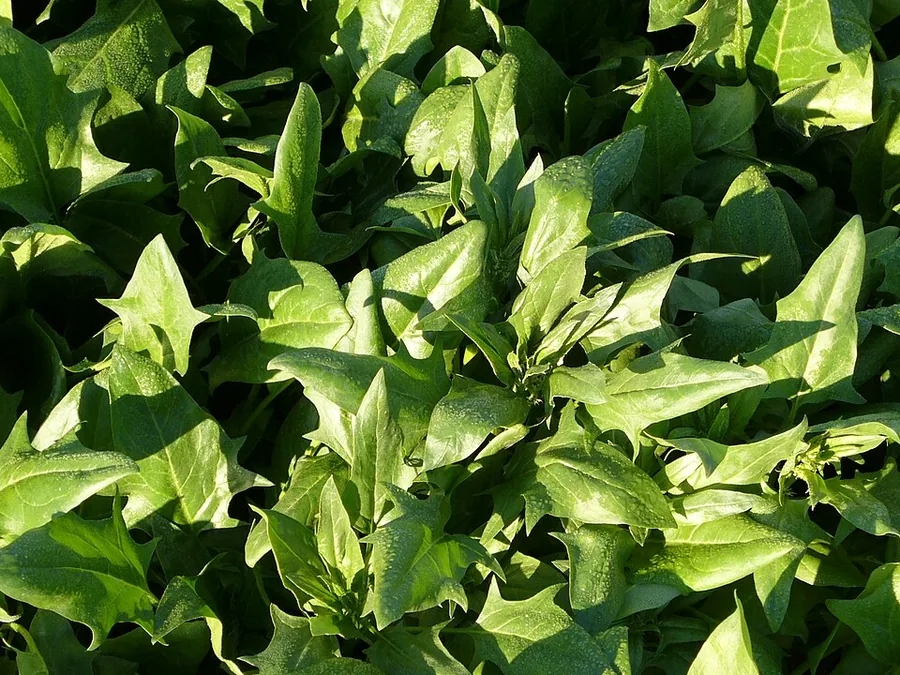
Spinach is a quick, cool-loving green that does its best work in the milder parts of the year. From seed to a good pile of tender leaves takes only about 40 to 50 days, so it's one of the first things ready in spring and one of the last in fall. Try to grow it through the peak of summer, though, and it'll bolt on you almost overnight.
The nice part is that it stays small, spreading just 6 to 12 inches (15 to 30 cm) wide, so a spare corner, a raised bed, or a decent-sized pot all work fine. You eat the leaves, and if you pick the outer ones and leave the middle alone, the plant keeps right on making more. That cut-and-come-again trick is how one sowing feeds you for weeks.
One thing worth knowing: spinach really is high in oxalates. That's no problem for the healthy leaves on your own plate, but it does mean pets and livestock should only get a little at a time instead of a whole bowlful.
Care
The short version: get spinach going while spring or fall is still cool, hand it full sun or a bit of shade with rich soil kept moist, and keep picking the outer leaves before the warm weather talks it into bolting.
Light
Spinach is happy in full sun while it's cool out, and it'll take partial shade just fine too. Once things heat up, a bit of afternoon shade actually helps, since it slows down the bolting that hot weather kicks off.
Water
Try to keep the soil evenly moist and peek at it every few days, because spinach roots stay shallow and those tender leaves wilt in no time. Steady water keeps the leaves lush and buys a bit more time before the plant bolts once things warm up.
Soil
Give it rich, well-drained soil with plenty of organic matter mixed in. Spinach isn't picky about pH and does fine anywhere from 6.0 to 7.5, but dig in some compost and you'll get fuller leaves that grow faster.
Temperature
Cool conditions are pretty much everything for spinach. It handles anything from near freezing up to about 77°F (25°C), and it's happiest at the cooler end, which is why spring and fall beat a summer planting every time.
Humidity
You don't need to worry about a humidity number outdoors, since normal air suits spinach just fine. What does matter is airflow, because leaves that are crowded and damp are basically an invitation for downy mildew.
Feeding
Spinach is a heavy feeder that really wants nitrogen to keep cranking out new leaves. Mix compost or a balanced, nitrogen-rich fertilizer into the soil before you plant, then side-dress later if the leaves look pale.
Pruning
There's really no pruning involved. Just pick the outer leaves as they get big enough and the center keeps pumping out new ones, and pull off anything that's yellowing or starting to bolt.
Repotting
Spinach lives as an annual, so it rarely sticks around past one season and never really needs repotting. When a batch is finished, pull it and start a new sowing instead of trying to move the plants.
Size & spacing
These are little plants, only 6 to 12 inches (15 to 30 cm) tall and about the same across. Thin the seedlings so they sit 3 to 6 inches apart, giving each some airflow and room for its leaves to spread out.
When to plant
Here's the thing about spinach: it loves the cold and can't stand the heat. So sow it the moment the spring ground is workable, sow another round in late summer for fall, and enjoy the leaves right through the cool stretch until it decides to bolt.
Northern hemisphere
Southern hemisphere
Typical months for a temperate climate: start earlier in warm zones, later where spring frosts linger.
- Sow: Usually direct-sown; optionally start 4-6 weeks before the last spring frost if transplanting.
- Plant: Early spring as soon as soil is workable (about 4-6 weeks before last frost) once soil reaches 45°F, and again in late summer for a fall crop.
- Harvest: Harvest leaves roughly 40-50 days after sowing, before plants bolt; grown for foliage rather than bloom.
Hardiness
USDA hardiness zones: 2–11
Temperature: down to -46°C
Troubleshooting
Most of what goes wrong with spinach shows up on the leaves, or as a plant that suddenly shoots up to flower. Spot it early and you can usually still get a decent harvest. Find your symptom below and jump on it before the leaves turn bitter or something spreads through the bed.
Yellow spots on top with fuzzy mold underneath
This one's downy mildew, a disease that spreads fast when things are cool, wet, and crowded. The giveaway is a gray to violet fuzz underneath the leaves, with yellow patches up on top. Clear out the sick leaves, give the plants more room to breathe, and water down low in the morning so the leaves dry off quick.
Fix:
- Remove and destroy infected leaves and plants
- Improve air circulation and avoid overhead watering
It shoots up a stalk and the leaves go bitter
What's happening here is bolting, and it starts once the days get longer and the weather warms up. The plant basically decides to make seed instead of leaves, and whatever leaves are left turn small and bitter. Best move? Pull the whole thing the second that stalk pops up, and get a fresh sowing going somewhere cooler.
Fix:
- Harvest the entire plant promptly once bolting begins
- Remove bolted plants and sow a fresh cool-season planting
Pale squiggly trails running through the leaves
Those pale squiggles are leafminer larvae, munching away inside the leaf where a spray just can't get to them. Easiest fix is to pick off the marked leaves and toss them the second you see them. Want to stop it before it starts? A floating row cover blocks those egg-laying flies from getting to the plants.
Fix:
- Pick off and destroy mined leaves
- Remove badly infested plants
Toxicity
Good news first: spinach is a healthy edible green, not a poisonous plant at all. The only thing to keep half an eye on is its high oxalate content, which is a small dietary note for anyone prone to kidney stones and the reason cats, dogs, and horses should get just small tastes rather than big servings.
Toxic to
Cats · Dogs · Horses
Safe for
People · Rabbits · Livestock · Birds — the leaves
Cats Caution
One little nibble of spinach won't do a cat any harm, but the leaves are loaded with soluble oxalates. Feed it often or in a big helping, though, and it can strain the kidneys and turn the stomach, so an occasional tiny taste is plenty.
Dogs Caution
A bit of spinach is fine for most dogs, but those oxalates do pile up. Large or regular servings can upset the gut and lean on the kidneys over time, which matters more for a dog that's already prone to kidney problems.
Horses Caution
Spinach isn't poisonous to horses, but a big oxalate load can mess with calcium and stress the kidneys if they eat a lot. A handful here and there is about the right limit.
Rabbits Safe
Rabbits can absolutely have spinach as part of a mix of leafy greens. Because of the oxalates, though, it's better to mix it in with other greens than to feed it every single day.
Livestock Safe
Cattle, goats, and sheep can all handle a moderate amount of spinach, trimmings and all, and there's nothing in the leaves that would put a grazing animal in danger.
Birds Safe
Backyard chickens and pet birds love pecking at spinach. Just serve it as one green in a mix so the oxalates never end up being most of the diet.
People Edible
For people, spinach is a healthy leafy green that's great raw or cooked. It's naturally high in oxalates, which really only matters if you're prone to kidney stones, and a quick cook lowers those levels.
Spinach is high in oxalates, a human dietary consideration (relevant to kidney-stone-prone individuals); cooking reduces oxalate levels.
Helpline numbers

United States
ASPCA Animal Poison Control: (888) 426-4435 (fee applies)
Poison Control: (800) 222-1222



Canada
Poison Centres: 1-844-764-7669
Varieties
Spinach comes in savoy, semi-savoy, and smooth-leaf styles, and honestly, a few reliable varieties will cover just about any garden. These are the names worth remembering.
Bloomsdale Long Standing
It's an old heirloom savoy with thick, super-crinkled dark-green leaves, and it shrugs off cold really well.
Tyee
A semi-savoy hybrid that laughs off the heat without bolting and gives you a pick in about 45 days.
Melody
A 1977 All-America Selections winner that's slow to bolt and gives you lightly crinkled leaves with really nice flavor.
Companions
Spinach grows best alongside other cool-season crops, especially legumes that share its early timing and feed nitrogen back into the bed.
Plant near
Peas: Shares cool-season preferences and the legume fixes nitrogen, making it an efficient early-spring interplant.
Bush beans: Listed on cool-season interplanting guides as a compatible companion that supplies nitrogen.
Brassicas: Cool-season brassicas pair well with spinach for interplanting in spring and fall beds.
How to propagate
Spinach might be the easiest green to start from seed. You just pop it straight in the ground, no transplanting needed.
SeedEasy
Direct sow in early spring once soil reaches about 45°F and again in late summer for fall. · Germinates in about 7-14 days; harvestable in roughly 40-50 days.
You almost always grow spinach straight from seed, right where it'll live, so there's no messing with transplants. Pop the seeds in 1/4 to 1/2 inch deep once the soil's warmed to about 45°F (7°C), then thin them so they sit 3 to 6 inches apart. They'll come up in 7 to 14 days, and you'll be picking leaves in roughly 40 to 50 days.
Myths
Spinach is packed with iron your body grabs right up.
Sure, spinach has iron, but it's the non-heme type, and the plant's own oxalates tie up a lot of it while you digest. As an iron source it's way overrated compared with the Popeye story, so it's better to count on it for other nutrients.
Spinach won't grow unless it gets full sun all day.
It does great in full sun, but it's totally fine with partial shade too. A bit of afternoon shade really pays off in the heat, since it holds back the bolting that hot weather tends to bring on.