Ornamental · Amaranthaceae
Globe Amaranth
Gomphrena globosa
Give globe amaranth full sun and warm, well drained ground and it'll toss out papery clover-like flowers from summer right until frost.
Full sun
Every 5–10 days
70–75°F · 21–24°C
84–112 days
Overview
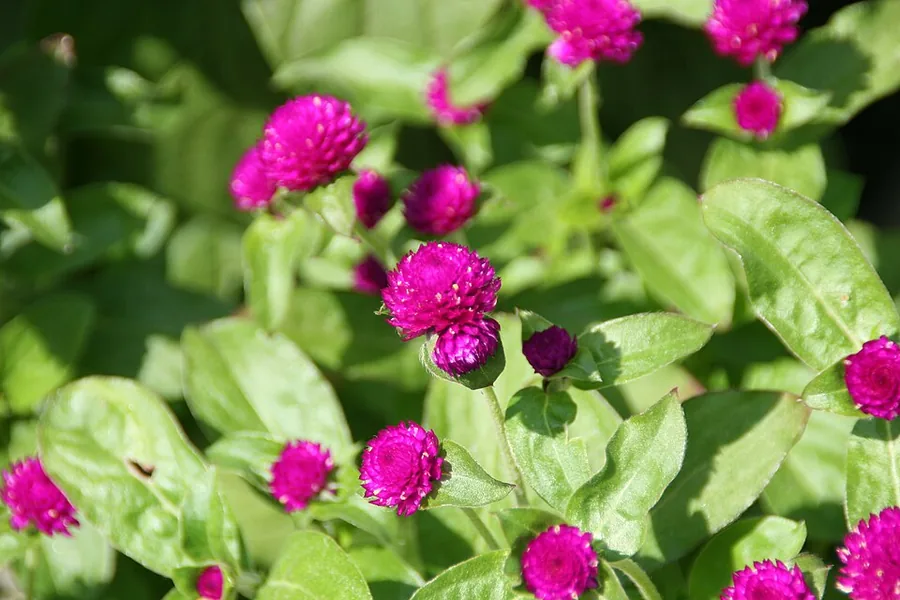
Globe amaranth wins people over with its round, papery flowerheads that look a lot like little clover blooms and hold their color for months. It's a tender annual that's happy in loads of different climates, whether you tuck it into a sunny bed or a pot, and it takes heat and dry spells better than most summer flowers. So if you forget to water now and then? It'll cope.
The flowers show up in pink, purple, white, and red, sitting on wiry stems above a neat little mound of leaves. Cut them and dry them, and they hold their shape and color for a year or more, which is exactly why they turn up so often in everlasting bouquets. Out in the garden they bring in butterflies and get left alone by deer.
This one's a great pick if you're just starting out. It doesn't ask for much once it's settled, it's fine in poor soil, and it'll keep blooming as long as you keep snipping off the old heads. Give it plenty of sun and a bit of room for air to move, and the worst problems just won't show up.
Care
The short version: full sun, average well drained soil, and steady water while it's young, then ease right off since it handles heat and drought once it's settled. Feed it every couple of weeks through the season and keep deadheading, and the flowers keep coming.
Light
Globe amaranth really wants full sun, at least 6 hours of direct light a day. It'll get by in part shade, but the plants tend to stretch, flop, and flower way less. The more sun you give it, the more flowers you'll get to pick.
Water
Keep the soil evenly moist while the young plants are settling in. After that, ease right off, since it handles heat and dry spells well and really doesn't like soggy roots. Let the top half of the soil dry out before you water again, because soggy ground is what invites disease.
Soil
Average, well drained soil is honestly all it wants. A pH somewhere between 6.0 and 7.0 works great, and it puts up with poor ground better than most. The one thing it won't stand is heavy, soggy soil that stays wet.
Temperature
It's a real heat lover and does best around 70°F to 75°F (21°C to 24°C). It sails through hot summers no problem, but it can't take frost, so wait until the cold's fully gone before planting it out.
Humidity
Regular outdoor humidity suits it fine, so there's no number to chase. What matters way more is air movement, since still, damp air around crowded plants is what kicks off mildew and mold.
Feeding
Feed it at planting with a water-soluble fertilizer, then keep going every couple of weeks through the growing season. That steady light feeding is what keeps all those flowers coming.
Pruning
Deadhead or snip off the old flowerheads to keep fresh ones coming all season. Pinch young plants back early too, and they'll push out more side branches for a fuller, bushier shape.
Size & spacing
Plants get to 12 to 24 inches (30 to 61 cm) tall with a spread of 6 to 12 inches (15 to 30 cm). Set them about 8 inches apart so air can move between them and the leaves stay dry.
When to plant
Globe amaranth is a warm season annual, and frost is a no-go for it. Start the seeds indoors in late winter or sow them out once the soil's warmed up, and you'll get flowers from early summer all the way to the first frost.
Northern hemisphere
Southern hemisphere
Typical months for a temperate climate: start earlier in warm zones, later where spring frosts linger.
- Sow: 6 to 8 weeks before last frost; soak seed overnight and keep at 70 to 75°F for germination in 2 to 3 weeks
- Plant: After all danger of frost has passed and soil has warmed, spaced about 8 inches apart
- Harvest: Blooms from early summer through fall until frost
Hardiness
USDA hardiness zones: 2–11
Temperature: down to -46°C
Troubleshooting
Most of the trouble you'll run into with globe amaranth comes from damp, crowded spots or just not enough sun. Catch the early signs on the leaves and you can usually sort it out with better spacing and steadier watering. Find what matches below, then act before it gets worse.
Fuzzy gray mold or dark spots on the leaves
Been through a cool, wet patch lately? That's usually what wakes up gray mold (Botrytis) and a few fungal leaf spots. Just pick off the affected bits as soon as you notice them, and try to water at the base so you're not soaking the leaves. Give everything a bit more space too, so air can slip through and dry the foliage off.
Fix:
- Remove affected plant parts
- Avoid overhead watering and wetting foliage
- Increase spacing and air movement
Hardly any seedlings coming up
Here's the thing, globe amaranth seed is just slow and a bit low to germinate by nature, and cold soil makes it even slower. So soak the seed overnight before sowing and keep the soil warm at 70°F to 75°F (21°C to 24°C), and you'll have a much better time of it. Sow a little extra to fill in the gaps, and hold off on sowing outside until the ground's actually warm.
Fix:
- Soak seed in water overnight before planting
- Maintain 70 to 75°F soil for germination
- Sow extra seed to compensate for low germination
White powder showing up on leaves and stems
What you're looking at is powdery mildew, a fungus that moves in when a plant's been left too dry or stuck through cool, damp weather. The fix is pretty simple: give the plants more room, thin out anything crowded, and water on a regular schedule so the leaves stay dry and the air keeps moving. Then just pull off the leaves that are badly coated and toss them.
Fix:
- Improve air circulation by spacing and thinning
- Water consistently to avoid drought stress
- Remove and discard severely affected foliage
Tall floppy stems that barely flower
When the stems go thin and floppy and there's hardly a flower in sight, it almost always comes down to not enough sun. Move it, or replant it, somewhere it gets at least 6 hours of direct light a day and it'll firm right up. And if you pinch young plants back early, they'll push out more side branches and a whole lot more flowers.
Fix:
- Relocate or plant in full sun
- Pinch young plants to encourage branching
Toxicity
Got pets? Good news, because globe amaranth is safe all around. The ASPCA lists it as non-toxic to cats, dogs, and horses, and it's no real danger to other animals or to people either. Worst case, a pet that eats a whole lot of any plant might get a quick upset tummy.
Safe for
People · Cats · Dogs · Horses · Rabbits · Livestock · Birds
Cats None
Good news if you've got a cat, the ASPCA has globe amaranth down as non-toxic to cats. A nibble on those papery flowers won't hurt at all, though a really big mouthful of any plant can leave a cat drooling a bit or with a quick upset tummy.
Dogs None
It's safe for dogs too, so a chewed stem or flowerhead is nothing to lose sleep over. The most a dog might get from really pigging out on it is some mild stomach upset that clears up on its own.
Horses None
Horses are fine with it as well, since globe amaranth is non-toxic to horses and a bit of grazing won't cause any trouble.
Rabbits Safe
Rabbits can nibble away at the leaves and you don't have to worry. There's nothing toxic in it, so it's safe if one hops into the bed.
Livestock Safe
Cattle, goats, and sheep can graze right near it without any bother, because there's nothing toxic in the plant for farm animals.
Birds Safe
Birds do just fine around it, and plenty of them like to peck at the dried seed heads. It's safe for backyard birds and pet birds alike.
People Safe
And it's safe for people too, so much so that the dried flowers get brewed into a herbal tea in some places. No need to keep the kids away from it either.
Varieties
Globe amaranth comes as both tall cutting types and tidy little dwarfs for edging. These are the ones you're most likely to bump into.
Strawberry Fields
It's a taller one at 18 to 28 inches, with bright red bracts dotted with tiny yellow true flowers.
Las Vegas series
These stay compact at 16 to 20 inches and come in pink, purple, and white, so it's an easy way to blend a few colors in one bed.
Buddy series
This little dwarf tops out at just 6 to 8 inches, which makes it great for edging and tight spots where bigger ones would take over.
Fireworks
Its sparkly pink bracts are tipped with yellow, and it keeps blooming longer than most other globe amaranths do.
How to propagate
You grow globe amaranth from seed, and honestly the only tricky bit is waiting on that slow seed to get going.
SeedEasy
Start indoors 6 to 8 weeks before last frost, or direct sow after frost and once soil is warm · Germinates in 2 to 3 weeks; blooms about 12 to 16 weeks after sowing
Growing it from seed is the way to go, and it's easy enough. Start it inside 6 to 8 weeks before your last frost, or just sow it straight into warm ground once the cold's gone. Give the seed an overnight soak, keep it warm at 70°F to 75°F (21°C to 24°C), and it'll sprout in 2 to 3 weeks. Harden the seedlings off before they go out into full sun, and you'll see the first flowers about 12 to 16 weeks after sowing.
Myths
Globe amaranth needs frequent watering to thrive.
Once it's settled in, this plant takes heat and dry weather in its stride, so there's really no need to keep watering it constantly. In fact, sticking to a heavy schedule does more harm than good, because wet soil and damp leaves are exactly what mildew and rot want. Water it well while it's young, then back off and let the top of the soil dry out between drinks.
Globe amaranth is toxic to pets.
Nope, the ASPCA has it listed as non-toxic to dogs, cats, and horses. If a pet eats a big pile of it they might get a mild, passing tummy upset, but there's no real poison to worry about.