Vegetable · Amaranthaceae
Swiss Chard
Beta vulgaris subsp. vulgaris
Plant it once, keep cutting the outer stalks, and Swiss chard just keeps handing you leaves all season.
Full sun
Every 3–7 days
41–86°F · 5–30°C
50–60 days
Overview
Swiss chard is a leafy green you grow for its big, glossy leaves and thick, crunchy stalks, and yes, you eat both. Here's the fun part: it's actually the same species as the beet, just bred for the tops instead of the root, and it's related to spinach too. It's a biennial that gets grown as an annual, so it spends that whole first year piling on leaves and doesn't really bother flowering.
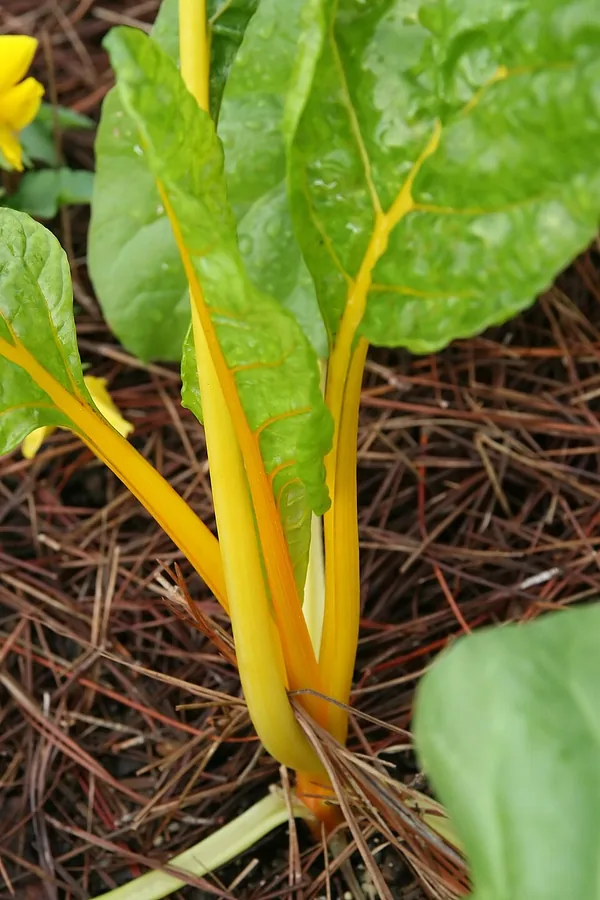
So what makes chard such a keeper? It handles summer heat and a light frost way better than most greens, which means one spring planting can keep you picking well into fall. Go for the colorful kinds and the veggie patch suddenly looks great, with stalks in red, pink, yellow, and white popping against the dark leaves.
If you've never grown much before, this is a great place to start. Pop in the seed, keep the soil damp, and start snipping the outer leaves while the middle keeps cranking out more. Give it steady water and halfway-decent soil, and honestly, chard doesn't ask for much.
Care
The short version: full sun or a bit of afternoon shade, soil that's rich and stays evenly moist, and regular picking of the outer leaves so tender new ones keep coming.
Light
Chard loves full sun, but it's totally fine in partial shade too, and honestly that shade comes in handy in hot weather since it slows down bolting. Push it into deep shade, though, and the leaves get thin while the whole plant kind of stalls out.
Water
Try to keep the soil evenly moist, somewhere around 1 to 1.5 inches of water a week. That steady moisture is the trick to tender leaves, and it helps head off the bolting that heat and dry spells like to trigger.
Soil
Chard's happiest in rich, well-drained loam with plenty of organic matter mixed in. A pH of 6.0 to 7.0 is right in its wheelhouse, and if you work some compost in before sowing, you'll be glad you did all season.
Temperature
Chard's pretty unbothered by temperature, growing anywhere from about 41°F to 86°F (5°C to 30°C). A light frost? No big deal. And it keeps chugging through summer heat when a lot of other greens would call it quits.
Humidity
Regular outdoor air works just fine, and 40% to 70% humidity sits comfortably in its sweet spot. What matters more than any number is airflow, because leaves that stay crowded and damp are just asking for leaf spot.
Feeding
Side-dress with a balanced, nitrogen-containing veggie fertilizer while it's actively growing leaves, starting in spring. Since you're picking leaves all season, a steady drip of nitrogen is what keeps the new ones coming.
Pruning
With chard, harvesting is basically the pruning, which is kind of nice. Cut the outer leaves at 4 to 12 inches down near the base, leave the central crown alone, and it just keeps pushing out fresh growth cut-and-come-again.
Repotting
Since chard's grown as an annual, there's really no repotting to think about. Just reseed your containers each season instead of trying to nurse a plant through, and go with a roomy planter so the roots aren't all cramped up.
Size & spacing
Plants usually hit 12 to 24 inches (30 to 60 cm) tall and spread out about 8 to 18 inch (20 to 45 cm). Thin the seedlings to 4 to 6 inches apart so each one gets its space and air can move around them.
When to plant
Chard's a cool-season grower, but it's easygoing about temperature and takes both spring chill and summer heat. Want to get a jump on it? Start seeds indoors in late winter, or just sow them right in the ground a couple of weeks before the last frost. Then sow again in late summer and you'll have leaves rolling through fall.
Northern hemisphere
Southern hemisphere
Typical months for a temperate climate: start earlier in warm zones, later where spring frosts linger.
- Sow: 4 to 6 weeks before the last spring frost
- Plant: 2 to 3 weeks before the last spring frost, and again in late summer for a fall crop
- Harvest: Harvest leaves from early summer through fall (and over winter in mild climates)
Hardiness
USDA hardiness zones: 3–10
Temperature: down to -40°C
Troubleshooting
Good news: chard barely causes any headaches, and when something does pop up, it's usually right there on the leaves. Keep half an eye on it, catch things early, and you can pull off the problem before it goes anywhere. Find your symptom below and deal with it while it's still an easy fix.
Little tan spots wearing a darker outline
This one's Cercospora leaf spot, a fungus that shows up as round spots with purple edges that start blending together as it spreads. Snip off the spotted leaves, get rid of them, and keep harvesting the clean outer ones. The thing that really slows it down? Thinning the plants so air can move through.
Fix:
- Remove and destroy infected leaves
- Harvest healthy outer leaves
- Improve air circulation by thinning
A tall stalk springs up and the greens go bitter
What's happening here is bolting, where the plant decides to make seed instead of leaves, usually after a long hot stretch or sometimes a cold snap when it was young. Once that seed stalk climbs up, leaf growth slows way down and the flavor turns sharp. Grab the good leaves before they go, then pull the bolted plant and start a fresh sowing.
Fix:
- Harvest remaining leaves before they turn bitter
- Pull bolted plants and resow for a fresh crop
Squiggly pale trails wandering across the leaves
Those wiggly trails? That's leafminer grubs munching away between the top and bottom of the leaf. Hold a leaf up to the light and you can usually spot the little grub or the dark specks it leaves behind. Just pull off the marked leaves and toss them right away, and a strong plant won't even notice the loss.
Fix:
- Pick off and destroy mined leaves promptly
- Remove larvae by hand
- Keep plants vigorous so outer leaves can be sacrificed
Toxicity
For people, Swiss chard is a great green to eat, cooked or raw, and there's nothing poisonous about it. It is loaded with soluble oxalates, though, so it's a mild caution for cats, dogs, horses, and grazing animals if they eat a lot of it over and over. A little taste won't do a thing, but it shouldn't turn into a regular part of any animal's diet.
Toxic to
Cats · Dogs · Horses · Rabbits · Livestock · Birds
Safe for
People
Cats Caution
Chard isn't going to poison a cat, but the leaves are packed with soluble oxalates. A quick nibble is no big deal, though a big serving eaten over and over can upset the gut and, down the line, be hard on the kidneys.
Dogs Caution
A few leaves won't bother a dog at all. Still, it's smart to keep the portions small, since that heavy oxalate load can turn the stomach and, in large amounts, work against the kidneys.
Horses Caution
A little taste is fine for a horse, but chard carries more oxalate than they really want. Steady, heavy grazing on it can mess with how the body handles calcium and put a strain on the kidneys.
Rabbits Caution
Sure, a rabbit can have chard as part of a mix of leafy greens, but it shouldn't be an everyday thing. Those oxalates pile up, so it's better to rotate it with lower-oxalate greens than to serve it solo.
Livestock Caution
Goats, sheep, and cattle can handle a bit of chard just fine. It's the big helpings of these oxalate-heavy leaves over time that can throw off calcium and lean on the kidneys.
Birds Caution
Backyard hens and pet birds can peck at chard here and there, no problem. Because of the oxalates, though, think of it as an occasional treat rather than something on the daily menu.
People Edible
For people, Swiss chard is a tasty, nutritious green, and it's totally safe cooked or raw. The one thing to know is the high oxalate content, which really only matters if you're prone to kidney stones.
No special handling precautions are required; rinse leaves before eating.
Helpline numbers

United States
ASPCA Animal Poison Control: (888) 426-4435 (fee applies)

United Kingdom
Animal PoisonLine: 01202 509000 (fee applies)

Australia
Animal Poisons Helpline: 1300 869 738
Varieties
Most of the difference between chard varieties comes down to stalk color and how the leaves feel. Here are the ones you'll bump into most.
Bright Lights
It's an All-America Selections winner, and its stalks and midribs show up in a fun mix of red, pink, yellow, orange, and white.
Northern Lights
You'll get that same bright coloring in the stalks and midribs here, running through red, pink, yellow, and white.
Ruby (Rhubarb) Chard
This one puts deep red stalks and veins against dark green, heavily savoyed leaves, and it looks pretty bold in the bed.
Fordhook Giant
It's a vigorous old heirloom, with broad white stalks and big, dark green, crumpled leaves.
Companions
Chard does well alongside other cool-season leafy crops and a few common garden neighbors, and poorly next to beans, which don't share well with it or its beet relatives.
Plant near
Cabbage family (brassicas): Listed as compatible neighbors that share cool-season conditions in extension companion guidance.
Lettuce: Compatible low-competition leafy crop grown in the same cool-season beds.
Tomatoes: Listed as a beneficial companion for chard in extension companion planting guidance.
Keep apart
Beans: Beans are listed as an incompatible companion for chard and beets in extension companion planting guidance.
How to propagate
Growing chard from seed is really all there is to it. There's just one funny little thing about the seed that's worth knowing before you sow.
SeedEasy
Spring and again in late summer for a fall crop · 50 to 60 days from sowing to first full harvest
Chard sprouts easily from seed, sown in spring and then again in late summer for a fall crop. Here's that quirk: each 'seed' is really a multigerm ball, a dried little fruit cluster that sends up a few seedlings at once, so once they're up you'll want to thin them to 4 to 6 inches apart. From sowing to your first real harvest is about 50 to 60 days.
Myths
You've got to replant Swiss chard every couple of weeks like spinach, or it'll bolt.
Nope. Chard rolls with heat and cold way more calmly than spinach, and it's a lot slower to bolt. A single planting can keep feeding you cut-and-come-again for a long stretch, so you can skip all those repeat sowings spinach makes you do.