Vegetable · Asteraceae
Lettuce
Lactuca sativa
Keep it cool, moist, and growing fast, and lettuce hands you crisp salads in about a month.
Full sun
Every 2–3 days
55–64°F · 13–18°C
45–75 days
Overview
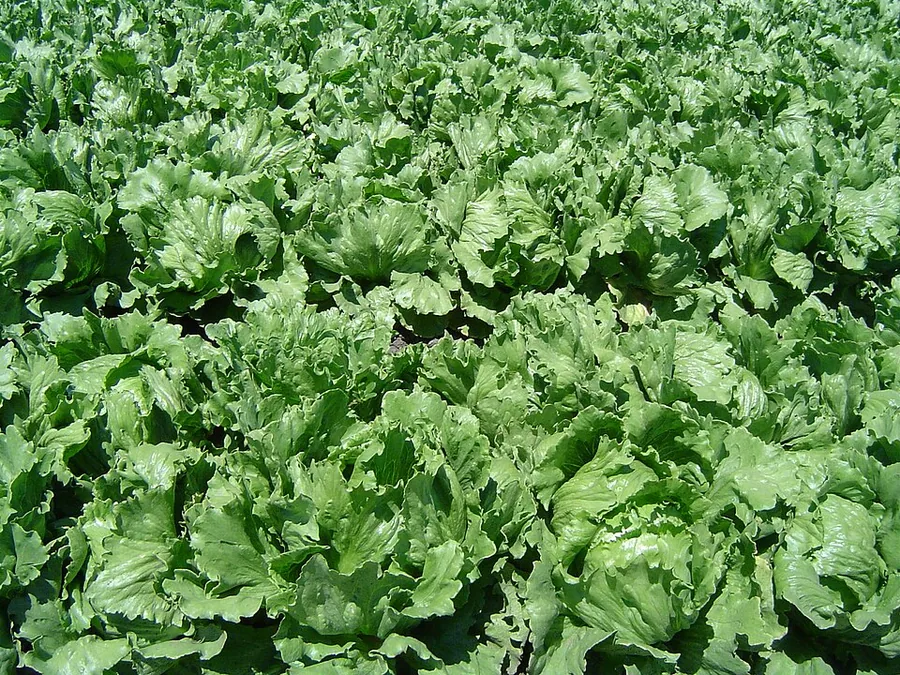
Want the quickest win in the veggie patch? That's lettuce, which can go from seed to salad in as little as 45 days. It's part of the daisy family and grows as a cool-season annual, so it's happiest in those mild stretches of spring and fall. You can grow it in a garden bed, a raised box, or just a pot on a bright windowsill, and honestly it doesn't ask for much.
The types run all over the place, from open rosettes of loose leaves to tall upright romaines to soft, folded butterheads. With the loose-leaf kinds you can grab a few outer leaves at a time and keep coming back, while heading types fill out for one big harvest. Either way the plant stays small and rarely gets past 12 inches (30 cm), so a little space goes a long way.
Here's the catch: lettuce really doesn't like heat. Push it into a hot, dry summer and it'll shoot up a flower stalk and turn bitter almost overnight. But give it cool weather, steady moisture, and good light, and the leaves stay sweet and crisp right up until you cut them.
Care
The short version: full sun with a little afternoon shade when it's hot, soil kept evenly moist, rich well-drained ground around a pH of 6.0 to 6.7, and cool weather between 55°F and 64°F (13°C to 18°C) so the leaves don't turn bitter.
Light
Lettuce loves full sun in cool weather, but it's happy in partial shade too and actually welcomes it once things heat up. A spot with morning sun and afternoon shade keeps the leaves tender and slows down that rush to bolt.
Water
Keep the soil evenly moist all the time, watering every 2 to 3 days and going deeper when it's hot. The roots sit shallow, so a dry spell stresses the plant fast and turns the leaves bitter. Water deeply to about 6 inches and just don't let the bed dry out.
Soil
Plant it in loamy, rich, well-drained ground with plenty of organic matter mixed in. A pH between 6.0 and 6.7 is what it likes, and soil that holds moisture without going soggy gives you the steadiest growth.
Temperature
It's a cool-season crop that's happiest between 55°F and 64°F (13°C to 18°C). Once you get past about 75°F it bolts, so aim your sowings at the mild shoulders of the year.
Humidity
Regular outdoor humidity is plenty, so there's no number to fuss over. Steady soil moisture matters way more than the air, since dry roots are what turn the leaves bitter.
Feeding
Mix in a 5-10-10 fertilizer before planting, then sidedress once with calcium nitrate as the plants grow. That second feed pushes leafy growth and helps head off the calcium shortfall behind tipburn.
Pruning
There's no real pruning to bother with. Just pick the outer leaves as you go and the plant keeps producing, then pull it once it bolts, because the leaves only turn bitter from there.
Size & spacing
Lettuce stays nice and compact at 6 to 12 inches (15 to 30 cm) tall and about the same across. Give each plant 6 to 12 inches (15 to 30 cm) of room so the leaves can fill out and air can move between them.
When to plant
Lettuce is built for the cool ends of the year, not the middle of summer. So sow your first batch in early spring as soon as you can work the soil, sow again in late summer for a fall crop, and just skip those hottest weeks in between, since that's when the plants only want to bolt anyway.
Northern hemisphere
Southern hemisphere
Typical months for a temperate climate: start earlier in warm zones, later where spring frosts linger.
- Sow: 4-6 weeks before the last spring frost
- Plant: 2-4 weeks before the last spring frost; sow again in late summer for a fall crop
- Harvest: Spring and fall harvest (cool season)
Hardiness
USDA hardiness zones: 2–11
Temperature: down to -46°C
Troubleshooting
Most lettuce problems turn up on the leaves, and nearly all of them come back to heat, uneven water, or some hungry pest. Catch it early and a quick fix usually saves the day. So take a look at what matches below, then get on it before the whole planting turns.
A stalk shoots up from the middle and the leaves go bitter
What's happening here is bolting, where the plant flips from making leaves to making seed once heat above 75°F (24°C) and longer days tell it the season's about done. You'll notice the leaves leak a milky sap and their sweetness is gone for good. So cut them the second the center starts to rise, give the plants some afternoon shade when it's hot, and next time go for slow-to-bolt varieties.
Fix:
- Harvest promptly before the plant fully bolts
- Switch to heat-tolerant, bolt-resistant cultivars
- Provide afternoon shade during hot spells
Curled-up leaves with something sticky underneath
Sticky leaves? That's aphids, those tiny soft-bodied bugs that gather under the leaves and leave a sticky honeydew behind them. They twist up the new growth while they feed. Just blast them off with a hard jet of water, hit any that hang on with insecticidal soap, and let the ladybugs and other predators clean up whatever's left.
Fix:
- Dislodge with a strong spray of water
- Apply insecticidal soap
Browned, scorched-looking edges on the inner leaves
That's tipburn, and here's the thing, it's a calcium shortfall in the fast-growing heart, not some bug. When warm weather and up-and-down watering push the plant too fast, the inner leaves just can't grab enough calcium, so their edges die off. Keep the soil evenly moist and go easy on the nitrogen, and growth won't get ahead of what the roots can hand up.
Fix:
- Maintain even soil moisture
- Avoid excessive nitrogen that pushes rapid growth
Chewed-up holes in the leaves with shiny trails
Those are slugs and snails, and they do their munching after dark, leaving those telltale shiny mucus trails, worst when it's damp out. Scatter a bit of iron phosphate bait, grab them by torchlight, and clear out the damp mulch and debris where they like to hide. Water in the morning too, so the bed's dry by nightfall, which is exactly what they can't stand.
Fix:
- Apply iron phosphate bait
- Hand-pick at night
- Reduce damp mulch and debris near plants
Toxicity
Lettuce is honestly one of the safest plants you can grow. Every part is non-toxic to people and to cats, dogs, rabbits, horses, livestock, and birds, which is exactly why it ends up in so many bowls and hutches. The only quirky bit is the milky sap, which can leave a mild rash on really sensitive skin, and that's about it.
Safe for
People · Cats · Dogs · Horses · Rabbits · Livestock · Birds
Cats None
Cats are totally fine with lettuce, so a nibbled leaf won't hurt them. Most cats couldn't care less about it, but if a curious one wants a chew, that's okay.
Dogs None
Dogs can have lettuce no problem. A big pile might loosen the stool a bit, though, so keep it to small amounts of plain washed leaves.
Horses None
Horses do just fine with lettuce as a once-in-a-while treat. Tear it up into pieces and don't overdo the portion, same as you would with any fresh green.
Rabbits None
Rabbits go for the crisp darker leaves, which suit them way better than the pale, watery hearts. Give it a wash and serve it right next to their usual hay.
Livestock None
Goats, sheep, and the backyard crew can graze lettuce with zero worry. Even bolted plants heading to seed are fine, they're just not as tasty once they've turned bitter.
Birds None
Chickens and pet birds happily peck away at fresh lettuce leaves with nothing to worry about. The darker, leafier kinds give them a lot more to enjoy than the watery crispheads.
People None
Lettuce is a salad classic, raw or cooked, and it's safe for everybody. The one odd thing is the milky sap, which can leave a mild rash on really sensitive skin, but that's it.
The milky sap may rarely cause mild contact dermatitis in sensitive individuals.
Varieties
There are hundreds of lettuces spread across the leaf, romaine, and butterhead groups, but only a handful really earn their spot year after year. These are the ones worth knowing by name.
Parris Island Cos
It's a classic upright romaine with tall, crisp green leaves and it holds up well against disease.
Tom Thumb
This little butterhead makes a tidy single-serving head in about 70 days.
Simpson Elite
It's a fast-growing green leaf type that keeps bolting at bay longer than most.
Red Sails
This bronze-red loose-leaf one is loved for its color and how slowly it gets around to bolting.
Defender
It's a romaine that was bred to brush off downy mildew and the other usual diseases.
How to propagate
Lettuce is about as simple as growing gets, and one packet of seed can keep a salad bed going for months as long as you sow it in waves.
SeedEasy
Spring and late summer; sow in succession every 2-3 weeks for a continuous harvest · 7-14 days to germinate
Lettuce is dead easy to start from seed, whether you sprinkle it right into the bed or bring on transplants indoors first. Sow it shallow, around a quarter inch deep, because the seed needs light and cool soil to get going, and it'll pop up in 7 to 14 days. Want salad for months instead of all at once? Just sow a fresh pinch every 2 to 3 weeks through spring and again in late summer.
Myths
Bitter lettuce has spoiled or gone rotten.
Nope, bitterness is just the plant reacting to heat as it bolts, and it's not rot at all. The leaves are still safe, they just taste off. Keep the crop cool and pick it early and you'll keep that sweetness.
Lettuce needs full hot sun all day to grow well.
Not really, since it's a cool-season crop and all-day blazing sun just pushes it to bolt. A bit of afternoon shade in the heat keeps it tender, but it still wants plenty of light the rest of the day.