Vegetable · Asteraceae
Salsify
Tragopogon porrifolius
Give salsify loose, deep, rock-free ground and plenty of cool weather, and it'll hand back a sweet root that tastes a bit like oyster.
Full sun
Every 4–7 days
50–77°F · 10–25°C
110–150 days
Overview
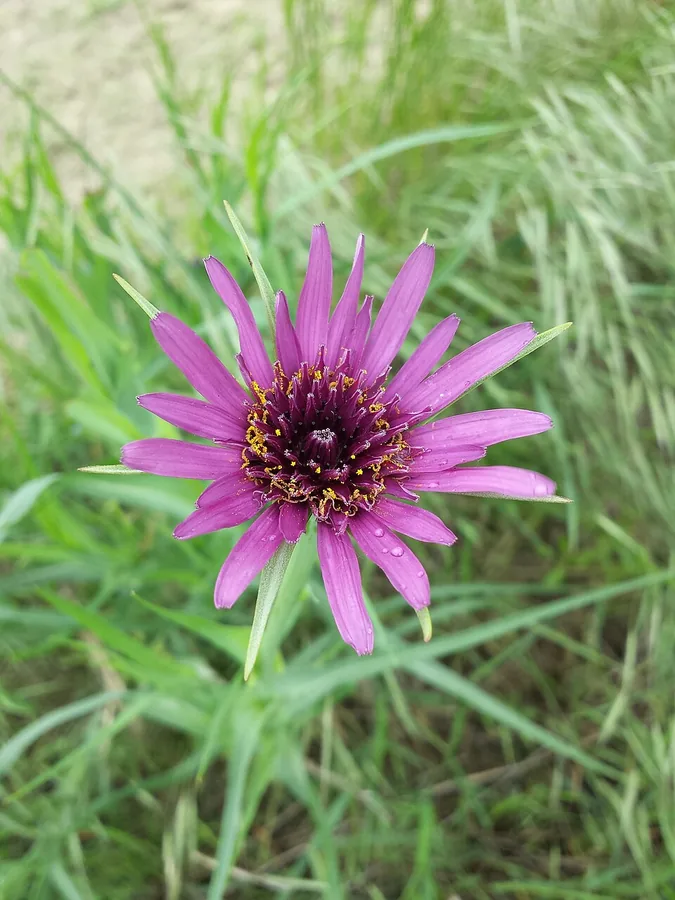
So what is salsify? It's an old-school root vegetable grown for a long, skinny taproot that tastes a little like oysters, which is how it picked up the nickname oyster plant. It's part of the daisy family and pretty much a cousin of the dandelion, so give it a second year and it'll send up those same starry purple flowers. Most folks never see that, though, because they pull the roots while the plant is still young.
Here's the thing: salsify wants patience more than any special talent. It likes a long, cool season of roughly four to five months, and the root only comes out nice and straight when the soil underneath is deep and loose. Sort out the bed and you're mostly done, because this plant brushes off most pests and barely needs a second glance.
And the best part? It saves its reward for late in the year. Frost actually makes the roots sweeter, and they'll happily sit in the ground all winter, so you can dig them fresh whenever the soil's soft enough to work.
Care
The short version: full sun, and a deep, loose, stone-free bed that's been worked over before you sow. Keep it watered at about 1 to 2 inches a week so the roots stay straight, get your seed in early for a long cool season, and hold off digging until a few frosts have sweetened things up.
Light
Salsify's happiest in full sun, though it'll put up with a bit of partial shade and still give you a crop. The more light those leaves soak up, the more energy heads down into the root, so sunnier is better.
Water
Aim for about 1 to 2 inches of water a week and keep the soil evenly moist the whole way through. That steady moisture is what keeps the roots from forking or splitting, so try not to let the bed dry out completely and then drown it.
Soil
This is where the crop's really won or lost. Salsify wants deep, loose, stone-free loam with plenty of organic matter, dug down a good 12 to 24 inches so the taproot can head straight down without hitting anything. A pH somewhere between 6.0 and 7.5 is right where it likes to be.
Temperature
This is a cool-weather root, most comfortable around 50°F to 77°F (10°C to 25°C). Cold doesn't bother it one bit, and honestly a late frost is a bonus, since it makes the roots taste sweeter.
Humidity
Regular outdoor air, somewhere around 40% to 70% humidity, is all salsify needs, so there's nothing to fiddle with here. What actually matters is airflow, because damp, stuffy conditions are what let white rust creep onto the leaves.
Feeding
Work some compost or a balanced fertilizer into the bed before you sow, and that's usually enough to see it through the season. Just skip the fresh manure, because it makes the roots fork and grow those little hairy side roots.
Pruning
There's really no pruning to bother with. In the first year, just snap off any flower stalk the moment it shows up, and the plant will keep sending its energy down into the root instead of running off to seed.
Repotting
not_applicable
Size & spacing
Once the flower stalks go up, plants hit about 1 to 4 feet (30 to 122 cm) tall, but they stay skinny, with just a 6 to 12 inches (15 to 30 cm) spread. Give each one a little elbow room so the root can fatten up without bumping into its neighbor.
When to plant
Salsify likes to take its time, so don't rush it. Get the seed into the ground in early spring, once the soil's crumbly enough to work, then let the roots plump up over a cool stretch of four to five months. Come fall, once a frost or two has sweetened them, you can start digging, and since the roots keep just fine in the ground, the harvest can roll right on into winter.
Northern hemisphere
Southern hemisphere
Typical months for a temperate climate: start earlier in warm zones, later where spring frosts linger.
- Plant: Direct sow in early spring as soon as the soil can be worked (about 2-4 weeks before the last frost); salsify needs a long, cool growing season.
- Harvest: Harvest roots in fall after the first frosts, which sweetens them; roots can overwinter in the ground and be dug through winter or early spring while the soil is workable.
Hardiness
USDA hardiness zones: 5–9
Temperature: down to -29°C
Troubleshooting
Good news first: salsify doesn't cause much drama, and when it does, the trouble usually starts down in the soil or with the weather. Forked roots and early bolting are the two you'll bump into most, and both come back to the bed and the timing. Find your issue below and sort out what's causing it.
An early flower stalk and a woody root
When salsify bolts, it puts up a flower stalk in the first year and the root turns woody and tough to eat. Heat, dry spells, or sowing too late into warm soil are usually what set it off. So get the seed in early for a nice long cool run, pinch off any flower stalks as soon as they appear, and dig the good roots before they harden up.
Fix:
- Remove flower stalks as soon as they appear
- Harvest usable roots before they become woody
Gnawed roots and tunnels over winter
To a hungry mouse or vole, roots sitting in the ground over winter are basically a free buffet, and they'll leave tunnels down the rows and hollowed-out roots behind. Easiest fix? Dig the roots and store them before the rodents really move in. If you'd rather leave them out there, stay on top of the mulch and set some rodent controls around the bed.
Fix:
- Harvest and store roots before deep winter rodent pressure
- Manage mulch and use rodent controls around the bed
Roots that fork, split, or go hairy
If the roots come up forked, it's almost always the bed that's to blame, not you. Stones, heavy soil, or a shallow dig knock the taproot off course, and patchy watering or fresh manure just make it worse. Dig the bed a good 12 to 24 inches deep, clear out the stones, keep the water steady, and you'll get long, smooth roots next time.
Fix:
- Work the soil deeply (12-24 inches) and remove rocks before sowing
- Maintain even moisture of 1-2 inches of water per week
- Amend with compost rather than fresh manure
White blisters or a powdery dusting on leaves
When the leaves stay damp and crowded, white rust and powdery mildew can move in, showing up as little white blisters or a dusty white coating. Pull off the marked leaves and toss them, space things out so air can move through, and keep the foliage dry. Shifting the crop to a fresh bed each year keeps the problem from sticking around.
Fix:
- Remove and dispose of affected foliage
- Improve airflow and reduce overhead moisture
- Rotate the crop to a new bed
Soft little clusters and sticky leaves
Aphids love to gather on the leaves and stems in soft little clumps, and they leave a sticky honeydew behind. A good blast from the hose knocks most of them off, and insecticidal soap will handle a colony that won't quit. Keep an eye on things and let the natural predators do their part too.
Fix:
- Dislodge with a strong jet of water
- Apply insecticidal soap if needed
Toxicity
Here's a nice easy one: salsify is grown to be eaten, so all of it is safe. The roots, shoots, and young leaves all end up on the plate, and it's fine around pets, livestock, and kids too. The only thing worth mentioning is that milky white sap from cut roots, which can stain your hands but won't do any harm.
Safe for
People · Cats · Dogs · Horses · Rabbits · Livestock · Birds
Cats None
Salsify isn't on the ASPCA's toxic list, so if a curious cat has a nibble at a leaf, there's nothing to worry about. The milky sap might leave a mark on a paw, but it won't hurt.
Dogs None
A dog can dig up and chew the roots no problem, since none of the plant is poisonous. Sure, too much of any veg might upset a tummy, but salsify itself is totally safe.
Horses Safe
Horses can graze on salsify without any bother, because there's no toxin in it to trouble them.
Rabbits Safe
Rabbits are fine to munch the tender leaves and roots, and plenty of them love the fresh greens. Just ease any new green in slowly so their stomachs stay happy.
Livestock Safe
Cattle, goats, and sheep can all graze salsify out in the field with no ill effects, which is part of why it spreads across grazing land. There's just no toxin here to worry about.
Birds Safe
Birds can peck away at the seeds and leaves all they like, since the plant's no danger to them. Backyard hens are welcome to the trimmings too.
People Safe
Salsify's a food crop, so the roots, shoots, and young leaves are all good to eat. The only real nuisance is that sticky white latex from cut roots, and it rinses right off your hands.
Cut roots and stems exude a milky white latex (typical of the daisy family) that can stain hands; wash after handling.
Varieties
There aren't many salsify types to sort through, which makes life easy. It really comes down to one tidy kitchen variety and the wilder original, and those are the two worth knowing about.
Mammoth Sandwich Island
This is the white-rooted one you'll run into most, loved for its long, smooth, evenly tapered roots and that gentle oyster taste salsify's known for.
Common (purple) salsify
The wild original, which throws up mauve-purple, dandelion-like flowers in its second year over roots with that same white flesh.
How to propagate
There's just one way to get salsify going, and luckily it's the simple one: sow the seed right where you want it to grow. That deep taproot hates being dug up and moved, so transplanting is off the table anyway.
SeedEasy
Direct sow in early spring as soon as the soil can be worked · Germinates in about 8-10 days; roots reach harvest size in roughly 110-150 days
Sow salsify right where it's going to grow, early in spring once the soil's workable, because that long taproot really doesn't like being moved. Seedlings usually pop up in about 8 to 10 days, and then the roots fill out over a long, cool run of roughly 110 to 150 days. One tip: always use fresh seed, since salsify seed goes off quickly from one year to the next.
Myths
Salsify and black salsify are really the same plant.
They might taste similar once cooked, but they're actually two different species. The salsify here is Tragopogon porrifolius, with white-skinned roots and purple flowers, while black salsify is Scorzonera hispanica, which has black-skinned roots and yellow flowers instead.
You've got to dig salsify before frost or it'll spoil.
It's actually the other way round. Frost makes the roots sweeter, not worse, so you can leave them right where they are and dig them through winter or into early spring, as long as the soil's still soft enough to work.