Vegetable · Asteraceae
Globe Artichoke
Cynara cardunculus var. scolymus
A big, handsome thistle you grow for the buds you eat before they bloom.
Full sun
Every 3–7 days
45–84°F · 7–29°C
85–110 days
Overview
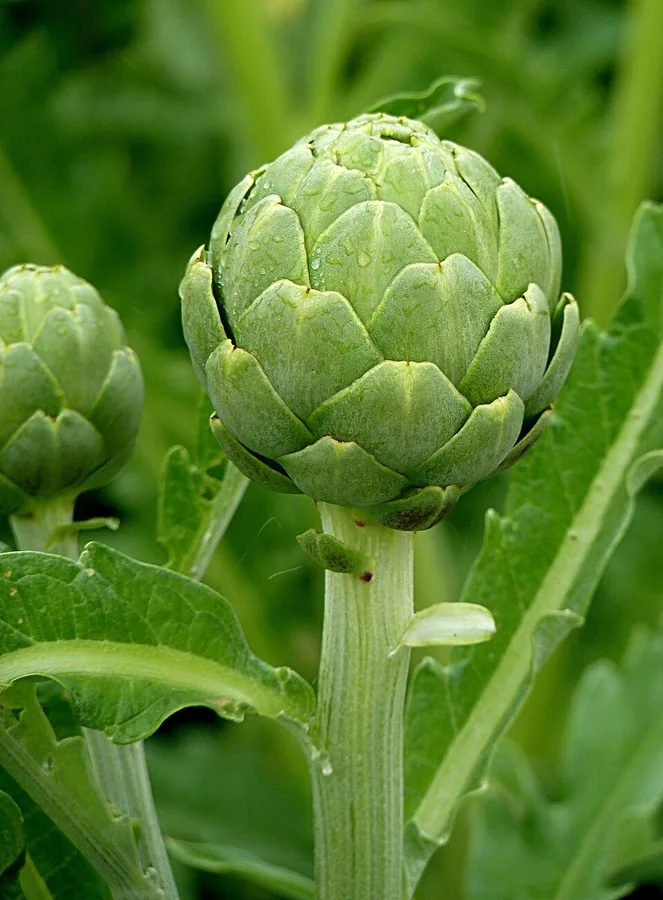
So what is a globe artichoke, really? It's a striking thistle, a cousin of daisies and sunflowers in the family Asteraceae, and you grow it for those immature flower buds. Pick them while they're still tight, steam them up, and eat them before the bracts open. Leave a bud on the plant and it'll open into a showy purple flower instead. The silver-green leaves are deeply cut and sprawl out a few feet, so even a single plant makes a real statement in the bed.
Here's the catch with how it lives. Where winters are mild, it's a perennial, the crown comes back and crops for years on end. In colder spots, you grow it as an annual from seed. Either way, a first-year plant only bothers making buds if it gets a proper cold spell, which is the quirk that trips up a lot of new growers.
Treat it well and it pays you back. It's a heavy feeder that wants rich, deep, well-drained ground and steady moisture, and the buds roll in from summer into fall. Skimp on the drainage, though, and the crown will rot, so that part's worth getting right from the start.
Care
The short version: give your artichoke full sun, rich and deep well-drained soil, and steady moisture, then feed it well because it's hungry. Where winters are mild it'll come back year after year; where they're cold, grow it as an annual and make sure the young plants get a cold spell so they'll actually bud.
Light
Give it full sun, plain and simple. There's no real shade tolerance here, and a plant this big needs all the light it can get to power those buds. A spot that's sunny most of the day is what you're after.
Water
Keep the soil evenly moist right through the season, since deep, regular watering is what makes the buds nice and tender. Water at the base rather than overhead, and whatever you do, don't let water pool around the crown, because that's a fast track to rot.
Soil
Aim for rich, deep, well-drained loam loaded with organic matter, sitting somewhere between pH 6.5 and 7.5. If your ground tends to stay wet, raise the bed, because good drainage is what keeps the crown from rotting out.
Temperature
It's comfortable across 45°F to 84°F (7°C to 29°C). The one thing to remember is that it needs a cold stretch near 50°F (10°C) to kick off budding, so a little chill is actually a good thing.
Humidity
Ordinary outdoor humidity suits it just fine, so don't fuss over numbers. What matters more is airflow, since damp, crowded leaves are an open invitation for pests and rot.
Feeding
This one eats a lot. Work plenty of compost into the bed up front, then feed monthly through spring and summer with a nitrogen-rich balanced fertilizer to keep it growing strong.
Pruning
Snip the buds while they're still tight, before they open. Once you've harvested, cut the spent flowering stalks back to the base. In cold zones, take the foliage to the ground and mulch the crown for winter; in mild zones, just trim the old growth in late winter to bring on fresh shoots.
Repotting
Containers aren't really this plant's thing, so skip the pot. The repotting equivalent is dividing the established crowns every 3 to 4 years, which keeps them productive and stops them getting crowded.
Size & spacing
Expect a plant around 3 to 6 feet (90 to 180 cm) tall and roughly as wide. Because it spreads out, give each one about 3 feet (90 cm) of elbow room so it has space to fill in.
When to plant
Artichokes are a bit contrary about timing. They want warmth to grow but a touch of cold to bud, so the trick is starting seed indoors in late winter, chilling the young plants, setting them out after the last frost, then harvesting those tight buds from summer into fall.
Northern hemisphere
Southern hemisphere
Typical months for a temperate climate: start earlier in warm zones, later where spring frosts linger.
- Sow: Start seed indoors 8-10 weeks before the last spring frost, then chill/vernalize the seedlings (expose to roughly 50°F / 10°C for 10 or more days) so they will form buds the first year.
- Plant: Transplant after the last frost once soil has warmed, in spring.
- Harvest: Harvest the immature flower buds in summer (and into fall) before the bracts begin to open.
Hardiness
USDA hardiness zones: 7–11
Temperature: down to -18°C
Troubleshooting
Most artichoke troubles come down to a few usual suspects: aphids on the new growth, slugs chewing the leaves, soggy soil rotting the crown, or a plant that grows big but won't bud. Here's how to spot each one and sort it out.
Crown rot creeping in from soggy ground
When a plant flops even though the soil's plenty wet, and the crown's gone soft and dark, that's rot taking hold. This one's the serious kind, so the soggy spot has to be fixed before anything else goes in there.
Fix:
- Remove and destroy affected plants
- Improve soil drainage before replanting
- Avoid replanting artichokes in the same wet site
Aphids piling onto your fresh growth
See little soft bugs crowding the new leaves with a sticky shine? That's an aphid party, and the ants tagging along are basically tending the herd for the sweet honeydew they leave behind.
Fix:
- Dislodge with a strong jet of water
- Apply insecticidal soap
- Remove and destroy heavily infested leaves
All leaves, no buds the first year
Got a big leafy plant that just won't make buds? Odds are it skipped its cold spell. As an annual, an artichoke needs a chilly stretch near 50°F (10°C) to flip into bud mode, and without it you'll get foliage and nothing to eat.
Fix:
- Vernalize transplants for 10 or more days near 50°F / 10°C before setting out
- Overwinter plants as perennials in mild zones to bud the following year
Surprise aphids tucked inside the bud
You split open a bud and there they are, hiding between the bracts where you'd never spot them from outside. A bit gross, but the bud itself is still fine to eat once you flush them out.
Fix:
- Soak cut buds in cold salted water to flush out insects
- Harvest buds promptly while still tight
- Control aphids on plants before they enter the bud
Slugs and snails snacking after dark
Ragged holes plus those telltale silvery streaks usually mean slugs, snails, or sometimes earwigs are dropping by at night. Annoying to look at, sure, but it rarely sets a healthy plant back much.
Fix:
- Handpick at night
- Set out traps or iron-phosphate slug bait
- Remove damp hiding places near plants
Toxicity
Good news on the safety front. This is a vegetable, so there's nothing poisonous to worry about for pets or people. The only thing to watch is physical, since some types have sharp spine tips and bristly leaves that can prick you.
Safe for
People · Cats · Dogs · Horses · Rabbits · Livestock · Birds
Cats None
Nothing to worry about here. A curious nibble won't poison a cat, and honestly the bristly leaves tend to put most cats off before they get very far.
Dogs None
No toxin in play, so it's safe. A dog that wolfs down a big pile of the tough, fibrous leaves might end up with loose stool, much like it would with any rich plant.
Horses Safe
Safe all around. There's nothing poisonous in it, and the coarse, prickly foliage isn't exactly tempting to a horse anyway.
Rabbits Safe
The tender leaves are fine for rabbits. Just go slow, since a sudden heap of fresh greens can loosen a rabbit's gut, so ease it in.
Livestock Safe
Cattle, goats, and sheep graze it (and its cousin the cardoon) without trouble. The only thing to keep an eye on is the sharp bracts on spiny types.
Birds Safe
No toxic worries for birds. Chickens, for one, are happy to peck away at leaf and stem scraps.
People Safe
Totally safe to eat, since the buds are the whole reason it's grown, cooked up and enjoyed all over. The one catch is the spiny bract tips, so glove up when handling the prickly types.
The bracts of some varieties have sharp spine tips and the foliage is bristly, which can prick or irritate skin during handling and harvest. This is a physical hazard, not poisoning.
Varieties
There are a handful of artichokes worth knowing, from the classic green-budded standard to an annual type for cold climates and even a purple Italian heirloom. Here's how they differ.
Green Globe
This is the green-budded one you'll see most often, and it's the usual pick for growing as a perennial where winters stay mild.
Imperial Star
An annual-type that'll set buds in its first year from seed without much chilling, which is handy if your winters run too cold for a perennial.
Violetto di Romagna
An Italian heirloom that swaps the usual green for long, elongated purple buds.
Green Globe Improved
A selected strain of Green Globe bred for more uniform, more productive plants.
How to propagate
You can grow new artichokes two ways: from seed or by dividing an existing crown. Seed is the route for an annual crop, while division is how you copy a favorite plant exactly.
SeedModerate
Start indoors 8-10 weeks before last frost, then vernalize seedlings before transplanting · First buds in roughly 85-110 days from transplant when seedlings are vernalized
Start the seed indoors 8 to 10 weeks before your last frost, then give the seedlings a cold spell before they head outside so they'll bud the first season. Heads up though, seed plants vary, so go for an annual cultivar like Imperial Star if you want a dependable first-year crop.
DivisionEasy
Late winter to early spring · Rooted offshoots establish within one growing season
Want an exact copy of a plant you like? In late winter to early spring, detach a rooted sucker from the parent crown and pot it up. These rooted pieces settle in within one growing season and come true to the parent.
Myths
Artichokes are poisonous to pets, so keep them away.
Not true at all. It's an everyday edible and isn't on the ASPCA's toxic list for cats or dogs. The only real risk is physical, from the sharp spines on some bracts.
Artichokes grow true to type from seed, like most other vegetables.
Not really. Seed-grown plants tend to vary a lot, so splitting rooted offshoots from a parent crown is what gives you matching plants. Only a handful of cultivars, such as Imperial Star, reliably bud the first year from seed.