Ornamental · Brassicaceae
Stock
Matthiola incana
Keep stock cool early and drop it in full sun, and it'll reward you with fragrant, spiky bloom.
Full sun
Every 3–7 days
80–100 days
USDA 6–10
Overview
So what's stock? It's a cottage-garden favorite grown for thick spikes of bloom and a clove-sweet smell that drifts on cool air. It's part of the cabbage family, Brassicaceae, believe it or not. Think of it as a cool-season annual that does its best in the mild days of spring or fall, not the thick of summer.
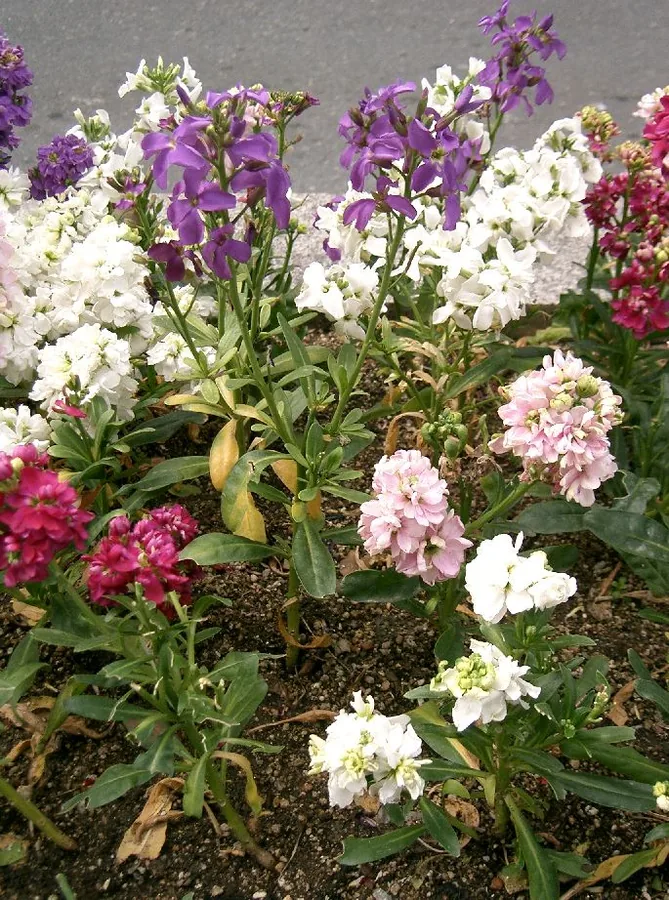
The flowers show up in soft pink, purple, cream, and white, on plants that get about 1 to 3 feet (30 to 91 cm) tall. Want cut flowers? Go for the tall types, since their long, fragrant stems really last in a vase. The shorter ones are great for edging a bed or brightening a pot.
Here's the one thing stock's fussy about: it needs cool weather while it's setting flowers. Get it planted early enough to catch that chill, keep the soil nicely moist, give it sun, and you'll get weeks of bloom out of it. Leave it too late and let the heat beat you to it, and it just kind of sulks and fades.
Care
The short version: stock wants full sun and cool weather, plus even moisture in fertile, well-drained ground that isn't acidic. Get it planted early so it blooms before summer turns hot, and you're set.
Light
Stock's happiest in full sun, which gives you the strongest stems and the most flowers. A bit of partial shade is okay, especially where spring warms up fast, but pile on too much shade and you'll end up with weak, leggy plants and hardly any blooms.
Water
Aim to keep it evenly moist, and don't let stock dry out during its cool-season stretch. Every 3 to 7 days works for watering, bump it up when it's dry, and pour at the base rather than over the foliage so mold doesn't get a chance.
Soil
Plant stock in fertile, well-drained soil, whether you've got loam, sand, or clay, and mix in some organic matter. It likes a pH around 6.0 to 8.0, so err on the alkaline side instead of acidic, because sour soil is a turn-off for it.
Temperature
This one's a cool-weather plant, no two ways about it. It handles light frost and thrives in the cool of spring or fall, coasting along somewhere around 28°F to 81°F (-2°C to 27°C), then dropping off quick once the heat climbs past the top of that.
Humidity
Regular outdoor humidity? Not an issue, so there's no number you're chasing. What really matters is airflow, because crowd stock together in damp weather and that's basically an invitation for white mold.
Feeding
Mix a balanced, all-purpose fertilizer into the bed when you plant, then feed again roughly once a month while it's growing hard. Keeping that feed steady means more spikes without a bunch of soft, floppy growth.
Pruning
Stock barely needs pruning. Just pinch or snip off the spent spikes to keep it looking tidy, and if you're cutting for a vase, grab those stems while they're fresh. Since it's a short annual, that's really all it asks.
Size & spacing
Plants get about 1 to 3 feet (30 to 91 cm) tall and roughly 9 to 18 inches (23 to 46 cm) wide. Give each one that much space so air can move through and mold doesn't stand a chance.
When to plant
Stock really runs on cool weather, so timing matters more here than with a lot of flowers. Sow your seeds indoors in late winter, then move the little plants outside once early spring rolls around and things are still cold. They'll flower from late spring into the front half of summer, right before the heat arrives and calls time.
Northern hemisphere
Southern hemisphere
Typical months for a temperate climate: start earlier in warm zones, later where spring frosts linger.
- Sow: 6 to 8 weeks before the last spring frost; seed germinates in 7 to 14 days at 65 to 75°F (18 to 24°C)
- Plant: Transplant in early spring while weather is still cool; plants tolerate light frost. In mild-winter regions plant in fall or late winter.
- Harvest: Blooms May through July under cool conditions; cool exposure near 50 to 55°F (10 to 13°C) is needed to trigger flowering
Hardiness
USDA hardiness zones: 6–10
Temperature: down to -23°C
Troubleshooting
Most of what goes wrong with stock comes down to two culprits: damp, crowded plants that start to rot, and weather that just isn't right for a cool-season flower. Catch the early signs and you can tweak the spacing, prop things up, or fix your timing before you lose the whole planting.
Fuzzy white mold and mushy stems
What you've got here is white mold, a fungus called Sclerotinia that loves the mild, wet, humid weather stock grows in. Anything with that cottony fuzz and soggy, rotting stems? Pull it and toss it. Then give the rest some room, water down low at the base, and keep the air moving so those spores never find a damp spot to settle.
Fix:
- Remove and discard affected plants
- Improve air circulation by proper spacing
- Avoid overhead watering and excess moisture
Plants giving up as it heats up
Remember, stock's a cool-season flower, so heat is what does it in. Once you're past 80°F (27°C), it quits blooming and goes downhill fast. There's really no rescuing a heat-hit planting, so it all comes down to timing. Grow it in spring or fall and cut your flowers before the hot weather settles in.
Fix:
- Grow as a cool-season crop and harvest before summer heat
- Time plantings for spring or fall cool periods
Loads of leaves but no flowers
When stock's all green and leafy but won't throw a single flower spike, it probably never got its cool spell. Young plants want a stretch near 50°F to 55°F (10°C to 13°C) while they're small. So give them that cool conditioning at the right leaf stage, or just pick early varieties that bloom after a shorter cool window.
Fix:
- Expose young plants to cool temperatures near 50 to 55°F (10 to 13°C)
- Choose early varieties for short cool windows
Stems flopping over after planting
Don't panic, this isn't a disease, it's just lodging. Those tall, top-heavy spikes tip over or lie flat the moment wind or a heavy watering leans on them. Lay down some horizontal netting at planting time and give each plant enough room, and the stems will grow up straight through the mesh.
Fix:
- Install a layer of horizontal support netting
- Provide even moisture and avoid overcrowding
Toxicity
Good news here: stock is one of the safe ones. The ASPCA has it on the list of non-toxic flowers, so it's no threat to cats, dogs, or the other critters wandering your yard, and the scented blooms are actually edible. Feel free to plant it right where the pets and kids hang out.
Safe for
People · Cats · Dogs · Horses · Rabbits · Livestock · Birds
Cats None
Totally fine for cats. The ASPCA has stock on its non-toxic flower list, so if your cat sneaks a nibble, no harm done.
Dogs None
Dogs are good here too. Stock's got no known toxin, though any dog that scarfs down a big pile of any plant might get a little tummy upset.
Horses Safe
Horses can hang out and graze near stock no problem, since there's nothing in it that'll hurt them.
Rabbits Safe
Rabbits are all clear with stock. If one nibbles the leaves or flowers, it won't do any damage.
Livestock Safe
Cattle, goats, and sheep are perfectly safe around stock growing nearby.
Birds Safe
Birds can peck at the plant or its seeds all they want, no harm in it.
People Safe
Stock's safe for people, and those sweet-smelling flowers even work as an edible garnish.
Varieties
There are a few different stock strains out there, mostly split up by how quick they bloom and how much cold they'll handle. Here are the ones worth having on your radar.
Harmony Series
This series, with Harmony Cherry Blossom and Harmony Purple in the mix, was bred to take warmer climates like Florida.
Brompton Stock
It's a biennial-type strain, and gardeners often carry it through winter for a nice flush of bloom come spring.
Ten Weeks Stock
This fast annual pretty much does what the name says, blooming about ten weeks after you sow it.
How to propagate
Stock grows from seed, and honestly the sprouting part is easy. The real trick is timing that cool spell that flips a leafy plant into a flowering one.
SeedModerate
Sow indoors 6 to 8 weeks before the last frost, or in seedling trays for transplanting; germinates in 7 to 14 days at 65 to 75°F (18 to 24°C) · 30 to 50 days to reach transplant size
Stock comes from seed, and it's not hard to get going. Start it indoors 6 to 8 weeks before your last frost, and it'll sprout in 7 to 14 days at 65°F to 75°F (18°C to 24°C), then take another 30 to 50 days to hit transplant size. Sow a fresh batch every couple of weeks if you want the bloom to keep going, and don't forget to give the young plants a cool spell so they actually flower.
Myths
Stock flowers are toxic and a bad idea around cats and dogs.
Nope. The ASPCA lists stock (Matthiola incana) as a non-toxic flower, the kind that's fine in a bouquet. It won't poison your cat or dog, so go ahead and grow it, cut it, and bring it inside without stressing.
As long as stock gets plenty of sun, it'll bloom any time of year.
Sun on its own won't cut it. Stock's a cool-season plant that needs a cool spell to set flowers, and it falls apart once summer heat climbs past about 80°F (27°C). So plant it for spring or fall, not the dog days of summer.