Vegetable · Brassicaceae
Brussels Sprouts
Brassica oleracea Gemmifera Group
Plant them for fall and let a light frost finish the job, and the sprouts show up firm and sweet.
Full sun
Every 3–7 days
41–77°F · 5–25°C
80–110 days
Overview
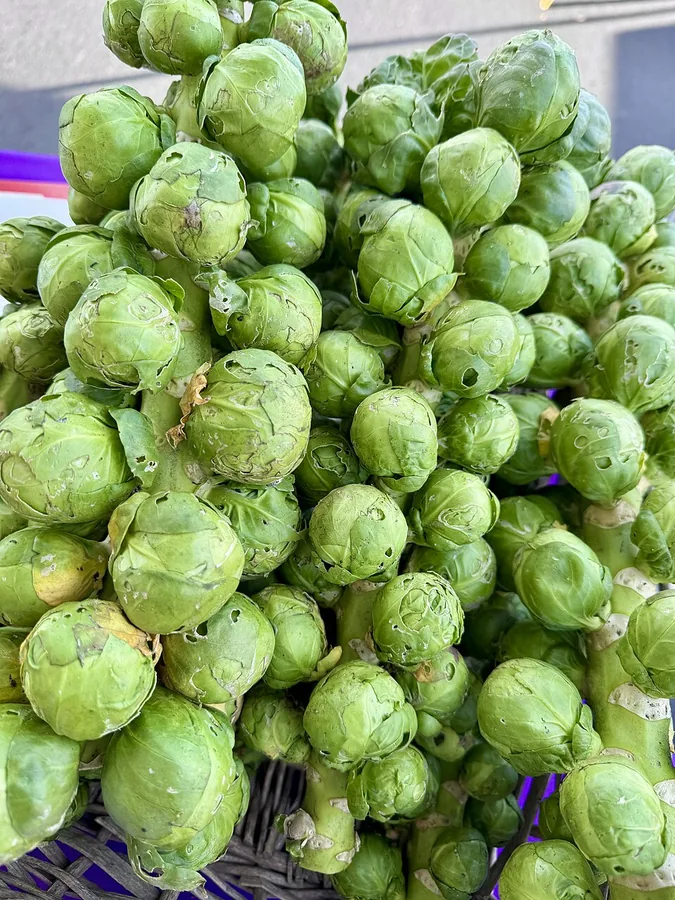
Brussels sprouts are a cool-season cousin in the cabbage family, the same species as broccoli, kale, and cauliflower, all nudged into different shapes by generations of growers. The plant puts up a tall, sturdy stalk dotted with dozens of little cabbage-like buds, and those buds are the sprouts you eat. It's a biennial grown as an annual, harvested in its first season long before it would ever bother to flower.
Here's a crop that pays off if you're patient. Brussels sprouts grow slowly and need a good long stretch of cool weather to really shine, so gardeners time them to mature in fall instead of in the heat of summer. Cold actually makes them better, turning starch into sugar so the sprouts taste sweeter after the first light frosts.
They want steady care over a long season: rich soil, even moisture, and a bit of cover from the cabbage pests that sniff out every brassica in the garden. Get the timing right and feed them well, and a single stalk can hand you weeks of harvest from the bottom up.
Care
The short version: full sun and rich, evenly moist soil, planted so the sprouts mature in cool fall weather, with steady feeding through a long season and a watchful eye for cabbage pests.
Light
Brussels sprouts want full sun, ideally 6 or more hours a day, so they can build the strong stalk that holds up a heavy crop. They'll put up with a little partial sun, but real shade leaves you with weak plants and loose, disappointing sprouts.
Water
Keep the soil evenly moist through the whole long season, somewhere around 1 to 1.5 inches (2.5 to 4 cm) of water a week. Bouncing between bone dry and soaking really stresses the plant, so mulch to hold the moisture in and keep the roots cool.
Soil
Plant in rich, well-drained loam packed with organic matter, since these are hungry plants that stay put for months. Shoot for a pH between 6.0 and 7.0, and lean toward the higher end, which also helps keep clubroot at bay.
Temperature
Brussels sprouts are a cool-weather crop that does its best from about 41°F to 77°F (5°C to 25°C). Hardened plants brush off frost and stand in the garden until temperatures slide toward 20°F (-7°C), and that cold is exactly what sweetens the sprouts.
Humidity
Ordinary outdoor humidity suits them just fine, so there's no number to chase here. Good airflow matters more than how moist the air is, since crowded, damp foliage is an open invitation to the diseases that bother brassicas.
Feeding
These are heavy nitrogen feeders. Work a balanced fertilizer into the bed at planting based on a soil test, then start side-dressing with nitrogen about 3 to 4 weeks after transplanting and keep feeding through the growing season so the plant keeps cranking out sprouts.
Pruning
Strip off the lower leaves as they yellow and the sprouts beneath them mature, working your way up the stalk. About 3 to 4 weeks before you want to harvest, you can pinch out the growing tip to send energy into the sprouts that are left so they size up evenly.
Size & spacing
A mature plant stands 2 to 4 feet (60 to 120 cm) tall and spreads about as wide. Set transplants 18 to 24 inches (45 to 60 cm) apart so air can move freely between the big leaves and disease stays down.
When to plant
Brussels sprouts are made for the back half of the year. Start the seeds in late spring, set the plants out in early to midsummer, and harvest from early fall into winter, picking the firm sprouts from the bottom of the stalk upward as the cold sweetens them.
Northern hemisphere
Southern hemisphere
Typical months for a temperate climate: start earlier in warm zones, later where spring frosts linger.
- Sow: Sow indoors 6-8 weeks before transplanting; in cold-winter regions sow in late spring (May-June) so plants mature as a fall crop, or 4-6 weeks before the last spring frost for an early planting
- Plant: Transplant hardened seedlings in early to mid summer (late June-early July in northern gardens) for fall harvest; in mild-winter regions plant in late summer for winter harvest
- Harvest: Harvest from early fall into winter, picking firm 2.5-4 cm sprouts from the bottom of the stalk upward; flavor sweetens after light frosts and plants can stand in the garden until temperatures drop toward 20°F
Hardiness
USDA hardiness zones: 2–9
Temperature: down to -46°C
Troubleshooting
Most Brussels sprouts trouble comes back to timing, feeding, or the constant pressure of cabbage-family pests. Spot the early signs on the leaves and roots and you can usually stop a problem before it climbs the stalk. Match what you're seeing below, then act while it still does some good.
Plants wilt in the heat and the roots come up swollen
Clubroot is a soilborne disease of cole crops that loves acidic, wet ground, and it shows itself as wilting on warm days and stunted growth. Pull up a struggling plant and you'll see those giveaway swollen, club-shaped galls on the roots. Once it's settled in there's no cure, so the move is to destroy infected plants roots and all, lime the bed toward pH 7.0, and shift your brassicas to clean ground.
Fix:
- Remove and destroy infected plants including roots; do not compost them
- Lime soil toward pH 7.0 or slightly above to suppress the pathogen
- Move brassicas to a clean bed
When sprouts stay loose and leafy and won't tighten
Blown, open sprouts are usually a heat problem, not a soil problem. When the buds set during summer warmth instead of cool fall weather, they come in loose and leafy, and a late hit of nitrogen only makes things worse. So what helps? Shift your planting so the sprouts mature in the cool of fall, and top the plant 3 to 4 weeks before harvest to firm up whatever's left.
Fix:
- Time plantings so sprouts develop in cool fall weather
- Harvest loose sprouts promptly and use them; they remain edible
- Top the plant 3-4 weeks before harvest to firm up remaining sprouts
Powdery gray aphids tucked deep in the sprouts
Cabbage aphids multiply quickly on brassicas when it's warm, and they like to hide deep between the sprout leaves where they're tough to get at. Keep an eye out for dense, mealy gray clusters on the undersides of leaves, curled foliage, and that sticky honeydew they leave behind. Knock them loose with a hard blast of water, then coat the undersides well with insecticidal soap or horticultural oil and pull off any lower leaves that are badly covered.
Fix:
- Knock colonies off with a strong spray of water
- Apply insecticidal soap or horticultural oil with thorough coverage of leaf undersides
- Remove and destroy heavily infested lower leaves
Ragged holes in the leaves with green droppings underneath
Three caterpillars cause this kind of damage, and they often show up together: the imported cabbageworm, the back-arching cabbage looper, and the small, squirmy diamondback moth larva. Turn the leaves over and look for green caterpillars and frass, and keep an eye out for the white butterflies that drop the cabbageworm eggs. Pick off the ones you spot, spray Bt or spinosad while they're still small, and drape the plants with floating row cover to keep the moths out.
Fix:
- Handpick caterpillars
- Apply Bacillus thuringiensis (Bt) or spinosad while caterpillars are small
- Cover plants with floating row cover to exclude egg-laying moths and butterflies
Toxicity
Good news if you've got pets: Brussels sprouts are a food crop and safe to grow around cats, dogs, and other animals. The plant isn't toxic, and the worst a curious nibble brings on is a little gas. Just cook them before serving people, since a steady diet of large raw amounts is the only real catch.
Safe for
People · Cats · Dogs · Horses · Rabbits · Livestock · Birds
Cats None
Safe to have around. A nosy cat that nibbles a leaf might get a touch gassy, but nothing in the plant is going to hurt it.
Dogs None
Nothing to worry about here. A dog that wolfs down a big pile of raw sprouts might get gassy or have a briefly upset stomach, and that's about as bad as it gets.
Horses None
Not toxic to horses. Brassica greens can get a bit gassy in quantity, so think of them as an occasional treat rather than a regular feed.
Rabbits None
Fine for rabbits in small amounts. Bring the leaves in slowly, since a sudden helping of any cabbage-family green can upset their digestion.
Livestock None
Cattle, goats, and sheep can graze on brassica foliage just fine at normal levels. It's only steady, heavy raw feeding that's worth a second thought.
Birds None
Backyard hens love pecking at the leaves and trimmings, and it does them no harm.
People Safe
Grown to be eaten, and they're good for you too. They taste best cooked, and only a steady diet of large raw amounts would matter for your thyroid.
No special handling precautions; wash before eating as with any garden produce.
Varieties
Brussels sprouts come in a handful of dependable varieties, from old heirlooms to colorful modern hybrids. These are the ones worth knowing by name.
Long Island Improved
A classic open-pollinated heirloom on a fairly compact plant, and it was the go-to home-garden sprout for generations.
Jade Cross E
An early hybrid that takes heat in stride and yields heavily, so it's a smart pick where the fall season runs short.
Falstaff
A late variety with red-purple sprouts that hold onto a lot of their color even after cooking.
Companions
Brussels sprouts do best beside plants that mask their scent from cabbage pests, and worst beside a few crops that simply don't get along with the cabbage family.
Plant near
onions: WVU Extension lists the onion family as compatible with cabbage-family crops; alliums' strong scent helps mask brassicas from common pests
aromatic herbs (sage, rosemary, peppermint): WVU Extension lists aromatic herbs such as sage, peppermint, and rosemary as compatible with the cabbage family; their scents help confuse and deter cabbage pests
beets: WVU Extension lists beets as compatible with cabbage-family crops; the low-growing roots share space well beneath tall brassicas
Keep apart
strawberries: WVU Extension lists strawberries as incompatible with cabbage-family crops and recommends keeping them apart
How to propagate
Brussels sprouts are grown from seed, started indoors and moved outside as transplants once they're big enough to fend for themselves.
SeedEasy
Sow indoors 6-8 weeks before transplanting (late spring in cold-winter regions for a fall crop); seeds can also be direct-sown about 4 months before the expected first fall frost · Germinates in about 5-10 days; seedlings reach transplant size in 4-6 weeks
Brussels sprouts start easily from seed. Sow them about a quarter to half an inch (0.6 to 1.3 cm) deep in sterile starting mix 6 to 8 weeks before you plan to transplant, and the seedlings push up in 5 to 10 days and reach planting size in 4 to 6 weeks. Harden them off first, then set them out 18 to 24 inches (45 to 60 cm) apart at the same depth they grew in their pots.
Myths
Brussels sprouts must be hit by a hard freeze before they are worth harvesting.
The plant doesn't need a freeze at all, and any firm sprout is ready for picking. Cool fall weather and light frosts do sweeten the flavor by building up sugars, which is exactly why the crop is timed to mature in fall. You can still pick plenty of fine, tight sprouts well before the first frost.
Cutting the top off a Brussels sprouts plant ruins the crop.
Topping is actually a handy trick, not a blunder. Pinching out the growing tip 3 to 4 weeks before harvest keeps the plant from climbing any higher and sends its energy into the sprouts already on the stalk so they fill out more evenly.