Vegetable · Rosaceae
Strawberry
Fragaria × ananassa
Give it full sun, steady water, and clean straw mulch, and the strawberry keeps handing you sweet fruit year after year.
Full sun
Every 2–4 days
59–77°F · 15–25°C
90–120 days
Overview
Honestly, few fruits are as easy to grow at home as the strawberry. It is part of the rose family and grows as a low, spreading perennial that sends out runners and fills a bed all on its own. And the best bit? One planting keeps cropping for several years before it needs a refresh.
There is more than one kind, and the type you pick really shapes your season. June-bearers ripen one big crop over a couple of weeks in early summer, while day-neutral and everbearing plants just keep fruiting from late spring into fall. June-bearers throw loads of runners to spread, and day-neutrals make hardly any, so that changes how you look after the bed.
Strawberries do not ask for much, but they sure pay you back for a little care. Give them sun, keep things evenly moist, and slip clean straw under the fruit, and the berries turn out sweet and spotless. Let the bed get crowded or leave fruit sitting on wet soil, though, and you swap that harvest for gray mold and soft, ruined berries.
Care
The short version: full sun, evenly moist soil with roughly an inch to an inch and a half of water a week, rich sandy loam that leans acidic, and clean straw mulch so the berries never touch bare ground.
Light
Strawberries really want full sun, ideally 8 or more hours a day, and that is what ripens the fruit nice and sweet. A bit of partial sun is okay, but real shade thins the crop and leaves the berries dull and watery.
Water
Keep the soil evenly moist but never waterlogged, which comes out to about 1 to 1.5 inches (2.5 to 4 cm) of water a week. Keep an eye on it through flowering and fruiting, and always water at the base so the foliage and berries stay dry.
Soil
Get them into well-drained sandy loam with plenty of organic matter mixed in. A pH of 5.8 to 6.5, so a little acidic, is their sweet spot, and it is that good drainage that keeps root rot away.
Temperature
Strawberries are happiest in the 59°F to 77°F (15°C to 25°C) range. They are tough enough to overwinter right in the ground, but the flowers and fruit start to struggle once summer heat pushes way past that band.
Humidity
Average humidity of 40% to 70% is plenty, so there is really no number to chase. Airflow counts for a lot more, since that still, damp air around crowded plants is exactly how gray mold and leaf fungi get going.
Feeding
Feed a balanced 10-10-10 in spring at planting, then again after summer renovation. Just go easy on spring nitrogen with fruiting June-bearers, or you end up with soft, leafy plants and lose the firm fruit.
Pruning
Pinch the first-year blossoms off June-bearers so they build strong crowns, and thin the runners so the bed does not choke itself out. Renovate June-bearing beds after harvest by mowing the old foliage and thinning the plants, and remove every runner on day-neutral types.
Repotting
Refresh or pot up container plants every 1 to 2 years, and renew in-ground beds every 3 to 4 years. Shrinking fruit, quick drying, and roots circling the pot are all telling you it is time.
Size & spacing
Plants stay low, running 6 to 12 inches (15 to 30 cm) tall, and they spread 12 to 24 inches (30 to 60 cm) wide as the runners fill in. Give them that room so air moves freely and the fruit stays clean.
When to plant
Strawberries like to go in early, back when the ground is still cool. Set out dormant crowns or transplants in early spring as soon as you can work the soil, and then you will be picking fruit from early summer through fall, depending on which type you grow.
Northern hemisphere
Southern hemisphere
Typical months for a temperate climate: start earlier in warm zones, later where spring frosts linger.
- Plant: Early spring, as soon as the soil can be worked; set dormant crowns or transplants 2 to 4 weeks before the last frost.
- Harvest: June-bearing: harvested over 2 to 3 weeks in early summer; day-neutral and everbearing: harvested from late spring through fall.
Hardiness
USDA hardiness zones: 3–10
Temperature: down to -40°C
Troubleshooting
Most strawberry trouble turns up on the fruit, the leaves, or the roots, and wet weather is usually the culprit. The trick? Learn the early signs, and you can jump in before anything spreads through the bed. Find the one below that matches what you are seeing, then act while it still does some good.
Small, wilting plants that just stop growing when it is dry
This one is tougher, because a soilborne rot like red stele or Verticillium wilt goes after the roots from underneath, and once it settles in there is no bringing that plant back. Want to know for sure? Dig up a struggling plant and slice a root down the middle to check, then pull and toss any that show the rot. From then on, plant in well-drained ground, pick resistant cultivars, and keep your strawberries away from spots that just grew tomatoes or potatoes.
Fix:
- Remove and destroy affected plants
- Improve soil drainage and avoid waterlogging
Soft brown spots and fuzzy gray mold on ripening berries
What you are looking at is gray mold, a fungus called Botrytis cinerea, and it moves in during wet, muggy weather right as the fruit colors up. So what helps? Pick your ripe berries often and take off any that are already spotted before the spores get around. Tuck clean straw underneath, leave the plants some breathing room, and keep every berry off the bare dirt.
Fix:
- Remove and destroy infected berries promptly
- Harvest ripe fruit frequently
- Improve air circulation and keep fruit off bare soil
Purple spots and burnt-looking edges on the leaves
That is leaf scorch and leaf spot, a couple of fungi that speckle the top of the leaf and singe the edges a reddish-brown. It looks rough, but here is the good part: it hardly ever costs you any fruit. Clear out the old marked leaves when you renovate, keep the foliage dry, and only bother with a labeled fungicide if an outbreak really takes off.
Fix:
- Remove and destroy old infected foliage at renovation
- Apply a labeled fungicide if infection is severe
Toxicity
Good news if you have pets: strawberries are safe from root to runner to fruit. The leaves, stems, and berries do not carry any toxic compound, so a nosy cat, dog, or rabbit that grabs a bite is in no danger at all. The fruit is a wholesome treat for pets and people, and it is best shared in small amounts.
Safe for
People · Cats · Dogs · Horses · Rabbits · Livestock · Birds
Cats None
No need to fuss over cats here, because there is nothing harmful in the leaves, runners, or fruit. If your cat sneaks a nibble, it will be totally fine.
Dogs None
Your dog can hang out by the plant and even split a ripe berry with the family. Just do not go overboard, since a big pile of fruit can upset the stomach a bit.
Horses Safe
Horses are fine grazing near a strawberry patch, because there is nothing toxic anywhere in the plant.
Rabbits Safe
Rabbits do not mind the leaves or fruit one bit, and a little slice of berry every so often makes a great treat.
Livestock Safe
Cattle, goats, and sheep can nibble the foliage all they want, since none of it is toxic.
Birds Safe
Birds love ripe strawberries and come to no harm, though do not be surprised if they clear the bed before you get a chance.
People Safe
Strawberries are a favorite for good reason and are safe fresh or cooked, and the rest of the plant will not hurt anyone either.
No toxic principle is present in the plant; the ripe fruit is edible and safe for pets and people.
Varieties
Strawberries come in three broad fruiting types plus a long list of named cultivars. Here are the ones worth knowing before you plant.
June-bearing (Junebearer)
You will get one big crop over 2 to 3 weeks in early summer, and it throws lots of runners to fill out the bed.
Day-neutral
It just keeps fruiting all season no matter the day length, and it barely makes any runners in return.
Honeoye
It is a really cold-hardy June-bearer that crops well and gives you big, firm, bright-red berries.
Albion
This day-neutral is a favorite for its big, cone-shaped, sweet berries and its solid disease resistance.
Seascape
It is a heat-tolerant day-neutral that is happy in all sorts of climates.
Ozark Beauty
It is a well-loved everbearer that gives you two main crops, one in spring and one in fall.
Companions
Strawberries do best beside low crops and pollinator plants that share the bed without crowding them, and worst beside relatives and heavy feeders that pass along wilt or steal nutrients.
Plant near
Bush beans: Legumes fix nitrogen and compete little with shallow strawberry roots.
Spinach: Low-growing leafy crop that uses bed space efficiently without shading strawberries.
Borage: Attracts pollinators that improve strawberry fruit set.
How to propagate
Strawberries are about as easy to multiply as it gets, mostly because they do the heavy lifting themselves by sending out runners that root into new plants.
Offsets & pupsEasy
Summer to early fall · 4 to 8 weeks
Here is the fun part: the plants basically do it for you. All summer and into early fall, little daughter plants pop up along the runners, so you just peg one down to root and then snip it away from the parent. It gets going in about 4 to 8 weeks, and believe it or not, one June-bearer can pump out around 120 runner plants in a season.
DivisionModerate
Early spring or after renovation · 4 to 6 weeks
Got an older plant with a bunch of crowns? You can lift it and split it to freshen up a tired patch. Do it in early spring or right after renovation, pull the rooted crowns apart with your hands, and pop them back in. Each piece roots and settles in around 4 to 6 weeks.
SeedDemanding
8 to 10 weeks before the last spring frost, indoors · 2 to 3 months to transplant size
Seed is really more of a breeder thing, plus alpine types, because hybrid garden strawberries will not come true to their parent. If you want to give it a go, sow indoors 8 to 10 weeks before the last spring frost and hang in there, since the seedlings take 2 to 3 months to reach transplant size.
Myths
The strawberry is a true berry.
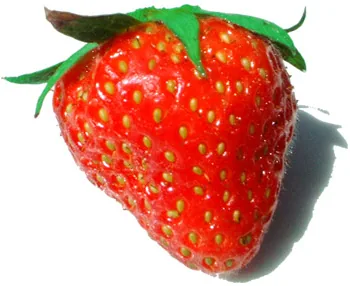
Funny enough, the name is a bit of a fib, because botanists call it an accessory fruit. That sweet red part grows from the receptacle, and the real fruits are the tiny achenes, those little seed-like specks dotted all over the outside.
Let June-bearing plants fruit heavily in their first year.
It is tempting, but a first-year crop wears out a young plant before it has really built its base. Pinch off the first-year blossoms on June-bearers and the crowns and runners come in stronger, which pays you back with much bigger harvests down the road.