Tree · Rosaceae
Weeping Cherry
Prunus subhirtella
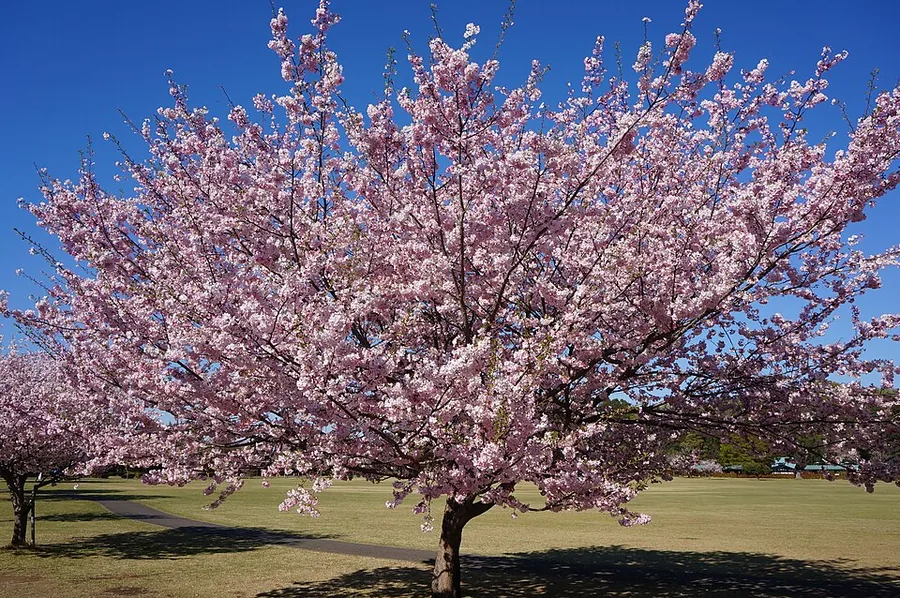
Plant it in a sunny spot, and every April the weeping cherry spills pink and white blossom right down to the grass.
Full sun
Every 5–10 days
USDA 4–8
15–40 ft · 4.6–12.2 m
Overview
So what exactly is a weeping cherry? It's a small tree with long branches that shoot up from a grafted standard and then tumble back toward the ground. Come early spring, before the leaves even show, the whole canopy fills up with light pink to white flowers dangling off those trailing stems. It's part of the rose family, and it goes all the way back to Japan, where the Higan cherry has been a favorite for centuries.
Here's the thing about the one you buy: it's almost always a graft. Someone's joined a weeping top onto an upright standard rootstock, usually about 4 to 6 feet up, so the branches spill from there instead of from the soil. Why does that matter? Because anything that pops up below the graft grows into a plain, straight tree, so you'll want to cut those shoots off when you spot them.
Give it some elbow room and it grows fast, getting to 15 to 40 feet (4.6 to 12 m) tall with a spread to match. It's tough, it handles a big chunk of the country, and it doesn't ask for much once it's settled in. Just keep in mind it carries the same cyanide-bearing foliage every cherry does, so where you put it matters if grazing animals are around.
Care
The short version: full sun, moist well-drained soil, and regular water while it's young. Feed it once in early spring, give it a light prune after it blooms, and snip off any suckers below the graft.
Light
Give it full sun and you'll get the biggest, showiest bloom. It'll take a bit of part shade and still flower, so don't stress if the spot isn't perfect. Basically, the more direct light the canopy gets, the fuller that spring display turns out.
Water
Try to keep the soil moist and well drained, watering every 5 to 10 days while the tree's young or when there's a drought. Once it's established, it'll handle a dry spell just fine. The only thing to avoid? Letting it sit in soggy ground.
Soil
It's happiest in moist, fertile, well-drained loam, but honestly it's not picky and will take clay or sand too. Any pH from 5.5 to 7.5 works, and that covers pretty much every garden soil out there.
Temperature
This one's seriously cold-hardy, comfortable anywhere from about -20°F to 100°F (-29°C to 38°C). It actually needs that winter chill you get in a temperate climate to put on a good spring bloom.
Humidity
Regular outdoor air is all it wants, so there's no number to worry about. What counts more is good airflow through the canopy, since crowded, damp branches are what bring on the leaf and bark diseases cherries tend to catch.
Feeding
One feeding does the trick. Give it a balanced slow-release tree fertilizer in early spring as it wakes up, and leave it at that. Anything heavier just pushes soft growth that pests and canker love to move into.
Pruning
Grab the pruners right after it flowers and take out any dead, damaged, or crossing wood while you tidy up the weeping shape. Always cut off the suckers below the graft union, and go easy on the big cuts, because those open the door to borers and canker.
Repotting
Good news here: it just stays put. It's not a container tree, so plant it where it'll live for good, leave room for that full spread, and you're done.
Size & spacing
Figure on a grown tree around 15 to 40 feet (4.6 to 12 m) tall with a spread of 15 to 25 feet (4.6 to 7.6 m), and give it that whole footprint from day one. Keep it well clear of buildings and other trees, since it grows fast and really won't want to be moved later.
When to plant
This tree likes the cooler stretches of the year, so the timing's pretty easy. Pop it in the ground while it's dormant in early spring or fall, watch the flowers open before the leaves in early to mid spring, and hold off on pruning until the blossoms have faded.
Northern hemisphere
Southern hemisphere
Typical months for a temperate climate: start earlier in warm zones, later where spring frosts linger.
- Plant: Early spring or fall while dormant
- Harvest: Early to mid spring (light pink to white flowers before leaves)
Hardiness
USDA hardiness zones: 4–8
Temperature: down to -34°C
Troubleshooting
Most of the time, trouble shows up on the bark and twigs rather than the flowers. Catch a canker or a black knot gall early and you can just cut it out before it goes anywhere. Find what matches below, then deal with it while the wood around it is still good.
Wilting branch tips and sunken, weepy cankers on the wood
What you're looking at is canker and dieback. Fungi sneak in through wounds and slowly choke off whole limbs, and sometimes borers are tunneling underneath too. Wait for dry weather, then cut the cankered wood out well below the lesion, wiping your tools clean between cuts. A strong, well-watered tree with no fresh bark wounds is really your best bet.
Fix:
- Prune out cankered wood well below the lesion during dry weather
- Sterilize tools between cuts
- Improve vigor with proper watering and avoid bark wounds
Hard black galls bulging along twigs and branches
Those coal-black, corky bumps? That's black knot, a fungus that latches onto the twigs and shows up clearest in winter. In late winter, prune each knot out about 10 to 15 cm below the swelling and toss everything you cut. It's also worth clearing out any wild cherry nearby, since it keeps feeding the same disease back to your tree.
Fix:
- Prune out knots 10-15 cm below the gall in late winter
- Destroy or remove pruned material
- Repeat inspections annually
Leaves that are spotted, sticky, or chewed up
A few different things can turn up on the leaves. Aphids and scale leave sticky honeydew and curl the foliage, Japanese beetles chew the green out between the veins, and leaf spot or leaf curl fungi leave clear lesions behind. Hose off or treat the sap-feeders with horticultural oil, pick the beetles off by hand, and rake up fallen leaves so the fungus can't stick around for next year.
Fix:
- Hose off or treat aphids/scale with horticultural oil or insecticidal soap
- Handpick Japanese beetles
- Rake and destroy fallen diseased leaves
Toxicity
It's a gorgeous tree, but there's a genuine warning to go with it. Like all cherries, its leaves, twigs, bark, and seed pits hold cyanogenic glycosides that release cyanide, and wilted foliage is the worst of the bunch. Keep prunings and fallen leaves well away from horses and livestock, and don't let pets or kids chew the twigs or pits.
Toxic to
Cats · Dogs · Horses · Rabbits · Livestock · Birds · People
Cats Mild
If a cat gnaws on wilted leaves, twigs, or a seed pit, it might show brick-red gums, wide pupils, and heavy, panting breathing. It doesn't happen often, but cyanide works fast, so any trouble breathing is an emergency, plain and simple.
Dogs Mild
A dog that chews bark, twigs, or fallen seeds could start drooling, breathing hard, and showing flushed red gums and dilated pupils. It's rare, but if a dog's cracked into the pits, it needs a vet right away.
Horses Severe
Horses are the ones in real danger here. A heap of wilted prunings tossed over the fence can bring on staggering, gasping breath, bright red mucous membranes, and convulsions, and a horse can be gone within minutes.
Rabbits Toxic
Those same cyanogenic compounds make the leaves, twigs, and bark unsafe for rabbits too. Keep all the cuttings and prunings out of reach, because even a little wilted foliage can leave a rabbit weak and struggling to breathe.
Livestock Severe
Cattle, sheep, and goats are the classic victims of wilted-leaf cyanide poisoning. Within 15 to 20 minutes of eating fallen or pruned leaves, they can start slobbering, breathing fast, showing bright red membranes, and convulsing, often fatally.
Birds Toxic
The cyanide in the foliage, bark, and seed pits is dangerous for birds as well, so keep poultry and pet birds from pecking at prunings or cracked pits.
People Caution
This is an ornamental tree, not something to eat. The pits, leaves, twigs, and bark all carry cyanogenic glycosides, so don't eat any of it, and keep curious kids from chewing the seeds or foliage.
Keep pruned branches and fallen leaves away from horses and livestock, since wilting raises cyanide. Prevent pets from chewing twigs, bark, wilted leaves, or seeds.
Helpline numbers

United States
ASPCA Animal Poison Control: (888) 426-4435 (fee applies)
Poison Control: (800) 222-1222



Canada
Poison Centres: 1-844-764-7669
Varieties
Most weeping cherries come down to a few named cultivars, and what really sets them apart is flower color, whether the blooms are single or double, and how big the tree gets. Here are the ones worth knowing about.
'Pendula'
It's the classic weeping form, with single light-pink flowers running down long cascading branches grafted on top of a 4 to 6 foot standard.
'Pendula Plena Rosea'
This weeping pick swaps the single blooms for fuller, double pink flowers instead.
'Snofozam' (Snow Fountains)
It's a dwarf weeping cultivar that pours white flowers down a low cascading frame, so it's great for smaller gardens.
'Autumnalis'
Its semi-double pink flowers actually open twice, once in fall and then again in early spring.
Yoshino cherry (Prunus × yedoensis)
It's a related flowering cherry, but this one grows upright and spreading instead of weeping, with white to pale-pink blooms.
How to propagate
Propagating a weeping cherry isn't exactly a weekend project. That cascading shape depends on grafting onto a tall standard, so nurseries handle just about all of it, and a cutting done at home rarely ends up looking the same.
GraftingDemanding
Late winter to early spring (bench graft) or summer (budding) · 1-2 years to a saleable grafted tree
Grafting is how nearly every weeping cherry gets made. Growers bench-graft in late winter or bud in summer, joining the weeping scion onto an upright standard rootstock, often Prunus avium, at 4 to 6 feet so the branches can spill from up top. It takes 1 to 2 years to grow a saleable tree, and the work's tricky enough that most home gardeners just skip it.
Stem cuttingsDemanding
Early summer (softwood) · Several weeks to root, 1-2 years to establish
Softwood cuttings taken in early summer will root, but not without a fight, taking several weeks to strike and 1 to 2 years to establish. And here's the catch: a rooted cutting doesn't have that tall standard, so it never gets the raised cascading look grafting gives it. That's why hardly anyone bothers with this route.
Myths
Weeping cherries grow from seed or cuttings and shoot straight up like a regular tree.
Nope, that cascade comes from a scion grafted onto an upright standard rootstock, not from a seed. Any sucker that comes up below the graft union reverts to the rootstock and grows straight, so those are the ones to cut off.
The flowers and fruit are the only parts that put animals in danger.
It's not really the petals you have to watch. The cyanogenic compounds gather up in the leaves, twigs, bark, and seeds, and wilted foliage is the most dangerous part of all for grazing animals.