Vegetable · Dioscoreaceae
Yam
Dioscorea
Give it warm ground and something tall to climb, wait out the long season, and yam hands you big, storable tubers.
Full sun
Every 5–7 days
68–86°F · 20–30°C
240–330 days
Overview
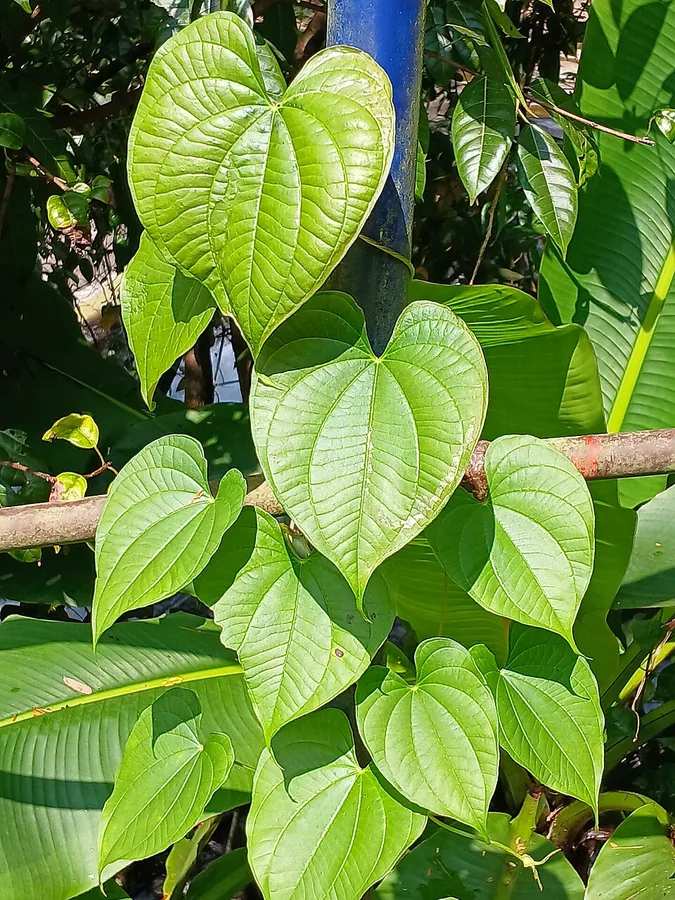
So what is a true yam, exactly? It's a twining tropical vine grown for the starchy tubers it makes underground, and people across Africa, Asia, and the Caribbean have been growing it for thousands of years. It sits in the genus Dioscorea, and despite the shared name, it isn't related to the sweet potato at all. Most of the world's yams come out of West and Central Africa, a lot of it white Guinea yam.
These plants get big, so they'll want some room. The vines climb 7 feet and go higher still on a good support, which is why the trellis goes in right when you plant. Down below, the tubers can get huge, and a winged yam will now and then top 100 pounds, though the ones most people grow for dinner stay a lot smaller and easier to deal with.
What does a yam really want? Warmth and a bit of patience. It's a warm-season crop that takes a long 8 to 11 months, so it's happiest somewhere frost-free, or with a head start indoors if your season's short. Cooked, the tuber's a great everyday staple, but it should never be eaten raw.
Care
The short version: full sun, warm soil, and a tall trellis set in at planting are the big three. Keep that deep, loose, well-drained soil evenly moist all season, feed it monthly with plenty of potassium, and then back off the water once the vines start to yellow before harvest.
Light
Yams do their best in full sun, since that's what powers both the long climb and the tubers filling out below. They'll handle a bit of partial shade, but you'll get softer growth and a smaller harvest, so brighter is better.
Water
Keep the soil evenly moist through the long growing season while the vines and tubers bulk up, which usually works out to every 5 to 7 days. Ease off once the foliage starts to yellow toward harvest, and whatever you do, don't let the ground stay waterlogged, because soggy soil rots the tubers.
Soil
Go for a deep, loose, well-drained sandy loam with lots of organic matter, so the tubers can spread out without forking. A slightly acid pH of 5.5 to 6.5 is what they like, and if your soil's heavy, planting on mounds or ridges helps the water drain.
Temperature
These are tropical plants, so they're happiest between 68°F and 86°F (20°C to 30°C). Frost is a no-go, which means you'll want the soil good and warm before the setts go in.
Humidity
Yams like it humid, somewhere around 60% to 90%, which fits their tropical background. Just pair that dampness with airy spacing and decent trellising, because damp, crowded leaves are exactly what anthracnose is waiting for.
Feeding
Feed monthly through the growing season with a balanced fertilizer high in potassium, since potassium is really what drives good tuber growth. And steady feeding across the long season beats one big dose every time.
Pruning
There's honestly not much pruning to do. Train the twining vines up a tall, sturdy trellis or stakes set in at planting, then just pull off any dead or diseased leaves and keep the vines up off the ground.
Size & spacing
On their support, the vines climb anywhere from 7 to 30 feet (2 to 9 m), and each plant takes up about 2 to 4 feet (60 to 120 cm) at the base. Give them that space, because good airflow means disease has a much harder time getting going.
When to plant
Yams run on heat and a long calendar, so timing matters. If your summers are short, get the setts going indoors a few weeks early, then move them out only once the frost's gone and the soil's warmed up. Fast forward 8 to 11 months, and when the vines yellow and die back, they're ready to dig.
Northern hemisphere
Southern hemisphere
Typical months for a temperate climate: start earlier in warm zones, later where spring frosts linger.
- Sow: In cool climates, pre-sprout seed-tuber pieces (setts) in warm, shaded conditions about 4-6 weeks before planting out.
- Plant: Plant setts outdoors after all danger of frost once soil is warm (roughly mid-to-late spring); install a tall trellis or stakes at planting time.
- Harvest: Harvest tubers 8-11 months after planting, when the vines yellow and die back.
Hardiness
USDA hardiness zones: 9–11
Temperature: down to -7°C
Troubleshooting
Most yam problems show up in one of two spots: on the leaves when it's humid, or in the tubers once you dig them. Catch the leaf stuff early and sort the soil out before planting, and you'll dodge most of the trouble. Find your symptom below and act while it still makes a difference.
Dark blighted spots creeping up the leaves
What you're looking at is yam anthracnose, the worst leaf disease water yam gets, and it moves in when warm, wet weather meets a crowded canopy. Those dark spots usually start low and climb, and they'll spread into the stems if you let them. So strip off the worst leaves, open things up with wider spacing and tidier trellising, and stick with tolerant cultivars and clean planting material.
Fix:
- Remove and destroy badly infected foliage
- Improve airflow by spacing and tidy trellising
- Plant tolerant cultivars and apply an appropriate fungicide where warranted
Small, forked, or rotten tubers at dig-up time
When the tubers come up misshapen or rotten, it's usually wet or compacted ground, and sometimes root-knot nematodes having a go at the roots. Heavy, soggy soil rots the flesh, while stony or shallow soil forks and twists it. So grow them in deep, loose, well-drained mounds, dig as soon as the vines die back, and cure the tubers somewhere dry and airy before storing.
Fix:
- Harvest promptly once vines die back and cure tubers in a dry, airy place
- Discard rotted tubers
- Rotate out of infested ground and improve drainage before replanting
Chewed leaves and bugs hanging around the vine
Ragged, holed leaves usually mean leaf-feeding beetles, while sticky clusters in the leaf joints are mealybugs or soft scale helping themselves to the sap. A quick check of the leaf undersides and stem joints tells you which one it is. Hose off or hand-pick the light stuff, hit the stubborn cases with insecticidal soap, and keep the plants healthy so they bounce back.
Fix:
- Hand-pick or hose off light infestations
- Treat persistent outbreaks with insecticidal soap or an appropriate insecticide
- Encourage natural predators
Toxicity
Here's the deal: cooked yam is a totally safe, everyday food, but the raw tuber isn't. Raw flesh has bitter saponins and skin-irritating crystals, and wild or bitter species carry the toxic alkaloid dioscorine. So cook every yam before you eat it, keep raw tubers and trimmings away from pets and kids, and give your hands a wash after handling cut raw flesh.
Toxic to
Cats · Dogs · Horses · Rabbits · Livestock · Birds
Safe for
People
Cats Caution
A bite of raw tuber or vine can leave a cat drooling and off its food for a bit, so it's best kept away. The only part worth sharing is a little cooked yam.
Dogs Caution
If a dog chews the raw tuber or leaves, you might see some mild drooling and a bit of an upset stomach, since the raw flesh has bitter saponins and irritant crystals.
Horses Caution
Keep the raw tuber and the vines out of a horse's reach, because a mouthful can leave it with mild digestive upset.
Rabbits Caution
Raw yam's too sharp and saponin-rich for a rabbit's tummy, so stick to its usual greens and keep the tubers and foliage out of the hutch.
Livestock Caution
Cattle, goats, and sheep might nibble the foliage or a stray raw tuber, which can give them a passing stomach upset, especially with the bitter wild types.
Birds Caution
Backyard poultry can react to raw tuber scraps and peelings, so keep trimmings out of the run and cook anything you want to share.
People Cooked tuber safe
Cooked yam's a wholesome staple eaten all over the world. Just never eat the tuber raw, leach and cook bitter or wild types well, and wash your hands after handling cut raw flesh, since it can irritate skin.
Always cook yams before eating and never eat the raw tuber. Wild and bitter yams contain dioscorine and may need soaking/leaching plus long cooking to be safe. Handling cut raw tubers can irritate skin.
Helpline numbers

United States
ASPCA Animal Poison Control: (888) 426-4435 (fee applies)
Poison Control: (800) 222-1222

Canada
Poison Centres: 1-844-764-7669
Varieties
Yam is really a whole genus of edible species rather than a list of garden varieties, so what's below are the species you'll actually come across. Here are the main ones worth knowing.
Dioscorea alata (water / winged / greater yam)
This is the most widely grown yam out there, and you'll know it by its squarish, winged stems and those very large tubers that can be white or purple inside.
Dioscorea rotundata (white Guinea yam)
The big staple across West and Central Africa, which happens to be the region growing most of the world's yams.
Dioscorea esculenta (lesser yam)
A spiny little vine with smaller, tender tubers that taste sweeter than the bigger yams.
Dioscorea bulbifera (air potato)
Grown mostly for the aerial bulbils along its vines, though plenty of forms are bitter and toxic, and it's turned invasive in the southeastern US.
How to propagate
Good news here: yams grow from the tubers themselves, not from seed. So once you've got some clean, healthy planting stock, getting a new crop started is pretty easy.
Bulbs & cormsModerate
Spring, after frost danger has passed and soil is warm · 3-6 weeks to sprout
Yams start from setts, which are just pieces of seed tuber or small whole tubers of around 100 to 300 grams, popped into warm soil in spring once the frost's passed. Pre-sprout them somewhere warm and shaded first and they'll get going quicker, but either way you're looking at about 3 to 6 weeks to sprout.
Bulbs & cormsModerate
Spring · 3-6 weeks to sprout
A few species, like D. alata and D. bulbifera, also make aerial bulbils up in the leaf joints. Just collect those and plant them in spring like small tubers, and they'll sprout on the same 3 to 6 week timeline.
Myths
Yams and sweet potatoes are just two names for the same thing.
Easy to get tangled up here, but a true yam is a Dioscorea in the family Dioscoreaceae, and it's got nothing to do with the sweet potato, which is Ipomoea batatas in the morning glory family. And here's the kicker: most produce sold as "yam" in US supermarkets is really sweet potato.
You can just eat a yam raw, like biting into a carrot.
Better not. Raw yam has bitter saponins and skin-irritating crystals, and the wild or bitter species carry the toxic alkaloid dioscorine, so yams have to be cooked first. Some wild types even need soaking and leaching before they're safe to eat at all.