Tree · Rutaceae
Yuzu
Citrus junos
It's the hardiest of all the true citrus, but yuzu will want patience and a sheltered, sunny spot.
Full sun
Every 7–14 days
USDA 8–11
6–18 ft · 1.8–5.5 m
Overview
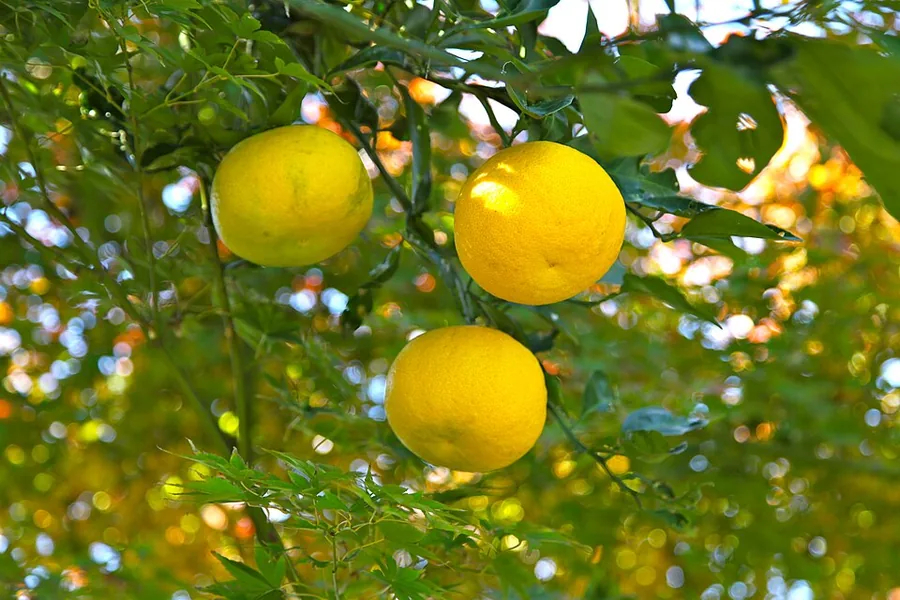
Ever wished you could grow citrus somewhere that gets properly cold? That's exactly where yuzu shines. It's an East Asian tree whose knobbly yellow fruit turns up in ponzu sauce and even winter baths, and it's the aromatic peel and tart juice that make it worth growing. It's a thorny evergreen, so those leaves stick around all year.
Here's the catch: you'll need some patience. Yuzu grows at a moderate pace, and a grafted tree usually fruits in a year or two, while one from seed takes several. What you get in return is toughness, since a settled tree handles temperatures down toward 14°F (-10°C), way colder than most citrus can cope with.
Live in zone 8 or warmer? You can plant it right in the ground. Colder than that, and a big pot you can move under cover for hard freezes does the trick. Either way, give it full sun, soil that drains well, and a bit of shelter from the worst cold, mind those long thorns when you prune, and it'll hand you fragrant fruit every autumn.
Care
The short version: yuzu likes full sun, slightly acidic well-drained soil, and a drink once the top of the soil dries out. Feed it monthly through the growing season, keep young trees away from hard frost, and pull on thick gloves before you tackle those thorns.
Light
Yuzu really wants full sun, six hours a day or more, if you want good fruit out of it. It'll cope with partial shade, sure, but it gets a bit leggy and the crop thins out where the light's weak.
Water
Let the top inch or so (3 cm) of soil dry out, then water it deeply, roughly every 7 to 14 days. Trees in pots dry quicker, so they'll want it more often, and in winter you can back right off and let the tree rest.
Soil
Go for well-drained, slightly acidic sandy loam with plenty of organic matter mixed in. Keep the pH around 6.0 to 7.0 and the roots can grab the iron and other micronutrients that citrus counts on.
Temperature
Yuzu takes a big range, somewhere around 14°F to 95°F (-10°C to 35°C), which is the best cold tolerance you'll get from a true citrus. That said, young trees still need frost cover, since the hardiness only really builds as the tree grows up.
Humidity
Average humidity of 40% to 60% is plenty, so there's nothing to fuss over outside. A tree kept indoors through dry winter air might like a little extra moisture around its leaves, though.
Feeding
Feed it monthly through spring and summer with a citrus fertilizer that's higher in nitrogen and has iron, zinc, and manganese in the mix. Then ease off late in the season, because a late nitrogen hit pushes soft new shoots that frost will just burn.
Pruning
Prune in late winter to early spring to shape it up and clear out any dead, crossing, or frost-damaged wood. And do wear thick gloves, because those branches have long, sharp thorns that'll snag skin and clothes without warning.
Repotting
Bump a potted yuzu up to a bigger container every 2 to 3 years, before the roots start circling inside or poking out the drainage holes. If water just runs straight through without soaking in, that's another hint it's outgrown its pot.
Size & spacing
Yuzu ends up around 6 to 18 feet (1.8 to 5.5 m) tall and spreads 5 to 13 feet (1.5 to 4 m) wide, so give it some elbow room. How big it actually gets comes down to the rootstock and whether it's in the ground or kept in check in a pot.
When to plant
Yuzu runs on the usual citrus schedule, just with a thicker coat for the cold. It flowers in spring, ripens its fragrant fruit through late autumn as the skin goes yellow, and heads into the ground once the last frost's gone in zone 8 and warmer. Most trees start life as a graft rather than from seed.
Northern hemisphere
Southern hemisphere
Typical months for a temperate climate: start earlier in warm zones, later where spring frosts linger.
- Sow: Seed late winter to early spring; yuzu is usually propagated by grafting rather than seed
- Plant: After the last frost in spring in zone 8 and warmer
- Harvest: Flowers in spring; aromatic fruit harvested in late autumn as it turns yellow
Hardiness
USDA hardiness zones: 8–11
Temperature: down to -12°C
Troubleshooting
Most of what goes wrong with yuzu comes back to the cold, or to soil that isn't quite right for citrus. The nice thing? The tree flags it early on its twigs and new leaves, so you've got time to jump in. Find the match below and act while it still helps.
Twig tips died back and leaves dropped after the cold
No mystery here, it's cold or frost damage, and it hits young trees hardest when they've been pushed past what they can take. Want to be sure? Scratch a suspect twig; if it's brown and dry at the tip but green further down, that's your answer. Let spring growth come in first, trim back to the living wood, and wrap young trees in frost cloth through the really hard freezes.
Fix:
- Wait until new growth resumes in spring, then prune back to live wood
- Protect with frost cloth or move containers under cover during hard freezes
New leaves going yellow but the veins stay green
That's interveinal chlorosis, which just means the tree's low on iron, zinc, or manganese, usually because the soil's too alkaline or too soggy. You'll see the newest leaves yellowing between their green veins while the older ones hang onto their color. Give it a citrus fertilizer with chelated micronutrients and sort out the drainage, and the roots can start taking up iron again.
Fix:
- Apply a citrus fertilizer containing chelated micronutrients
- Correct drainage and avoid overwatering
Toxicity
Good news first: the fruit is totally safe for people, and honestly it's the reason to bother growing the tree. The rest of the plant's a different story for animals, though, because the peel, leaves, and stems carry essential oils and psoralens that can upset cats, dogs, horses, and more. Just keep clippings and any fallen peel out of reach of pets and livestock.
Toxic to
Cats · Dogs · Horses · Rabbits · Livestock · Birds
Safe for
People
Cats Mild
Those essential oils and psoralens in the peel, leaves, and stems can leave a cat drooling, throwing up, or going off its food, often with loose stools too. And if it brushes against the peel, that can irritate the skin a bit.
Dogs Mild
A dog that chews on the leaves or peel usually ends up with an upset stomach, so that's vomiting, diarrhea, and a low, sluggish mood. Those same oils can redden its skin on contact, too.
Horses Mild
The peel, leaves, and stems have those same citrus oils, so a horse that nibbles them might drool and get diarrhea or a generally unsettled gut. Luckily the strong smell puts most horses off before they eat much.
Rabbits Caution
That oily peel and foliage doesn't agree with a rabbit's sensitive gut, and it can bring on soft stools or a dip in appetite. Best to keep trimmings out of the hutch instead of handing them over as a treat.
Livestock Caution
Goats, sheep, and cattle might pick at fallen leaves or prunings, and a big oily mouthful can loosen the stomach. The bitter taste usually stops them before they overdo it, though.
Birds Caution
The essential oils in the peel and leaves can upset a bird's digestion, so keep pet birds clear of the clippings. A little taste of the flesh is way less of a worry than the peel is.
People Fruit safe
The fruit, juice, and zest are loved in the kitchen and totally safe to eat, which is really the whole point of growing one. Handling loads of peel out in the sun can make sensitive skin react, so give your hands a rinse after juicing.
The branches also bear long, sharp thorns that can scratch curious pets and people.
Helpline numbers

United States
ASPCA Animal Poison Control: (888) 426-4435 (fee applies)
Poison Control: (800) 222-1222



Canada
Poison Centres: 1-844-764-7669
Varieties
Only a few named yuzu ever make it out of Japan, and they basically split into ones for cooking and ones just for looks. Here are the two worth knowing about.
Yuzu Ichandrin
A popular seedling-type yuzu that people grow for its extra cold hardiness and its steady cropping even where things stay cool.
Shishi Yuzu
This one's more of an ornamental oddity than a juice tree, and it's known for its unusually large, bumpy fruit.
How to propagate
Yuzu's almost always grafted, since that's faster and gives it a hardier streak. But if you don't mind waiting a good while, growing it from seed works too.
GraftingModerate
Late spring through summer when bark slips easily · 1 to 2 years before reliable fruiting
Grafting's the usual commercial way to go, done from late spring through summer while the bark slips off easily. Put onto trifoliate rootstock, the tree picks up extra cold hardiness and vigor, and it'll be fruiting reliably within 1 to 2 years.
SeedEasy
Late winter to early spring, sown fresh · Several years to fruit
Sowing fresh seed in late winter or early spring is the easy way in, as long as you're patient. Seedlings are slow and can take several years to fruit, so seed's the simplest route, just not the quickest one to a harvest.
Myths
If yuzu's toxic to pets, then the fruit has to be poisonous to people too.
Nope, that's mixing up two different things. The pet warning is about essential oils and psoralens that bother cats and dogs, not the flesh you'd actually eat. Yuzu zest, peel, and juice are perfectly safe, everyday ingredients for people, showing up in everything from ponzu sauce to marmalade.
Yuzu is completely winter-proof and shrugs off any freeze.
It's true yuzu is one of the most cold-hardy true citrus, handling about 10°F to 15°F (-12°C to -9°C) once it's settled in. Young trees are a different matter, though; they still need frost protection and can still lose their twig tips after a hard freeze.