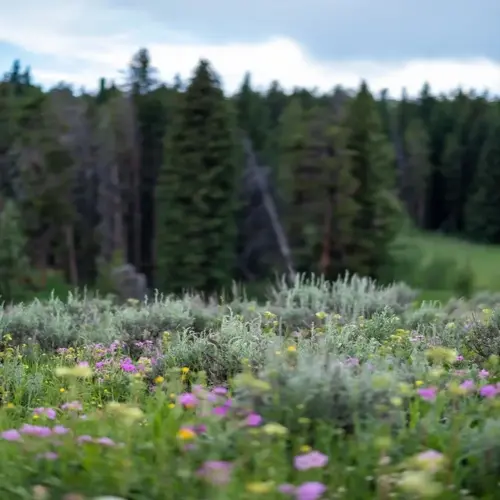
One fall I tossed a fat handful of seed straight onto the grassy strip along my back fence in Illinois and walked away happy. By spring I had maybe five sad little plants poking through the lawn. So I cut the grass out, dug the strip down to bare clay, raked it flat, and sowed the same seed mix again. That second strip came up thick with color.
You can scatter the seed, but scattering wildflower seeds works only on prepared bare soil, not on an existing lawn or weedy patch. Bare ground is the whole game here. Throw seed onto grass and most of it never reaches the dirt.
The reason comes down to seed-to-soil contact. A wildflower seed has to sit against actual soil so it can pull in water and stay put while roots form. Most of these seeds also need light to germinate, so they go on the surface, not buried deep. Seed that lands on top of grass blades or thatch just dries out, blows off, or gets eaten by birds.
There is a second problem with bare-tossing seed onto a lawn. Young wildflower seedlings are slow and small at the start. They cannot beat established grass and weeds that already own the root space, the water, and the sunlight. The lawn wins every time, which is exactly what happened along my fence. The grass had a head start of years, and a brand new seedling has no chance against roots that deep.
Clearing the ground first solves both problems at once. Bare soil gives the seed real dirt to grab, and it removes the competition that would smother the seedlings. You can strip the area with a spade, smother it under cardboard for a season, or pull the sod by hand the way I did. Whatever method you pick, the goal is the same. You want open soil with no living grass left to fight your flowers.
Mix tiny seed with about ten parts dry sand to one part seed before you spread it. The sand bulks up the handful so you get even coverage, and the light color shows you where you have already been. After spreading, walk over the area or roll it to press the seed into firm contact with the soil.
That sand mix matters more than people think. Wildflower seed is often dust-fine, so a bare handful clumps and you end up with thick spots and bald spots. The sand spreads it out. Pressing it in afterward gives you that firm contact that loose surface seed never gets. You do not rake soil over the top. You press the seed down into the surface and leave it showing. Scattering wildflower seeds this way, with sand and a firm press, beats any bare-handed toss by a wide margin.
Timing makes the rest of the difference. Sow in fall so cold winter weather breaks the seed's dormancy, or sow in early spring as soon as the ground can be worked. Both windows give seedlings cool, damp weather to settle in before summer heat arrives. A summer scatter onto dry ground rarely takes. Many native species actually need that cold spell to wake up, so a fall sowing does the work for you while you wait out the winter.
Once you have sown the seed, keep the surface lightly moist until the seedlings stand a couple inches tall. The top layer should never bake into a dry crust during those first few weeks. A light daily misting beats one heavy soaking, since a strong spray can wash surface seed into piles.
So the short version of sowing wildflower seeds is this. Clear the spot down to bare soil, cut and pull every bit of grass and weed. Mix your seed with sand, spread it, and press it in firmly. Sow in fall or early spring, then keep the ground damp. Do those four things and a thrown handful turns into a real stand of flowers instead of five sad plants in a lawn.
Read the full article: Native Wildflowers: A Complete Guide