
Introduction
I walked past my own meadow patch this morning and counted 9 bees on the coneflowers before my coffee went cold. That patch hums with life and sways with color, yet it never needs the weekly mow. That is the promise of a meadow garden. It is a planned mix of native flowers and grasses that turns flat green turf into a living, low maintenance space. It looks wild, but it works for you.
Now for the proof. Researchers at King's College, Cambridge turned an old lawn into a meadow. That small patch held 3 times more plant, spider, and insect species than the mown grass beside it. The bug life packed into it weighed 25 times more than the lawn could. Those are not soft claims. They are real numbers from real ground.
You have heard that a wildflower meadow helps pollinators and the climate. This guide puts a figure on it, and tells you how long it really takes. You get the measured payoff, the case for native plants over imported ones, and an honest timeline so you know what year 2 looks like.
More people want this now. Homeowners are tired of burning fuel and weekends on grass that gives nothing back, so a lawn alternative that feeds wildlife has real pull. Just know the truth up front. A meadow takes about 3 to 4 years to fill in, and it can look rough before it looks lovely. Stick with it, and below you will learn exactly how to get there.
What Is a Meadow Garden
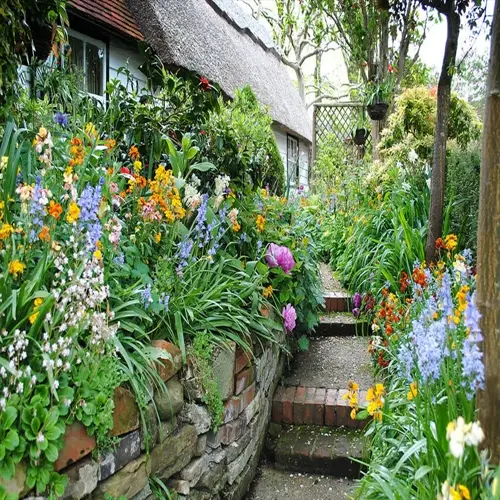
A meadow garden is a planned mix of native wildflowers and grasses that takes the place of a lawn. Think of it as a small slice of wild grassland that you design on purpose. The plants shift in color and height through the seasons, and they feed bees, butterflies, and birds in a way no clipped lawn ever can.
The word planned matters here, because a meadow garden is a deliberate design and not a patch of neglect. This naturalistic planting mimics a wild meadow. But you pick the native grasses and wildflowers that go in it. A good example sits at King's College in Cambridge. In 2019 the College turned a stretch of fine lawn, first laid in 1772, into a meadow. That was a choice, not an accident.
An abandoned lawn or a weedy field is not the same thing. Both fill in with whatever blows in on the wind. A meadow garden starts with regionally native plants picked to suit your soil and sun. You guide what grows, then you let it settle into a loose, natural look over a few years.
The contrast with a lawn is easy to picture. A clipped lawn gives you one flat shade of green, cut to the same height week after week. A meadow garden flows. It rises and falls, and the color changes as black-eyed Susan, coneflower, and little bluestem take their turns through the warm months.
A meadow garden scales to fit your space. You can start with a mini meadow of about 4 square meters, roughly 43 square feet, or you can go all the way up to a full field. Aim for at least 400 square feet, about 37 square meters, if you want enough room for a good mix of species. A lawn conversion at that size gives your wildflowers and grasses space to spread, seed, and pull in real wildlife.
Site and Soil Preparation
By the second week my first scatter of seed had vanished under a thick mat of crabgrass on a patchy back strip of about 500 square feet. The flowers never stood a chance. I had raked the seed straight onto live sod and hoped, and the old grass woke up and swallowed the lot. So the next summer I covered that whole strip with black plastic and left it for a full season. When I pulled the plastic back, the ground was bare and brown, and that time the wildflowers took.
That whole mess came down to skipping the boring part. Good site preparation is the real first step, and it does more for your meadow than any fancy seed mix you can buy. UNH Extension says the first full year of the project should go to prep alone, before a single seed hits the ground.
Start by picking the right spot. Meadow wildflowers and warm season grasses need full sun, meaning 6 or more hours of direct light each day, or they sulk and refuse to bloom. Aim for at least 400 square feet if you have the room, since that much space gives you the diversity that makes a meadow feel alive.
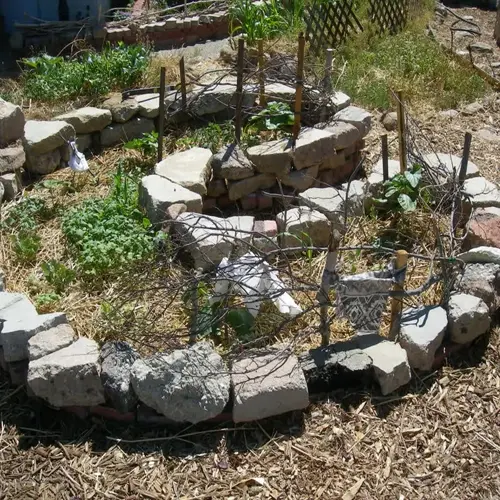
Next you have to clear weeds and kill the existing sod, and the trick is to do it without a tiller. Smother the area with black plastic from mid June to mid September, which cooks and starves out the grass over the summer. You can also solarize with clear plastic, which traps heat and bakes the weeds and seeds near the surface. Both are no till methods, and that matters.
Choose a site that gets full sun for 6 or more hours a day, since most meadow wildflowers and warm season grasses need strong light to flower well.
Smother the area with black plastic from mid June to mid September, or solarize with clear plastic, to kill grass and weeds without tilling.
Do not add compost, manure, or nitrogen fertilizer, because wildflowers prefer low fertility soil and rich soil favors aggressive grasses and weeds.
Rake the dead surface to create bare, firm soil so seed makes good contact, but avoid tilling, which brings buried weed seeds up to germinate.
Skip the tiller for a reason. Tilling churns up buried weed seeds that have waited years for light, and you hand them a fresh start right where you want your flowers. Rake the dead surface instead, just enough to open up bare, firm soil for good seed contact.
Here is where a lot of well meaning advice steers you wrong. Wildflowers want poor soil, so do not add compost, manure, or nitrogen before you sow. Rich ground feeds the aggressive grasses and weeds that crowd out the very flowers you are after. Low fertility soil is a feature here, not a problem. That lean, hungry patch out back is exactly what you need.
Adding compost or topsoil before sowing feels helpful, but it backfires. Rich soil pushes vigorous grasses and weeds that smother the wildflowers you are trying to grow.
Planting Methods Compared
You have three ways to start a meadow, and the right one depends on your budget and how long you can wait. The cheapest path is to grow from seed, the priciest is wildflower turf, and plug plants sit in the middle. Each one trades money for time in a different way.
Think of it like raising the meadow from babies versus buying it full grown. When you sow seed, you start with tiny plants that take years to mature. Turf is the opposite, since you roll out a finished meadow in an afternoon. Plug plants land between the two, giving you young but real plants that fill in faster than seed.
Seed wins on price for any larger area. The seeding rate for a full sow is about 0.5 pound per 1,000 square feet, which works out to roughly 20 pounds per acre. Your seed mix cost runs about $60 to $80 per 1,000 square feet, so you cover a lot of ground for little money. The catch is patience, because a seeded meadow needs 3 to 4 years to truly fill in.
Plug plants cost more per square foot but give you known species and faster structure in year one. Turf costs the most and covers the smallest area for your money. But it hands you near instant color. It also skips the weedy waiting period that catches new gardeners off guard. The table below lays out how the three methods stack up.
Timing matters as much as the method you pick. Spring or fall are the best windows to sow, since cool soil and steady moisture give your seed solid contact with the ground. You do not need a big plot to make this work. Researchers seeded tiny 4 square meter plots at about 4 grams per square meter and still saw a jump in bees the next year, so a small patch counts.
Successfully establishing a meadow from seed is a three-year process, with the first year devoted to good site preparation.
Best Plants for a Meadow
I planted little bluestem along my 500 square foot back strip years ago. Every fall it turns a warm coppery orange. From the deck path, the low autumn light catches each clump and the whole strip glows. The black-eyed Susan, purple coneflower, and common milkweed I sowed with it had gone to seed by then. Still the grass carried the show on its own.
That mix is no accident. The best meadows blend three jobs into one planting. You want early color, you want structural grasses, and you want pollinator magnets. Pick a few reliable plants for each job. Then your planting looks alive from spring through deep winter.
Choose plants that are native to your own region. Group them by sun and moisture so each one lands where it wants to grow. This matters more than you might think. Over 90% of plant-eating insects feed on just one or a few native plant species. So your regional native plants feed far more wildlife than pretty exotics ever will.
Start with the workhorses below. Black-eyed Susan is often the first to bloom in a young meadow. Coneflower and milkweed pull in the bees and butterflies. And warm season native grasses like little bluestem give your whole meadow its backbone.
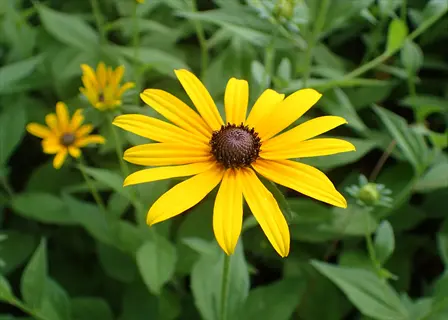
Black-eyed Susan
- Role: A cheerful golden daisy that is usually one of the first wildflowers to bloom in a young meadow, often in its first or second year.
- Light: Thrives in full sun of 6 or more hours and tolerates the poor, low fertility soil a meadow garden needs.
- Wildlife: Draws bees and butterflies in summer, and its seed heads feed finches and other songbirds into winter.
- Habit: Forms upright clumps that self sow readily, helping fill gaps while slower perennials establish over several years.
- Care: Needs no fertilizer and little water once established, making it a dependable beginner choice.
- Pairing: Combines well with purple coneflower and little bluestem for a classic warm toned meadow look.
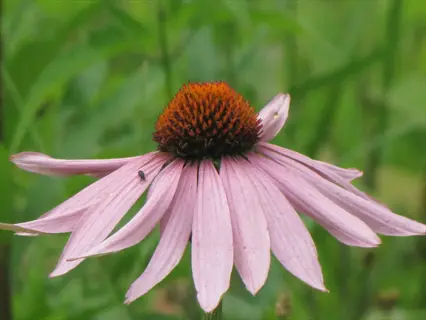
Purple coneflower
- Role: A sturdy native perennial with daisy like pink purple petals and a raised cone, giving mid to late summer color.
- Light: Prefers full sun and drains best in poor to average soil, fitting the low fertility meadow approach.
- Wildlife: A strong pollinator magnet for bees and butterflies, and goldfinches feed on the dried seed heads.
- Habit: Grows in clumps roughly 2 to 4 feet (60 to 120 centimeters) tall and stands well without staking.
- Care: Drought tolerant once established and best left standing through winter for seed and habitat.
- Pairing: Works beside black-eyed Susan, bee balm, and grasses for a layered, long blooming display.
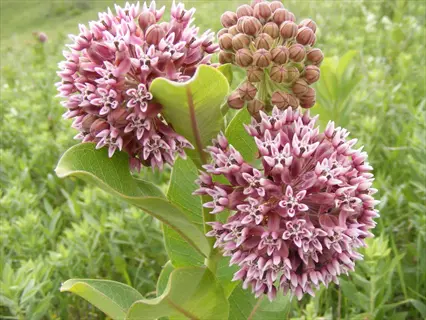
Common milkweed
- Role: The essential host plant whose leaves monarch caterpillars must eat to develop, making it a keystone meadow choice.
- Light: Grows in full sun and spreads in open ground, so give it room in a larger meadow planting.
- Wildlife: Its fragrant summer flower clusters feed many bees and butterflies, beyond its role for monarchs.
- Habit: Spreads by underground roots, which suits a meadow but can be vigorous in a small, tidy bed.
- Care: Needs no enrichment and tolerates dry spells, fitting the no fertilizer meadow rule.
- Pairing: Plant among grasses and coneflowers so its spread is balanced by other strong growers.
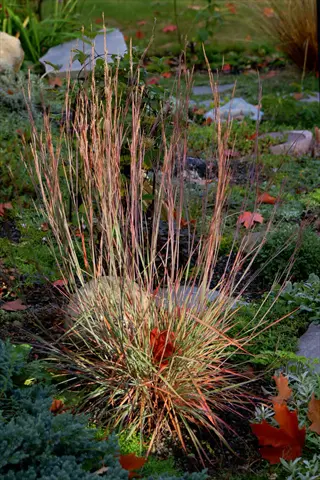
Little bluestem
- Role: A clumping warm season native grass that gives a meadow its structure, movement, and four season presence.
- Light: Loves full sun and poor, dry soil, thriving exactly where rich lawn grass would struggle.
- Wildlife: Provides cover and nesting material, and its seeds and stems shelter insects through winter.
- Habit: Forms tidy upright clumps about 2 to 3 feet (60 to 90 centimeters) tall that turn coppery orange in fall.
- Care: Very drought tolerant once established and simply cut back with the meadow once a year.
- Pairing: Anchors wildflowers like coneflower and black-eyed Susan, carrying color long after blooms fade.
Use these four as your starting frame, not your whole list. Add a few more native wildflowers and grasses that suit your soil. Bee balm, switchgrass, and Indian grass all work well. The more variety you sow, the longer your meadow keeps blooming across the seasons.
One simple rule ties it all together. Lean on grasses for structure and winter shape. Lean on milkweed and coneflower for the pollinators. Let black-eyed Susan fill the gaps while slower perennials settle in. Get that balance right and your meadow holds its own all year.
Wildlife and Climate Benefits
A meadow helps wildlife. That is the soft promise, and the real numbers beat it by a wide margin. King's College in Cambridge turned a mown lawn into a meadow. That single patch held about 3 times more plant, spider, and bug species than the grass before it. Bat activity ran 3 times higher too, since more bugs mean more food up the chain.
The lift in biodiversity is hard to picture until you weigh it. Insect biomass in that meadow came in 25 times higher than the lawn next to it. That extra life feeds birds in a direct way. One pair of chickadees needs 6,000 to 9,000 insects, mostly caterpillars, to raise a single brood, and roughly 96% of land birds rear their young on bugs.
You also pull real climate weight from a small plot. The Cambridge meadow cut an estimated 1.36 tonnes of CO2 per hectare each year versus the mown lawn. Most of that carbon sequestration goes on below ground. Grassland roots lock it in the soil, where drought and fire can't release it. The pale meadow even bounced more sunlight back than dark turf. That eases the heat cities trap.
More species and life
- Species: A meadow on a former lawn supported about 3 times more plant, spider, and bug species than the adjacent mown lawn.
- Biomass: Terrestrial invertebrate biomass was 25 times higher in the meadow than in the lawn it replaced.
- Predators: Bat activity over the meadow was about 3 times higher, since more insects mean more food for animals up the chain.
Pollinator boost
- Bumblebees: A tiny 4 square meter (43 square foot) mini meadow supported about 111% more bumblebees the year after sowing.
- Other bees: The same study found roughly 87% more solitary bees and 85% more solitary wasps versus control plots.
- Diversity: Researchers recorded 66 wild bee species across the mini meadow sites, showing small plots still draw varied pollinators.
Carbon and climate
- Emissions saved: Reduced mowing and fertilizing saved an estimated 1.36 tonnes of CO2 equivalent per hectare per year versus lawn.
- Stable storage: Grasslands store much of their carbon belowground in roots and soil, where it resists release by drought and wildfire.
- Heat island: The meadow raised surface reflectance, helping reduce the urban heat island effect compared with dark, mown turf.
Food for birds
- Caterpillars: One pair of chickadees needs 6,000 to 9,000 insects, mostly caterpillars, to raise a single clutch of young.
- Bird diet: About 96% of terrestrial birds rear their young on insects, so insect rich meadows directly support birdlife.
- Native link: Over 90% of plant eating insects specialize on a few native plants, so native meadows feed far more wildlife.
Size is not the gate you might fear. A 4 square meter mini meadow drew about 111% more bumblebees the year after sowing. Even a corner of your yard can become real wildlife habitat. Let the native bees and pollinators of your region guide your plant picks. Over 90% of plant eating bugs feed on just a few native plants. Plant for them and the birds, bats, and bees follow on their own.
There's no doubt that the introduction of the meadow has been an unqualified success; not only has it had a hugely beneficial impact on our biodiversity within the College, but it's also captured the imagination of so many people across the city and beyond.
Maintenance and Mowing
By its third autumn my 500 square foot back strip finally read as a true meadow from the deck path. Gold and rust grasses swayed over the last coneflowers. The summer before had me ready to dig the whole thing up. It looked like a failure, just patchy crabgrass and bare dirt with a few stray blooms. I left it alone through that weedy stretch, and the slow perennials I could not see were growing roots the whole time.
That patchy second year is normal, not a sign you did anything wrong. Year one goes to site prep, killing weeds and sowing seed on bare soil. Year two often looks weedy and uneven because fast annuals and weeds show up first while the perennials build roots underground. Year three brings more wildflowers into bloom, and some species do not even germinate until year two or three. Plan on three to four years before a meadow settles into its full look.
Learning how to maintain a meadow garden is mostly about doing less than you think. An established meadow is drought tolerant and needs no fertilizer at all. So you can skip the watering can and the compost bag once the plants take hold. Rich soil works against you here by feeding aggressive grasses that crowd out the flowers. This is about as low maintenance as a planted space gets.
The one real chore is the yearly cut. You mow an established meadow just once a year, and the question of when to cut meadow plantings has a simple answer: late fall or early spring. Set the mowing height at 6 to 8 inches (15 to 20 cm), not your usual lawn setting. That single pass stops shrubs and young trees from taking root and turning your open meadow back into scrub over time.
Year 1
Devote the first season to site preparation: kill weeds and sod, expose bare soil, and sow native seed without enriching the soil.
Year 2
Expect a weedy, uneven look as fast annuals and weeds appear first. Black-eyed Susan often blooms now while slower perennials build roots.
Year 3
More wildflowers flower as perennials mature. Some species germinate only now, so the meadow starts to read as intended.
Year 4 and on
The meadow fills in and settles into low upkeep. Mow once a year at 6 to 8 inches (15 to 20 centimeters) to keep shrubs and trees out.
When you do the yearly cut, mow only a quarter to a third of a large meadow at a time. Leaving the rest standing gives insects and other wildlife winter shelter.
5 Common Myths
A meadow garden is just a neglected, unmown lawn that you let grow wild without any planning or effort.
A real meadow garden is a deliberately designed planting of selected native wildflowers and grasses, and it needs careful site preparation to succeed.
You should enrich the soil with compost, manure, or fertilizer before planting a meadow so the wildflowers grow strong.
Wildflowers prefer low fertility soil; rich soil makes aggressive grasses and weeds outcompete the flowers, so you should never add compost or nitrogen.
Once you scatter the seed, a meadow garden looks finished and beautiful within a few weeks of sowing.
Establishment is a three to four year process, and year two often looks weedy because some wildflowers do not germinate or bloom until later.
Meadow gardens only work on large rural properties and are pointless in a small suburban backyard.
Even a tiny four square meter mini meadow boosted bumblebees by about 111 percent, so small urban and suburban plots deliver real benefits.
A meadow garden is purely decorative and offers no measurable environmental value compared to a normal lawn.
A former lawn converted to meadow supported three times more species, twenty five times more invertebrate biomass, and saved carbon emissions.
Conclusion
A meadow garden is a planned planting of regional native plants. It swaps weekly mowing for real seasonal beauty and a yard full of life. You trade the chore of a lawn for color that shifts month to month. And the plants do the work once they settle in.
The payoff is not a feel-good guess. A lawn at King's College Cambridge became a wildflower meadow. It held about 3 times more species and 25 times more invertebrate biomass than the grass it replaced. Even a tiny 4 square meter (43 square foot) mini meadow drew about 111% more bumblebees the year after sowing. That is a lot of pollinators from a patch the size of a parking space.
The fundamentals stay simple, so keep them in front of you. Pick a spot in full sun, and never enrich the soil because wildflowers want it poor. Plan for a three to four year establishment, since some seeds sleep for a season or two before they show. Then mow just once a year at 6 to 8 inches (15 to 20 centimeters) and leave the stems standing through winter for shelter.
Meadows reward patience. Year 2 can look weedy and rough, but the planting fills in and the dual payoff of low maintenance and real wildlife grows stronger every season. Starting small is not a compromise either. The mini meadow research proves a little plot still delivers, so dig one bed this year and let it teach you the rest.
Glossary
- forbs
- Herbaceous flowering plants, such as wildflowers, that are not grasses, sedges, or rushes.
- low fertility soil
- Poor soil low in nutrients, which wildflowers prefer because it keeps aggressive grasses and weeds in check.
- naturalistic planting
- A garden style designed to look wild and self-sustaining while still being deliberately planned.
- plug plants
- Young, individually rooted starter plants set into the ground to speed up a meadow's structure.
- smothering
- Covering an area with black plastic to block light and kill existing weeds and lawn before sowing.
- solarization
- Using clear plastic to trap heat and kill weeds and grass in the soil before planting.
- warm-season grasses
- Native grasses like little bluestem that grow most actively in summer heat and turn bronze in fall.
- wildflower turf
- Pre-grown rolls of mature meadow plants laid like sod for near-instant cover.
External Sources
Frequently Asked Questions
What is meadow gardening?
Meadow gardening means growing native wildflowers and warm season grasses together in a naturalistic planting that imitates a wild meadow and replaces conventional lawn.
What qualifies as a meadow?
A meadow is an open, sunny area dominated by grasses and herbaceous flowering plants rather than woody trees and shrubs.
What does a meadow look like?
A meadow looks like an open, flowing sweep of mixed grasses and wildflowers that changes color and texture through the seasons.
How do you start a meadow garden from scratch?
You start by killing existing weeds and grass, choosing a sunny site, sowing a native seed mix on bare soil without fertilizer, then managing it over three to four years.
What is the best soil for a meadow garden?
Poor, low fertility soil is best, because rich soil makes vigorous grasses and weeds outcompete the wildflowers you want.
What is a meadow flower?
A meadow flower is a sun loving native wildflower, such as black-eyed Susan, purple coneflower, or milkweed, that thrives in open ground.
How long does a meadow garden take to establish?
A meadow garden typically takes three to four years to establish, since the first year goes to site preparation and some species do not bloom until year two or three.
Can you grow a meadow garden in a small yard?
Yes. Even a four square meter (43 square foot) mini meadow boosted bumblebees by about 111 percent the year after sowing, so small spaces work well.
When should you mow a meadow garden?
Mow an established meadow once a year in late fall or early spring at 6 to 8 inches (15 to 20 cm), leaving part standing for winter wildlife habitat.
Is a meadow garden good for wildlife?
Yes. A meadow on a former lawn supported three times more species and twenty five times more invertebrate biomass than the adjacent lawn.