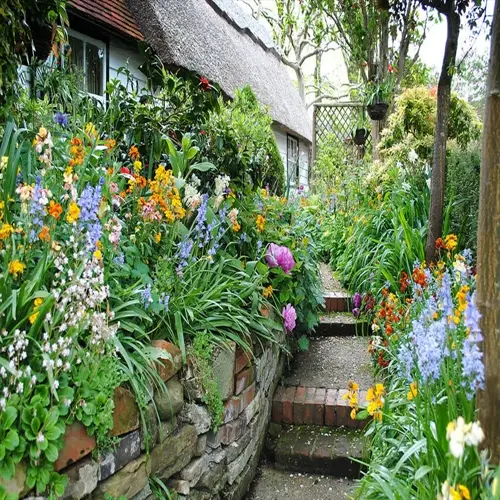

With meadow gardening, you grow native wildflowers and grasses side by side. They look and act like a wild meadow. A clipped lawn sits flat and stays the same green all summer. A meadow garden does the opposite. It rises, sways, and shifts in color from one month to the next. You get soft yellows in spring, deep purples by midsummer, and dry seed heads that catch the low light in fall. The space is never quite the same two weeks in a row.
The heart of it is a mix of native plants chosen for your region. You combine wildflowers, called forbs, with warm season grasses that hold the planting together. The grasses give the meadow its backbone. They keep weeds out, hold the soil, and prop up taller flowers that would flop on their own. Done well, the result reads as a wildflower meadow rather than a tidy flower bed. Plants weave into each other instead of sitting in neat rows, and the whole space hums with bees on a warm day.
Here is the part people get wrong. A meadow garden is not a patch of grass you stopped mowing. It is deliberate naturalistic planting, and the design is the real work. You pick species that suit your soil and your light. You decide how many of each one goes in and where. You plan for bloom from spring through frost so something is always in flower. The wild, loose look is the goal. But it comes from careful choices, not from neglect or a lazy summer.
A famous case shows just how planned these projects can be. At King's College, Cambridge, gardeners replaced a stretch of fine lawn with a meadow. That turf was first laid in 1772, so this was no accident. A team studied the site, chose the plants, and built the meadow on purpose. Centuries of close mowing gave way to a richer, buzzier space full of flowers and insects. A good meadow is a design choice. Even the most respected gardens treat it that way.
The best news is that you do not need a big plot to begin. A meadow garden works at almost any size, and you can scale it to the room you have.
A mini meadow of about 4 square meters (43 square feet) still pulls in pollinators and gives you that layered, moving look. It fits in a side yard or a strip by the fence. If you have the room, aim for around 400 square feet (37 square meters). That size holds enough plants to give you real diversity and bloom that carries from spring to frost. Go bigger and you build true habitat, but you do not have to start there.
Think of meadow gardening as a swap for lawn that earns its keep. You mow once or twice a year instead of every week. You feed birds, bees, and butterflies that plain turf never supports. And you trade a flat green rectangle for a patch that changes with each season. Start with native plants that already thrive near you. Give them a sunny, open spot with room to spread. Then let the meadow settle in and grow into itself over the first season or two.
So meadow gardening is not a wild accident or a sign you gave up on the yard. It is a chosen, layered way to grow that brings color, sound, and life to a space that used to just sit there. You read your site, pick the right plants, and let nature do the rest of the work for you.
Read the full article: Meadow Garden: A Complete Beginner Guide