
Introduction
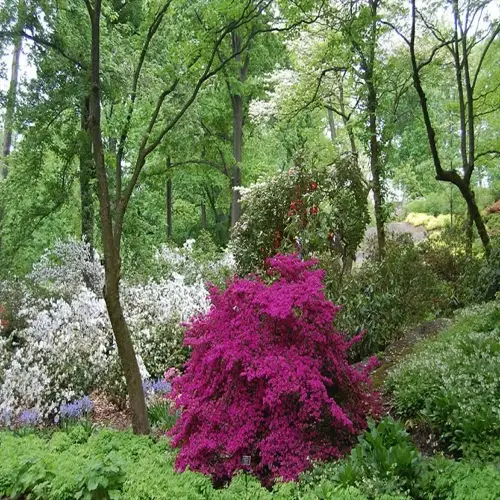
My front border started as a patch of tired lawn. Now it spills over with foxglove, catmint, and roses. The bees find them before I even step outside. That happy, packed look is what cottage garden plants do best. They turn a plain yard into something soft and full. And they do it without asking for hours of work each week.
Here is a definition you can trust before you dig a single hole. The NC State Cooperative Extension calls it a perennial garden with a loose, informal design. It grows in the space between the lawn and the home. That one line tells you the whole idea. You plant thick, you skip the straight lines, and you let the flowers do the talking.
Many plant lists name the flowers and stop there. This one goes further. You get 20 plant picks with real spacing numbers and a quick care table. You get clear design rules too, like short flowers in front and tall ones in the back. And you get sourced pollinator facts, backed by USDA data. A season-long bloom plan keeps your beds from going bare.
These ideas work for any look you want. Pick classic cottage garden perennials like peony and delphinium. Or chase dreamy cottagecore flowers for photos. Or build the layered charm of a true English cottage garden. The style fits hardiness zones 3 to 9. It mixes perennials, shrubs, bulbs, and annuals for color from spring to frost. Let's start with the cottage garden flowers that earn their spot first.
20 Best Cottage Garden Plants
These 20 cottage garden plants give you a full season of bloom from a mix of perennials, shrubs, climbers, bulbs, and a few annuals. Most of them want full sun and well-drained soil, and the style works across hardiness zones 3 to 9. I picked each one for a clear job in the bed, not just a pretty face.
One quick note before the list. Foxglove is a self-seeding biennial, not a true perennial, and plenty of guides get that wrong. It flowers in its second year, drops seed, then fills the gaps on its own. Knowing that saves you from thinking your plant died when it was always meant to.
My Walker's Low catmint flopped wide open after a hard rain, splitting down the middle right in the sunny fence strip by the kitchen window. I sheared the whole plant back by half that afternoon. Three weeks later it filled back in tight and bloomed a second time. Shear catmint, don't stake it.
Spacing matters more than people think with these plants. As a rule, set most of them 12 to 24 inches (30 to 60 cm) apart based on their mature size. Give the big peonies and climbing roses more room, and pack the low edgers tighter. The per-plant notes below tell you exactly how far apart each one should go.

English Lavender
- Type: A woody, fragrant perennial herb that anchors sunny borders and edges paths with silvery foliage and purple flower spikes.
- Sun and soil: Needs full sun and sharp, well-drained soil, since it dislikes wet roots and rich, soggy ground.
- Spacing: Set plants about 18 to 24 inches (45 to 60 cm) apart so air moves freely and crowns stay dry.
- Bloom: Flowers from early to midsummer, with a lighter rebloom if you shear lightly after the first flush.
- Design role: Works as a low hedge, path edging, or repeated color that ties a cottage border together.
- Pollinators: Bees and butterflies cover the spikes, making lavender one of the strongest pollinator magnets in the garden.
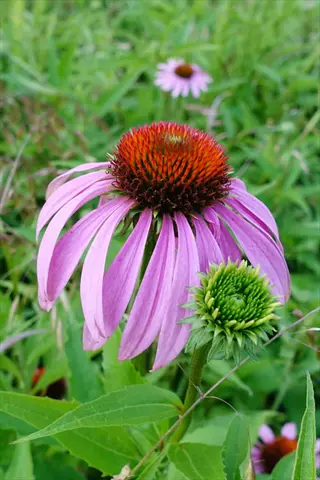
Purple Coneflower
- Type: A tough, upright native perennial with daisy-like pink-purple petals around a raised, bristly orange cone.
- Sun and soil: Thrives in full sun and average well-drained soil, tolerating heat and dry spells once established.
- Spacing: Give each plant about 18 inches (45 cm) so clumps have room to widen over a few seasons.
- Bloom: Flowers from midsummer into fall, especially when you remove spent blooms during the early weeks.
- Design role: Adds reliable mid-height color and a meadow feel that fits the informal cottage look.
- Pollinators: Bees and butterflies feed on the cones, and finches eat the seeds if you leave seed heads for winter.
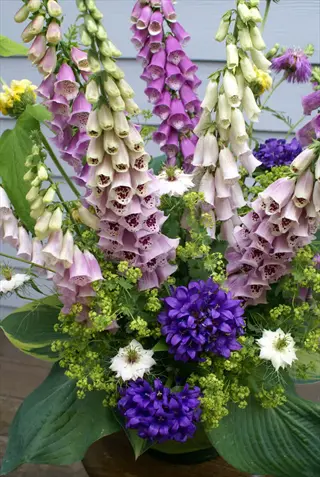
Foxglove
- Type: A classic self-seeding biennial, not a true perennial, with tall spires of tubular bells in pink, white, and purple.
- Sun and soil: Prefers part shade to full sun in moist, well-drained soil rich in organic matter.
- Spacing: Space plants about 12 to 18 inches (30 to 45 cm) apart so the tall spikes have support from neighbors.
- Bloom: Flowers in early summer of its second year, then drops seed that fills gaps for future seasons.
- Design role: Provides vertical drama at the back of a border, a hallmark of the English cottage garden.
- Safety: All parts are toxic if eaten, so place it away from areas where children or pets graze.
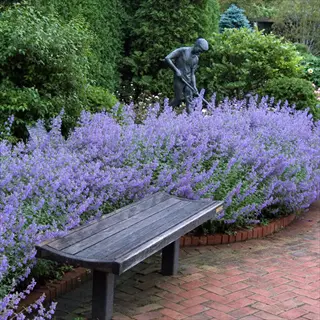
Catmint
- Type: A billowing, aromatic perennial with gray-green leaves and clouds of small lavender-blue flowers.
- Sun and soil: Loves full sun and well-drained soil, shrugging off heat, drought, and poor ground.
- Spacing: Set plants about 18 to 24 inches (45 to 60 cm) apart so the soft mounds can spread and knit together.
- Bloom: Flowers from late spring into summer, and a hard midseason shear brings a fresh second flush.
- Design role: Softens path edges and front borders, and pairs beautifully with roses in classic combinations.
- Pollinators: Bees swarm the flowers, and catmint is both deer resistant and rabbit resistant in most gardens.
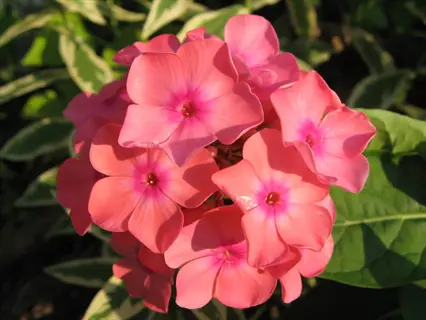
Garden Phlox
- Type: An upright summer perennial topped with large, fragrant flower clusters in pink, white, lavender, and red.
- Sun and soil: Grows best in full sun and rich, well-drained soil with steady moisture during dry weather.
- Spacing: Allow about 18 to 24 inches (45 to 60 cm) between plants to improve airflow and limit powdery mildew.
- Bloom: Flowers through midsummer to early fall, filling the border with color and a sweet evening scent.
- Design role: Adds height and bold blocks of color in the middle to back of a layered cottage bed.
- Pollinators: Butterflies and hummingbirds visit the clusters, drawn by nectar and the strong fragrance.
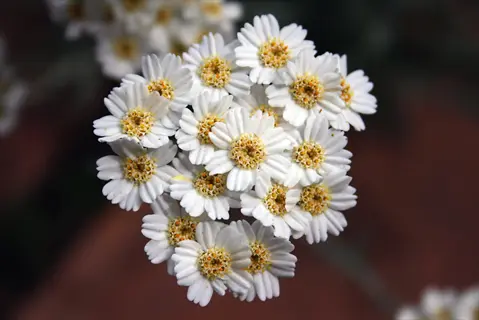
Yarrow
- Type: A ferny-leaved, drought-tough perennial with flat-topped flower clusters in yellow, white, pink, and red.
- Sun and soil: Wants full sun and lean, well-drained soil, where it stays sturdy without flopping.
- Spacing: Space plants about 18 inches (45 cm) apart, as clumps spread steadily once they settle in.
- Bloom: Flowers from early summer into fall, with repeat blooms if you trim spent flower heads.
- Design role: Brings a flat, lacy texture that contrasts with spiky and round flowers nearby.
- Pollinators: The broad landing pads attract bees, butterflies, and many beneficial insects.
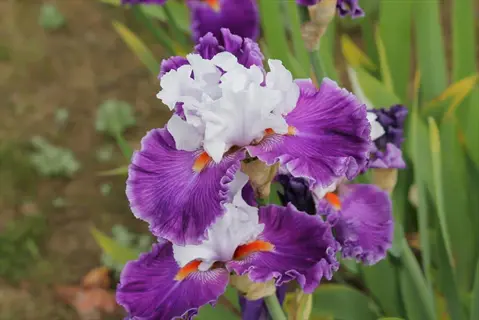
Bearded Iris
- Type: A spring perennial growing from rhizomes, with sword-like leaves and ruffled blooms in nearly every color.
- Sun and soil: Needs full sun and well-drained soil, with rhizomes set near the surface, not buried deep.
- Spacing: Space rhizomes about 12 to 24 inches (30 to 60 cm) apart so clumps do not crowd or rot.
- Bloom: Flowers in late spring, and reblooming types add a second show later in the season.
- Design role: Vertical foliage adds structure even after flowering, a useful trait in dense plantings.
- Care: Divide congested clumps every few years to keep flowering strong and healthy.
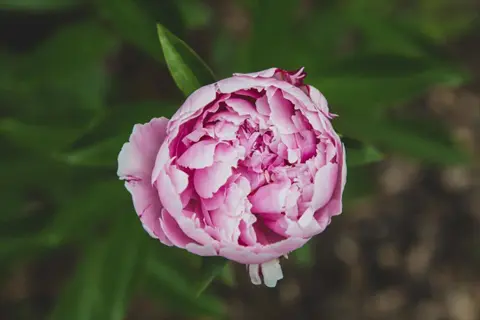
Peony
- Type: A long-lived perennial with lush, often fragrant blooms in white, pink, and deep red on bushy plants.
- Sun and soil: Prefers full sun and rich, well-drained soil, and resents being moved once established.
- Spacing: Give each plant about 24 to 36 inches (60 to 90 cm), since peonies grow into wide, shrubby clumps.
- Bloom: Flowers in late spring to early summer, with a brief but spectacular display each year.
- Design role: Acts as a structural anchor whose foliage stays attractive long after the flowers fade.
- Care: Plant the eyes only an inch or two deep, as planting too deep prevents flowering.
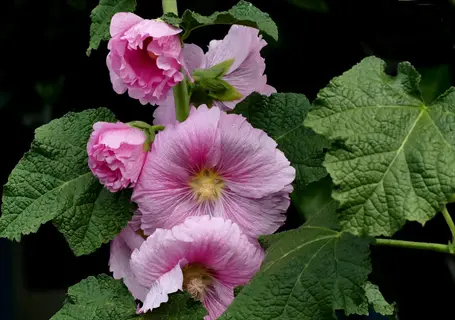
Hollyhock
- Type: A towering biennial or short-lived perennial with single or double blooms climbing tall, sturdy stalks.
- Sun and soil: Grows best in full sun and rich, well-drained soil, often near a fence or wall for support.
- Spacing: Space plants about 18 to 24 inches (45 to 60 cm) apart to allow their broad leaves room.
- Bloom: Flowers in mid to late summer, then self-sows to keep the planting going year after year.
- Design role: Delivers cottage-classic vertical height at the very back of a border or against a building.
- Pollinators: Bees and hummingbirds visit the open flowers throughout the bloom season.
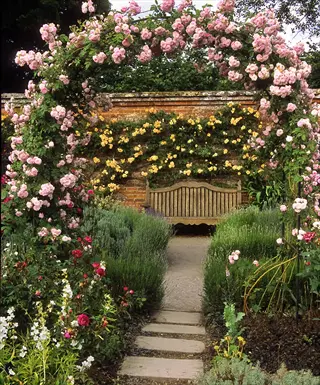
Climbing Rose
- Type: A vigorous rose trained upward on supports, with romantic clusters of fragrant blooms over a long season.
- Sun and soil: Needs full sun and rich, well-drained soil, plus a trellis, arbor, or fence to climb.
- Spacing: Space plants about 36 inches (90 cm) or more apart, depending on the variety's mature reach.
- Bloom: Many modern types rebloom from early summer to fall, especially with light feeding and deadheading.
- Design role: Adds vertical romance over an arbor or doorway, a signature feature of cottage style.
- Pollinators: Single-flowered roses offer open access to bees, while all roses add fragrance and charm.

Delphinium
- Type: A dramatic perennial with tall, dense spires of blue, purple, white, or pink flowers.
- Sun and soil: Prefers full sun and rich, moist, well-drained soil sheltered from strong wind.
- Spacing: Space plants about 18 to 24 inches (45 to 60 cm) apart, and stake the tallest stems early.
- Bloom: Flowers in early summer, often reblooming if the first spent spikes are cut back.
- Design role: Supplies bold blue vertical accents at the back of the border that few other plants match.
- Pollinators: Bees and hummingbirds work the tall flower stalks during the bloom period.
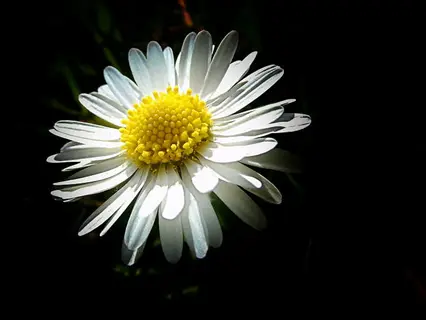
Shasta Daisy
- Type: A cheerful clumping perennial with crisp white petals around bright golden centers.
- Sun and soil: Thrives in full sun and average, well-drained soil with steady summer moisture.
- Spacing: Space plants about 18 inches (45 cm) apart so clumps fill in without crowding.
- Bloom: Flowers through midsummer, and frequent deadheading keeps fresh blooms coming for weeks.
- Design role: Provides clean white that brightens busy borders and excellent cut flowers for the vase.
- Pollinators: The open daisy form gives bees and butterflies an easy landing spot and steady nectar.
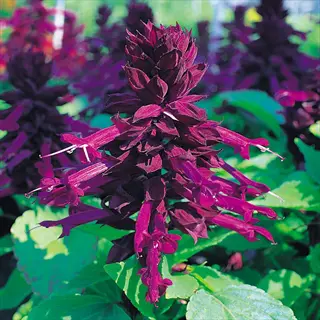
Salvia
- Type: An aromatic, upright perennial with slim spikes of blue, purple, pink, or red tubular flowers.
- Sun and soil: Loves full sun and well-drained soil, and tolerates heat and drought once rooted.
- Spacing: Space plants about 12 to 18 inches (30 to 45 cm) apart for a full, massed effect.
- Bloom: Flowers from late spring into summer, with strong rebloom after you shear spent spikes.
- Design role: Repeats vertical color through the border and pairs cleanly with roses and catmint.
- Pollinators: Hummingbirds and bees favor the tubular blooms, and deer usually leave the aromatic foliage alone.
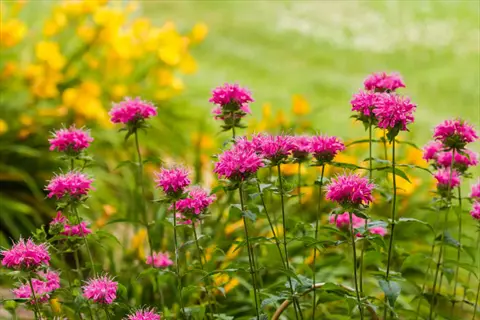
Bee Balm
- Type: A fragrant native perennial with shaggy, crown-like flowers in red, pink, and purple.
- Sun and soil: Grows best in full sun to part shade and moist, well-drained soil with good airflow.
- Spacing: Space plants about 18 to 24 inches (45 to 60 cm) apart to reduce powdery mildew.
- Bloom: Flowers in midsummer, with repeat blooms possible after deadheading the first flush.
- Design role: Adds bold, informal color blocks and spreads to fill space in a relaxed planting.
- Pollinators: Hummingbirds, bees, and butterflies flock to it, making it a top wildlife plant.
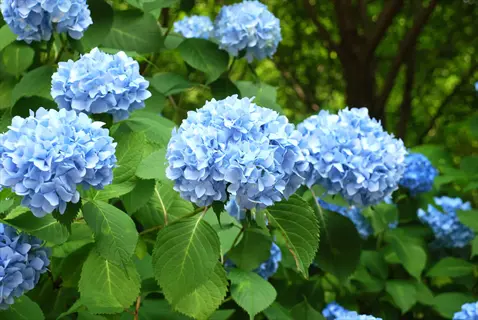
Hydrangea
- Type: A flowering shrub with large rounded or cone-shaped flower heads in white, pink, blue, and green.
- Sun and soil: Most prefer morning sun with afternoon shade and rich, moist, well-drained soil.
- Spacing: Space shrubs about 36 to 60 inches (90 to 150 cm) apart, depending on the mature variety.
- Bloom: Flowers from summer into fall, with many types holding dried heads for winter interest.
- Design role: A long-blooming shrub anchor and a low-effort alternative to fussier roses.
- Care: Choose a panicle type for full sun and cold hardiness, or a smooth type for reliable native blooms.
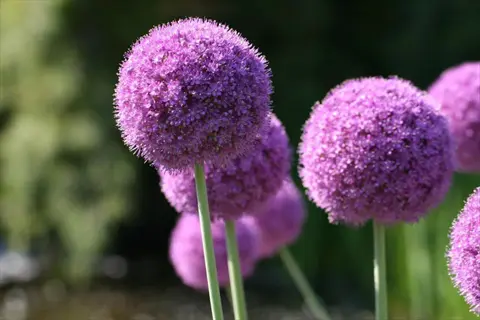
Allium
- Type: A spring-flowering bulb that sends up tall stems topped with globe-shaped clusters of tiny star flowers.
- Sun and soil: Needs full sun and well-drained soil, and naturalizes easily in a relaxed border.
- Spacing: Space bulbs about 6 to 12 inches (15 to 30 cm) apart in groups for the best visual punch.
- Bloom: Flowers in late spring to early summer, and dried seed heads stay handsome for weeks after.
- Design role: Adds playful purple spheres that float above lower plants and weave the border together.
- Pollinators: Bees cover the round flower heads, and deer and rabbits usually skip the onion-scented foliage.
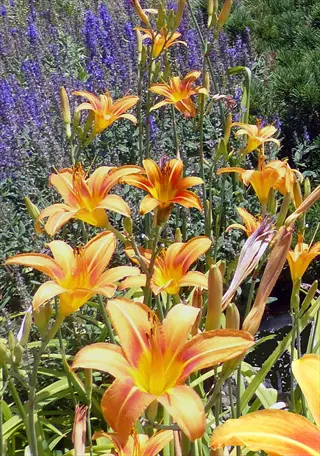
Daylily
- Type: A tough, grassy-leaved perennial whose trumpet flowers each last a day but bloom in steady succession.
- Sun and soil: Thrives in full sun to light shade and almost any well-drained soil.
- Spacing: Space plants about 18 to 24 inches (45 to 60 cm) apart, as clumps widen quickly.
- Bloom: Flowers across summer, and reblooming types extend the show into early fall.
- Design role: Fills space dependably, smothers weeds, and softens the front to middle of a border.
- Care: Divide crowded clumps every few years to keep flowering vigorous and tidy.
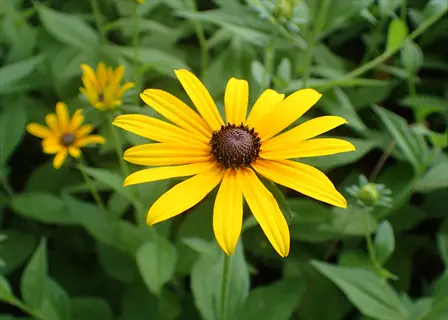
Black-Eyed Susan
- Type: A cheerful native perennial with golden petals around a dark central cone on sturdy stems.
- Sun and soil: Grows best in full sun and average, well-drained soil, tolerating heat and dry spells.
- Spacing: Space plants about 18 inches (45 cm) apart so clumps mass into bold drifts.
- Bloom: Flowers from midsummer well into fall, carrying color when many perennials fade.
- Design role: Delivers warm late-season gold and a meadow feel that suits the informal style.
- Pollinators: Bees and butterflies feed on the flowers, and birds eat the seeds from left-standing heads.
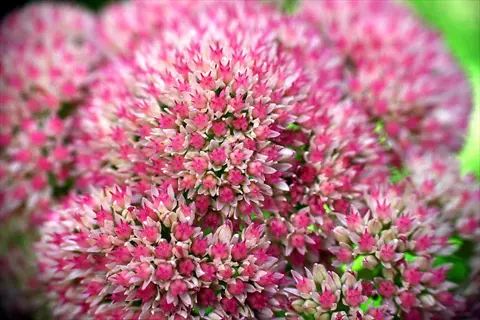
Sedum
- Type: A succulent perennial with thick leaves and flat flower clusters that shift from green to rosy pink.
- Sun and soil: Wants full sun and lean, well-drained soil, and is among the most drought-tolerant choices.
- Spacing: Space plants about 18 inches (45 cm) apart so the rounded mounds stand on their own.
- Bloom: Flowers in late summer into fall, then dries to bronze seed heads that hold through winter.
- Design role: Provides reliable late-season color and strong structure at the front of a border.
- Pollinators: The broad flower heads draw bees and butterflies during the lean days of late summer.
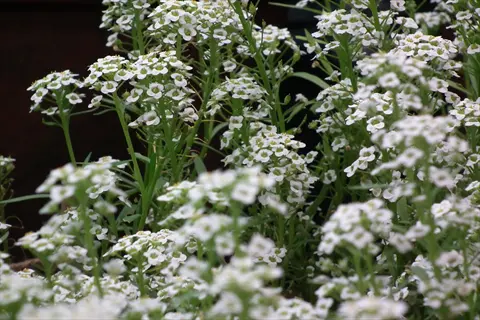
Sweet Alyssum
- Type: A low, spreading annual that forms a fragrant carpet of tiny white, pink, or purple flowers.
- Sun and soil: Grows in full sun to part shade and any well-drained soil, including pots and gaps.
- Spacing: Set plants about 6 to 10 inches (15 to 25 cm) apart to knit into a soft edging mat.
- Bloom: Flowers from spring until frost, often reblooming after a light midseason trim.
- Design role: Spills over path edges and container rims, softening hard lines in true cottage fashion.
- Pollinators: The honey-scented flowers attract bees and tiny beneficial insects all season long.
You don't need all 20 to make a cottage bed sing. Start with a few workhorses like lavender, coneflower, yarrow, and catmint. Then add height with hollyhock and roses. Garden phlox and foxglove fill the middle and back once the early color fades.
Pick plants that bloom at different times so something is always in flower from spring to frost. That steady, overlapping bloom is what feeds bees and butterflies all season, and it's the heart of the cottage look.
What Defines a Cottage Garden
A cottage garden looks loose and lush, yet it follows a clear set of rules. The style leans on informal design, packed beds, and a friendly mix of pretty and useful plants. You get charm and grace here, not the grand symmetry of a formal estate.
The look did not start as decoration at all. Back in the late 1400s the end of feudalism let family farmers tend their own small plots. These first plots were kitchen gardens, so they grew vegetables, herbs, and fruit trees, and flowers came second. Only later did people add blooms for beauty and turn the practical patch into something ornamental.
Think of the style as less a formal portrait and more a relaxed family photo. Everyone is crowded in, a few faces overlap, and nobody stands in a perfect line. The shot still has a frame, though, and that frame is what keeps the scene from turning into chaos.
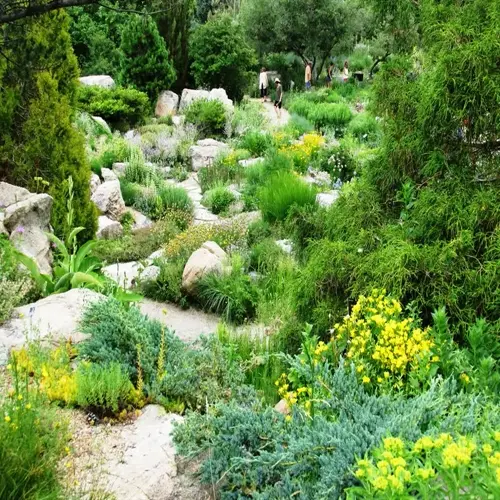
That frame is the real secret. A cottage garden is not a meadow or a wild woodland patch. It keeps a minimal design of borders, paths, and a bit of hardscape. The plants spill and tumble, but tidy edges and a clear walkway hold them in place. Take that away and you just have a weedy field.
The cottage garden is a distinct style that uses informal design, traditional materials, dense plantings and a mixture of ornamental and edible plants. English in origin, it depends on grace and charm rather than grandeur and formal structure.
The English cottage garden you picture today owes a lot to a revival in the 1870s. Two designers, William Robinson and Gertrude Jekyll, grew tired of stiff Victorian beds. They pushed for a softer look led by the plants. Their work tied into the Arts and Crafts movement, and it shaped the romantic style most people copy now.
So the recipe is simple to name. You want dense plantings of perennials and herbs, a blend that stays both ornamental and edible, and just enough hard edges to read as a garden. Keep those three in balance and the rest of your choices fall into place.
Design and Layer Your Beds
My first bed sat in the sunny strip along the fence by the kitchen window, and it looked thin and gappy all summer. I had dotted single plants across the soil, so each one stood alone with bare dirt showing between them. Then I dug three coneflowers and three catmints and grouped each kind together in a tight clump. The bed read as full within weeks, and the gaps vanished as the plants knit into each other.
Good cottage garden design starts before you buy a single plant. The look feels wild and loose, but it rests on a few simple rules that keep the chaos charming instead of messy. Get the bones right and the flowers do the rest. Skip them and you end up with a weed patch.
The first rule is to lose the straight lines. Curving beds and winding paths feel relaxed and old-fashioned, while sharp edges feel stiff. Washington State University Extension suggests you outline a new bed with a hose or a rope on the ground first. You walk around the shape, tweak the curves until they look natural, then cut the line once you like it.
Next, plant in drifts. Instead of one of this and one of that, pick a few species and mass three or five of each in a group. This is the single biggest fix for a sparse bed, and it is the trick that saved mine. Repeat the same plants and colors across the space so your eye flows from one drift to the next, which ties the whole bed together.
Layering plants by height gives the bed depth. The rule is short in front tall in back, so nothing hides behind a bigger neighbor. Low edging plants spill onto the path, mid-height flowers fill the middle, and tall spires anchor the rear. The steps below walk you through building a border from bare ground to mulch.
Sketch curving beds between the lawn and the house, and outline them with a hose or rope before you dig so the lines stay soft and natural.
Edge the beds with a path, low fence, or stone border, since this minimal structure is what separates a cottage garden from a meadow.
Till in plenty of organic matter such as compost to build the rich, well-drained soil that dense plantings need to thrive.
Place short plants in front and tall plants in back, and repeat colors across the bed so the eye flows from one drift to the next.
Mass a few species in groups rather than dotting singles, spacing most plants 12 to 24 inches (30 to 60 cm) apart for a full look.
Finish with a layer of mulch to hold moisture and suppress weeds, then water the new plants in deeply to help roots establish.
Skipping borders and paths leaves a cottage garden looking like an overgrown weed patch. The relaxed style still needs that light structure to read as intentional and charming.
Quick Care and Spacing Guide
Picking your plants is the fun part. Getting them to thrive comes down to a few plain numbers, and most cottage garden plants want the same things from you. They like full sun and well-drained soil, and the look fits your garden in hardiness zones 3 to 9. Give them the light and drainage they want, and the rest gets easy for you.
The table below puts sun, plant spacing, height, and bloom time in one place so you can plan your border at a glance. Most perennials want 12 to 24 inches (30 to 60 cm) apart, while shrubs and roses need more room from you to spread. Use it to mix early bloomers with late ones so your beds carry color from spring right through fall.
Your spacing numbers can feel wide when the plants are still small. Trust them. Crowd your cottage bed and you trade airflow for mildew and weak stems, so give the roots the room the chart shows you. Your plants will fill the gaps faster than you think within one season.
One last note on the drought-tolerant picks you might choose. Catmint, yarrow, and sedum shrug off dry spells once they settle in, but they are not tough on day one. Water them through their first season until the roots take hold. After that, they get by on far less, which keeps your busy border simple to look after.
Cottage Plants for Pollinators
Every garden list tells you cottage plants attract pollinators. Few back it up with anything you can trust. The numbers behind that claim come straight from the federal government, and they are bigger than most people expect.
The USDA says about 75% of crop plants need animals and insects to set fruit. And one in every three bites of food you eat leans on them too. Pollinators add more than $15 billion a year to US crops. Managed honey bees alone bring in at least $18 billion. So when bees work your flowers, they feed far more than your backyard.
Native plants are the ideal choice, because they require less maintenance and tend to be heartier.
A border that pulls in bees and butterflies comes down to three rules from the US Fish & Wildlife Service. Use native plants. Skip the pesticides. Aim for continuous bloom from spring through fall, so something is always in flower. Perennials carry most of that load and cut your work each year. That is why cottage gardens lean on them so hard.
To turn that into pollinator-friendly plants you can buy this weekend, start with the proven feeders from the main list. Lavender, catmint, and yarrow draw early and mid-season bees, while coneflower and bee balm carry the summer. Sedum closes the year, blooming late when little else does. Plant a few of each and you stretch the buffet across every warm month.
Picture the difference. A flat lawn feeds almost nothing. It is a green carpet that insects pass right over. A dense cottage border does the opposite. It can hum with bees and butterflies from the first spring crocus until frost. That steady traffic is how cottage plants attract pollinators in real numbers, not just on paper.
Blooms by Season All Year
Last October my fence strip glowed with purple asters and rosy sedum. The rest of the lawn had gone flat and dull by then. The year before, that same border sat bare and brown through a long August gap. Nothing was in bloom, and I did not see a single bee. So that fall I dug out the empty patches and tucked in late bloomers. The next autumn the strip held its color right up to frost.
No single flower blooms outdoors all year, and any guide that promises year-round blooms from one plant is selling you a dream. You get long color by layering early bulbs, summer perennials, and fall flowers so something fresh opens as the last one fades. This chaining of bloom time across the seasons is the whole trick behind a cottage garden that never looks empty.
Succession planting is just that plan put on paper. You pick plants whose peak weeks overlap and hand off to each other, the way a relay team passes a baton down the track. It feeds wildlife too. The US Fish & Wildlife Service says pollinators need nectar in early spring, through summer, and into fall.
The calendar below shows you what blooms in October and every month before it, so you can spot your own gaps. Notice where your garden goes quiet, then plant for that week the same way I did.
Early Spring
Bulbs lead the way as daffodils, tulips, and alliums push up, joined by hellebores and creeping phlox for the first color.
Late Spring
Peonies, bearded iris, foxglove, and early catmint open as the border fills in and shifts from bulbs to perennials.
Summer
The garden peaks with lavender, coneflower, garden phlox, daylily, salvia, bee balm, and roses blooming together.
Fall
Asters, sedum, black-eyed Susan, and Japanese anemone carry color into October, with mums and late dahlias for extra punch.
Winter
Standing seed heads on coneflower, sedum, and grasses add structure and feed birds until the bulbs return.
Do not cut everything back the second frost hits, either. Leave the seed heads on coneflower, black-eyed Susan, and sedum standing. They add winter texture, and they feed finches and other birds when little else is around. You get one more season of interest for zero extra work. The garden starts the next year already alive.
5 Common Myths
A cottage garden is just a wild, messy patch of flowers with no planning or structure behind it at all.
A cottage garden looks relaxed but needs borders, paths, and a basic plan; that minimal structure separates it from a meadow.
Cottage gardens demand constant work, with endless staking, deadheading, watering, and fussing to keep them looking lush.
Many cottage classics like catmint, yarrow, and coneflower are drought tolerant and reliable, giving romance without heavy upkeep once established.
Foxglove is a true perennial that returns from the same root year after year in every cottage garden bed.
Foxglove is usually a biennial that flowers in its second year, but it self-seeds freely so it appears to return on its own.
Cottage gardens are only for flowers, so vegetables, herbs, and fruit trees have no real place among the blooms.
Cottage gardens began as kitchen gardens; mixing edibles like herbs, berries, and fruit trees with flowers is true to the style.
October is far too late in the year to plant anything, so you must wait until spring to start a cottage garden.
Fall is often ideal for planting hardy perennials, shrubs, and spring bulbs, since warm soil and cool air help roots settle in.
Conclusion
I planted my first border with a long list of the best cottage garden plants and still got it wrong. The plants were fine. I had just lined them up in tidy rows like a vegetable patch. A strong plant list gives you the bones, but real cottage garden design is what makes the whole thing feel alive and a little wild in the right way.
Keep the style in mind as you plant. A cottage garden stays informal and packed tight. It mixes flowers with edibles, and it leans on grace and charm rather than formal structure. Skip the straight lines. Let plants spill over the path and lean into each other, and the look takes care of itself.
If the choices feel like a lot, start small. Plant lavender, coneflower, catmint, and one good rose, then add more by season once you see what thrives. Those four are tough, low-maintenance perennials that handle a dry spell and still pull in bees all summer. From there you build toward year-round blooms, with bulbs in spring and sedum holding on into fall.
Your garden does not need to be big to matter. A balcony of pots feeds bees and butterflies the same way a long border does, so even a few pollinator-friendly plants earn their keep. Plant what you love, give it sun and decent soil, and you'll end up with a space that looks effortless and works hard for the things that live in it.
Glossary
- Biennial
- A plant that grows leaves in its first year, flowers and sets seed in its second year, and then dies.
- Cottage garden
- An informal, densely planted flower garden that mixes ornamental and edible plants and relies on charm rather than formal structure.
- Deadheading
- Removing spent flowers from a plant to encourage it to produce more blooms.
- Drifts
- Groups of the same plant massed together in a sweeping cluster to create a natural, flowing look in a border.
- Hardiness zone
- A region defined by its average coldest winter temperature, used to tell which plants will survive there.
- Pollinator
- An animal or insect, such as a bee or butterfly, that moves pollen between flowers so plants can produce seeds and fruit.
- Rhizome
- A thick underground stem, like those of bearded iris, that stores energy and sends up new shoots and roots.
- Succession planting
- Choosing plants that bloom at different times so a garden has continuous color across the seasons.
External Sources
Frequently Asked Questions
What is a cottage garden plant?
A cottage garden plant is an informal, densely planted flower, herb, shrub, or bulb chosen for charm rather than formal structure.
What plants look good in cottage gardens?
Classic choices include lavender, coneflower, foxglove, catmint, garden phlox, roses, peonies, hollyhocks, and yarrow.
What are the key elements of a cottage garden?
Key elements are informal design with no straight lines, dense layered planting, winding paths, and a mix of ornamental and edible plants.
What blooms in October?
October bloomers include asters, sedum, chrysanthemums, dahlias, Japanese anemone, and many late roses.
Is October too late to plant a cottage garden?
No, October is often ideal for planting hardy perennials, shrubs, and spring bulbs while the soil is still warm.
Which flowers can be planted in October?
Plant spring bulbs like tulips, daffodils, and alliums, plus hardy perennials such as coneflower and yarrow.
What flower will bloom all year round?
No single flower blooms all year outdoors, but layering spring, summer, and fall bloomers keeps color going for months.
What plants are best for cottagecore?
Cottagecore favorites include roses, foxglove, hollyhock, sweet peas, lavender, delphinium, and daisies.
What can you plant in pots in a cottage garden?
Good container picks include lavender, catmint, petunias, sweet alyssum, dwarf roses, and herbs like chives and thyme.
What cottage garden flower means I love you?
The red rose traditionally means I love you, while red tulips and red carnations also symbolize deep love.