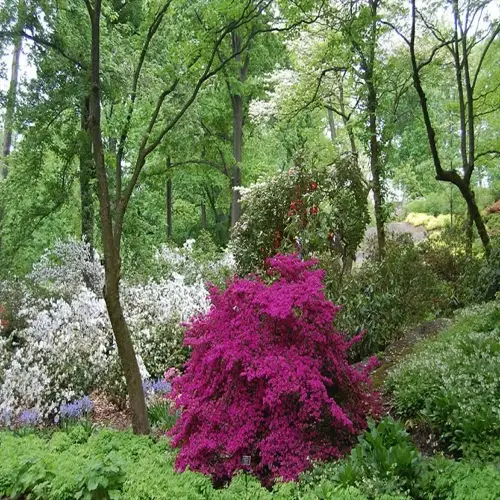

The best cottage garden plants are soft, full perennials that bloom for weeks and lean into each other in a loose, layered way. Think roses, lavender, catmint, foxglove, and daisies packed close so the bare soil barely shows. The relaxed look comes from mixing many of these together, not from spacing one neat plant at a time.
Silvery 'Munstead' lavender and blue 'Walker's Low' catmint glow side by side along the sunny fence strip I see from the kitchen window. I set them out in a single afternoon, alternating one of each down the whole run. The lavender holds tight and upright while the catmint spills over the path edge in a soft haze. Bees work the row all morning, and the two purples read as one ribbon of color from across the yard. By the second summer the gap between plants had vanished and the strip looked like one long drift.
That pairing works because of three simple moves you can copy anywhere. You mix heights so tall plants rise behind short ones. You repeat a color or two down the bed so the eye travels in a smooth line. And you blend flower shapes, setting spikes next to daisies next to round globes so nothing looks flat.
Spiky plants like lavender, salvia, and foxglove give you vertical lines. Daisy shapes like coneflower and rudbeckia bring flat, open faces that read clearly from far off. Round forms like allium and globe thistle add a third note that ties it together. A bed with all three shapes feels rich instead of busy. Height matters just as much, so put tall foxglove and phlox at the back and let low alyssum and catmint pool at the front edge.
Color is the thread that pulls the whole picture together. Pick two or three shades you love and carry them down the bed instead of dotting in every color at once. A run of purple, pink, and soft white covers most cottage looks and lets the green foliage rest your eye between the blooms. The plants can sprawl all they want once the colors line up.
Here is a quick overview by category to help you shop. Each of these plants gets full coverage in the main guide, so treat this as a starting list rather than the whole story.
Lean on cottage garden perennials as your backbone since they return each year and fill out fast. Coneflower and garden phlox carry the show through summer, while a hydrangea or two anchors the back of the bed with real size. Tuck alliums between them for spring globes, then edge the front with sweet alyssum to soften the line where the bed meets the path.
The biggest trap with cottage garden plants is buying one of everything, which leaves the bed looking like a jumble. Pick a handful of repeat plants instead and set each one in three or five spots down the bed. That repetition is what makes a wild-looking garden feel calm and planned, even when nothing sits in straight rows.
Pair the classics and you can't go far wrong. Roses with catmint at their feet is the oldest trick in the book, since the loose blue froth hides the bare rose stems and softens their stiff shape. These old-fashioned flowers were grown together for generations because they thrive in the same sun and soil. Start with three or four of these proven pairs, plant them in repeats, and your cottage garden will look full in a single season.
Read the full article: 20 Best Cottage Garden Plants for Charm