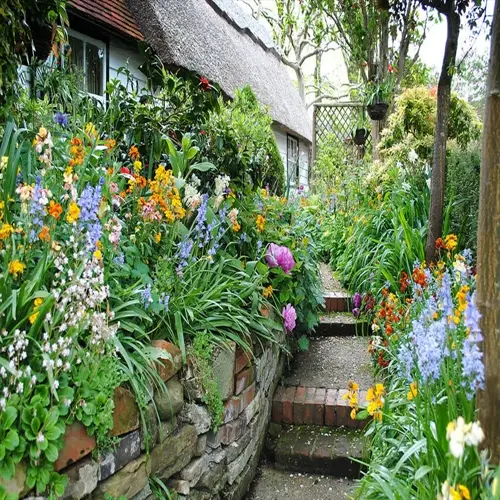

A meadow looks like an open, flowing mass of grasses and wildflowers. The plants rise at many heights, with no clipped edges and no single green carpet. The whole meadow appearance reads as loose and layered. It looks like a patch of land left to grow on its own terms. You see waves of color, tall seed stalks, and short tufts all mixed in one wide sweep.
I planted this back strip three years ago, and now I stand on the deck path each October to watch it. The little bluestem glows a coppery orange in the low sun. Spent coneflower seed heads poke up beside it. They sit dark brown and spiky on stiff stems. A few late asters still hold purple near the ground. The whole strip moves when the wind comes through. Goldfinches drop in to pick at the seeds. None of it sits flat or even. It rolls in patches of height and color across about 500 square feet behind my house. You can see the same effect in any meadow you walk past.
That layered look is the core of good meadow scenery. A lawn gives you one flat plane of green at one cut height. A meadow does the opposite. The grasses might reach three to four feet tall. The flowers rise and fall around them at lower levels. Your eye never lands on a hard line. Instead it travels across a soft, busy surface that shifts as you walk past it. I notice something new in mine almost every time I stop to look.
The plants you spot give a wildflower meadow its real character. Black-eyed Susan throws bright yellow petals around a dark center. Purple coneflower stands tall on pink-purple blooms that bees crowd all summer. Little bluestem fills the gaps with fine blue-green blades that turn bronze by fall. Add some milkweed, bee balm, or yarrow and you get the classic look. That mix is what most people picture when they hear the word meadow. You will know the look the moment you see all those shapes growing together in one space.
The look changes a lot through the year, so your meadow never holds one fixed image. In spring you see fresh green growth with the first low flowers opening near the soil. Summer brings the peak, when blooms stack thick and the native grasses push up tall behind them. By fall the flowers fade into seed heads and the grasses turn bronze and copper. Then winter strips it back to tan standing stems that catch frost and sway in the cold wind. You get four different scenes from the same patch of ground, and each one looks alive in its own way.
Up close a meadow looks far busier than it does from a distance. I find spiders strung between stems and beetles working the petals. Dew sits on the blades each morning. From across the yard the same space reads as one soft, textured sweep of color. Both views belong to the same patch. That double scale gives a meadow its pull. It looks detailed up close and painterly far off, and that is why it draws the eye.
Want to spot one in the wild? Look for that untrimmed, mixed, multi-height growth. The flowers scatter through the grass rather than sit in neat rows. A real meadow has rough, loose edges where it blends into the land around it. This whole meadow appearance comes from local plants left to mingle. Lean toward native grasses and wildflowers in your own yard. You can grow that same alive, layered look within a season or two.
Read the full article: Meadow Garden: A Complete Beginner Guide