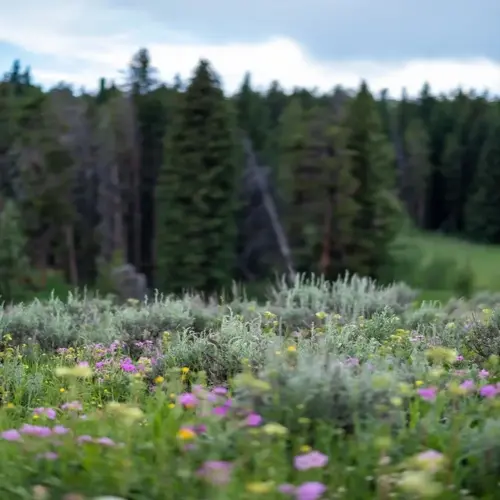
My back-fence meadow strip in heavy Midwest clay looked thin and patchy its first summer after a fall sowing. The second summer it filled in, and by the third it was a wall of color. Most native wildflowers come back every year, because the planting runs on two engines at once.
Perennial wildflowers live for many years and return each spring on their own. Annuals live one season, but a good number of them drop seed that sprouts the next year. Put both in the same patch and you get a stand that keeps showing up season after season. That mix is what turns your one-time sowing into a meadow you can count on.
The mechanism is simple once you see it. A perennial spends its first year building roots and a crown below the soil. You may see only a few low leaves that summer while the real work happens underground. Each spring that root system wakes up and pushes out fresh growth, so the same plant comes back larger and with more blooms. That slow root building is why my strip looked sparse at first and then surged.
Annuals work on a faster clock. They sprout, bloom, and set seed all in one season, then die back. Before they go they scatter seed onto the soil around them. If you leave that seed in place, it sits through your winter and germinates the next spring. So your bed returns not from the same plants, but from their offspring landing in fresh spots near where you first sowed.
Regrow each spring from established roots and crowns, often getting larger and more floriferous over several years.
Live one season but drop seed that germinates the next year, so the planting returns through reseeding rather than regrowth.
A few plants make this easy to watch in your own yard. Purple coneflower sat quiet its first year in my clay, then came back stronger in years two and three from the same crown. Butterfly weed did the same, sending down a deep taproot before it ever put on a real show. Both are true perennials that return from established roots, so once you have them you have them for years. Give them a sunny spot and they will outlast most of the annuals around them.
Black-eyed Susan plays a different role. It blooms fast, sets a heavy crop of seed, and scatters it across the bed. New plants pop up the following spring in spots you never planted. That habit makes it one of the most reliable returners, even though many strains behave more like a short-lived plant than a long one. You give up control over exactly where it grows, but you gain a planting that fills its own gaps.
Your job is to stay out of the way at the right time. Leave the seed heads standing through fall and winter instead of cutting everything to the ground. Those dry heads feed finches and chickadees, and they drop the seed that becomes next year's plants. If you mow or rake the bed clean in October, you haul off the very seed your meadow needs. A tidy fall cleanup is the fastest way to break the cycle that keeps the planting going.
Thin spots still happen, and that is normal in the early years. When you see a patch looks bare in fall, scatter fresh seed of self-sowing wildflowers right onto the soil and press it in with your foot. The cold winter does the rest. Keep up that small fall habit and your planting fills in a little more each year. Do that, and your wildflowers come back on their own for a long time without you replanting from scratch.
Read the full article: Native Wildflowers: A Complete Guide