
Yes, in most cases you need a male and female skimmia growing close together to get a good crop of berries. A female on her own can flower every spring, but she only sets fruit once a male nearby sends her pollen. Buy a lone female that arrived loaded with skimmia berries and you may watch it go bare in later years. The plant did not change. The male that fed it pollen at the nursery just is not in your garden.
This catches out a lot of gardeners. You see a perfect shrub on the shelf, so you plant it alone in a shady corner. Your first winter still carries the old berries it came with. By the second or third year the show fades, and no amount of feeding or pruning brings it back. The missing piece is a pollinator, not better care.
Here is what is going on inside the plant. Skimmia is a dioecious plant, which means it carries male and female flowers on separate shrubs. One plant is male and makes pollen. Another is female and makes berries. Neither can do both jobs. For fruit to form, pollen has to travel from a male flower to a female flower, usually carried by bees in spring. No male within reach means no pollination, and no pollination means no berries.
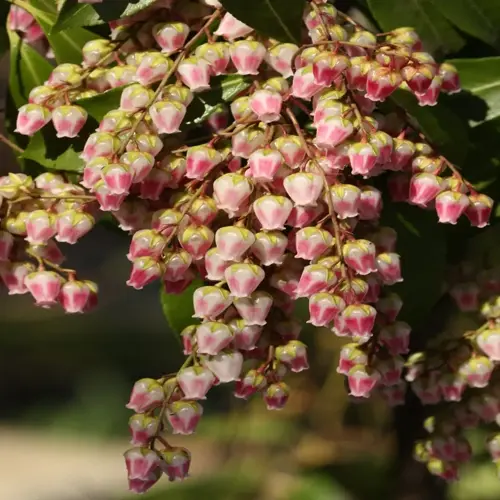
You can tell the two apart at flowering time with a close look. Male flowers tend to be larger and more scented, and you will see clear stamens dusted with pollen. Female flowers are smaller and carry a tiny green or red ball at the center, which is the start of a future berry. If your shrub flowers but never fruits, you have either a male or a lone female with no mate near enough to help.
Male plants
- Main job: They supply the pollen, so they never carry berries themselves no matter how well they grow.
- Good choices: A variety such as Rubella is a strong male with red flower buds that look great through winter.
- Coverage: One healthy male can pollinate several females, so you rarely need more than a single male in a small garden.
Female plants
- Main job: They turn pollen into the red berries that hold on the plant from autumn deep into winter.
- The catch: Without a male close by they flower and then drop the flowers, setting little or no fruit at all.
- Best results: Plant them within a few yards of a male so spring bees can move pollen between the two with ease.
Reevesiana plants
- Main job: Each flower holds both male and female parts, so one plant pollinates itself and sets its own berries.
- Best use: Pick this type when you have room for just one shrub and still want winter fruit.
- Watch for: It stays small and likes neutral to slightly acid soil, so it suits a pot or a tight bed.
Spacing matters more than you might expect. Research on fruit set points to a ratio of about one male per six female shrubs for a strong crop. Your male also needs to sit within a few yards of the females, because bees only carry pollen so far. Plant the male on the far side of your garden and the females may still come up short.
There is one clear exception worth knowing. The subspecies reevesiana is a self-fertile skimmia, and it works in a different way for you. Each flower is hermaphrodite, meaning it holds both male and female parts. A single reevesiana plant can pollinate itself and set berries with no partner at all. It tends to stay smaller and prefers neutral to slightly acid soil, so you can fit it in a pot or a tight bed.
So your plan comes down to space. If you have room for a group, pair one male such as Rubella with a handful of females and let the bees do the rest each spring. If you only have space for one plant and still want winter color, pick reevesiana and skip the pairing problem completely. Either route gives you berries. Just avoid the one trap. A lone female that is not reevesiana, with no male near it, leaves you a healthy green shrub and an empty winter.
Read the full article: Skimmia Japonica: Complete Care Guide