
"Just hit it with baking soda, it'll clear those spots right up," my neighbor said, leaning over the fence at my Cherokee Purple in the damp raised bed. I trusted him. I mixed the spray that night and coated every leaf for two weeks straight. The brown spots kept marching up the lower leaves anyway. They climbed one rung at a time, and by the end half the plant stood bare.
Here is the honest answer. Baking soda tomato blight sprays do not cure blight, even though half the garden forums online swear by them. A baking soda mix can slow a few mild leaf problems a little, but it will not wipe out an infection that already has a grip on your plant.
The reason comes down to chemistry. Baking soda raises the pH on the leaf surface, which makes that surface a bit less friendly to some fungal spores. That mild shift may slow powdery mildew and a few minor leaf spots. But early blight and late blight are tougher diseases. The spray sits on top of the leaf, and it does not kill what is already growing inside the leaf tissue. By the time you spot the lesions, the fungus is deep in the plant where no surface spray can reach it.
Field evidence for this trick is thin. The common baking soda spray recipe is a teaspoon of soda, a few drops of soap, and a quart of water. People coat the leaves and hope for the best. In real outdoor tests, this and most kitchen mixes underperform once rain, dew, and humidity move in. Sprays that look fine on a dry afternoon wash off by morning. Then the spores get a clean leaf to land on, and you are back where you started with a fresh round of spots.
Treat baking soda as a minor supplement at best, never as a cure. Once you see spreading brown lesions, no kitchen spray will pull the plant back.
Growers who fight blight every season land in the same place. A DIY blight remedy built from pantry items sets the wrong expectation. It makes you feel busy while the disease keeps moving. My raised bed plant is proof. I sprayed faithfully for two weeks and got nothing. The spots reached the top trusses right on schedule, and I ended up pulling the whole plant by August.
Put your effort into prevention instead, since it does far more work. I pulled my whole spray routine the next season and switched to clean habits. A clean, dry, well-spaced plant resists blight better than any sink spray. My Cherokee Purple even held its leaves into September that year.
- Space: Give each plant at least 2 feet of room so leaves dry fast after rain.
- Water: Water at the base only and keep the leaves dry to starve the spores.
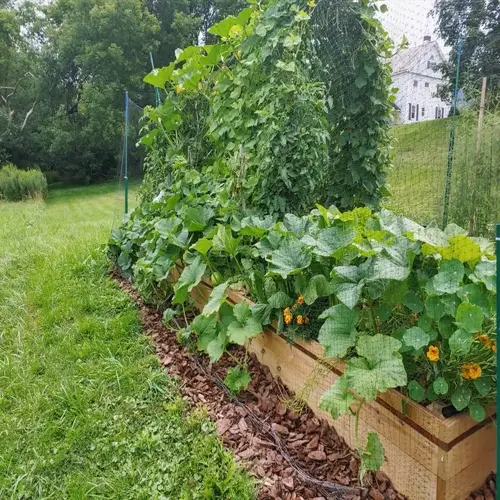
- Mulch: Lay mulch to block soil from splashing fungal spores onto low leaves.
- Prune: Strip the bottom 8 inches of leaves so air moves under the plant.
- Reach for a timely protective fungicide before spots spread, not after.
If blight pressure is high in your area, lean on a protective fungicide. A product like copper or chlorothalonil does the heavy lifting here. You apply it before the disease takes hold, not as a rescue. That timing is the whole game. It is where the baking soda crowd usually goes wrong, since they wait until they can already see the damage.
So save the box for your cookies. Build your plant clean, airy, and base-watered from the start. You will beat blight far more often than any $0 kitchen spray ever could, and your harvest will thank you for it.
Read the full article: Tomato Blight: Identify, Treat, and Prevent It