
Introduction
Few plants give back as fast as squash plants do once you get them going. Drop a few seeds in warm soil and you can be carrying armloads of fruit to the kitchen within weeks. The catch is the part most beginner guides skip: the exact numbers that decide your harvest.
This guide gives you those numbers. They come straight from university Extension labs. So you get real figures, not soft tips. Soil pH, fertilizer rates, and hand pollination are where new growers get stuck, and they are the exact spots most pages stay fuzzy. You get the precise targets here instead.
First you need to know which path you are on, because squash splits into two camps. Summer squash like zucchini gets picked young, soft, and tender, so the game is fast and frequent picking. Winter squash like butternut grows to a hard rind that stores for months, so the game is patience and long storage. One feeds you this week. The other feeds you all winter.
Both types want the same start. Give them full sun and wait until the soil hits 65 degrees Fahrenheit (18 degrees Celsius) before you plant, or the seeds just sit and sulk. Cold dirt is the most common reason early squash fails to come up.
The two hardest parts of growing squash are pollination and pests. Squash carries separate male and female flowers, so bad pollination leaves you with tiny fruit that yellows and drops. Then come the squash bugs and the squash vine borer, which can drop a healthy plant in days. We cover both in depth later, with the morning wilt warning sign that tells you the borer has moved in.
Summer And Winter Squash Types
Every type you grow falls into one of two camps, and that split shapes how you plant, pick, and store the fruit. Summer squash is like fresh bread you eat within days, while winter squash is more like a stored grain that keeps for months. The harvest stage drives your whole approach, so knowing which camp a variety sits in matters before you ever drop a seed.
Summer types grow fast and you eat them young with a soft, edible skin. Most squash varieties in this group hit maturity in just 35 to 45 days. That speed makes zucchini and pattypan a quick win for beginners. You pick the fruit small and keep picking, and the plant keeps setting more all season.
Winter squash plays a slower, longer game. These plants need 80 to 120 days to grow a hard storage rind. A butternut squash or spaghetti squash is ripe only when its rind resists a fingernail scratch. The trade for that wait is fruit that lasts in the cellar long after the garden goes quiet.
Zucchini (Summer Squash)
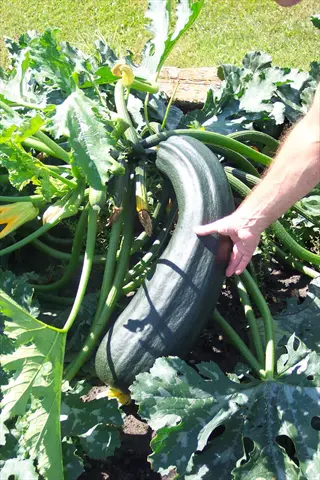
- Type: A classic summer squash in the Cucurbita pepo species, picked young when the skin is still soft and tender.
- Days to maturity: Roughly 35 to 45 days, making it one of the fastest and most productive vegetables for beginners.
- Harvest size: Pick at 4 to 6 inches (10 to 15 centimeters) long for the best texture, since oversized fruit turns seedy.
- Habit: Often a compact bush form, which makes it a strong choice for raised beds and large containers.
- Yield: Extremely prolific, so plan to harvest every other day during peak summer to keep plants producing.
- Best use: Great fresh, grilled, or baked, and the plant also produces edible squash blossoms.
Yellow Crookneck (Summer Squash)
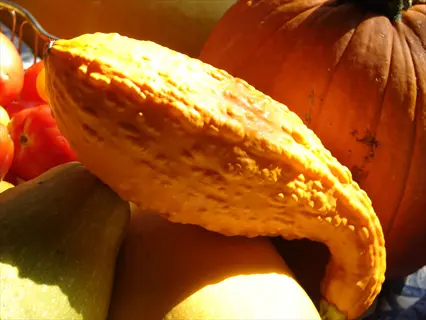
- Type: A warm-season summer squash with a curved neck and bright yellow, bumpy or smooth skin.
- Days to maturity: About 40 to 50 days, similar to zucchini and harvested young while tender.
- Harvest size: Best picked at 4 to 6 inches (10 to 15 centimeters) long before the skin hardens and seeds enlarge.
- Habit: Usually a bush form that stays manageable and fits well in compact garden layouts.
- Flavor: Mild and slightly buttery, popular sauteed or added to summer vegetable dishes.
- Care note: Like all summer squash, frequent picking keeps the plant setting new fruit through the season.
Butternut (Winter Squash)
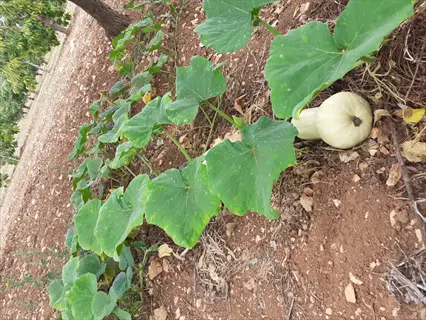
- Type: A popular winter squash in the Cucurbita moschata species, grown to full maturity for storage.
- Days to maturity: Around 90 to 110 days, fitting within the 80 to 120 day winter squash window.
- Ripeness sign: Ready when the skin turns deep tan and the rind resists a fingernail scratch.
- Habit: A long trailing vine that sprawls widely, so it needs generous spacing of 5 to 6 feet (1.5 to 1.8 meters).
- Storage: Cures well and keeps for several months when stored around 50 to 55 degrees Fahrenheit (10 to 13 degrees Celsius).
- Flavor: Sweet, nutty flesh that is a favorite for roasting and soups.
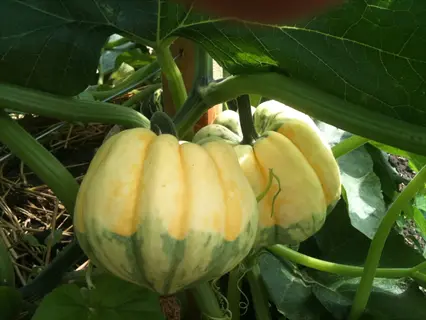
Acorn (Winter Squash)
- Type: A compact winter squash in the Cucurbita pepo species with distinctive ridged, dark green skin.
- Days to maturity: Roughly 80 to 100 days, near the shorter end of the winter squash range.
- Ripeness sign: Mature when the skin is hard and the patch touching the ground turns from yellow to orange.
- Habit: Vining but somewhat shorter than butternut, though it still needs room to spread.
- Storage: Keeps for one to two months, slightly shorter than thicker-skinned winter types.
- Flavor: Mild and slightly sweet, often halved and baked.
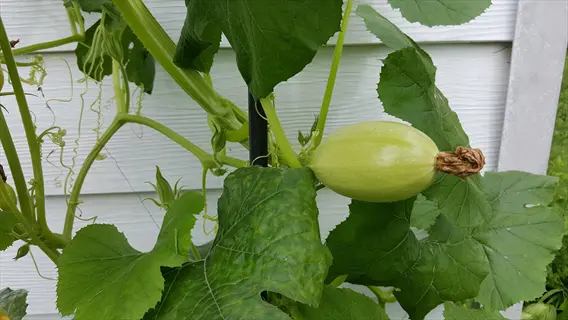
Spaghetti (Winter Squash)
- Type: An oblong winter squash whose cooked flesh separates into noodle-like strands.
- Days to maturity: About 90 to 100 days from planting, harvested fully mature.
- Ripeness sign: Ready when the rind turns golden yellow and is hard enough to resist a fingernail.
- Habit: A trailing vine that needs the wider winter squash spacing to sprawl.
- Storage: Stores well for one to two months in cool, dry, dark conditions.
- Flavor: Mild flesh that is popular as a lower-carb pasta substitute.
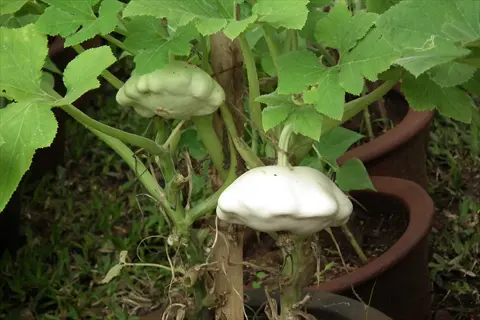
Pattypan (Summer Squash)
- Type: A small, scalloped summer squash that looks like a flying saucer, eaten young and tender.
- Days to maturity: Roughly 45 to 55 days, harvested while the skin is still soft.
- Harvest size: Best picked small at 2 to 4 inches (5 to 10 centimeters) across for the sweetest texture.
- Habit: Compact bush form that suits small gardens and containers.
- Flavor: Mild and slightly nutty, good roasted whole or stuffed.
- Care note: As a summer squash, frequent harvest keeps the plant productive.
Growth habit decides how much room you need to set aside. Bush varieties such as many zucchini plants stay compact and fit raised beds, small plots, even big pots on a patio. Trailing winter types like butternut and Hubbard sprawl far and wide, so give those vines a lot more space to roam.
Match the variety to your space first, then plan the rest. A tight bed of fast summer squash feeds you for weeks, and a single butternut squash vine can fill a corner and stock your shelves through the cold months.
Planting And Soil Basics
Healthy squash plants start with two things you can measure: warm soil and the right dirt. Get those right and the rest of the season gets a lot easier. Here are the exact numbers to aim for.
Knowing when to plant squash matters more than any seed packet date. University of Minnesota Extension found that vine crops need warm ground to sprout. The soil has to reach 65 degrees Fahrenheit (18 degrees Celsius) at 2 inches deep. A cheap soil thermometer settles the question in seconds, and it beats guessing off the calendar.
Last May I direct-sowed a full row of zucchini into a bed that still felt cool under my hand. Two weeks later not a single seedling had broken the surface, so I dug one up and found a soft, rotted lump where the seed had been. I waited, checked the soil at 65 degrees, and dropped fresh seeds into the same row. They were up in days.
Soil chemistry is the other half of how to plant squash well. The University of Georgia Extension wants a bed that is slightly acidic. Aim for a soil pH of 5.8 to 6.8 and a soil temp of 65 to 80 degrees Fahrenheit (18 to 27 degrees Celsius). A few inches of compost worked in before planting feeds the vines and helps the bed hold moisture. Squash also wants full sun, so pick a spot with six to eight hours of direct light.
Spacing depends on the type you grow. Plant in mounds for summer squash, set 4 feet (1.2 meters) apart. Run winter squash in rows 5 to 6 feet (1.5 to 1.8 meters) apart so the longer vines have room to sprawl. Whatever the layout, keep your seed depth at about 1 inch (2.5 centimeters), with a few seeds per spot. The steps below put it all in order.
Plant only after the last frost and once soil reaches 65 degrees Fahrenheit (18 degrees Celsius) at 2 inches deep, since cold soil rots squash seeds.
Choose a site with at least six to eight hours of direct sun and well-drained soil amended with compost for strong, productive vines.
Aim for a slightly acidic pH of 5.8 to 6.8 and work in a few inches of organic matter so roots get steady moisture and nutrients.
Build mounds for summer squash 4 feet (1.2 meters) apart, and set winter squash in rows 5 to 6 feet (1.5 to 1.8 meters) apart to give vines room.
Plant seeds about 1 inch (2.5 centimeters) deep, with several seeds per mound, then thin to the two strongest seedlings once they are up.
Water the newly planted seeds or transplants at the base to settle the soil, keeping the surface evenly moist until they establish.
Your region changes the timing more than the method. In a short growing season, start seeds indoors a few weeks early and move the young plants out once the bed has warmed. In warmer areas you can sow straight into the ground, but only after frost has fully passed and the soil has hit that 65 degree mark.
You can seed vine crops directly into the garden, but they need warm soils (65 degrees Fahrenheit at 2 inches soil depth) to germinate properly.
Watering And Fertilizing
Squash plants drink a lot, but how to water squash trips up most gardeners. The roots run deep, so a quick evening rinse never reaches them. Think of it like filling a tank, not wiping a counter. You want a deep, slow soaking that sinks down to the roots, not a splash that only dampens the top of the soil.
UGA Extension sets a clear target for established plants. They need 1 to 1.5 inches (2.5 to 4 centimeters) of water per week. That water should soak down 6 to 8 inches deep. Stick close to that 1 inch per week rule and your plants build strong, drought-ready roots. During hot, dry spells when fruit is setting, give them a bit more.
How you deliver that water matters as much as the amount. Drip irrigation or a soaker hose puts moisture at the base and keeps the leaves dry. The RHS backs this to cut disease risk. Wet leaves let mildew take hold and spread. One RHS trick is to sink a small pot beside each plant and fill it. The water then drains straight down to the roots.
How Much Water Squash Need
- Weekly target: Give established squash 1 to 1.5 inches (2.5 to 4 centimeters) of water per week, more during hot, dry spells when plants are fruiting.
- Depth matters: Water deeply so moisture penetrates 6 to 8 inches (15 to 20 centimeters), encouraging strong, drought-resistant roots.
- Frequency: Deep watering once or twice a week beats daily light sprinkling, which keeps roots shallow and weak.
Keep The Leaves Dry
- Why it matters: Wet foliage invites fungal problems like powdery mildew, so water at the base instead of over the top.
- Best tools: Drip irrigation or a soaker hose delivers water to the roots while keeping leaves dry.
- Timing: Water in the morning so any splashed leaves dry quickly through the day.
When And How To Fertilize
- At planting: Mix compost or a balanced fertilizer into the soil so young plants start with steady nutrients.
- Side-dressing: Feed again once vines develop runners and flowering begins, following package rates for vegetables.
- Go easy on nitrogen: Excess nitrogen drives leafy growth at the cost of fruit, so balanced or lower-nitrogen feeds set more squash.
Mulch And Moisture
- Conserve water: A layer of organic mulch keeps soil moisture even and reduces how often you need to water.
- Time it right: Apply mulch only after the soil has warmed well, since early mulch can keep roots too cool.
- Bonus: Mulch also suppresses weeds that would otherwise compete with squash for water and nutrients.
Feeding is where a good crop turns into a great one. Mix compost or a balanced squash fertilizer into the soil at planting so young plants start strong. Then side-dress the plants once the vines push out runners and flowers appear, following the package rate for vegetables. USU Extension points to this post-runner feeding as the moment that builds real fruit.
Here is the plain truth most feeding advice skips. You want to avoid high nitrogen. Too much nitrogen grows lush, leafy plants with few squash, since the plant pours its energy into foliage instead of fruit. Reach for a balanced or lower-nitrogen feed, and hold off on heavy feeding until flowering starts. That timing alone sets more squash on the vine.
Splashing the whole plant with a hose every evening leaves foliage wet overnight and invites mildew; instead water deeply at the base in the morning once or twice a week.
Pollination And Flowers
One July my zucchini sat covered in bright yellow blooms and not a single fruit for over a week. Every tiny squash turned soft and dropped off before it grew. One morning I picked a male flower, peeled back its petals, and dabbed the pollen onto a female bloom. Three days later that fruit was swelling, and the rest followed once the bees showed up.
That whole mess comes down to squash pollination and how the plant times its blooms. The first flowers are almost always male, so you see lots of color and zero fruit at the start. Learning to tell male and female squash flowers apart fixes the panic fast.
Male flowers sit on thin straight stems. Female flowers have a tiny immature squash, the ovary, tucked right behind the petals. Bees carry pollen from the male blooms to the female ones, and that swap is what sets the fruit you actually eat.
So why do you get flowers but no fruit? Three things cause it. Your plant may still be in its early male-only stage. Bees might be scarce in your yard. Or a heat wave can trigger blossom drop, where the plant sheds both flowers and baby fruit to save itself. When you find your squash not producing fruit, you can step in and hand pollinate squash yourself.
Find male flowers on thin straight stems and female flowers with a tiny immature squash (the ovary) just behind the petals.
Pollinate early in the morning when flowers are freshly open and pollen is most viable, ideally on a warm, dry day.
Pick a fresh male flower and peel back its petals, or use a small soft brush to collect the yellow pollen from the central stamen.
Gently dab or brush the pollen onto the center of the female flower, touching the stigma so pollen sticks and fertilizes the fruit.
Within a few days a successfully pollinated female flower fades and the small fruit behind it begins to swell and grow.
The first flowers are almost always male. Female flowers will have small fruits behind the flowers. By producing male flower first, the likelihood of getting the female flowers pollinated by bees is greatly improved.
You do not have to do this by hand all season. Plant zinnias or sunflowers near your squash and the bees will handle most of the work for you. Hand pollination then becomes a backup for slow days, not a daily chore.
One more bonus here. Squash blossoms are edible, so the extra male flowers you do not need for pollen make a tasty treat. Stuff them, fry them, or toss them in a salad while your fruit keeps setting on the vine.
Pests And Diseases
My own healthiest zucchini plant collapsed flat overnight in early July. The leaves lay in the soil like someone had stepped on the whole thing. The day before it had stood waist high and loaded with flowers. I checked the base of the stem and found a soft split. It oozed moist, sawdust-like frass the color of wet greenish orange. Something was living inside the stalk. The borer was in there, and the plant was finished.
That collapse is the calling card of the worst of all squash pests, the squash vine borer. It hits your plant when it looks its best. By the time you see the wilt, the larva is deep in the stem blocking water flow. Knowing what to watch for, and when you should watch for it, is how you beat the borer before it beats your plants.
Here are the four troublemakers you will run into most, plus how you can spot each one early. The borer leads your list because it does the most damage. But squash bugs, cucumber beetles, and powdery mildew all earn a spot on your watch list too.
Squash Vine Borer
- The pest: A day-flying moth, about half an inch (1.3 centimeters) long with an orange abdomen and black dots, that mimics a wasp.
- Damage: Larvae bore into the stem and block water flow, so the first symptom is sudden wilting, often worst in strong sun.
- Telltale sign: Look for holes near the plant base filled with moist, sawdust-like greenish or orange frass.
- Timing: Adults emerge late June to early July, so cover young plants before then and inspect stems weekly.
- Control: Use row covers early, scout for eggs at the base, and slit the stem to remove a larva if caught in time.
Squash Bugs
- The pest: Flat, gray-brown shield-shaped bugs that cluster on stems and the undersides of leaves.
- Damage: They suck sap, causing leaves to wilt, yellow, and develop dark spots, weakening the whole plant.
- Eggs: Look for clusters of bronze, oval eggs on leaf undersides and crush or scrape them off.
- Control: Handpick adults in the morning, remove garden debris where they overwinter, and rotate crops each year.
- Prevention: Row covers on young plants reduce early infestations before flowering.
Cucumber Beetles
- The pest: Small yellow beetles with stripes or spots that feed on leaves, stems, and flowers.
- Damage: Beyond chewing, they can spread bacterial wilt that collapses vines.
- Control: Use row covers early, handpick beetles, and keep plants vigorous so they tolerate light feeding.
- Companion help: Nearby flowers that draw beneficial insects can reduce beetle pressure.
- Rotation: Move squash to a new spot each year to break the pest cycle.
Powdery Mildew
- The disease: A fungal problem showing as white, powdery patches on leaves, common late in the season.
- Why it spreads: Wet foliage and crowded, poorly ventilated plants encourage it to take hold.
- Prevention: Water at the base, space plants for airflow, and grow resistant varieties when available.
- Management: Remove badly affected leaves and treat early with an approved fungicide or baking soda spray.
- Impact: Light cases mostly affect appearance, but heavy infection reduces yield.
Your best early warning is morning wilt. A little droop at midday in strong sun is normal, and the plant perks back up by evening. But wilting that hangs on through the cool morning often means a borer is choking the stem from inside. Check the base for those frass-filled holes the moment you see it.
Prevention beats treatment with every one of these pests. Floating row covers keep moths, bugs, and beetles off young plants, but you have to pull them off once the flowers open so bees can reach the blooms. Crop rotation each year breaks the pest cycle, and companion flowers nearby pull in the good bugs that hunt the bad ones.
Adult moths are unique in that they fly during the day and mimic wasps.
Harvesting Curing And Storage
The two halves of this plant family ask two different things of you at the finish line. Summer squash is a sprint you pick constantly, while winter squash is a marathon you cure and store. Knowing when to harvest squash starts with sorting which race you are running.
Summer squash like zucchini hits its best size fast. UGA Extension says to pick it at 4 to 6 inches long every other day. Young fruit tastes better, and the steady cutting keeps new flowers coming. Miss a few days and you find a baseball bat hiding under the leaves.
Winter squash plays the long game. You let it ride the vine for its full 80 to 120 days to maturity, until the rind turns full color and a fingernail can't break the skin. To harvest winter squash, cut it with the stem attached and bring it in before any hard freeze.
Summer Squash Harvest
Pick summer squash young at 4 to 6 inches (10 to 15 centimeters) long, every other day, to keep plants producing all season.
Winter Squash Maturity
Leave winter squash on the vine until fully colored with a hard rind that resists a fingernail scratch, usually 80 to 120 days from planting.
Cutting From The Vine
Cut winter squash with at least 4 inches (10 centimeters) of stem attached, before any hard freeze, to protect it in storage.
Curing
Cure winter squash for 1 to 2 weeks in a warm, dry, sunny spot to toughen the skin for long keeping.
Long Term Storage
Store cured winter squash around 50 to 55 degrees Fahrenheit (10 to 13 degrees Celsius), dark and dry, with fruits not touching, for months.
Cut the fruits from the plant with at least 10cm (4in) of stem still attached – if you cut too close to the fruit, it leaves a soft area that is vulnerable to rotting in storage.
Most guides blur curing and storage into one step, but they are two separate jobs. Curing winter squash means leaving the cut fruit in a warm, dry, sunny spot for 1 to 2 weeks so the skin hardens. That tough rind is what lets the squash sit for months without going soft.
Only after the skin sets do you move into storage. UMN Extension says to keep cured fruit around 55°F (13°C) at 50 to 75% humidity, somewhere dark and dry. Cure first, then store. Skip the curing and even a perfect cellar won't save it.
For how to store squash through winter, lay the fruits out so none of them touch each other. One soft spot spreads fast to its neighbors. Check the pile every couple of weeks, pull anything that feels soft, and a good butternut or acorn will easily keep until spring.
5 Common Myths
Many gardeners believe squash plants that flower heavily will always go on to set a full crop of fruit.
Flowers alone do not guarantee fruit, since early blooms are male and female flowers still need pollination by bees or by hand.
A common belief is that squash should be watered lightly every single day to keep the large leaves from wilting in heat.
Squash do better with deep watering once or twice weekly at the base, totaling 1 to 1.5 inches, since daily splashing invites disease.
People often assume midday wilting always means a squash plant is thirsty and needs an immediate heavy soaking.
Brief midday wilt is normal transpiration, but wilting that lasts into the cool morning often signals a squash vine borer instead.
Gardeners sometimes think squash plants come back on their own each year like perennials once established in a bed.
Squash are annuals that die after one season, so you must replant from seed or transplants every year for a new harvest.
It is widely believed that any rich fertilizer high in nitrogen will give squash the biggest possible harvest.
Too much nitrogen drives leafy growth at the expense of fruit, so balanced or lower-nitrogen feeding produces more squash.
Conclusion
Growing squash comes down to a handful of numbers you now know better than most guides ever share. Wait until your soil hits 65°F (18°C) before you plant, keep the pH near 5.8 to 6.8, and give your plants 1 to 1.5 inches of water each week. Get those three right and your squash plants will do most of the rest of the work for you.
Your timeline depends on the path you picked back at the start. Summer squash rewards fast pickers, with tender fruit ready in just 35 to 45 days from planting. Winter squash asks for patience instead, taking 80 to 120 days to build a hard rind built for months of storage. Neither path is harder than the other. They just suit different goals.
The two parts that worry new gardeners are both manageable. If bees seem scarce and your fruit drops young, you can hand pollinate in a minute by brushing a male flower into a female one. Slip floating row covers over young plants early to block the squash vine borer. Then pull them off once flowers open so bees can get to work.
Few beginner crops pay you back like squash does. Steady sun, warm soil, regular water, and a watchful eye for pests are the whole recipe for strong squash care. Maybe you want zucchini on the counter all summer. Maybe you want butternut in the pantry all winter. Either way, your garden is ready to give you more than you expected.
Glossary
- Blossom drop
- When squash flowers fall off without setting fruit, often from incomplete pollination, heat stress, or early male-only flowering.
- Cucurbita
- The plant genus that includes all squash, pumpkins, and gourds, split into species such as pepo, maxima, and moschata.
- Curing
- Resting harvested winter squash in warm, dry conditions for one to two weeks to toughen the skin so it stores longer.
- Frass
- The moist, sawdust-like waste left behind by boring insect larvae, often seen at holes near the base of an infested squash plant.
- hand pollination
- Moving pollen from a male flower to a female flower yourself when bees do not do the job.
- Side-dressing
- Applying fertilizer in a band alongside growing plants partway through the season rather than only at planting.
- soil pH
- A measure of how acidic or alkaline your soil is, on a scale where lower numbers mean more acidic.
- Squash vine borer
- A day-flying moth whose larvae tunnel into squash stems and block water flow, causing the plant to suddenly wilt.
External Sources
Frequently Asked Questions
What is the best month to plant squash?
Plant squash in late spring once soil reaches 65 degrees Fahrenheit and all frost danger has passed, usually May or June in most regions.
What are squash plants?
Squash plants are warm-season vegetables in the Cucurbita family, grown as quick-harvest summer types or storage-ready winter types.
Do squash like full sun or shade?
Squash need full sun, meaning at least six to eight hours of direct light each day for healthy vines and good fruit set.
Is squash easy to grow?
Squash is one of the easiest vegetables to start, though pests like squash vine borers can make a steady harvest harder.
How long does squash take to grow?
Summer squash matures in about 35 to 45 days, while winter squash needs roughly 80 to 120 days from planting.
Do you water squash every day?
Most squash need deep watering once or twice a week rather than daily, aiming for 1 to 1.5 inches of water weekly.
What should not be planted near squash?
Keep squash away from heavy feeders like potatoes and other sprawling vines that crowd it, and avoid fennel which suppresses many crops.
Should I remove first flowers on squash?
You do not need to remove first flowers; the early male blooms are normal and simply appear before female flowers form.
Can I grow squash in pots?
Yes, you can grow squash in pots if you choose bush varieties and use a wide container at least 18 inches across.
Do coffee grounds help squash plants?
Coffee grounds can help squash when composted first, adding mild nitrogen and organic matter, but piled fresh they can harm roots.