
Introduction
Most people who fail at spinach growing did nothing wrong in the garden bed. They just planted at the wrong time of year. Spinach is one of the easiest leafy greens you can grow, and it forgives a lot, but only when the weather suits it. Get the timing right and the rest feels almost automatic.
Here is the fact that makes everything click. Spinach grows best at 50 to 60°F (10 to 16°C), and it bolts once days stretch past roughly 14 hours of light. Bolting means the plant shoots up a flower stalk and the leaves turn bitter fast. So spinach is both heat sensitive and day-length sensitive. That is why when to plant spinach matters more than your soil, your watering can, or your bag of fertilizer.
Picture your whole year as two planting windows. You get an early-spring crop and a fall crop, and they sit on either side of a hot summer gap where true spinach simply refuses to grow. Once you see those two windows, learning how to grow spinach stops feeling like guesswork and starts feeling like a calendar.
Plenty of guides will tell you spinach is a cool season vegetable and that it bolts in the heat, then stop right there. This one keeps going. You will get the precise numbers most pages skip. That means the soil pH of 6.0 to 7.0 that keeps plants from stunting, how deep to sow, and how far apart to thin. You also get the 1 to 2 inches of water per week spinach needs and the real days-to-harvest range. Let's start with the timing that decides it all.
How to Grow Spinach Step by Step
My first early-spring sowing went into the raised bed by the back fence, the one I could see from the kitchen window while the coffee brewed. I dumped the Bloomsdale seed in way too thick, and a green fuzz of seedlings came up packed shoulder to shoulder. Those plants sat small and stalled for weeks. Once I pulled them out to a proper 3 inches (8 cm) apart, the ones left behind doubled in size on the same soil and the same water.
So here is how to grow spinach the way it works in a real garden, start to finish, in one clean run. The method is short on purpose. You sow seeds, you keep the ground cool, you thin seedlings, and you pick leaves while they are tender.
When you sow seeds, drop them half an inch (1.3 cm) deep and about 2 inches (5 cm) apart, in rows 12 inches (30 cm) apart. Sow them right in the garden, not in trays. Spinach hates having its roots moved. So planting spinach in place beats moving young plants later.
Seeds sprout best when the soil sits between 45 and 68°F (7 to 20°C), and you should see green within 7 to 10 days. Warm ground works against you here. Spinach struggles to sprout in heat. Use fresh seed each year because its viability drops fast. For a late-summer crop, chill the seed in the fridge for a few days to wake it up.
Loosen soil 12 inches (30 cm) deep, mix in compost, and confirm soil pH sits between 6.0 and 7.0 since spinach hates acidic ground.
Plant seeds half an inch (1.3 cm) deep and about 2 inches (5 cm) apart in rows 12 inches (30 cm) apart, directly in the garden.
Water gently and aim for soil at 45 to 68°F (7 to 20°C); seedlings usually emerge within 7 to 10 days.
Once plants have a few true leaves, thin them to 3 inches (8 cm) apart so each one has room to size up.
Provide 1 to 2 inches (2.5 to 5 cm) of water weekly and side-dress nitrogen about three to four weeks after planting.
Pick outer leaves once they reach usable size, roughly 37 to 55 days from sowing, and leave the crown to regrow.
The one step beginners skip is the one that matters most. You have to thin seedlings even when it feels wrong to pull up healthy plants. Crowded spinach stays small no matter how much you feed it, so good spinach spacing does the work, not fertilizer. Give each plant room and the leaves size up on their own.
Sowing spinach in warm summer soil is the most common first-year mistake. Above 80°F (27°C) germination drops sharply, so wait for cool spring or fall ground instead.
When to Plant Spinach
Timing decides everything with this crop. Spinach is day-length sensitive, so it will bolt in June even when the air stays cool. That single fact answers most questions about when to plant spinach, because it pushes your two real windows to early spring and fall.
Build your spring planting around your last frost date. Sow your first crop 4 to 8 weeks before that frost, as soon as the soil hits 45°F (7°C). Then sow a small batch every 2 to 3 weeks through succession planting, so a slow start or a quick bolt never costs you the whole harvest.
For fall spinach, count back 6 to 8 weeks from your first frost and sow into cooling September soil. Skip true spinach in midsummer. The heat alone will scorch it, and warm-season stand-ins like Malabar do that job better.
The two crops feel different in the row. A spring crop races the lengthening days and sprints toward a bolt the moment summer hits. A fall crop relaxes into shortening days and cooling nights, so the leaves grow sweeter and the plants hold longer. That is why fall is the easier, more forgiving season for most gardeners.
Early Spring
Sow 4 to 8 weeks before your last frost as soon as soil reaches 45°F (7°C) for the first crop.
Late Spring
Make a final spring sowing, then expect crops to bolt as days pass 14 hours and heat climbs.
Summer
Skip true spinach in the heat; grow warm-season substitutes like Malabar or New Zealand spinach instead.
Early Fall
Sow 6 to 8 weeks before first frost in September into cooling soil for sweet, slow-bolting leaves.
Late Fall to Winter
Harvest into December with row cover; fall-sown crops can overwinter in mild areas for an early spring picking.
That fall crop also opens the door to overwintering. A late sowing under row cover keeps producing well past the first frosts. In mild areas the small plants ride out winter and give you the earliest picking of the next year. Spinach handles cold far better than heat. That is why a strong fall planting beats chasing a summer crop you cannot win.
Spinach tolerates frost so it is a good crop for the fall garden and with protection can be harvested into December.
Soil, Water and Feeding
Uneven watering ruins more spinach than dry soil ever does. When the ground swings from bone dry to soaked, the leaves turn tough, stringy, and bitter. Consistent moisture is the real fix. Aim for 1 to 2 inches (2.5 to 5 cm) of water per week, enough to wet the soil about 6 inches (15 cm) down.
Steady soaking beats the occasional heavy drink. So when you are watering spinach, check the top inch of soil with your finger and water before it dries out. Pour the water at the base, not over the leaves, because dry foliage shrugs off downy mildew and other fungal problems.
Soil chemistry matters just as much. Spinach is sensitive to acidic soil and grows best at a spinach soil pH of 6.0 to 7.0. A quick soil test before you sow tells you where you stand. If your ground reads too low, work in lime to nudge it up, or your plants stay stunted and pale no matter how well you water.
Spinach is a heavy nitrogen feeder, so rich, compost-loaded soil drives the fast, tender leaf growth you want. Dig in plenty of finished compost before planting. Then plan on a single nitrogen boost about four weeks in. Fertilizing spinach at the right moment is what separates lush rows from thin, slow ones.
For that boost, side-dress a quarter cup of 21-0-0 nitrogen fertilizer per 10-foot (3 m) row. Do it about four weeks after planting, or when you thin. Clemson gives another option too. Use 1 lb of calcium nitrate per 100 square feet (9 sq m). Keep it 4 to 6 inches (10 to 15 cm) from the plants so the roots do not burn. The table below lays out every care number in one place.
Soil and pH
- Texture: Loosen rich, well-drained soil 12 inches (30 cm) deep and work in compost so the taproot can reach down freely.
- pH target: Keep soil pH between 6.0 and 7.0, since spinach is sensitive to acidic soil and stunts badly below that range.
- Test first: Run a simple soil test before sowing and add lime if your ground is too acidic to hit the target range.
Watering
- Amount: Give 1 to 2 inches (2.5 to 5 cm) of water per week, moistening the soil to about 6 inches (15 cm) deep.
- Consistency: Keep moisture steady, because swings between dry and wet make leaves tough, stringy, and off-flavored.
- Method: Water the soil rather than the leaves to keep foliage dry and reduce fungal diseases like downy mildew.
Feeding
- Nitrogen need: Spinach is a heavy nitrogen feeder, so leafy growth depends on nitrogen-rich soil and a timely boost.
- Rate: Side-dress a quarter cup of 21-0-0 per 10-foot (3 m) row about four weeks after planting or at thinning.
- Alternative: Clemson suggests 1 lb of calcium nitrate per 100 square feet (9 sq m), kept 4 to 6 inches (10 to 15 cm) from plants.
Natural options
- Compost: A generous layer of finished compost or aged manure feeds spinach slowly while improving soil structure.
- Liquid feeds: Fish emulsion or blood meal deliver quick nitrogen for organic gardeners who skip synthetic fertilizer.
- Timing: Apply any feed early in growth so plants build leaf mass before warm weather and long days push them to bolt.
Spinach is sensitive to acidic soils; therefore, follow the results of a soil test to maintain a soil pH between 6.0 and 7.0.
Why Spinach Bolts and Turns Bitter
Your spinach was perfect last week, and now a thick stalk shoots up from the center and every leaf tastes harsh. That stalk is the plant trying to flower, and it is the moment your harvest goes downhill fast. Spinach bolting is the single biggest reason home gardeners give up on this crop, so it pays to know why spinach bolts in the first place.
Two things set it off, and most guides only name the heat. The first trigger is day length. Spinach is day length sensitive, and once the days stretch past about 14 hours it starts building a flower stalk no matter how mild the weather feels. The second trigger is heat. Penn State pins the start of bolting near 70°F (21°C), and once you hit 80°F (27°C) it is unavoidable. Put long June days together with a warm spell and the plant has every signal it needs.
The cause-and-effect chain is short. Long days plus heat tell the plant to make seed, so it pushes up a flower stalk. That stalk pulls energy and sugar away from the leaves, and the plant floods them with the compounds that make bitter spinach. The leaves turn narrow, tough, and sharp-tasting within days. By the time you see the stalk, the flavor is already gone.
Spinach is also day-length sensitive. It will bolt in June even if the temperatures are cool.
Genes load the dice too. A 2026 study in Frontiers in Plant Science looked at 295 spinach types. It found bolting is about 33% heritable, so genes and weather share the blame. In that group, 61.5% bolted early, in under 60 days. The other 38.3% held out past 70 days. The slow types came from cool places like Turkey and the United States. Short seasons there favored plants that waited.
This is why your variety choice matters more than any trick. Shade cloth and extra water buy you a little time, but they cannot stop the day-length clock. Pick bolt-resistant varieties bred to ignore long days, and plant in fall so the plants grow into shorter days instead of longer ones. Do those two things and you sidestep the trigger instead of fighting it.
Spinach Varieties and Alternatives
My back fence bed held two short rows, a smooth-leaf variety on one side and Bloomsdale on the other. A warm spell hit in late spring and I watched the smooth-leaf row shoot up a flower stalk within days. The Bloomsdale beside it held a full week longer before it even thought about bolting.
That extra week is why slow-bolting savoy types earn their spot in a home garden. Smooth-leaf spinach grows fast and gives you tender baby leaves, but it gives up sooner once the days get long and warm. Savoy and semi-savoy types are tougher and slower to flower, so matching the leaf type to your season is half the battle.
Choosing among spinach varieties comes down to two questions. When are you planting, and how do you want to eat it? The list below covers the true spinach types worth your bed space, plus the heat-loving stand-ins that keep a spinach-style harvest going once real spinach quits.
Bloomsdale
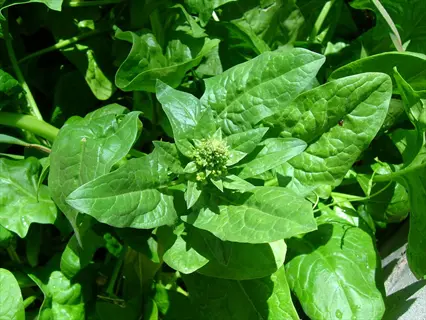
- Leaf type: A classic savoy spinach with thick, crinkled, deep-green leaves that hold up well in the garden and the kitchen.
- Bolting: Known as a slow-bolting variety, which buys extra harvest time as spring days lengthen toward the bolting trigger.
- Best season: Excellent for both spring and fall sowings and a reliable first choice for new spinach growers.
- Flavor: Rich, full spinach flavor that many gardeners prefer over flat, smooth-leaf supermarket types.
- Hardiness: Cold tolerant enough for fall crops and overwintering with simple protection in milder areas.
- Use: Great cooked or in hearty salads, since the savoy leaves keep texture rather than wilting instantly.
Tyee and resistant hybrids
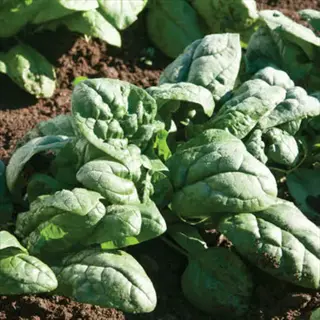
- Leaf type: A semi-savoy spinach with lightly crinkled leaves that are easier to wash than fully savoy types.
- Disease resistance: Bred for downy-mildew resistance, which matters in cool, damp spring and fall weather.
- Bolting: Holds reasonably well before bolting, making it a dependable workhorse for succession sowings.
- Growth: Upright habit keeps leaves cleaner and off the soil, reducing grit and disease splash.
- Best use: A strong pick where downy mildew has been a recurring problem in past spinach crops.
- Companions: Pairs well in a rotation with other slow-bolting and smooth-leaf types for a steady supply.
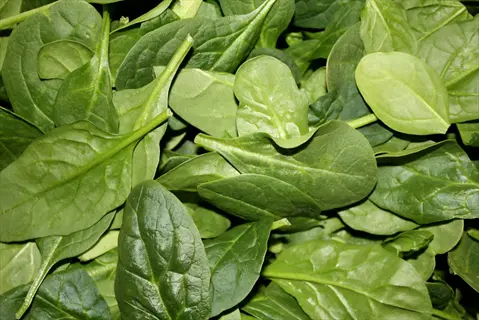
Smooth-leaf spinach
- Leaf type: Flat, smooth leaves that grow quickly and rinse clean easily, ideal for tender baby spinach.
- Speed: Among the fastest spinach to reach baby-leaf size, perfect for quick succession sowings.
- Bolting: Tends to bolt sooner than savoy types, so it shines most in cool spring and fall windows.
- Best use: First choice for raw salads and smoothies where soft, mild baby leaves are the goal.
- Spacing: Can be grown densely and cut young, then resown every couple of weeks for a continuous supply.
- Containers: Its fast, shallow growth suits pots and window boxes for small-space gardeners.
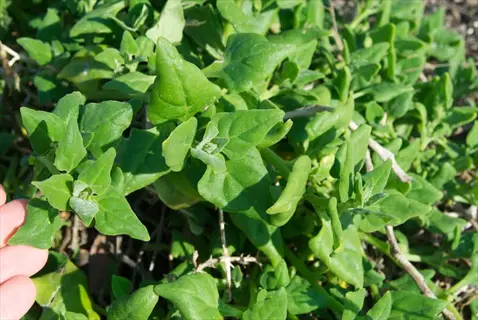
New Zealand spinach
- Type: Not true spinach but a heat-loving substitute that keeps producing spinach-like greens through summer.
- Heat tolerance: Thrives in warm weather that would make real spinach bolt, filling the summer gap.
- Habit: Sprawling, branching plant that yields repeatedly when you pinch the tender growing tips.
- Flavor: Mild, spinach-like taste best enjoyed cooked, since the leaves are thicker than true spinach.
- Sowing: Soak the hard seeds before planting and sow after frost danger passes and soil warms.
- Role: A reliable bridge crop that keeps a spinach-style harvest going when true spinach cannot.
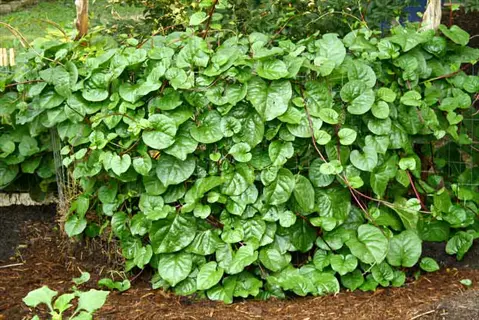
Malabar spinach
- Type: A warm-season climbing vine grown as a spinach substitute, unrelated to true spinach botanically.
- Heat tolerance: Loves heat and humidity, growing vigorously through summer when spinach is long gone.
- Habit: Climbs a trellis with glossy, fleshy leaves, making it ornamental as well as edible.
- Flavor: Mild and slightly mucilaginous, so it works well in soups, stir-fries, and cooked dishes.
- Sowing: Start from seed after the soil is warm, and give it sturdy support to climb.
- Role: One of the best hot-weather greens for gardeners who want a spinach-like harvest all summer.
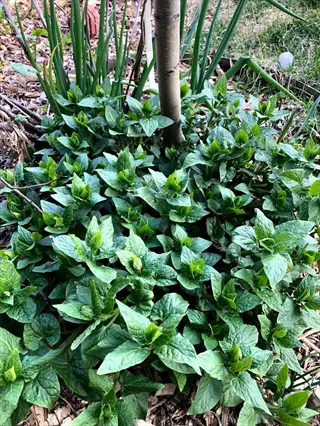
Caucasian Mountain spinach
- Type: A perennial climbing green grown as another spinach substitute, popular in cold-climate gardens.
- Hardiness: Returns year after year once established, unlike annual true spinach that must be resown.
- Habit: A vigorous vine that produces tender, arrow-shaped leaves over a long season.
- Flavor: Mild and spinach-like, good raw when young or lightly cooked as the leaves mature.
- Establishment: Slow to settle in the first year, then increasingly productive in following seasons.
- Role: A low-maintenance perennial option for gardeners wanting spinach-style greens without yearly sowing.
Here is the simple relay that keeps greens on your plate all year. True spinach bolts when summer heat sets in, so heat-loving stand-ins take over from there. New Zealand spinach and Malabar spinach both keep producing spinach-like leaves right through the hot months when real spinach cannot.
So the best spinach to grow depends on the calendar. Lean on Bloomsdale and a downy-mildew resistant pick like Tyee for your cool spring and fall crops. Then hand the summer over to the heat lovers, and you never have to go without.
Common Spinach Problems
Most spinach problems trace back to the same root cause. Warm, wet, or crowded plants invite trouble. Get your timing right and water at the soil line, and you head off far more disease than any spray ever will.
When you spot something wrong, match the sign to the cause and act fast. The most common spinach pests are aphids and leaf miners, while downy mildew, white rust, and damping-off cause the worst of the disease damage. A resistant variety like Tyee is your first line of defense against several of these at once.
Leaf miners tunnel inside the leaf, so you see pale winding trails you cannot wash off. Pull and destroy those mined leaves the moment you find them, and float a row cover over the bed to block the flies that lay the eggs. Aphids cluster on stems and leave a sticky film, and they spread plant viruses as they feed. Knock them off with a hard spray of water and let ladybugs handle the rest.
Notice the pattern across that whole list. Almost every fix comes back to cool timing, dry leaves, and room to breathe. Space your plants for airflow, water the soil instead of the foliage, and pull any leaf that looks off before the trouble spreads to its neighbors.
Water at the soil line in the morning rather than over the leaves. Dry foliage and good spacing for airflow stop most spinach diseases before they start.
5 Common Myths
Spinach is hard to grow and needs constant fussing, so beginners are better off buying it from the store instead.
Spinach is one of the easiest crops once timing is right; cool-season sowing does most of the work for you.
Spinach bolts because you watered it wrong or starved it, so better care alone will stop it from flowering early.
Bolting is mainly triggered by long days and heat, not care mistakes; timing and variety choice control it, not watering.
You can plant spinach any time during the growing season as long as you keep the soil moist and weed-free.
Spinach only thrives in cool windows; summer sowings bolt fast, so spring and fall plantings give the real harvests.
Spinach will not survive frost, so it must be covered or harvested before the first cold nights arrive in fall.
Spinach is very cold hardy, surviving 15 to 20F (-9 to -7C), and fall crops can overwinter with simple protection.
Cutting your spinach plant ends its life, so each plant gives only a single harvest before you must replant it.
Harvesting outer leaves leaves the crown intact, so one plant keeps producing new leaves for several more pickings.
Conclusion
Here is the part most guides bury, and it sits at the core of spinach growing: spinach is easy once you treat it as a timing crop. You are not fighting the plant. You work with two short windows. Sow in spring a few weeks before your last frost, then sow again for a fall spinach crop as the heat fades. Both windows land in that cool sweet spot where leaves stay tender and sweet.
Keep a few numbers in your back pocket and the rest takes care of itself. These are the ones you should burn into memory. Aim for a soil pH of 6.0 to 7.0, since spinach hates acidic ground. Give the bed 1 to 2 inches (2.5 to 5 cm) of water each week so the leaves never turn tough. Thin your plants to 3 inches (8 cm) apart so each one has room. Then count down the 37 to 55 days from seed to your first real cutting.
Here is the plain fact to take with you. With the right timing and one of the slow-bolting varieties like Bloomsdale, even a small bed pays you back for weeks. So yes, spinach earns its spot in the garden. You get armfuls of sweet, tender leaves from a patch you can measure in feet. Harvesting spinach stays simple too, because you snip the outer leaves and the plant keeps feeding you.
So think like a grower who plans in seasons, and start looking forward to your next sowing. Pull out a calendar and note your next cool-weather window right now, whether that is the coming fall or next spring. Pick your variety, count back from your frost date, and get the seeds in the ground on time. Do that, and the two-crop calendar does the heavy lifting for you.
Glossary
- Bolting
- When spinach sends up a flower stalk and turns bitter, triggered by long days and heat.
- Cut-and-come-again
- Harvesting only the outer leaves so the plant keeps producing new ones for repeat pickings.
- Damping-off
- A fungal disease that makes young seedlings collapse and rot at the soil line.
- Day-length sensitive
- A plant that responds to how many hours of daylight it gets, which can make spinach flower even in cool weather.
- Overwintering
- Keeping a fall-sown crop alive through winter, often under cover, for an early spring harvest.
- Savoy
- A spinach leaf type with thick, crinkled leaves, as opposed to flat smooth-leaf types.
- Side-dressing
- Adding fertilizer in a band alongside growing plants rather than mixing it into the whole bed.
- Succession planting
- Sowing small batches of seed every couple of weeks for a steady, ongoing harvest.
External Sources
Frequently Asked Questions
How long does it take to grow spinach?
Most spinach is ready to harvest 37 to 55 days after sowing, with baby leaves picked even sooner.
Will spinach grow back after you cut it?
Yes. If you cut the outer leaves and leave the central crown, spinach regrows for several more harvests.
What is the trick to growing spinach?
The trick is timing: sow in cool weather and short days, since heat and long days trigger bitter bolting.
Can you grow spinach all year round?
Not quite. Spinach bolts in summer heat, but spring, fall, and protected winter crops cover most of the year.
What should not be planted near spinach?
Avoid heavy nitrogen feeders and tall, shade-casting plants that compete with spinach for food and light.
How often should you water spinach?
Give spinach 1 to 2 inches (2.5 to 5 cm) of water per week with steady, even moisture, not a daily splash.
Is spinach winter hardy?
Yes. Spinach is very cold hardy, surviving 15 to 20°F (-9 to -7°C), and overwinters with simple protection.
What are common spinach growing problems?
The most common problems are:
- Bolting in heat and long days
- Poor germination in warm soil
- Downy mildew and white rust
- Leaf miners and aphids
Can you grow spinach in September and October?
Yes. Early fall is ideal for spinach, as cooling soil and shorter days produce sweet, bolt-resistant leaves.
What is a good natural fertilizer for spinach?
Compost, aged manure, blood meal, and fish emulsion all supply the nitrogen that leafy spinach needs.