
Introduction
Floating plants drift across the water surface with their roots hanging free below, never anchored in soil. That one trait makes them the simplest aquatic plants you can keep. They feed straight from the water, so you just drop them in and watch them spread across your pond. This guide works for both your backyard water garden and your fish tank at home.
I planted a small handful of duckweed in a bare tub one spring afternoon. The green skin sealed the whole surface inside a week, and I pulled half of it back out by hand. Duckweed can double its mass in about 2 days under good conditions, according to a 2019 study in PLOS One. That speed is exactly why you will love these plants and why they can take over your pond fast. Few plants grow this fast, and fewer still clean your water while they do it.
Most guides just list the perks and move on. You read that floating plants fight algae, give your fish shade, and soak up waste, but you never see a single number. You also get a quick line about invasive risk buried near the bottom. This guide does both jobs right for you, with cited science and an honest look at the real legal and invasive dangers some popular floaters carry.
Here is the plain truth you need. Floating plants are the easiest aquatic plants to grow and some of the most dangerous to release into wild water. So you get the how-to balanced with real responsibility on every page. Whether you keep floating pond plants in your water garden or floating aquarium plants in your aquascape, both your worlds are covered. Now let's meet the plants themselves.
10 Best Floating Plants
By August the back corner of my pond ran calm and green. The surface there was furred with native frogbit and dotted with the red of red root floater. That same corner had been bare and choppy for three summers straight. The frogbit and the floater backfilled every empty patch, and the water below them went still and clear.
The right floating plants can do that for almost any pond or tank. The trick is picking species that match your setup and your climate, since a great pond floater can be a poor fit for a small aquarium. The list below mixes pond and tank picks so you can shop from one place.
I also split the safe choices from the risky ones, because two of the most common floaters are trouble. Both water hyacinth and water lettuce are invasive and banned in some states. Plants like frogbit, salvinia, azolla, and red root floater give you the same shade and nutrient control without the legal headache.
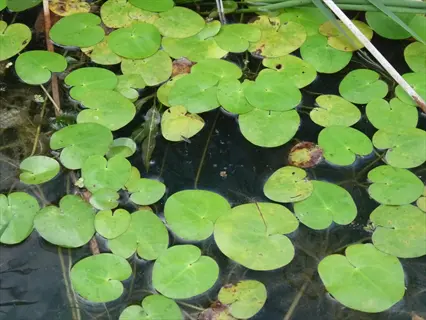
Frogbit (Limnobium laevigatum)
- Looks: Small rounded leaves like miniature lily pads sit flat on the surface with trailing white roots beneath.
- Best for: A strong all-rounder for both ponds and aquariums, and a safer pick than the banned floaters.
- Benefit: Shades the water and draws up nutrients, helping starve algae of the food it needs to bloom.
- Care: Wants bright light and calm water, and dislikes droplets sitting on its leaves from splashing or filters.
- Spread: Grows steadily and sends out daughter plants, so expect to scoop out handfuls during the warm months.
- Cold: Hardy enough to go dormant and return in milder zones, though tender in hard-frost areas.
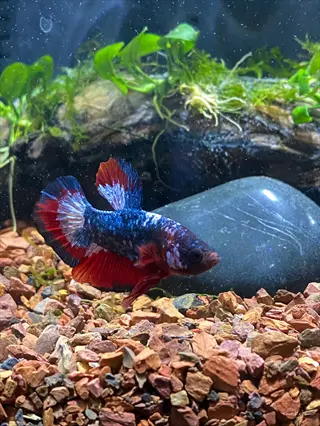
Red Root Floater (Phyllanthus fluitans)
- Looks: Coin-sized leaves that blush deep red under strong light, with bright crimson roots dangling below.
- Best for: A favorite aquascaping floater that also works in warm outdoor containers.
- Benefit: Fast nutrient uptake competes directly with algae, and the red color signals lean, healthy water.
- Care: Needs strong light and still surface water to color up and stay compact rather than green and leggy.
- Spread: Multiplies quickly in good conditions, so thin it often to keep light reaching plants below.
- Cold: A tropical species that will not survive frost and must be overwintered indoors under a grow light.
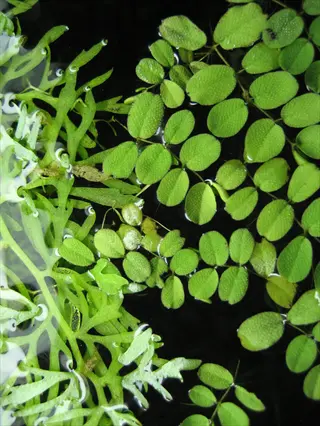
Salvinia (Salvinia species)
- Looks: Paired oval leaves with a velvety, water-repellent texture form a soft quilted carpet across the surface.
- Best for: Ponds and tanks where a dense floating mat for shade and cover is wanted.
- Benefit: Excellent surface shade for fish and strong nutrient export that helps keep algae down.
- Care: Easy in bright light and warm water, and one of the more forgiving floaters for beginners.
- Spread: Grows fast and forms thick mats, so thin it regularly so it does not blanket the whole surface.
- Note: Some Salvinia types are themselves regulated, so check that the species you buy is legal in your area.
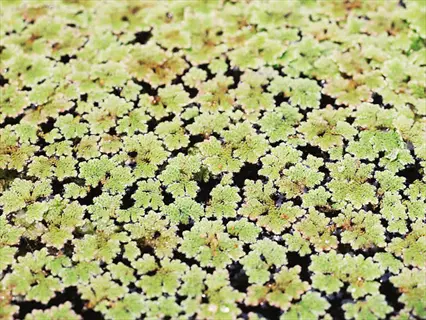
Azolla (Fairy Moss)
- Looks: Tiny lacy fronds that form a fine red-green film, sometimes called fairy moss or mosquito fern.
- Best for: Small ponds and containers wanting quick, fine-textured surface cover.
- Benefit: Hosts nitrogen-fixing partners and is noted for taking up heavy metals, a useful cleanup plant.
- Care: Likes bright light and calm water, turning reddish under strong sun and cooler temperatures.
- Spread: Doubles very fast and can cover small surfaces quickly, so skim off excess often.
- Cold: Often dies back in winter but can return from surviving fragments in milder climates.
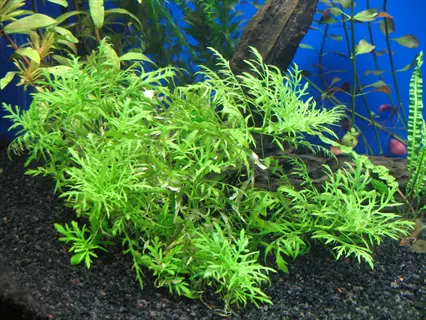
Water Sprite (Ceratopteris)
- Looks: Lacy bright-green fronds that can float at the surface or be planted, giving a soft feathery look.
- Best for: A versatile aquarium plant that doubles as a floating nursery for fish fry.
- Benefit: Fast growth soaks up nitrogen and phosphate, a classic algae-fighting floater for planted tanks.
- Care: Easy under standard aquarium lighting and tolerant of a wide range of water conditions.
- Spread: Produces baby plantlets along its leaves that you can pinch off and float separately.
- Tip: Floating it gives faster growth and better surface shade than planting it in the substrate.
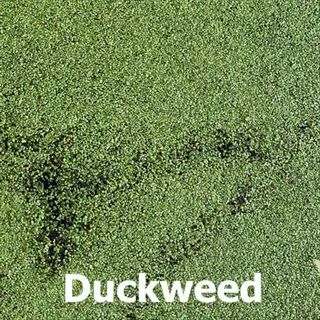
Duckweed (Lemna minor)
- Looks: Tiny single leaves, each just a few millimeters across, that carpet the surface in bright green.
- Best for: Ponds and tanks, and a favorite food source for ducks, tadpoles, and turtles.
- Benefit: A nutrient-stripping powerhouse that can double its biomass within two days in good conditions.
- Care: Almost foolproof in light and still water, but its speed means it needs constant management.
- Spread: Among the fastest floaters of all, capable of blanketing a surface in days if unchecked.
- Warning: Once introduced it is very hard to remove, so add it only where you can keep it controlled.
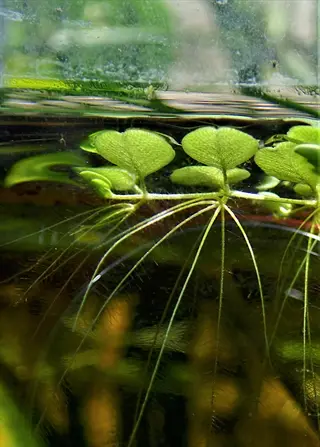
Dwarf Water Lettuce
- Looks: Rosettes of soft, ribbed pale-green leaves like tiny floating lettuce heads with feathery roots.
- Best for: A smaller, manageable cousin of the invasive species, used in tanks and warm ponds.
- Benefit: Long trailing roots offer fish cover and pull nutrients straight from the water column.
- Care: Needs bright light and dry leaves, as overhead droplets and condensation can cause melt.
- Spread: Reproduces through daughter plants on stolons and can mat quickly in warm water.
- Caution: Full-size water lettuce is invasive and banned in places, so confirm legality before buying.
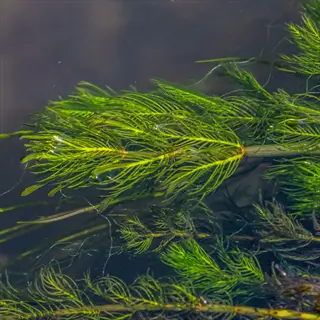
Hornwort (Ceratophyllum)
- Looks: Bushy bottlebrush stems of fine needle-like foliage that drift just under the surface without true roots.
- Best for: Ponds and tanks as a floating oxygenator and spawning cover, even in cooler water.
- Benefit: Fast nutrient uptake and known to release compounds that can suppress algae growth.
- Care: Extremely undemanding, growing rootless wherever there is light and nutrients.
- Spread: Lengthens quickly and can be trimmed into pieces that each keep growing.
- Cold: One of the more cold-tolerant choices, often persisting where tender floaters fail.
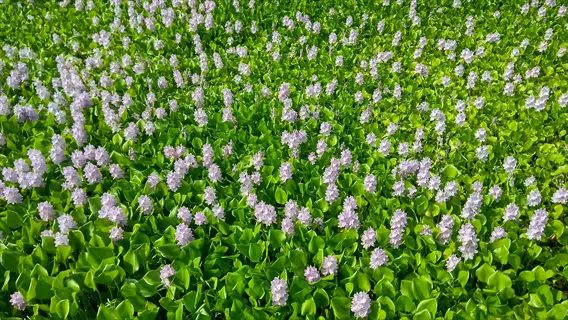
Water Hyacinth (use with caution)
- Looks: Glossy paddle leaves on inflated spongy stalks topped by showy lavender flowers.
- Best for: Often sold for ponds, but it is one of the world's worst invasive weeds.
- Benefit: A remarkable phytoremediator, yet that same vigor is exactly what makes it dangerous.
- Spread: Can reach 450 tonnes per hectare with a seven-day doubling time, and its seeds stay viable for up to 20 years.
- Legality: Listed among the top 100 global invasive species and prohibited in several states.
- Verdict: Never release it into natural water; choose a safe floater instead and dispose of it responsibly.
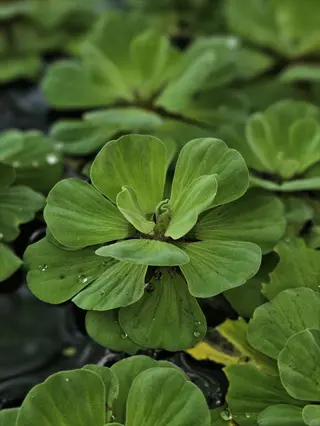
Water Lettuce (use with caution)
- Looks: Large soft rosettes of pale ribbed leaves that look like floating heads of lettuce.
- Best for: Popular for shade and fish cover, but it is extremely invasive in warm regions.
- Benefit: Provides heavy surface shade and habitat, though it can blanket a waterbody completely.
- Spread: Reproduces mainly by stolons forming daughter plants and rapidly creates obstructive mats.
- Legality: Documented as extremely invasive and banned or restricted in some states.
- Verdict: Extension experts say it should never be introduced, so favor dwarf water lettuce or frogbit instead.
Where you keep them shapes the best pick. Pond keepers tend to reach for frogbit, salvinia, and azolla, which form shade and cover across an open surface. Aquarists lean toward red root floater, water sprite, and duckweed, which color up and strip nutrients in a tank.
Whatever you grow, start with a safe species and keep it in check. The fast spreaders like duckweed and azolla can blanket a surface in days, so scoop out the excess every week. Skip the banned floaters and you get all the upside with none of the risk.
How Floating Plants Work
You have heard that floating plants fight algae. The full story is a connected system, and the numbers back it up. These plants pull nutrients out of your water, shade the surface, and feed the tiny life that does its own cleanup.
Look at the data first. One 60-day study found native floaters pulled out 79 to 84% of total nitrogen. They also removed 89 to 96% of total phosphorus. Field tests of floating wetlands varied more, from near zero up to 92% for nitrogen. The range is wide because your conditions matter. But the ceiling is high.
That nutrient removal runs on three jobs at once. First, the plant pulls nitrogen and phosphorus into its tissue as it grows. Second, a film of microbes on the roots breaks nitrogen down. Third, the thick roots trap floating sediment so phosphorus settles out. Direct plant uptake handles only about 35 to 44% of the total. The roots and their microbes do the rest.
Here is what explains your green water. Your floaters and the algae fight over the same dissolved nitrogen and phosphorus. When the floaters win, the algae starve and your water clears. The wide leaves help too. They block the sunlight algae need to bloom. Strong algae control comes from this one-two punch, not from any single trick.
Your surface coverage decides how much work the system can do. Aim for 10 to 25% of your pond surface in floating plants to move the needle on water quality. Plan around one more thing. Nutrient removal drops in fall and winter, then climbs back in spring and summer, so your water quality follows the seasons. That swing is why care and overwintering matter, and they come up next.
Floating wetlands absorb excess nutrients, provide habitat for aquatic and terrestrial wildlife, and may reduce the frequency of algal blooms.
Floating Plant Care Basics
Good floating plant care comes down to four things you can manage in a pond or a tank. Floaters want bright light, calm water, dry leaf tops, and a steady supply of food in the water. Get those right and most species almost grow themselves.
My red root floater told me which one I was getting wrong. The deep red faded patch by patch until the whole mat sat there plain green, and I watched it slip from the back deck of the woods-edge pond. I raised the light over that corner and shifted the small fountain away from the floaters. The water went still, the tops dried out, and over a few weeks the red crept back in from the edges.
Bright light is the engine. Floaters ride on top of the water in the sunniest spot of any system, so most want strong, steady light to grow fast and hold their color. Light requirements climb for the showy species, and a plant like red root floater only turns red when your light is truly bright. Pale, stretchy growth is the first sign you are short.
Water movement matters almost as much. Floaters drift, so spray and current shove them around and wet their leaves. The detail you might miss is that droplets sitting on a floater leaf cause rot and melt. They land from filter spray, splashing, or a dripping lid. Keep your surface calm and the leaf tops dry, and you remove the most common way these plants die.
Food is the easy part. Floaters pull nitrogen and phosphorus straight from the water, which makes them such good workers for nutrient removal. In a pond, fish waste feeds them for free. In a very clean tank, a light dose of liquid fertilizer keeps fast growers fed. They also take carbon dioxide from the air, so you skip the injection gear and still get great results in a low-tech tank.
One number is worth keeping in mind for your pond. Research on floating wetlands points to a clear range. Cover about 10% to 25% of the pond surface and you give the water a real quality boost. The takeaway is simple: let your floaters work, but leave open water for fish, oxygen, and a bit of sky. That surface coverage rule keeps your system in balance.
Bright Light
- Why it matters: Floating plants sit in the brightest spot in any system and most want strong, steady light to grow and color well.
- Pond: A spot with several hours of direct sun supports fast growth, while heavy shade leads to thin, pale plants.
- Aquarium: Standard planted-tank lighting is usually enough, and species like red root floater need strong light to turn red.
- Sign of trouble: Stretching, fading color, and slow growth usually mean the plants are not getting enough light.
Gentle Water Movement
- Why it matters: Floaters prefer calm surfaces, since strong current and spray push them around and wet their leaves.
- Pond: Keep fountains and waterfalls away from the floating area, or corral plants in a calmer corner.
- Aquarium: Reduce surface agitation near floaters and consider a floating ring to stop them drifting into the filter.
- Sign of trouble: Constantly wet leaf tops, melting, and plants piling against an outflow point to too much flow.
Dry Leaf Surfaces
- Why it matters: Many floaters rot when water sits on top of their leaves, so keeping the upper surface dry is key.
- Pond: Position plants away from splashing features and condensation drips under covers and pergolas.
- Aquarium: Lower the water line slightly or use a feeding ring so the lid does not drip onto the leaves.
- Sign of trouble: Brown mushy patches and clear melt on leaves usually trace back to standing droplets.
Steady Nutrients
- Why it matters: Floaters pull food directly from the water, so they thrive where some nitrogen and phosphorus are present.
- Pond: Fish waste usually supplies plenty, which is exactly why floaters are such good nutrient exporters.
- Aquarium: In very clean tanks a light dose of liquid fertilizer keeps fast floaters from running short.
- Sign of trouble: Yellowing, holes, and stalled growth in clean water often mean a nutrient shortage.
The fastest way to kill floaters is constant droplets on their leaves from filter spray, splashing, or a dripping lid; keep leaf tops dry and the surface calm.
Invasiveness and Legality
The fast growth that makes floaters so good at cleaning your water is the same trait that makes a few of them dangerous. In a closed pond or tank you control the spread. But once a stray plant rides downstream into a wild lake or river, that vigor turns into a real threat. The plant keeps doubling, and nothing local is built to stop it.
Two of the most popular species carry the worst track record. Water hyacinth came to the United States in 1884 as a pretty ornamental. Water lettuce showed up even earlier, first written up in Florida back in 1765. Both escaped and never looked back. Water hyacinth now ranks among the world's top 100 invasive species, and its seeds can stay viable for up to 20 years in the mud.
These are not minor nuisances. Escaped mats of invasive aquatic plants block sunlight from the surface and crowd out native species that fish and frogs depend on. A pond that vanishes under a green carpet loses its oxygen and its life. That is why several states treat water hyacinth and water lettuce as noxious weeds and either ban or restrict their sale.
Rules shift by state and they change over time. Michigan adds water hyacinth to its banned list on June 19, 2026. Other states keep updating their own lists too. Check your state rules before you buy any floater. What ships freely to one address can be illegal at the next. A quick search of your state's aquatic plant rules takes 5 minutes and saves you a fine.
You hold the disposal responsibility every time you thin your plants. Never toss trimmings into a stream, ditch, storm drain, or any natural water. Bag the extra growth, let it dry out, and put it in the trash. Even a thumbnail of duckweed can seed a whole new colony, so treat clippings like the live plants they are.
The good news is you do not have to choose between a healthy pond and a clear conscience. Swap each risky plant for a tamer one. Pick frogbit or salvinia instead of water hyacinth, and choose dwarf water lettuce or frogbit in place of full water lettuce. The table below pairs each high-risk species with a safer choice so you walk away with a plan, not just a warning.
Extremely invasive and should never be introduced. Eradicate on first sign.
Overwintering and Seasons
Floating plants live and die by the calendar, and your winter plan depends on what you grow. Cold-hardy floaters and tropical species need very different care once the cold sets in. Your hardiness zones decide the whole strategy, so match your plant choices to where you live.
Growth and water cleaning rise and fall with the seasons too. Clemson Extension found that nutrient removal by floating plants drops in fall and winter and climbs back up in spring and summer. Your plants pull the most waste from the water when days are long and warm, then slow down as light fades.
Some floaters shrug off the cold. Hornwort, frogbit, and some duckweed can overwinter or come back on their own in milder zones. These cold-hardy floaters go into dormancy, sink or die back, then return when warmth and light come around again. Tropical species play by harsher rules. Red root floater and water hyacinth get killed by frost, so they must come indoors to survive a real winter.
A clear plastic tub sat on my sunny windowsill all winter. I pulled a scoop of red root floater and frogbit from my woods-edge pond and dropped it in. Then I set a small grow light a few inches above the water. By March I watched the red root floater hold deep color and the frogbit spread across half the tub, while the pond outside lay frozen and bare.
That tub is the whole point of overwintering floating plants the tender way. Tropical floaters need indoor light to bridge the cold, and cheap grow lights over a warm container do the job. Keep a small indoor backup of any tender floater you want year after year, and let your zone guide what you trust to the pond outside.
Early Spring
Growth restarts slowly as light and warmth return; uncover ponds and reintroduce any floaters saved indoors once frost has passed.
Late Spring
Floaters take off and spread fast; this is the time to add tropical species and start thinning to keep open water.
Summer
Peak growth and peak nutrient removal; thin regularly, keep about 10% to 25% surface cover, and watch for runaway mats.
Fall
Growth and water cleaning slow as days shorten; rescue a scoop of tender floaters indoors before the first frost.
Winter
Hardy floaters go dormant or die back outdoors, while tropical species overwinter indoors under a grow light in a warm tub.
Containment and Problems
Floaters drift. A breeze or a filter outflow can shove your whole crop into one corner overnight, so most people want to keep floating plants in one place. The fix is a simple surface barrier that pens them in without choking off the rest of the water.
You can buy floating plant rings made for the job. But a loop of airline tubing or a length of fishing line works too, and it costs a few cents. Just anchor whatever you use, so wind and current cannot drag your little raft of plants out of bounds.
Penning them in is only half the work. You also have to keep the population in check, because a thin layer turns into a solid mat faster than you expect. Aim to keep cover near 10% to 25% of the surface. That is the range Clemson Extension links to real water quality gains. Treat anything past it as your signal to scoop.
Choose a spot away from fountains, waterfalls, and filter outflow so plants are not constantly pushed around or sprayed.
Lay a floating ring, a loop of airline tubing, or a length of fishing line across the surface to pen the plants in.
Tie the barrier to a rock, planting basket, or the pond edge so wind and current cannot drag it out of place.
Add floaters inside the ring at light coverage, leaving plenty of open water around it for fish and oxygen exchange.
Scoop out excess weekly in summer to keep coverage near 10% to 25% and stop the plants from escaping the corral.
Thinning floating plants is a weekly summer chore, not a one-time setup. Reach in, lift out the excess by hand, and toss it in the compost. A pond skimmer net makes quick work of duckweed, which is the worst offender for blanketing a surface in days.
People also worry that all this surface cover breeds mosquitoes. Here is the honest picture. Mosquito larvae need still, fishless water to thrive, so moving water and a few fish keep them in check on their own. The real risk shows up only when a dense mat seals off stagnant water with no fish below it, which is one more reason not to let cover go total.
So why are floating plants dying on you? Most cases trace back to four things. Too little light turns leaves pale and thin. Water droplets sitting on top of the leaves cause melt, and so does a sudden swing in temperature when you do a big water change. The fourth culprit is a starved tank with no nutrients left to draw from.
Match each symptom to its fix and the problem usually solves itself. Raise the light or move the plants closer to the surface for pale growth. Keep splashing off the leaves and ease new plants in gently to avoid melt. And in a clean, low-nutrient tank, a light dose of liquid fertilizer gives floaters the iron and nitrogen they live on.
If floaters are melting, check for droplets on the leaves and raise the light before changing anything else; those two causes explain most sudden die-offs.
5 Common Myths
Floating plants are always good for any pond, so adding the most popular ones is a safe and harmless choice.
Water hyacinth and water lettuce are among the world's worst invasive weeds, banned in some states and harmful when they escape into wild waterways.
Floating plants automatically breed swarms of mosquitoes because they sit on still water and shade the surface below.
Moving water and fish keep mosquito larvae in check; only dense mats over stagnant water with no fish raise the breeding risk.
You need to inject carbon dioxide to grow floating plants successfully, just like demanding rooted aquarium plants.
Floaters take carbon dioxide straight from the air above the surface, so they grow fast in low-tech tanks and ponds without any injection.
Floating plants need rich soil or substrate to feed their roots and put on healthy new growth.
Their dangling roots absorb nutrients directly from the water, so floaters grow with no soil at all.
More floating plant coverage is always better, so letting them blanket the entire surface improves the water.
Full coverage blocks light and oxygen exchange; research suggests about 10 to 25 percent surface cover for water quality while keeping open water.
Conclusion
Floating plants give you a lot for very little work. They feed off the same nutrients that fuel algae, they shade the water surface, and they hand your fish a place to hide and breed. The other side of that power is easy to miss. The fastest, most popular floaters are often the riskiest ones to put in your water.
Keep the numbers in mind as you start. Native floaters pull out the large majority of the nitrogen and phosphorus in your water. That is the same fuel that drives algae blooms. For real algae control you want roughly 10% to 25% of your surface covered. That much shade and uptake helps, but it still leaves plenty of open water for air and light below.
So here is the plain advice. Reach for non-invasive floating plants like frogbit, salvinia, or red root floater. Skip water hyacinth and water lettuce unless your state allows them and you can fully contain them. Thin your plants before they choke the surface. And never dump any floater, trimmings included, into a lake, stream, or storm drain. A handful of plants in a bag can seed a whole waterway.
The same simple rules carry across both worlds. Steady light, calm water, and a little restraint serve a backyard pond and a low-tech tank alike. Start small, watch how fast they spread, and trim as you go. Pick the right species and floating pond plants or tank floaters will reward you with clearer water and healthier fish for years.
Glossary
- Daughter plant
- A new plant that grows from a parent plant's runner and can detach to live on its own.
- Dormancy
- A resting phase when a plant stops active growth to survive cold or harsh conditions.
- Floating treatment wetland
- A floating mat of plants placed on a pond so their roots filter and clean the water.
- Free-floating macrophyte
- A water plant that drifts on the surface with its roots hanging in the water rather than anchored in soil.
- Melt
- The rot and collapse of aquatic plant leaves, often caused by water sitting on their surface.
- Nutrient export
- Removing nitrogen and phosphorus from water by harvesting the plants that absorbed them.
- Phytoremediation
- The use of plants to pull pollutants and excess nutrients out of water or soil.
- Stolon
- A horizontal runner a plant sends out to grow new daughter plants nearby.
External Sources
Frequently Asked Questions
What is the word for floating plants?
Botanists call them free-floating macrophytes, or simply floaters.
How do floating plants survive without soil?
Their roots dangle in the water and absorb nutrients directly, so they need no soil.
Why are my floating plants dying?
Common causes are low light, water on the leaves, sudden temperature swings, and nutrient shortage.
Do floating plants attract mosquitoes?
Healthy moving water with fish rarely breeds mosquitoes, but dense stagnant mats can.
How do you keep floating plants alive?
Give bright light, gentle water movement, dry leaves, and steady nutrients.
What floating plants survive winter?
Frogbit and some duckweed go dormant and return, while tropical floaters need indoor protection.
Do floating plants need CO2?
No. Floaters pull carbon dioxide from the air, so they thrive without injection.
How do you keep floating plants in one place?
Use a floating ring, airline tubing, or a fishing-line corral to pen them in.
Are floating plants easy for beginners?
Yes. Most floaters need only light and water, making them very beginner friendly.
What is the best non-invasive floating plant?
Frogbit, red root floater, and salvinia give the benefits with far less invasive risk.