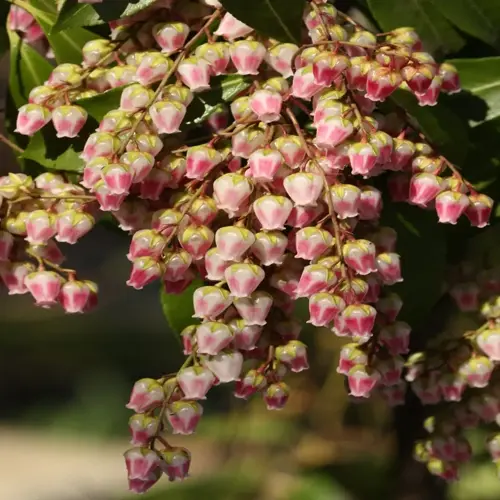

I poked a finger into my doorstep pot of male Rubella on a frosty morning. The compost was bone dry an inch down. A white crust of frost sat on top, so I had thought it held plenty of water. I filled the can and gave it a slow drink before the red buds took a hit. Caring for a skimmia in pots winter is really three things. You want free-draining compost, steady watering even when it feels too cold to bother, and shelter from hard frost.
Good skimmia container care starts with that watering point because it catches you out. A frosty top layer hides dry roots underneath, and your plant still loses water through its leaves on cold bright days. Stick a finger in before you trust the look of the surface, and water whenever you find it dry.
A pot is a harder home than the ground. Roots in open soil have the whole earth around them to buffer the cold and hold water. Roots in your container have only a thin wall of compost between them and the freezing air. So they freeze faster and they dry out faster. Your potted skimmia copes with both drought stress and frost stress at once. That double hit is why winter is the season most likely to set your plant back.
Your compost choice is simpler than you might think. People lump skimmia in with rhododendrons and camellias. So they reach for ericaceous compost out of habit. You do not need it. A good free-draining general purpose compost suits your plant well. Mix in a handful of grit and water runs through even faster.
Put your pot somewhere sheltered and shaded or part shaded, not in full winter sun. Bright cold sun pulls water out of the leaves while frozen roots cannot replace it, and that is what scorches your foliage brown.
Your position matters as much as your compost. Stand the pot against a north or east wall, under the shade of a larger shrub, or in the lee of the house. That keeps the worst of the wind and direct frost off your plant. The same shade your skimmia likes in summer protects it in winter too.
When a hard frost is forecast you can do a few practical things to insulate the roots. You want to keep that thin shell of compost from freezing solid for days on end.
- Group: Push several pots together in a tight cluster so they shield each other and share warmth instead of standing alone.
- Wrap: Lag the outside of the pot with hessian, bubble wrap, or fleece to slow how fast the roots chill.
- Lift: Stand the pot on feet or bricks so meltwater drains away and the base never sits in an icy puddle.
- Move tender pots into a porch or unheated shed during the very worst nights, then bring them back out after.
The mistake that does the most damage is the opposite of drought. Compost left soggy through a cold spell turns the pot into a block of ice and rots the roots. So check that every drainage hole runs free. Never leave your pot sitting in a saucer of water. Water it only once the compost has started to dry. Damp but not soggy is your target.
Keep a simple rhythm through the cold months and your plant will reward you. Check the moisture once a week, even when the weather feels too cold to garden. Water on the milder days. Keep your pot sheltered and draining freely. Overwintering skimmia in a pot is mostly about care and attention. A healthy plant pays you back with bright red buds that hold their colour right through to spring.
Read the full article: Skimmia Japonica: Complete Care Guide