
You control early blight tomatoes with garden habits, not a spray bottle. To control early blight tomatoes, you mulch the soil, water at the base, prune the lowest leaves, and give each plant room to breathe. Most home gardeners never need a fungicide for it. Early blight is one of the most manageable tomato problems. Your plants can carry a fair bit of it and still hand you a full harvest.
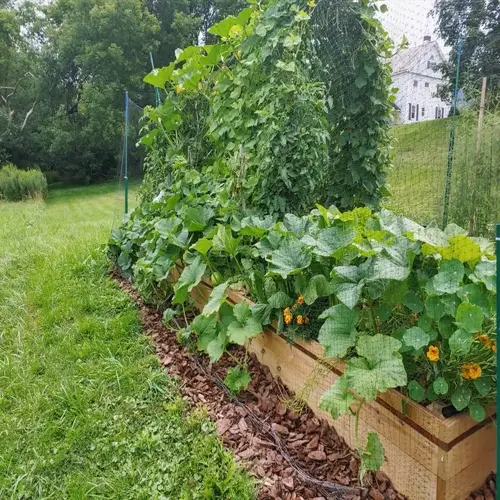
I am crouched in the damp, fenced raised bed by my Cherokee Purple. I snap off the lowest leaves, the ones with those little target rings of brown. I drop them in a bucket, not on the ground. Then I tuck a fresh handful of straw mulch in tight around each stem. The straw caps the soil so rain can't kick dirt up onto the foliage. The whole pass takes ten minutes a plant.
Here is what that routine fights. Early blight spores overwinter in the soil and in old plant debris. When rain or a hose hits bare dirt, those spores splash up onto the lowest leaves first. That is why damage always starts at the bottom and climbs. So the real job is to break the splash-and-airflow cycle, not to wipe the fungus out of your yard.
Good early blight prevention stacks a few simple habits together. None of them is hard, and each one cuts the spore's path to the leaves.
Mulch and water at the base
- Mulch: A 2 to 3 inch layer of straw caps the soil so spores can't splash onto leaves.
- Watering: Water at the soil line, never overhead, so the foliage stays dry and gives spores nowhere to land.
- Timing: Water in the morning so any stray splash dries off fast in the sun.
Airflow and pruning
- Staking: Stake or cage every plant so leaves dry quickly after rain or dew.
- Spacing: Set plants 24 to 36 inches apart so air moves freely between them.
- Pruning: Snap off the lowest leaves, but remove no more than one third of the plant at once.
Rotation and tough varieties
- Rotation: Keep a two-year gap before tomatoes return to a bed that grew them.
- Resistant types: Grow a bred variety like Iron Lady so part of your bed stays clean in a wet year.
- Cleanup: Pull old plants in fall so spores have no debris to overwinter in.
Pruning is the one to slow down on. Take off the bottom leaves that touch the soil or already show target rings, and stop there. Cut past one third of the plant and you stress it, which invites more trouble than the blight you removed. Clean your snips between plants so you don't carry spores down the row.
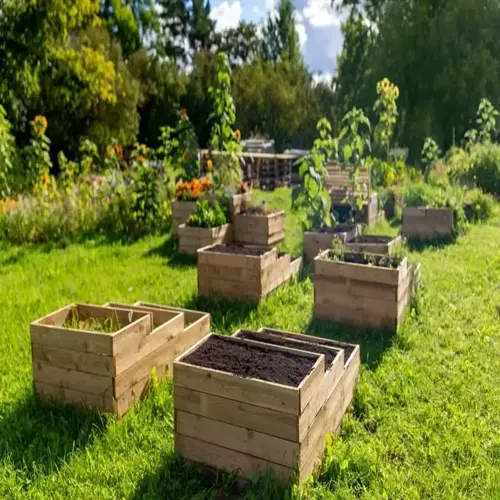
Plan the bed for next year too. Tomato crop rotation keeps you from planting tomatoes in soil that is loaded with last season's spores. Move them to a fresh spot and keep a two-year gap before tomatoes, peppers, or potatoes go back in. If your garden is small, that may mean a few large containers of clean potting mix instead. Either way, you starve the soil-borne spores of a host.
Stack the deck before you even plant by choosing a resistant variety. Iron Lady was bred to shrug off early blight, and it holds up far better than an heirloom in a wet summer. You can still grow your Cherokee Purple, but pair it with a tough variety so part of the bed stays clean no matter the weather.
Last thing, and it matters most. Some early blight is normal, and your plants tolerate a lot of it. A few spotted lower leaves do not cost you tomatoes. Combine mulch, base watering, airflow, light pruning, and rotation, then let the plant handle the rest. Reach for a copper or biofungicide spray only if a wet stretch pushes the spots up into the fruit-bearing canopy.
Read the full article: Tomato Blight: Identify, Treat, and Prevent It