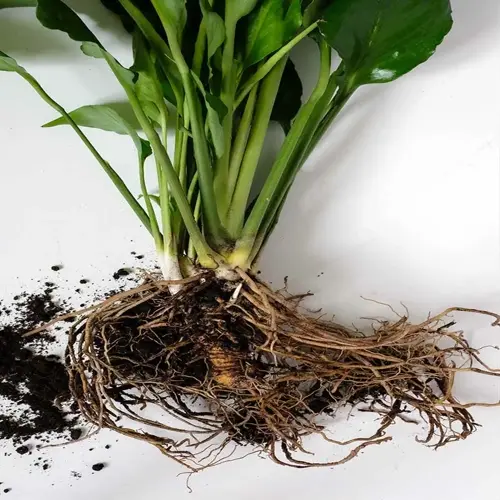

A fresh leaf section starts with no roots at all, and that is exactly how it should look. You can propagate without roots by cutting a leaf into pieces and letting each piece grow its own root system from the bottom up. Every snake plant cutting you take begins this way. A bare stub is a normal start for you, not a sign that something went wrong with your plant.
Here is what happens under the soil after you plant your cutting. The cut bottom of a bare leaf cutting seals over and forms a callus first, which protects the wound. Roots then push out of that callused end over the next few weeks. Once the roots take hold, a new pup shoots up from the base. Your cutting builds its whole root system and a new plant from nothing, so you do not need a single root to start.
Iowa State Extension lays out the method cleanly. Slice the leaf into 3 to 4 inch (7.5 to 10 centimeter) sections. Keep track of which end pointed down. A cutting only roots from its original bottom edge, so the bottom must go in the soil. Dip that bottom in a rooting hormone such as IBA or NAA to speed things along. Push the section 1 to 2 inches (2.5 to 5 centimeters) deep into moist mix. You should see pups in about 2 months.
Slice a 3 to 4 inch (7.5 to 10 centimeter) leaf section and let the cut end dry and callus for a day or two.
Dip only the bottom end in rooting hormone such as IBA or NAA to encourage roots, then tap off the excess.
Insert it bottom-end down 1 to 2 inches (2.5 to 5 centimeters) into moist medium, or stand it in a glass of water.
Place it in bright indirect light at 75 to 80 degrees Fahrenheit (24 to 27 Celsius) and wait for roots, then pups.
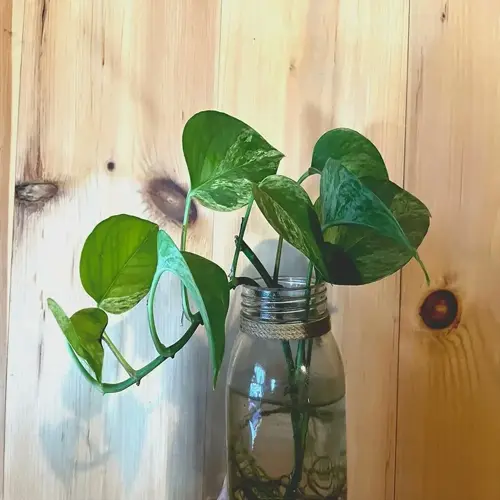
Water rooting works too, and it lets you watch your progress. Stand the cut piece in a glass with about an inch of water and set it on a bright sill. Swap the water every few days so it stays clear and fresh. White roots show up first. You move the piece into soil once those roots reach an inch or two long. Some growers leave the cutting in water for good, but soil gives you a stronger plant in the long run.
Warmth drives the whole process for you. Snake plant cuttings root fastest at 75 to 80 degrees Fahrenheit (24 to 27 Celsius), so a warm room beats a cold windowsill. Bright indirect light feeds the leaf without scorching it. Keep the mix barely moist, never soggy, because a wet callus rots before it can root. If your home runs cool in winter, a seedling heat mat under the pot keeps the roots active and speeds your timeline.
Patience pays off more than anything else here. When you propagate without roots, your cutting can sit for weeks with no visible change while it works on roots below the line. Resist the urge to tug on it, since pulling breaks the fragile new roots you cannot see. Give it a gentle test only after a month or two, and a slight resistance tells you the roots have gripped the soil.
Two things will save you grief. First, never plant a cutting upside down, since a flipped piece sits there for months and does nothing. Mark the bottom the moment you cut so you never lose track. Second, give a callus cutting a full day or two of drying time before it touches soil or water. That dry seal is what keeps rot out while your new roots form. Do both of these, and your bare leaf turns into a full plant on its own.
Read the full article: Snake Plant Propagation: A Complete Guide