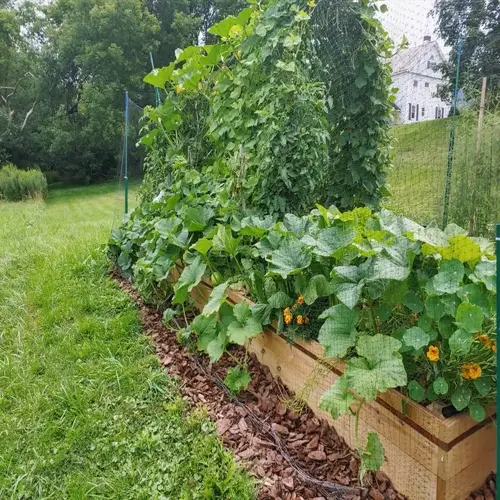

Early blight came back to my damp fenced raised bed three seasons in a row. Each fall I pulled every visible leaf, raked the surface clean, and felt sure I had beaten it. The next summer the same brown bullseye spots showed up on the lower leaves by July. The pathogen was overwintering in the soil and in bits of root and stem I had missed under the mulch.
The honest answer depends on the type. Tomato blight in soil breaks into two very different stories. Early blight survives for years in infected plant debris and the top layer of soil. Late blight usually does not stick around in bare ground because it needs living tissue to make it through winter.
Early blight comes from a fungus called Alternaria, and its spores are tough. They sit dormant in blight overwintering debris like old leaves, stems, and roots. They can stay viable for two to three years or more. Even a clean-looking bed holds spores in the soil itself, so a quick rake never gets all of them. That is why my fall cleanup kept failing. I was missing the buried scraps and the spores already in the dirt. If your bed has fought early blight, you should treat the soil as infected for at least two seasons.
Late blight plays by different rules. It needs living host tissue to overwinter. It cannot ride out a hard freeze in bare soil the way early blight can. Instead it survives on volunteer tomato and potato plants left in the ground. It also hides on cull piles and inside stored potatoes that carry it into the next season. Clear those living hosts and you cut off its path back into your garden.
This split explains why your clean bed still fails one year and stays healthy the next. Early blight is patient and soil-bound. Late blight is fragile once its host is gone. Knowing which one you fought tells you how hard you need to work the soil over winter. If it was early blight, your plan has to target the dirt itself, not just the leaves.
Your strongest tool is crop rotation for blight. Keep a minimum two-year rotation with no tomatoes, potatoes, peppers, or eggplant in the same bed. Those four are all in the nightshade family and they all feed early blight. With no host plant present, the spores in that soil slowly run out of food and lose their grip. A longer three to four year gap works even better in wet, fenced beds like mine.
Cleanup matters just as much as where you plant. Bag and bin infected debris instead of composting it, since most home piles never get hot enough to kill the spores. Pull every volunteer tomato and potato that sprouts, because each one can host the pathogen for free. Strip the lower leaves that touch the ground, and clear the stems and roots at the end of the season, not just the leaves you can see.
Draw a simple rotation map before spring so you do not plant from memory and slip up. Sketch your beds, label this year's nightshades, and shift them to fresh ground next season. Pair that map with strict debris removal and the soil-borne early blight loses its host plants year after year. Late blight, with no volunteers or stored potatoes to hide in, has nowhere to wait out the cold.
Read the full article: Tomato Blight: Identify, Treat, and Prevent It