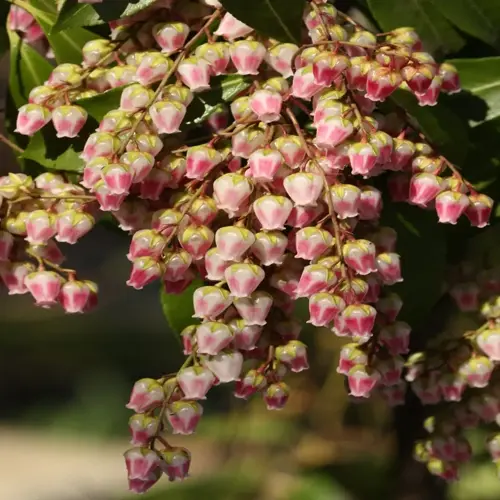

I planted one against a shaded fence in my coastal Connecticut garden. One warm July evening it stopped me cold. Deep pink spikes glowed there against the green. The air down the back-door path smelled like spice and honey at once. That plant is Ruby Spice summersweet, a pink-flowered form of Clethra alnifolia. The plain species blooms white. This one trades that pale color for bottlebrush blooms the shade of cotton candy.
The scent hits you first, and the color hits you second. You can spot those blooms from across a yard. White summersweet hides against green leaves. This pink summersweet stands out and pulls your eye straight to it. I have walked past the white kind and not noticed it was in bloom.
What sets it apart is the depth of that pink. Growers picked it as the darkest pink form of the species, and the color holds. Some pink summersweets wash out to a faded blush once midsummer heat hits. This one keeps its rich tone right through the hot weeks. So the show lasts the full bloom season instead of fading early.
The plant history is worth knowing too. Ruby Spice Clethra came out of Broken Arrow Nursery in Hamden, Connecticut. It has also won the RHS Award of Garden Merit. That award is a sign the plant does well in real gardens, not just in a catalog photo. So you can trust it to perform when you bring it home.
Size matters when you plan a spot for it. Your Ruby Spice summersweet reaches about 5 to 6 feet (1.5 to 1.8 m) tall and wide at maturity. That makes it a solid mid-sized plant for the back of your border. It also fits a damp corner of your yard where fussier shrubs sulk and rot.
The bloom time is mid to late summer, and that timing is part of the appeal for you. Most shrubs flower in spring and go quiet by July. This one waits and fills the gap when your garden needs color most. The spikes can run 3 to 6 inches long and stand up well on the stems.
Care follows the same rules as any other summersweet. Give it moist, acidic soil and a spot in full sun to part shade. It takes wet ground that drowns most shrubs, so a low, soggy patch suits it well. Mine sits in a spot that floods after heavy rain, and it shrugs it off. More sun gives you more flowers, but it still blooms in part shade. The blooms also pull in bees and butterflies all summer, a nice bonus for the rest of the bed.
It spreads slowly by suckers, so your single plant fills out into a small clump over the years. You can dig the suckers out each spring if you want to keep it tidy. Or let them run and form a loose, fragrant screen along your fence. The fall color is a clear yellow, so the plant earns its space past bloom time.
Place it where the pink reads against a backdrop of green. A dark fence, a hedge, or a cluster of leafy neighbors makes the color pop instead of fading in. Put it near a path or a door so you catch the scent on warm evenings without going to look for it.
One honest caveat on size. If your space is tight, a shrub this big can crowd a small bed fast. In that case, look at a dwarf white form like Hummingbird, which tops out around 3 feet. You lose the pink, but you gain a plant that fits a courtyard or a narrow strip without taking over the whole spot.
Read the full article: Summersweet Shrub: Care and Growing Guide