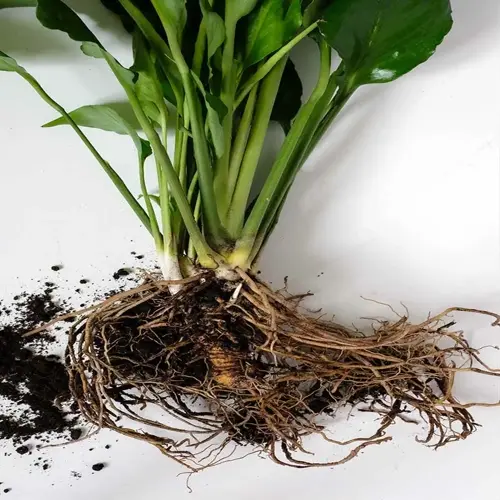

"What's the quickest way to get more of these?" my friend asked, eyeing the green Hahnii on my south-facing windowsill. I pulled the plant out of its pot, teased a rooted section loose with my thumbs, and set it in her palm. I sent her home with a whole plant, not a project. That is the fastest propagation method for a snake plant, and it is snake plant division, hands down.
Division wins because you are not growing anything new. You are splitting a plant that already works. Each piece you pull away keeps its own roots and its own leaves, so it stands up in fresh soil the same day and keeps right on growing. You skip the part where a baby plant has to build itself from a scrap. There is no callusing, no waiting, no guessing whether your cutting will take or rot. You start with a complete plant and you end with two complete plants.
A leaf cutting starts from zero. You slice a leaf, let the cut callus, then push it into soil or water and wait. The leaf has to build roots before it can feed itself, and only after that does a tiny new shoot break the surface. Iowa State puts that wait at about two months before plantlets appear from a leaf cutting. A division skips every bit of that lag. Think about what your leaf is doing during those weeks. It spends its stored energy on roots you cannot see. You have nothing to show for it up top. A division flips that. Your roots are already there on day one. So your plant feeds itself right away and just keeps growing leaves.
Here is how the common methods stack up on raw speed.
The grid makes the gap clear. Water cuttings feel quick because you watch white roots form in a few weeks, but you still have to pot them up and grow them on. Soil cuttings are the slowest of the lot. A division is the only true instant plant in the bunch, since the moment it hits soil you own a finished snake plant.
The trick is having a parent worth splitting. A mature, rootbound plant pushes out side shoots, and Penn State notes that older snake plants form these offsets that separate with little fuss. The best time for your snake plant division is at spring repotting. You are already pulling the plant out, so the root ball is loose and easy to read. Spring also gives your new divisions the long, bright days they want to settle in fast. If your plant is young or still small in its pot, wait a season and let it bulk up first, because a crowded parent gives you cleaner, more even splits.
Pick a plant that is crowding its pot and shows clusters of snake plant pups poking up near the edges. Slide the whole root ball out, brush off loose soil, and look for the natural seams where a pup connects to the main clump by its own short rhizome. Cut there with a clean knife, or just snap the section free with your hands if it gives easily.
There is one more reason to reach for division over cuttings. A variegated snake plant, like the yellow-edged Laurentii, loses its stripes when grown from a leaf cutting and comes back plain green. Division keeps the cultivar intact because the new plant is the same plant, not a fresh seedling-like start. So if you paid for the color, split it, never slice a leaf.
Want more snake plants this weekend? Find your most crowded pot, divide it at the rhizome, and replant both halves. You go from one plant to two grown plants in under ten minutes, with no rooting wait at all. That is why division stays my go-to fastest propagation method for anyone who wants a real plant today, not a leaf and a long wait.
Read the full article: Snake Plant Propagation: A Complete Guide