Tree · Fagaceae
American Beech
Fagus grandifolia
Hand it rich, acidic, moist soil and plenty of room to spread, and the American beech turns into a shade tree your great-grandkids will know.
Full sun
Every 7–14 days
USDA 3–9
60–80 ft · 18.3–24.4 m
Overview
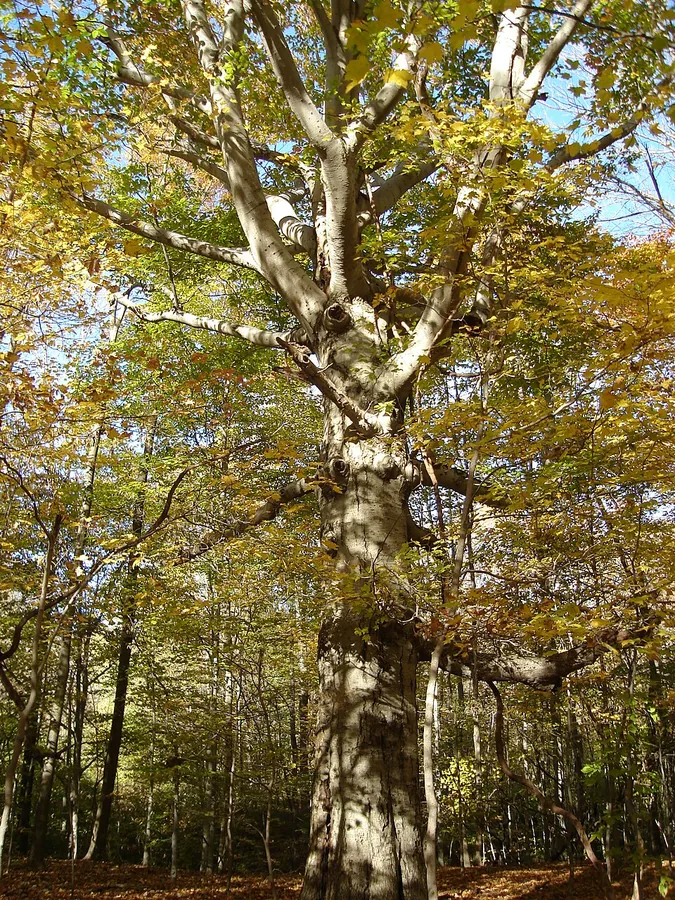
The American beech is a slow, easygoing hardwood from the eastern woods, and you'll usually know it right away by that smooth, silver-gray bark that stays sleek even when every tree around it has gone rough and craggy. It's part of the Fagaceae family, so it's related to the oaks and chestnuts. Give it time and it'll climb to 60 to 80 feet (18 to 24 m), drop deep shade, and stick around for hundreds of years.
What makes it worth planting isn't speed, it's staying power. Young trees hang onto their coppery dead leaves all winter, a quirk called marcescence that gives the bare woods a warm glow, and older ones drop little triangular beechnuts that wildlife loves every few years. Just remember it wants a big, open spot, not a cramped little yard, because those shallow roots spread out wide and the canopy gets about as wide as the tree is tall.
Beech is a bit picky, and honestly, who can blame it? It wants deep, rich, moist, acidic soil and clean air, and it'll sulk in packed-down ground, drought, heat, or road salt. Two nasty imports, beech leaf disease and beech bark disease, are now going after established trees all over its range, so picking a good spot and keeping the tree healthy matters more than it used to.
Care
The short version: get it into deep, rich, moist, acidic, well-drained loam with plenty of elbow room, keep young trees watered through dry spells until they're settled, and keep the thin bark safe from cuts and sunscald.
Light
American beech is happy in full sun, but it handles shade better than just about any other tree, which is exactly how it ends up ruling the forest floor and then climbing into the canopy above. Trees out in the open branch low and wide, while shaded ones stretch up toward whatever light they can get.
Water
Keep that soil evenly moist, because beech really can't deal with drought, heat, or soggy ground. Older trees in decent native soil mostly take care of themselves, but a young one needs a deep drink during dry spells, roughly every 7 to 14 days, until it gets comfortable.
Soil
This tree's after deep, rich, moist, well-drained loam that leans a little acidic, ideally a pH of 5.0 to 6.5. It won't put up with compaction or road salt, so do it a favor and keep the root zone loose and left alone.
Temperature
Beech is tough as nails in the cold, shrugging off winter lows near -40°F (-40°C) and summer heat up around 100°F (38°C), which lands it in USDA zones 3 to 9. Honestly, cold bothers it way less than drought or a hot, exposed spot ever would.
Humidity
Regular outdoor humidity is plenty, so there's really no number to fuss over here. What matters way more is steady moisture down at the roots and clean air moving around the canopy.
Feeding
A beech in good native soil barely needs feeding at all. If it's looking a little sluggish, a balanced slow-release fertilizer in spring or just a layer of leaf-litter mulch over those shallow roots does the trick without pushing it too hard.
Pruning
Beech hardly needs any pruning. Snip out the dead, damaged, or crossing branches in late winter to early spring, and call it done. That thin, smooth bark scars and sunscalds so easily that every cut you skip is one less wound the tree has to patch up.
Repotting
This is a landscape tree, not a potted one, and those shallow, spreading roots make transplanting a pain once it's grown. Only move a beech while it's young, and keep an eye on a nursery transplant for circling roots, stunted new growth, or dieback that tells you it had a rough start.
Size & spacing
Plan for a tree that'll hit 60 to 80 feet (18 to 24 m) tall and spread 40 to 80 feet (12 to 24 m) wide. Give it a big, open spot well away from buildings, paving, and other trees, because the canopy and the surface roots both reach a long way out.
When to plant
You'll want to plant beech while it's still young, because once those shallow, spreading roots are set, moving an older tree is a real headache. Pop it in the ground in spring or fall, keep it watered through its first couple of dry spells, and then just let it take its own sweet time. The yellowish-green flowers open up March to May, and the nuts ripen September to October once the tree's old enough to bear.
Northern hemisphere
Southern hemisphere
Typical months for a temperate climate: start earlier in warm zones, later where spring frosts linger.
- Plant: Spring or fall, while young; transplanting is difficult once established.
- Harvest: Yellowish-green flowers March to May; triangular beechnuts ripen September to October.
Hardiness
USDA hardiness zones: 3–9
Temperature: down to -40°C
Troubleshooting
Most of the time, beech trouble shows up on the leaves or the bark, and the two diseases that matter most are newcomers you'll really want to catch early. Have a look at the signs below, and if something serious is going on, call in a certified arborist instead of guessing your way through it.
Dark-striped leaves curling up and turning leathery
That's beech leaf disease, and it comes from a tiny nematode that gets into the buds and warps the new leaves before they've even opened. Want the easiest way to spot it? Hold a spring leaf up and peek at the underside, where those dark bands really pop. There's no fix you can do yourself, so phone a certified arborist or your state forestry office, keep the tree mulched and watered if things get dry, and flag any new outbreaks so they can keep tabs on it.
Fix:
- Consult a certified arborist or state forestry office for current management options
- Phosphite fertilizers may boost tree vigor and suppress nematode activity
- The nematicide/fungicide fluopyram (Broadform) has reduced nematode populations in trials
- Maintain tree vigor with mulch and watering during drought
Fuzzy white specks on bark that later crack into cankers
This one's beech bark disease, and it's really a one-two punch. The felted beech scale shows up first and speckles that smooth trunk with little white waxy dots, and then Neonectria fungi sneak into the feeding wounds and carve out those sunken, weeping cankers. Catch the scale while it's early and an arborist can step in before the fungus gets a grip. Once the cankers and crown dieback are well along, though, taking a badly hit tree down is usually the kindest move for the trees nearby.
Fix:
- Consult an arborist; insecticide treatments targeting the scale before fungal infection can help in early stages
- Remove and properly dispose of severely diseased trees to reduce spread
- Avoid wounding bark
Fluffy white bugs bobbing together up and down the twigs
Good news, because these are just beech blight aphids, and folks call them boogie-woogie aphids since the whole colony sways back and forth together the second you bump it. They dribble sticky honeydew, and that feeds a layer of black sooty mold on the leaves and the ground underneath. It's almost always just an eyesore, so you can let them be, knock a small bunch off with a firm blast of the hose, or leave it to the natural predators.
Fix:
- Usually cosmetic and tolerable; no treatment normally needed
- Hose off small colonies with a strong stream of water
- Encourage natural predators
A white powdery film coating the leaves
That dusty look is powdery mildew, a fungus that settles on the tops of the leaves late in the year when the air's muggy and the tree's sitting in shade. On a big shade tree it's rarely more than a cosmetic thing. Just rake up the dropped leaves and toss them, let a bit more air move through the canopy if you can manage it, and don't bother with the fungicide.
Fix:
- Rarely serious; improve air circulation
- Rake and remove fallen infected leaves
- Fungicide is seldom warranted on a mature shade tree
Toxicity
Good news for the whole household: American beech is safe around pets, livestock, and kids. It's not on the ASPCA toxic list, and animals browse beech woods all the time. The one little caveat? The raw nuts and foliage have natural saponins and oxalates that can upset a stomach if you eat a bunch, so cook any beechnuts you're planning to eat.
Safe for
People · Cats · Dogs · Horses · Rabbits · Livestock · Birds
Cats None
Beech isn't on the ASPCA's toxic-for-cats list, so if your cat wanders over for a sniff or a quick nibble, there's nothing to stress about.
Dogs None
Dogs are fine around beech. If one scarfs down a whole pile of raw fallen nuts it might feel a little off from the saponins, but that sorts itself out pretty quick.
Horses Safe
The leaves and nuts aren't considered poisonous to horses, so a horse can graze right around the tree and be totally fine.
Rabbits Safe
Rabbits can munch beech leaves no problem. The raw nuts are a bit much, though, so it's best to keep those as the now-and-then treat they'd find out in the wild.
Livestock Safe
Cattle, sheep, and goats wander beech woods without any fuss, and that fallen mast has been feeding grazing animals for ages.
Birds Safe
Jays, turkeys, and loads of songbirds go wild for beechnuts and crack them open all day with no trouble at all.
People Safe
Roasted beechnuts are a tasty little snack and the tree's non-toxic. Plow through a big batch of the raw nuts, leaves, or buds, though, and the natural saponins and oxalates can upset your stomach, so just cook the nuts first and you're good.
Beechnuts are edible to wildlife and to people in small amounts, but raw beechnuts (and the leaves and buds) contain saponin glycosides (fagin) and oxalates, so eating large quantities of raw nuts can cause gastrointestinal upset in people and some animals; roasting reduces this. This nuance does not change the cats/dogs rating of none.
Varieties
The American beech pretty much does its own thing, but its European cousin has been bred into all sorts of ornamental shapes that you'll spot way more often in gardens and parks.
Fagus sylvatica (European beech)
It's a close Old World cousin that's a bit smaller overall, with darker gray bark and shorter, rounder leaves trimmed in fine hairs along wavy edges, and you'll run into it as a garden ornamental way more than the American one.
Fagus sylvatica 'Purpurea' (copper / purple beech, Atropurpurea Group)
It's a European beech grown for leaves that range from deep purple to coppery.
Fagus sylvatica f. pendula 'Pendula' (weeping European beech)
It's a European beech whose branches really swoop down into that classic weeping look.
Fagus sylvatica 'Dawyck' (columnar / fastigiate European beech)
It's a skinny, upright European beech that grows like a column, and there's even a purple-leaved one called 'Dawyck Purple' if that's your thing.
How to propagate
You've got a few ways to go here: grow beech from its nuts, coax it along using its own suckering habit, or graft it to hold onto a named form. Just know that whichever route you pick, this tree won't be rushed.
SeedModerate
Sow fresh beechnuts in fall, or cold-stratify over winter for spring sowing. · Several years to establish; slow-growing
Most people just grow beech straight from the nuts, but here's the thing: the seed needs a good cold spell before it'll wake up. So either pop fresh beechnuts in the ground come fall, or chill them through winter and sow in spring, and the seedlings show up that first year, since the nuts go bad fast after that. After that? It's all patience, with several years to establish and slow going the whole time. And good nut crops only turn up in those scattered mast years, so grab them while you can.
LayeringModerate
Growing season · One to two seasons to root
Beech already clones itself out in the wild through root suckers and stump sprouts, so why not borrow that trick and layer a tree during the growing season? Shoots you layer usually take about one to two seasons to root, but keep in mind the shallow roots make moving it later on a pretty fiddly job.
GraftingDemanding
Late winter to spring · One to two seasons
When it comes to named cultivars, especially European beech ones, growers graft them to keep that exact shape and leaf color, because seed just won't pass those traits along. Do it from late winter into spring, give the graft about one to two seasons to knit together and settle, and know that it takes a fairly skilled hand.
Myths
The tree's non-toxic, right? So there's no harm in eating as many raw beechnuts as you like.
Sure, the tree won't poison your cat or dog, and yes, the nuts really are edible, but here's the catch: the raw nuts, leaves, and buds still carry saponin glycosides (fagin) and oxalates. Eat your way through a big handful of the raw nuts and you might end up with a sour stomach, and some animals can too. Roasting or cooking the nuts breaks down the irritants and is the safe way to enjoy them.
Want a lush lawn under your beech? No problem, grass and garden plants grow just fine down there.
Think about it: between the heavy shade up top, those shallow surface roots grabbing every bit of water, and the tree's strong love of undisturbed acidic ground, hardly anything's going to make it down there. Underplanting and turf rarely succeed beneath a mature beech.
Sources
- ASPCA Animal Poison Control
- NC State Extension Gardener Plant Toolbox
- USDA Forest Service, Fire Effects Information System (FEIS)
- Penn State Extension
- University of New Hampshire Extension
- UMass Amherst Center for Agriculture, Food, and the Environment
- ASPCA Animal Poison Control
- NC State Extension Gardener Plant Toolbox