Ornamental · Campanulaceae
Balloon Flower
Platycodon grandiflorus
Tuck it into full sun and sharp drainage just once, and those puffed-up buds keep popping open every summer for years.
Full sun
Every 5–10 days
USDA 3–8
12–30 in · 30–76 cm
Overview
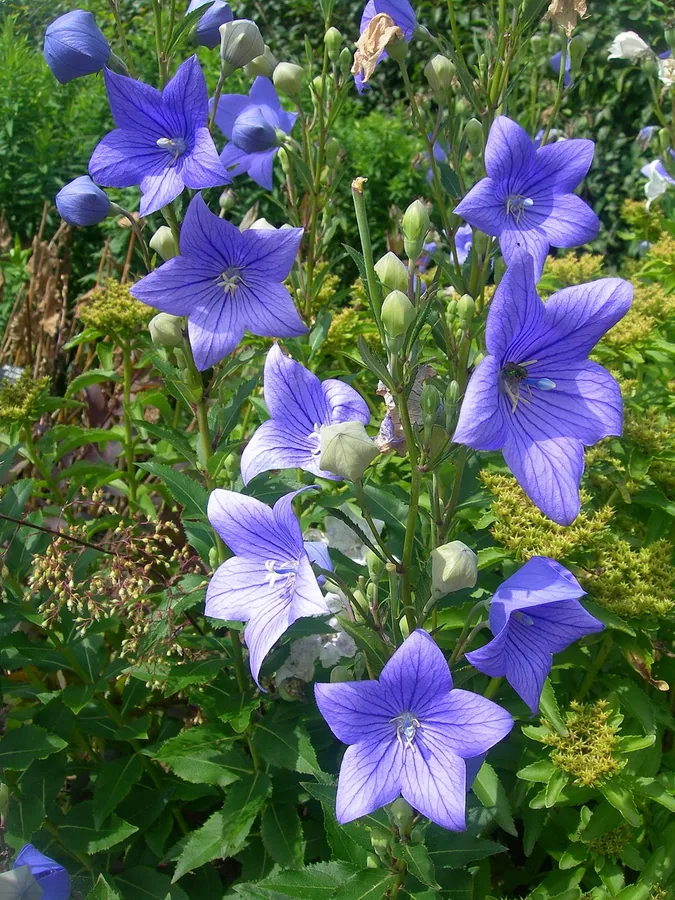
Ever wonder how balloon flower got its name? It's all about the buds. Each one puffs up into a little inflated pod, then pops open into a broad, five-pointed star, most often deep blue but sometimes white or pink. It's a hardy perennial in the bellflower family, native to East Asia, and plenty tough enough to return year after year across zones 3 through 8.
If you like a perennial that doesn't demand much, this one's for you. It wants full sun, soil that drains well, and honestly not a lot beyond that, blooming from June into August once it's settled. The taller versions come with one quirk worth a heads-up: they like to flop without support, which is why a lot of folks cut them back in late spring to keep them tidy.
There's one habit that throws new growers for a loop. Balloon flower is a late riser come spring, sending up new stems weeks after the rest of the bed has already greened up, so plenty of people figure it's a goner. Mark its spot, fight the urge to dig, and it'll come back on its own timeline.
Care
The short version: full sun and light, well-drained soil, with steady moisture but never soggy roots. Give it a light feed in spring, cut the taller stems back in May to keep them from flopping, and otherwise just let this easygoing perennial do its thing.
Light
Give balloon flower full sun if you want the sturdiest stems and the most blooms. It'll put up with partial shade, but plants that don't get enough light tend to stretch, weaken, and lean over a lot more than ones out in the open.
Water
Keep the soil evenly moist but never waterlogged, watering about every 5 to 10 days once the top inch dries out. Drainage is the one thing that really matters here, because roots left sitting in wet ground rot in a hurry.
Soil
Go for light, rich, well-drained loam that lets water pass through freely. A slightly acidic pH of 5.5 to 6.0 is what it likes best, and soil that hangs onto water is the quickest way to lose the plant.
Temperature
This is a truly cold-hardy perennial that rides out winters as low as -29°F (-34°C) and shrugs off summer heat up to around 90°F (32°C). That covers zones 3 through 8 without any special fuss.
Humidity
Everyday outdoor humidity is all it needs, so there's no number to chase. Air movement matters more than moisture in the air, since still, damp conditions are an open invitation to rot and slugs.
Feeding
A light touch is really all this plant asks for. Mix a bit of balanced fertilizer or compost into the soil in spring and leave it be, because overfeeding just gives you soft, floppy stems instead of flowers.
Pruning
Snip off spent blooms to keep the flowers coming, and cut taller stems back by half in May to head off flopping and dodge the staking. Leave those old stems standing through winter so they mark where the late crowns will pop up.
Repotting
Balloon flower rarely needs repotting, and it really doesn't like having its roots messed with. Only move a container-grown plant when flowering tails off or roots start circling the pot, and go gently with that brittle taproot.
Size & spacing
Plants grow 12 to 30 inches (30 to 76 cm) tall and spread 12 to 18 inches (30 to 46 cm) wide, depending on the cultivar. Give each one that much elbow room so air can move freely and the stems stay standing tall.
When to plant
Balloon flower keeps to a late schedule. Get seeds going indoors in late winter, move young plants outside after the last frost once the soil warms up, and watch those inflated buds open from June into August.
Northern hemisphere
Southern hemisphere
Typical months for a temperate climate: start earlier in warm zones, later where spring frosts linger.
- Sow: Late winter to early spring, about 6-8 weeks before last frost
- Plant: After last spring frost once soil has warmed
- Harvest: June to August
Hardiness
USDA hardiness zones: 3–8
Temperature: down to -40°C
Troubleshooting
Balloon flower stays happy with hardly any fuss, and most of its problems trace back to too much water or hungry slugs instead of disease. Keep an eye on the roots and the lower leaves, then match what you're seeing to the notes below before you do anything.
Drooping, yellowing leaves and squishy roots in wet ground
When a plant wilts, yellows, and the roots turn soft and dark, you're looking at root rot, and soggy soil is nearly always the culprit rather than some passing disease. Lift a failing plant and you'll spot mushy roots sitting in ground that just won't dry out. So what helps? Better drainage, a lighter watering hand, and moving any survivors into airy, well-drained loam.
Fix:
- Improve drainage and reduce watering
- Remove severely affected plants
- Replant in light, well-drained loam
Chewed-up leaves with shiny slime trails
Notice ragged holes and a shiny silver streak? That's the calling card of slugs and snails munching away once the sun goes down. Grab a flashlight after dark or right after a rain shower and you'll likely catch them red-handed. Pick them off, tidy up the damp hiding spots, and put down some iron-phosphate bait if the nibbling won't quit.
Fix:
- Hand-pick slugs and snails in the evening
- Remove debris and mulch that shelters them
- Use traps or iron-phosphate baits if needed
Tall stems leaning over and sprawling out
The taller types just like to flop over once they hit their full height, and a heavy rain or a shady spot only makes things worse. Want sturdier stems? Plant them in full sun, and trim everything back by half in May to keep the height in check. For whatever still leans, a stake does the trick.
Fix:
- Stake taller plants
- Cut stems back by half in May to reduce height
- Grow in full sun for sturdier stems
Toxicity
Here's some good news: balloon flower is safe to keep around the whole household. The ASPCA doesn't list it as toxic to pets, and it isn't flagged as poisonous to people either. The root is actually a traditional Korean vegetable called doraji, though it does carry saponins that can upset a stomach if you eat raw plant material in quantity.
Safe for
People · Cats · Dogs · Horses · Rabbits · Livestock · Birds
Cats None
You can relax with cats around this one, since the ASPCA flags no toxic compounds in it. If a curious cat takes a nibble, the saponins might bring on a touch of stomach upset, but that's about as far as it goes.
Dogs None
Dogs are welcome in the same garden, no worries there. It's nowhere on the ASPCA toxic list, and a mouthful of leaves will, at worst, lead to a quick, mild tummy ache.
Horses Safe
Nothing to fret about with horses. None of the toxins that bother grazing animals are found in this plant.
Rabbits Safe
Rabbits can nibble away without coming to harm, but those saponins mean it's best kept to a small taste rather than a regular meal.
Livestock Safe
Cattle, goats, and sheep are fine grazing nearby, because not a single part of it is poisonous to them.
Birds Safe
Whether they're backyard visitors or wild, birds have nothing to fear from the plant or its seeds.
People Safe
People are safe with it too, and the root is actually a real food. Korean cooks turn it into doraji, though eating raw root in quantity can upset your stomach thanks to the saponins.
Roots and other parts contain saponins (platycosides); eating raw plant material in quantity could cause mild stomach upset, and traditional use involves preparing the root before eating.
Varieties
Most balloon flowers you'll find for sale are named cultivars picked for their height or flower color. Here are the ones you're most likely to come across.
Astra Blue
Think of a small, tidy dwarf whose plump violet-blue balloon buds spread open into broad, star-shaped blooms.
Fuji White
Here's a taller pick that swaps the familiar blue for crisp white bell-shaped blooms.
Komachi
A quirky one whose blue buds stay shut in their puffed-up balloon shape and never quite open up.
Sentimental Blue
Looking for something tiny that flowers freely? This blue-flowered dwarf fits a border edge or a container nicely.
How to propagate
Seed is really the way to go with balloon flower, since that brittle taproot makes the other methods more trouble than they're worth.
SeedEasy
Sow indoors in late winter/early spring or direct sow after frost · One to two seasons to reach flowering size
Seed really is the simplest, best route for raising balloon flower. Get it going indoors in late winter or early spring, or pop it straight in the ground once frost is gone, and you'll see flowering size in one to two seasons. Since the roots hate being bothered, sowing seed beats wrestling with an established clump every time.
DivisionDemanding
Spring · Variable; recovery can be slow
Sure, you can split a plant in spring, but that delicate, fleshy taproot makes it tricky, and the plant won't thank you for it. Recovery comes slow and patchy, so leaving an established clump right where it is tends to be the smarter call.
Stem cuttingsModerate
Late spring to early summer · Several weeks to root
Taking basal stem cuttings in late spring or early summer gives you a way to make more plants while leaving the taproot untouched. Just be patient: they'll need several weeks to root before you can move them along.
Myths
Balloon flowers are easy to lift and divide like most clumping perennials.
Here's the catch: the roots are fleshy and brittle, so digging up and splitting a clump usually sets the plant way back or kills it outright. Start new plants from seed and leave established ones alone once they've settled in.
The plant has died because nothing comes up in early spring.
Don't panic, it's just a late riser, and fresh stems poke up well into spring once most perennials are already going. Mark where each plant sits and hold off on early digging so the crowns don't get nicked before they wake up.