Ornamental · Sarraceniaceae
American Pitcher Plant
Sarracenia
Hand it full sun, rain-pure water, and a chilly winter break, and the pitcher plant will go catch its own supper.
Full sun
Every 1–3 days
1460–1825 days
USDA 6–8
Overview
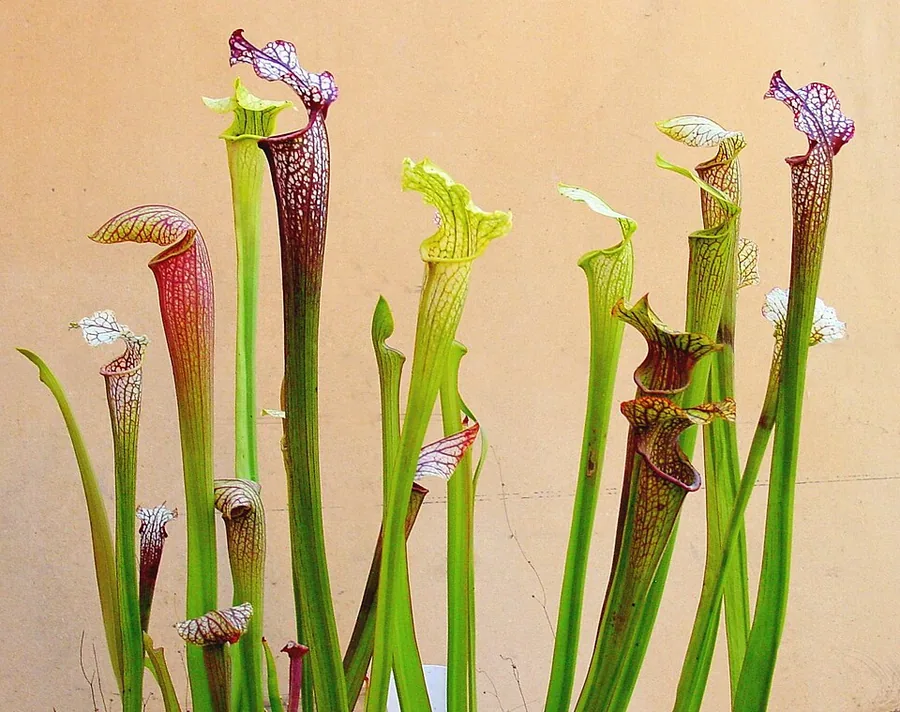
Here's a plant that flips the script on how feeding usually works. Rather than drawing nutrients up from the dirt, the American pitcher plant grabs and digests insects to get fed. Why go to all that trouble? Because Sarracenia call nutrient-poor acidic bogs home, and that ground barely offers them anything. Each pitcher is really a leaf that's been reshaped into a slippery trap, dabbed with nectar to coax bugs down toward the bottom.
Being temperate plants from the wetlands of eastern North America, where they come from drives the whole care routine. They like plenty of bright light, soggy roots while they're actively growing, and an honest cold stretch over winter. Cheat them out of that winter dormancy and the plant just gradually peters out, even if you nail everything else from spring through fall.
That doesn't make them difficult, just specific about what they like. Hand them rainwater rather than tap, a peat-and-sand blend rather than potting mix, and a bright spot sitting in a water tray, and you've got hardy perennials that live a long time and bulk up every spring. Mess up the water or the winter rest, though, and those healthy traps turn into browned-out pitchers and a rotting crown.
Care
The short version: lots of sun, a pot that stays soaked in a tray of rain or distilled water, a thin peat-and-sand mix that never sees fertilizer, and a cold winter break so the plant can settle into dormancy.
Light
Aim for full sun, with about 6 or more hours of direct light each day if you can swing it. All that sun is what pulls out the red and purple veining and keeps the pitchers tall. Stick the plant in shade and the traps flop over, wash out, and snag a lot fewer bugs.
Water
Through the growing season, keep that medium soaking wet by sitting the pot in a shallow tray of water, bog-style, just be sure the rhizome and crown ride above the waterline. Stick with mineral-free water only, so distilled, reverse-osmosis, or rainwater, because the salts dissolved in tap water pile up and scorch the plant. Come winter, back off and let the mix go just damp instead of soaked.
Soil
Pot it in a thin carnivorous blend of sphagnum peat moss and sand or perlite, about an even split. You want the pH on the acidic side, somewhere between 4.0 and 6.0. Steer clear of regular potting soil, and don't toss in any fertilizer or lime, since every one of those will finish the plant off.
Temperature
These guys handle a big temperature range, from roughly 5°F to 95°F (-15°C to 35°C), which is enough for a steamy bog summer and a hard freeze in winter. And that cold-hardiness is the whole idea, since they rely on the chill to flip into dormancy.
Humidity
Ordinary humidity in the 40% to 70% band works just fine for them, and the soggy tray underneath keeps the air near the pitchers damp anyway. No reason to mist or fuss over hitting some bigger number.
Feeding
Skip feeding this one entirely. The pitchers catch and dissolve their own insects, so any fertilizer in the soil, or a bit of greasy food dropped into a trap, will only burn it. As long as it's pulling in bugs and getting sun, it's already got the whole package.
Pruning
Early in spring, right before the new growth and flowers turn up, snip off the dead brown pitchers. Hang on to that old foliage over winter, though, because it keeps the crown safe from the cold. Then clip the spent flower stalks once blooming wraps up.
Repotting
Plan to repot every 2 to 3 years in early spring, which also happens to be the perfect time to split the rhizome. Bump it up when the rhizome crowds the pot's rim, roots poke out the drainage holes, or the mix has fallen apart and quit holding water. Use fresh peat-and-sand every go.
Size & spacing
Grown plants reach 6 to 36 inches (15 to 91 cm) tall, which depends on the species, and fan out 6 to 24 inches (15 to 60 cm) across. The towering trumpets and the stubby purple sorts land at the far ends of that spread.
When to plant
Everything a pitcher plant does follows the calendar. The blooms show up in spring right as the fresh pitchers come along, the traps stay busy all summer, and then the whole thing browns over and naps through a cold winter before it kicks off again.
Northern hemisphere
Southern hemisphere
Typical months for a temperate climate: start earlier in warm zones, later where spring frosts linger.
- Sow: Late winter; seed needs about 4-8 weeks of cold-moist stratification before sowing
- Plant: Spring, after the last hard frost
- Harvest: Spring (flowers open in spring as or just before new pitchers emerge)
Hardiness
USDA hardiness zones: 6–8
Temperature: down to -23°C
Troubleshooting
Nearly every pitcher plant problem comes down to water, light, or a winter rest that got skipped. Take a look at the pitchers and the rhizome and you can usually tell whether you're seeing a normal seasonal shift or something actually going wrong. Find your symptom below before you do anything.
Browning tips, stalled growth, and a white crust over the soil
A white crust on the mix plus scorched leaf tips usually mean mineral salt damage from tap water, fertilizer, or regular potting soil. Swap over to distilled, reverse-osmosis, or rainwater and run plenty of it through the medium to rinse the salts out. And if there's garden mix or potting soil in there, repot into fresh peat-and-sand, and never feed the soil.
Fix:
- Switch to distilled, reverse-osmosis, or rainwater only
- Flush the medium repeatedly with mineral-free water to leach salts
- Repot into fresh peat-and-sand mix if ordinary potting soil was used
- Never fertilize the soil
A mushy, blackened rhizome with the whole plant caving in
A soft rhizome that smells bad is a sign of crown rot, usually from a soaked crown, stale air, or a winter that ran too warm. Pull the plant up, trim off every rotted bit, and replant the firm chunks into fresh damp peat-and-sand. Water it only from below using the tray method and keep the crown up above the waterline so it never sits soggy.
Fix:
- Lift the plant and cut away all rotted tissue
- Repot firm sections into fresh damp peat-and-sand mix
- Keep the crown above the waterline and wet only from below via the tray method
Floppy, washed-out pitchers that have lost their color
Pitchers that sag over and shed their red and purple veining are simply hungry for light. Get the plant into full sun with 6 or more hours of direct light and the next round of growth comes back upright with bright markings. If it's been parked somewhere dim, ease it over little by little, because jumping straight into strong sun can burn the leaves.
Fix:
- Move to full sun with 6 or more hours of direct light
- Acclimate gradually if moving from a low-light spot to avoid scorch
Pitchers going brown and dying off in fall and winter
Don't panic, this is just winter dormancy doing its thing. Once the days get short and the air turns cool, the plant eases off and lets the old pitchers brown while the rhizome stays solid down in the soil. Leave that dead foliage where it is over winter so it covers the crown, keep the mix barely damp, and snip the brown pitchers away in early spring before fresh growth shows up.
Fix:
- Treat as normal seasonal behavior, not disease
- Keep the medium just damp (not deeply flooded) through dormancy
- Trim the dead pitchers in early spring before new growth
Toxicity
If you've got pets, here's the part you'll like: the American pitcher plant is not toxic. There's no known poison in it, and the digestive juice down in the pitchers is way too weak to hurt a pet or a person. The catch is just that the plant is delicate, so the reason to keep it up high is really about saving those brittle traps, not the nose that's poking at them.
Safe for
People · Cats · Dogs · Horses · Rabbits · Livestock · Birds
Cats Safe
There's no known toxic compound here, so a nosy cat that swats or gnaws on a pitcher won't get poisoned. The fragile leaves are really the only casualty in that scenario.
Dogs Safe
A dog can sniff or nibble at the plant without coming to harm, since the digestive juice in the pitchers is so weak. Worst case, a big mouthful of plant might leave its tummy off for a little while.
Horses Safe
Nothing in the plant poisons horses, and its relative the California pitcher plant lands on the ASPCA non-toxic list.
Rabbits Safe
A rabbit can munch a stray pitcher with zero risk of poisoning. There's no harmful toxin in this plant at all.
Livestock Safe
Grazing animals have nothing to fear from these bog plants. They hardly ever run into one anyway, since pitcher plants grow in soggy, acidic ground far from any pasture.
Birds Safe
Birds get no toxic threat from the leaves or the trapping juice. A little bird's a lot likelier to swipe the bugs out of the pitchers than to come to any harm.
People Safe
Touching the plant or brushing past it does no harm, and that weak fluid inside the pitchers is no poison. There's nothing to eat here either, so this one's grown for the look rather than the dinner plate.
No toxic principle is known; the digestive fluid in the pitchers is mild. The plants are fragile, so keep them out of reach mainly to protect the plant rather than the pet.
Varieties
Sarracenia spans a handful of clearly different species, everything from sky-high yellow trumpets to flat purple cups that sit right on the ground. Some turn up all the time in cultivation, and a couple are scarce enough to have legal protection.
Sarracenia flava (Yellow trumpet)
Its tall yellow-green trumpets climb to around 90 cm, finishing in a flaring lid, and it throws up nodding, bright yellow flowers come spring.
Sarracenia leucophylla (White-topped pitcher plant)
Its pitchers stand upright with bold white, red-veined tops, and it puts out a strong second round of growth once autumn rolls in.
Sarracenia purpurea (Purple or Northern pitcher plant)
These squat purple pitchers stay low against the ground and collect rainwater, and this is the most cold-hardy of the bunch, reaching up north into Canada.
Sarracenia oreophila (Green pitcher plant)
It's Federally Endangered and sits on CITES Appendix I, so collecting it from the wild and trading it are both legally restricted.
Sarracenia rubra subsp. jonesii (Mountain sweet pitcher plant)
Also Federally Endangered, this one grows slim red-veined pitchers along with fragrant flowers, and you'll only find it at a few spots in Carolina.
How to propagate
There are two ways to get more pitcher plants, a fast one and a slow one: split a grown-up rhizome, or raise seedlings that need years before they're ready to flower.
DivisionEasy
Early spring before active growth, typically while repotting · 1-2 growing seasons
If you want quick, dependable results, division is the way to go. In early spring, before things get growing and usually while you're repotting anyway, slice the rhizome into pieces so each one keeps its own roots plus a growth point, then settle them into damp peat-and-sand. Give the new divisions a season or two to root in and beef up.
SeedModerate
Sow in late winter or early spring after 4-8 weeks of cold-moist stratification · 4-5 years to flowering size
Going the seed route asks for patience. The seed wants 4 to 8 weeks of cold-moist stratification before it'll sprout, so sow it in late winter or early spring once that chilling's wrapped up. The seedlings come along slowly and won't hit flowering size for 4 to 5 years.
Myths
Tossing pitcher plants some hamburger or fertilizer will speed up their growth.
This plant already feeds itself by catching bugs in its pitchers, so it doesn't need a hand at dinnertime. Greasy food and fertilizer just burn it, and the soil should never get fed. Let the pitchers go after their own meals.
You can give pitcher plants plain tap water just like any other houseplant.
All those dissolved minerals and salts in tap water keep collecting in the mix and slowly poison these bog plants. Stick to distilled, reverse-osmosis, or rainwater.
Carnivorous pitcher plants are a danger or a poison risk to pets.
Those traps look scary, but Sarracenia don't carry any toxin that hurts animals. The closely related California pitcher plant is on the ASPCA non-toxic list for cats, dogs, and horses, and the digestive juice inside the pitchers is way too weak to do a pet any harm.
Pitcher plants are tropical and ought to stay warm the whole year.
These are temperate bog plants, not tropicals, and a warm winter slowly does them in. They need a cold winter dormancy so they bounce back strong each spring.