Herb · Musaceae
Banana
Musa acuminata
Hand it warmth, rich soil, and steady water, and this giant herb just keeps throwing up new stems year after year.
Full sun
Every 2–4 days
59–86°F · 15–30°C
270–600 days
Overview
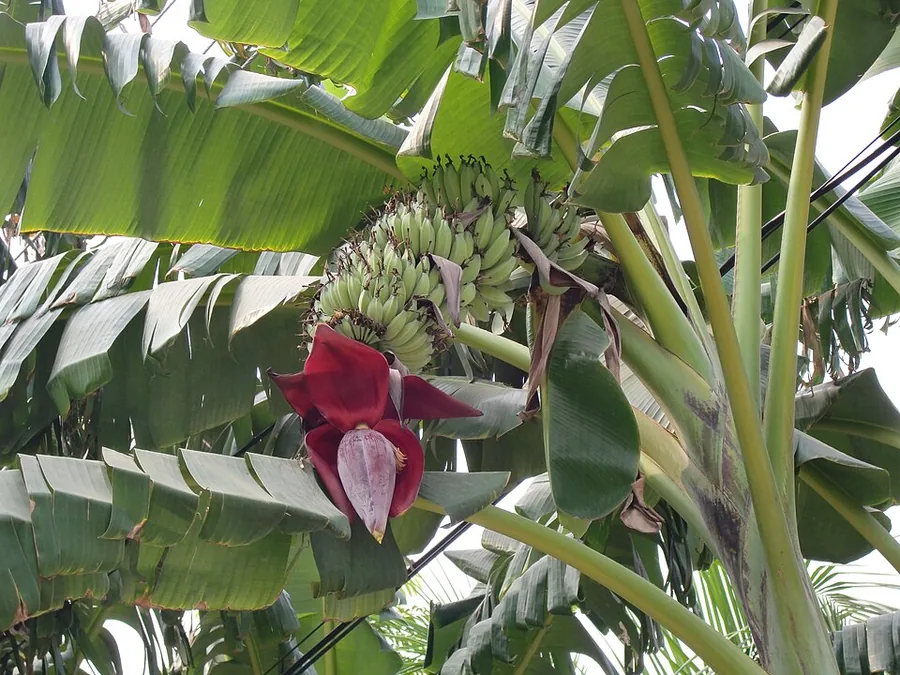
Here's the fun part: the banana isn't a tree at all, it's a giant herb, and the biggest one out there. That trunk you're looking at? It's a pseudostem, a snug column of leaf sheaths that holds everything up until the plant flowers. Each stem shoots up fast, fruits once, then calls it quits and hands things over to the suckers crowding around the bottom.
Banana's a tropical plant through and through, so it really wants heat and humidity to do well. It'll grow outside in USDA zones 9 to 11, and if you're somewhere colder, no worries, just keep it in a big pot you can haul inside for winter. Give it sun, deep rich soil, and lots of water, and one plant turns into a clump that keeps renewing itself.
Growing a banana takes some patience, though. A new stem needs 9 to 20 months to get to harvest, so the payoff isn't quick. But once your clump's settled in, the followers ripen one after another, and honestly, those big bold leaves are worth growing even before any fruit shows up.
Care
The short version: full sun and warmth, deep rich soil kept evenly moist, and a steady run of high-potassium feed through the growing season, plus cold protection the second frost looks likely.
Light
Banana wants full sun to power its fast, hungry growth, but it'll take partial shade and still get by if that's what you've got. The more light it gets, the sturdier the stem and the better the fruit.
Water
This one's thirsty, no two ways about it. Keep the soil evenly moist all the time but never soggy, watering every 2 to 4 days and more when it's hot or windy. Deep, well-drained ground is what lets you water hard without drowning the roots.
Soil
Plant it in deep, fertile, well-drained loam packed with organic matter, which feeds the roots and holds onto the moisture banana's always after. A pH somewhere between 5.5 and 7.0 keeps it happy.
Temperature
Banana does its best between 59°F and 86°F (15°C to 30°C). Growth slows down as things cool toward 60°F (16°C), and a freeze at or below 32°F (0°C) knocks the leaves out, so it really needs warmth to fruit.
Humidity
Being a tropical plant, banana likes the air humid, around 50% to 80%. Too dry and the leaf edges brown, so a sheltered, muggy spot outside or a misted corner inside keeps the foliage looking great.
Feeding
Banana's a heavy feeder with a big thing for potassium. Use a high-potassium fertilizer at around a 3-1-6 N-P-K ratio about once a month through the warm growing season, and you'll keep the leaves green and the fruit filling out.
Pruning
Pull off dead or torn leaves whenever they show up, and once a stem's fruited, go ahead and cut that pseudostem to the ground, because it only fruits the one time. Thin the suckers down to one or two followers per clump so the plant's energy stays where it matters.
Repotting
A potted banana wants moving up every 1 to 2 years, or sooner if roots start circling the pot, growth stalls, or suckers fill the surface. Shift it into a bigger pot at the start of the warm season so it can stretch its roots before growth kicks off.
Size & spacing
This is a big one, running 6.5 to 16 feet (2 to 5 m) tall and spreading 5 to 10 feet (1.5 to 3 m) wide. Give it plenty of open space, because the clump just keeps widening as new suckers fill in.
When to plant
Banana goes by warmth, not by some frost calendar. Plant it in spring once the soil and air have warmed up, let the stem build over the long growing season, and you'll get fruit anywhere from 9 to 20 months down the road. If your winters are rough, just grow it in a pot and bring it in before the cold hits.
Northern hemisphere
Southern hemisphere
Typical months for a temperate climate: start earlier in warm zones, later where spring frosts linger.
- Plant: Spring, after the last frost when soil and air are warm (zones 9 to 11)
- Harvest: Each pseudostem flowers and fruits once, about 9 to 20 months after planting, then is cut down and replaced by suckers
Hardiness
USDA hardiness zones: 9–11
Temperature: down to -7°C
Troubleshooting
Most banana headaches come down to cold, hungry soil, or a fungus in the ground. The good thing is the plant tells you which one, so read the leaves and the pseudostem and you'll usually know. Match the signs below and step in early, before a little setback turns into losing the whole thing.
Lower leaves yellowing and wilting from the bottom up
When the bottom leaves go yellow and wilt while everything else looks okay, that's the calling card of Panama disease, a Fusarium fungus that lives in the soil and clogs the plant from the inside. Want to be sure? Cut into a pseudostem and you'll spot brown or red streaks running through it. There's no cure once it's in, so dig out and destroy the sick plant, and don't put a vulnerable cultivar back in that spot, because the fungus sticks around in the ground for years.
Fix:
- Remove and destroy infected plants
- Do not replant susceptible cultivars in the same soil
- Use resistant cultivars where available
Leaves turning black and collapsing after a cold snap
If a cold night left the leaves black and flopped over, that's just cold damage, and it's a lot less dire than it looks. Banana's a tropical plant, so the chill starts biting below 60°F (16°C), and a freeze at or below 32°F (0°C) takes the leaves right out. Once frost's no longer a threat, snip off the dead foliage and heap some mulch over the rhizome, and odds are you'll see fresh shoots come up from below in spring.
Fix:
- Cut away dead foliage once frost danger passes
- Mulch heavily over the rhizome
- Allow the plant to resprout from the rhizome in spring
Older leaves yellowing or scorching at the edges
Banana eats a lot, so when the oldest leaves start yellowing or scorching along the edges and new growth comes in weak, it's usually a potassium or nutrient shortage. A quick soil or leaf test will tell you for sure. From there it's an easy fix: work in a high-potassium fertilizer at around a 3-1-6 N-P-K ratio and keep feeding through the warm season, and the plant should bounce right back.
Fix:
- Apply a high-potassium fertilizer (about 3-1-6 N-P-K)
- Feed regularly through the warm growing season
Toxicity
Good news if you've got pets: the banana is non-toxic from root to fruit. The ASPCA lists it as safe for cats and dogs, and that goes for other animals and people too. The worst a big mouthful of leaves might do is loosen a stomach a bit, same as any rich plant material.
Safe for
People · Cats · Dogs · Horses · Rabbits · Livestock · Birds
Cats None
Got a curious cat? No problem here, since the ASPCA calls banana non-toxic to cats. If one really goes to town on the leaves it might get a quick upset stomach, but that's true of just about any plant.
Dogs None
Dogs are totally fine around banana, and you'll actually find the ripe fruit in loads of dog treats. Eat a big pile of leaves in one sitting and a dog might end up with a runny tummy, but there's no real toxin behind it.
Horses Safe
Horses can graze the leaves and come to no harm, and plenty of them are happy to munch the peeled fruit too. There's just nothing in the plant that'll hurt them.
Rabbits Safe
Rabbits are safe with banana, but the fruit's pretty sugary and rich, so it's better as a little once-in-a-while treat than something they get every day.
Livestock Safe
Cattle, goats, and sheep can eat the leaves and stems just fine, and in lots of tropical places the plant's grown to feed them on purpose.
Birds Safe
Birds love ripe banana, and the fruit and foliage are both non-toxic. Your backyard hens or a pet parrot can share a bite no trouble.
People Safe
Bananas are an everyday food for people, eaten raw or cooked, and nothing in the plant is toxic. Even the green fruit and the soft inner stem turn up in kitchens all over the place.
Safe around pets; fruit and foliage are non-toxic, though eating large amounts of any plant material can cause mild digestive upset.
Varieties
Most bananas people grow at home come back to just a few well-known cultivars. Here are the ones worth knowing before you pick.
Dwarf Cavendish
It's a short-stemmed seedless dessert banana that's happy in a pot and doesn't mind wind, which is why it's usually the go-to for indoor and small-space growing.
Cavendish
This is the dessert banana you see all over supermarket shelves, and since it's sterile and seedless, it only gets grown from suckers.
Lady Finger
These are tall plants that give you small, really sweet sugar bananas.
Lacatan
If you're after height, this is one of the tallest banana cultivars around.
How to propagate
Making more bananas is about as easy as it gets, since every clump puts up new shoots on its own. You start fresh plants from those shoots or from a piece of the underground rhizome, never from seed.
Offsets & pupsEasy
Warm season (spring to summer) · Roots in a few weeks; first fruit in about 9 to 20 months
The easiest way to make more bananas is to lift what's called a sword sucker, which is just a young shoot about 4 to 5 feet tall with narrow leaves, grabbing a chunk of the rhizome along with it. Plant it out in the warm season and it'll root in a few weeks, though you'll wait about 9 to 20 months before it carries its first bunch.
DivisionModerate
Warm season (spring to summer) · Several weeks to root
Another option is to split the rhizome into pieces during the warm season, just make sure each one has healthy white tissue and a couple of buds, and each piece roots over several weeks. Seed won't help you here, since edible bananas are sterile and seedless.
Myths
Bananas grow on trees.
Tree? Not quite. The banana's actually a giant herbaceous perennial, and that thing that looks like a trunk is a pseudostem, just tightly packed leaf sheaths with no wood in it at all. People love to call it the world's largest herb, and while folks argue over the title, it's a fun one.
You can grow an edible banana from the seeds in store-bought fruit.
Sounds handy, but it won't work, because dessert bananas like Cavendish are sterile and seedless, so there aren't any real seeds to plant. The good news? New plants come along easily from suckers, pups, or divisions of the rhizome.