Herb · Cannabaceae
Cannabis / Hemp
Cannabis sativa
Give it full sun, warm soil, and steady nitrogen, and Cannabis sativa rips from seed to harvest in a single season.
Full sun
Every 2–7 days
59–86°F · 15–30°C
90–120 days
Overview
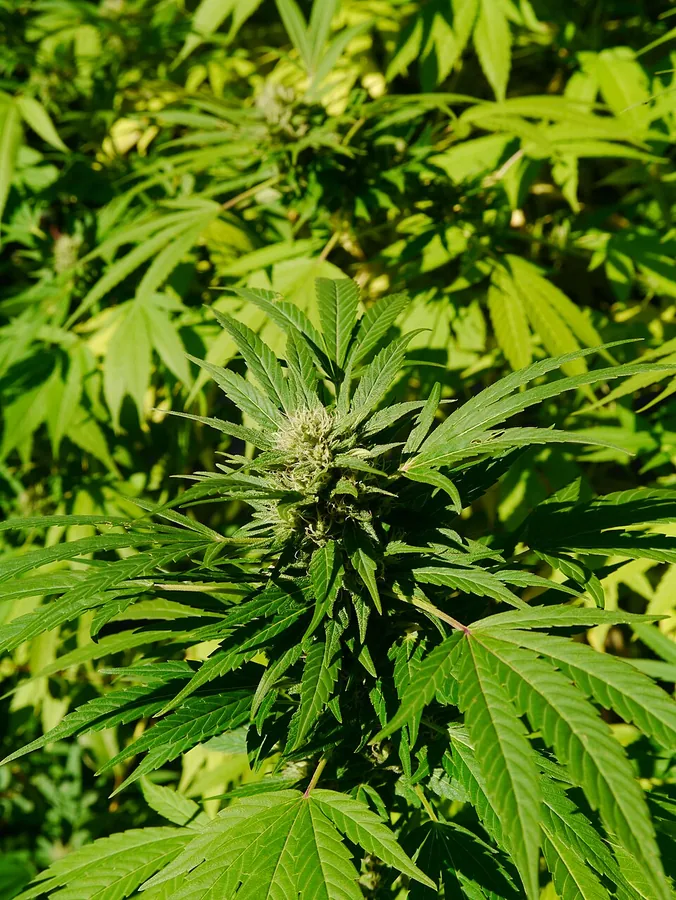
Cannabis sativa is a fast, hungry annual that goes from a single seed to a tall stand of stems in just one season. It's got a long history as a fiber and grain crop, and the very same species also grows for CBD and for its intoxicating flowers. Hemp and marijuana aren't two different plants; they're two ends of one species, sorted out by how much THC the flowers carry.
How you grow it really comes down to what you want from it. Fiber and grain crops go in thick and stay unpruned, shooting up to 4 m (157 inches) when the ground is good. Plants grown for CBD or flower get more room, a topping or two, and their lower branches cleared away so light and air can reach the buds.
Whatever you're after, the plant asks for the same basics: full sun, warm well-drained soil, and plenty of nitrogen. It flowers once the days grow short in late summer, and that's what sets the harvest clock. One thing to sort out before you plant? The law, since growing Cannabis sativa is restricted in a lot of places.
Care
The short version: full sun, deep well-drained soil that stays evenly moist without sitting waterlogged, and a generous, nitrogen-forward feed all through the vegetative stretch, from spring planting right up to a late-summer harvest.
Light
Cannabis loves full sun, and the more direct hours it gets, the happier it is. It'll manage in partial sun, but cutting the light cuts both the fiber yield and the strength of the flowers, so give it an open, unshaded spot.
Water
Keep the soil evenly moist, but never let it sit wet, because waterlogged ground breeds root disease. A field crop drinks somewhere around 25 to 30 inches of water over the season, and it needs the most during establishment and that vegetative push.
Soil
Plant it in deep, well-drained loam that's rich in organic matter, with enough aeration to let the roots stretch out. A pH between 6.0 and 7.5 suits it just fine, and honestly, good drainage matters here as much as fertility does.
Temperature
The plant does its best from 59°F to 86°F (15°C to 30°C). It needs real warmth to get going and has zero tolerance for frost, so hold off until spring weather has settled before it heads outside.
Humidity
Somewhere around 40% to 70% keeps it comfortable. The bigger worry is humidity that climbs and hangs around inside a thick canopy, since damp, still air is exactly what lets bud mold take hold.
Feeding
This one is a heavy nitrogen feeder, often wanting 100 to 150 lb of nitrogen per acre depending on what you're growing it for. Feed it through the vegetative season with a nitrogen-forward balanced fertilizer, and match the rate to whether you're after fiber, grain, or flower.
Pruning
Fiber and grain crops get left alone and never pruned. For CBD and flower production, top the plants and strip off the lower branches so air can move freely and light can reach deeper into the canopy.
Repotting
Since it's an annual field crop, it doesn't really get repotted. CBD starts get one transplant out of the plug tray after hardening off, and from there they stay put in the ground for the rest of the season.
Size & spacing
Plants run from 1 to 4 m (39 to 157 inches) tall, depending on the type and how thickly they're sown, with a spread of 30 to 90 cm (12 to 35 inches). Fiber crops go in dense, while flower plants want a lot more elbow room for airflow.
When to plant
Cannabis is a warm-season annual, and it won't put up with frost at all. Start CBD transplants indoors about a month before your last frost, set plants or seed out once the soil reaches at least 50°F (10°C) in late spring, and harvest from late summer once the shortening days have kicked off flowering.
Northern hemisphere
Southern hemisphere
Typical months for a temperate climate: start earlier in warm zones, later where spring frosts linger.
- Sow: 4 to 6 weeks before last frost for CBD transplants
- Plant: After last frost when soil reaches at least 50°F, typically late spring
- Harvest: Flowering triggered by shortening daylength in mid to late summer; fiber harvested at early flower, grain at seed maturity, CBD at peak cannabinoid
Hardiness
USDA hardiness zones: 3–10
Temperature: down to -40°C
Troubleshooting
Most of the trouble with this crop turns up in one of two spots: the lower leaves or deep inside the flowers. Spot the early signs and you can jump in before a small problem spreads through a thick stand. Match what you're seeing below, then act while it can still help.
Buds going gray-brown and mushy from the inside
This one is Botrytis, the gray mold that moves into thick flowers whenever the air stays humid and still. It starts deep inside the bud, so by the time you spot the fuzzy gray growth on the outside, the harm is already done. Cut out anything infected and get rid of it, open up the canopy so air can move, and pull the crop as soon as it's ready to go.
Fix:
- Remove and destroy infected material
- Increase airflow and reduce canopy density
- Harvest promptly when mature
Seedlings pinching off right at the soil line and tipping over
This is damping-off, and it comes from soilborne fungi like Pythium, Fusarium, and Rhizoctonia that love cold, wet ground. The stem turns water-soaked and dark right where it meets the soil, and the little seedling just keels over. The fix is mostly prevention: sow into warm, well-drained beds with clean, treated seed, and back off the watering so the surface never stays soggy.
Fix:
- Improve drainage
- Avoid overwatering
- Plant into warm soil
Older bottom leaves going yellow while the plant keeps climbing
What you're looking at is nitrogen deficiency, and it turns up a lot because hemp is such a hungry feeder. The oldest leaves lose their color first, then the yellowing creeps higher as the plant moves nitrogen up to fresh growth. Want to be sure? Run a tissue or soil test, then side-dress or fertigate so the rate fits your crop and where it is in the season.
Fix:
- Side-dress or fertigate with a nitrogen source
- Match N rate to end use and growth stage
Toxicity
This is a plant to keep away from animals. Its main active compound is THC, which is toxic to pets and brings on clear neurological signs in cats, dogs, and horses. For people, the THC is psychoactive and stronger in marijuana types than in low-THC hemp, and growing the plant is legally restricted in lots of places, so check the law where you live before you plant anything.
Toxic to
Cats · Dogs · Horses · Rabbits · Livestock · Birds · People
Cats Severe
Cats really take it hard when the THC gets into them. Look for deep lethargy, a wobbly, uncoordinated walk, vomiting, dilated pupils, a body temperature that keeps dropping, and dribbling urine, and at higher doses things can tip over into seizures or coma.
Dogs Severe
A dog that gets into any part of the plant or a dried product goes dull and shaky on its feet, often vomiting, leaking urine, and overreacting to sound and touch. A slow heart rate and a low body temperature show up often too, and the worst cases bring on seizures or coma.
Horses Toxic
Horses feel the same THC. A horse that grazes the plant gets sluggish and unsteady, usually goes off its feed, and you'll see a slowed heart rate along with clear depression.
Rabbits Toxic
There's no safe nibble for a rabbit here. The THC hits them the way it hits other mammals, leaving them dull, off-balance, and sluggish, so keep every part of the plant well out of reach.
Livestock Caution
Cattle, goats, and sheep usually steer clear of the bitter plant, but if one does eat it, the THC can leave it lethargic and unsteady. Why risk it? Fence your stock away from any planting.
Birds Caution
Pet birds are small and sensitive, so even a bit of plant material or some smoke can leave them dull and off balance. Just treat it as off-limits for them.
People Caution
The plant's THC is psychoactive and intoxicating, and it's stronger in marijuana types than in low-THC hemp. Growing it is legally restricted in plenty of places, so check the laws where you live, and keep all plant material and any product well away from children and pets.
Keep all plant material, dried product, and edibles away from pets; THC is the primary toxic principle.
Helpline numbers

United States
ASPCA Animal Poison Control: (888) 426-4435 (fee applies)
Poison Control: (800) 222-1222


Canada
Poison Centres: 1-844-764-7669
Varieties
Cultivars get bred for very different jobs, everything from fiber and grain to high-CBD flower. These three give you a good sense of the range.
Fedora 17
A monoecious French fiber and grain cultivar bred for low THC and nice even stands.
Futura 75
A dioecious dual-purpose variety that's grown all over Europe for both fiber and grain.
Cherry Wine
A photoperiod CBD type picked for high cannabidiol while keeping THC inside legal limits.
How to propagate
Cannabis grows easily from seed for field crops, or from cuttings when a grower wants exact copies of a particular plant.
SeedEasy
Direct sow after last frost into warm soil for fiber and grain crops · 7 to 14 days to emergence
Seed is the usual way to go for fiber and grain crops. Direct sow after the last frost once the soil has warmed up, and the seedlings come up in 7 to 14 days. Going from seed gives you genetic variability and the mix of male and female plants that makes a dioecious stand.
Stem cuttingsModerate
Take cuttings from vegetative mother plants before flowering · 2 to 3 weeks to root
Cuttings are how CBD and floral growers copy their best plants. Take them from vegetative mother plants before flowering kicks in, and they root in 2 to 3 weeks into uniform, high-cannabinoid females that match the parent.
Myths
Industrial hemp will get you high like marijuana.
Not really. Hemp is legally defined as Cannabis sativa with no more than 0.3 percent delta-9 THC, and that's way too little to be intoxicating. That's the whole reason the law puts the line right there.
Hemp and marijuana are two different plant species.
They're actually the same species, Cannabis sativa. The difference between them is a legal one based on THC concentration, not a botanical split between two separate kinds of plant.