Herb · Lauraceae
Bay Laurel
Laurus nobilis
Slow-growing and evergreen, bay laurel turns one little tree into fresh kitchen leaves for years.
Full sun
Every 5–10 days
USDA 8–11
3–10 ft · 0.9–3 m
Overview
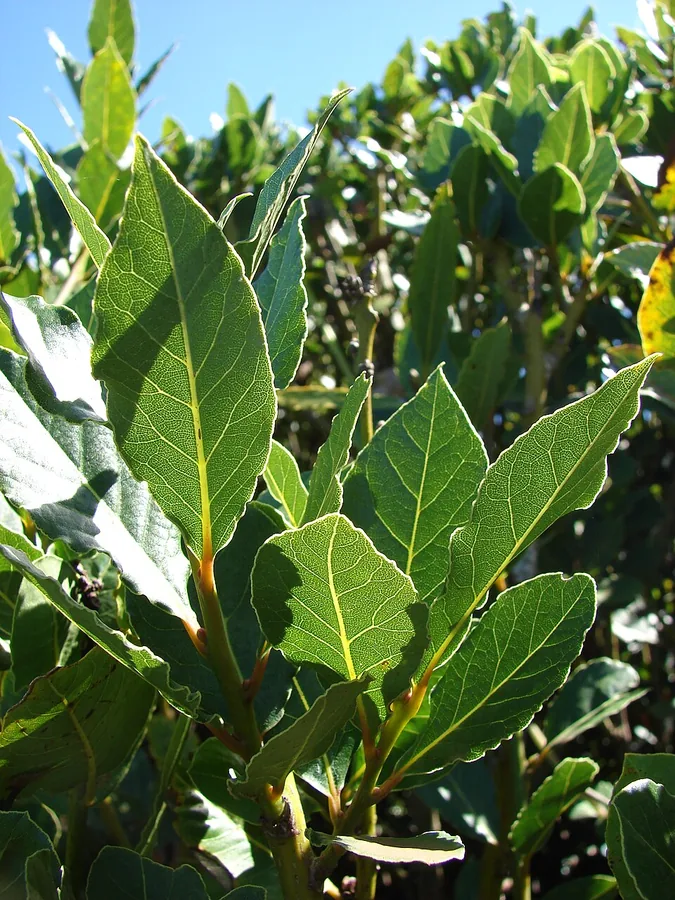
Ever wonder where the bay leaf in your spice jar comes from? It's this plant. Bay laurel is an evergreen tree from the Mediterranean that grows into a tall, aromatic shrub or small tree, and it keeps the same glossy, leathery leaves whether it's in a garden bed or a pot by the door. People have grown it for cooking and shaped it into topiary and standards for ages.
Here's the thing about bay: it's a slow grower, and that one trait pretty much explains the rest. Since it takes its time filling out, it puts up with hard pruning and keeps a clipped shape nicely, but it also means a plant you lose to cold won't bounce back overnight. It's hardy in the milder zones and frost-tender below about 25°F (-4°C), so if you're somewhere colder, just grow it in a pot you can bring inside for winter.
The good news? Once it's settled in, bay barely asks for anything. Give it sun, soil that drains, and water that doesn't leave it sitting in a puddle, and you'll get fresh leaves to pick all year. Most people who lose a bay lose it to soggy roots or a hard freeze, and honestly, both are easy to dodge once you know what to look for.
Care
The short version: full sun to part shade, soil that drains freely so the roots never stay wet, a balanced feed through the growing season, and a little shelter from hard frost, since bay's tender below about 25°F (-4°C).
Light
Bay loves full sun, though it'll take partial shade without making a fuss, and a bright spot keeps its growth dense and its leaves a good rich green. Got it indoors? Give it the brightest window you've got.
Water
Keep the soil evenly moist but never soggy, and let the surface dry a bit between drinks. Container plants are the ones to keep an eye on, since standing water rots the roots fast, so ease off through winter when growth slows down.
Soil
Plant it in fertile, well-drained loam or a good potting mix and it'll be happy. Bay's fine with all sorts of soils as long as the ground isn't soggy, and it's comfortable anywhere across a pH of 6.0 to 7.5.
Temperature
Bay does well from about 25°F to 86°F (-4°C to 30°C), but that low end is where it draws the line. It's frost-tender, so a hard freeze browns the leaves and a colder snap can finish it off entirely.
Humidity
Average humidity around 40% to 60% suits it just fine, and that's easy enough outdoors. The thing to watch indoors over winter is dry, still air, which invites scale, so keep a little air moving around the plant.
Feeding
Feed it a balanced general-purpose fertilizer through spring and summer while it's actively growing. Bays in pots burn through their soil pretty quick, so a regular monthly feed during the season keeps them going.
Pruning
Prune in spring to early summer to shape it, hold its size, or train it as a topiary or standard. Bay takes hard pruning and clipping in stride, so that's also your moment to cut out anything damaged, frost-burned, or crossing.
Repotting
Move container plants into fresh mix every 2 to 3 years, or just refresh the top dressing each year in between. Time to repot? Look for roots circling the pot or poking out the drainage holes, plus water that starts running straight through.
Size & spacing
Bay climbs slowly to 3 to 10 feet (90 cm to 3 m) tall with a spread of 3 to 8 feet (90 to 240 cm), though clipping keeps it to whatever size you like. Give an in-ground plant room to hit those numbers, or just keep it compact in a pot.
When to plant
Because bay keeps its leaves all year, there's no tight planting window like you'd have with a vegetable. Pop young plants outside after the last frost once the soil's warmed up, prune to shape from spring into early summer, and grab leaves whenever a recipe needs them. Live somewhere cold? Then your real calendar is just moving a potted bay under cover before winter and back out once the frost is gone.
Northern hemisphere
Southern hemisphere
Typical months for a temperate climate: start earlier in warm zones, later where spring frosts linger.
- Sow: Seed can be started indoors but germination is slow and erratic; cuttings are more common
- Plant: Plant outdoors after the last frost once soil has warmed; in cold zones grow in containers and move indoors or to a sheltered spot before winter frost
- Harvest: Small, inconspicuous yellowish flowers appear in spring on mature plants; aromatic leaves can be harvested anytime, year-round
Hardiness
USDA hardiness zones: 8–11
Temperature: down to -12°C
Troubleshooting
Good news here, because bay's a tough plant and most of its trouble comes from water and cold rather than disease. Keep an eye on the leaves and the roots, since that's where things show up first. Find what you're seeing below and deal with it early, before a small hiccup turns into dieback.
Yellowing, wilting growth with soft, sour-smelling roots
This one's root rot, and it almost always comes down to soil that stays too wet. Tip the plant out and have a look, because healthy roots are firm and white while rotted ones go brown, soft, and fall apart. Cut back on water, repot into fresh free-draining mix once you've trimmed off the dead roots, and never let the pot sit in a saucer of water.
Fix:
- Reduce watering and allow soil to dry appropriately
- Repot into fresh, well-drained mix, trimming away rotted roots
- Ensure pots have drainage holes and never leave plants standing in water
Sticky leaves, a black film, and little bumps on the stems
Those little bumps? They're scale insects, and the sticky film is the honeydew they leave behind, which then grows the black sooty mold you're looking at. Wipe the leaves and stems clean, treat with horticultural oil or insecticidal soap, and snip out any shoots that are badly covered. A bit more airflow keeps it from coming back, since scale really likes plants brought indoors for winter.
Fix:
- Wipe off scale and sooty mold with a damp cloth or soft brush
- Treat with horticultural oil or insecticidal soap, repeating per label
- Prune out heavily infested shoots
- Improve air circulation and reduce overwintering stress
Scorched, browned leaves and dieback after a cold snap
Bay's frost-tender and starts taking damage below about 25°F (-4°C), so a hard freeze or a cold drying wind leaves the foliage brown and the tips dead. Don't write it off yet, though, scratch the stems to find living green underneath, then wait for spring and prune the dead wood back to it. In a cold zone, the easy answer is a pot you can move under cover or indoors before winter shows up.
Fix:
- Wait until spring and prune out clearly dead, brown wood back to live tissue
- Move container plants to a sheltered, frost-free location
- Protect in-ground plants with mulch and wind protection
Toxicity
Bay leaves are great in the pot, but they're not for eating and not for leaving where animals can get at them. The leaves hold essential oils like eugenol that upset the stomach, and a whole leaf stays stiff and never softens, so it can choke or scratch on the way down. Keep your trimmings away from pets, livestock, and little kids, and always fish the leaf out before you serve.
Toxic to
Cats · Dogs · Horses · Rabbits · Livestock · Birds · People
Cats Mild
A cat that chews the leaves usually ends up with vomiting and diarrhea from the essential oils, and a swallowed stiff leaf can choke or scratch the gut on the way down too.
Dogs Mild
After a dog eats the foliage, you'll likely see an upset stomach with vomiting and loose stool, and the rigid whole leaf adds a real choking and gut-laceration risk on top.
Horses Toxic
Those same aromatic oils irritate a horse's digestive tract and bring on stomach upset and drooling, so it's smart to keep clippings well out of reach.
Rabbits Toxic
Bay's oils are just too strong for a rabbit's sensitive gut and can leave it off its food with diarrhea, so keep the leaves out of the hutch entirely.
Livestock Caution
Grazing animals usually leave the bitter, oily leaves alone, but one that does eat them can get a digestive upset, so don't toss prunings into a pasture.
Birds Caution
The concentrated oils are risky for a small bird, and the stiff leaf's a choking hazard, so it's best kept away from pet birds.
People Caution
Bay's a kitchen herb that flavors a dish and gets fished out before serving, and the leaf's never eaten whole, because it stays stiff and can choke or cut, so always take it out of the pot.
Keep leaves and trimmings away from pets and small children. Beyond the mild GI upset from the essential oils, whole bay leaves are stiff and do not soften, so a swallowed whole leaf is also a choking and laceration hazard; bay leaves are removed from food before eating.
Helpline numbers

United States
ASPCA Animal Poison Control: (888) 426-4435 (fee applies)
Poison Control: (800) 222-1222



Canada
Poison Centres: 1-844-764-7669
Varieties
Most bay you'll find is the plain old species, but a few named forms pop up now and then for their leaves or their hardiness. Here are the ones worth knowing by name.
'Aurea'
Its young leaves come out a golden yellow that glows brightest when the plant's getting plenty of light.
'Angustifolia' (willow-leaf bay)
The narrow, willow-like leaves give it away, and it's got a reputation for handling a touch more cold than the species.
'Undulata'
You'll know it by the wavy, crinkled margins running along the edge of every leaf.
How to propagate
Want to make more bay? Be warned, it's one of the trickier herbs to multiply, and it's patience you'll need more than skill. Both methods are slow, which is exactly why most people just buy a young plant and skip the wait.
Stem cuttingsDemanding
Late summer to autumn using semi-ripe cuttings · Several months; cuttings root slowly and unreliably, often taking a season or more to establish
Take semi-ripe heel cuttings in late summer to autumn, dip the ends in rooting hormone, and keep them warm and humid. Just be ready to wait, because bay roots slowly and unevenly, and a cutting often needs a full season or more before it's really established.
SeedDemanding
Spring, from fresh seed · Slow; germination is erratic and seedlings grow slowly over several years to reach usable size
Sow fresh seed in spring, since it comes up way better than stored seed once it's been soaked and kept warm. Expect a slow, uneven start, and figure on the seedlings taking several years of slow growth before they're a usable size.
Myths
Any plant called laurel is interchangeable, so any laurel leaf works like a bay leaf in cooking.
Only true bay, Laurus nobilis, is the laurel you actually cook with. Plenty of other plants borrow the laurel name, and several are genuinely poisonous, like cherry laurel, which is cyanogenic, mountain laurel, which carries grayanotoxins, and oleander, which is dangerous all over. Always check the botanical name before any leaf goes near food.
Bay leaves don't really do anything in cooking since you take them out before eating.
You pull the whole leaf out for one simple reason: it never softens and can choke or scratch on the way down. But while the dish was simmering, that leaf was busy releasing its aromatic oils into the food, and flavoring the pot is the whole reason it went in.