Tree · Lauraceae
Sassafras
Sassafras albidum
Want knockout fall color and quirky mitten-shaped leaves? Plant sassafras and just give its roots space to wander.
Full sun
Every 7–14 days
USDA 4–9
30–60 ft · 9.1–18.3 m
Overview
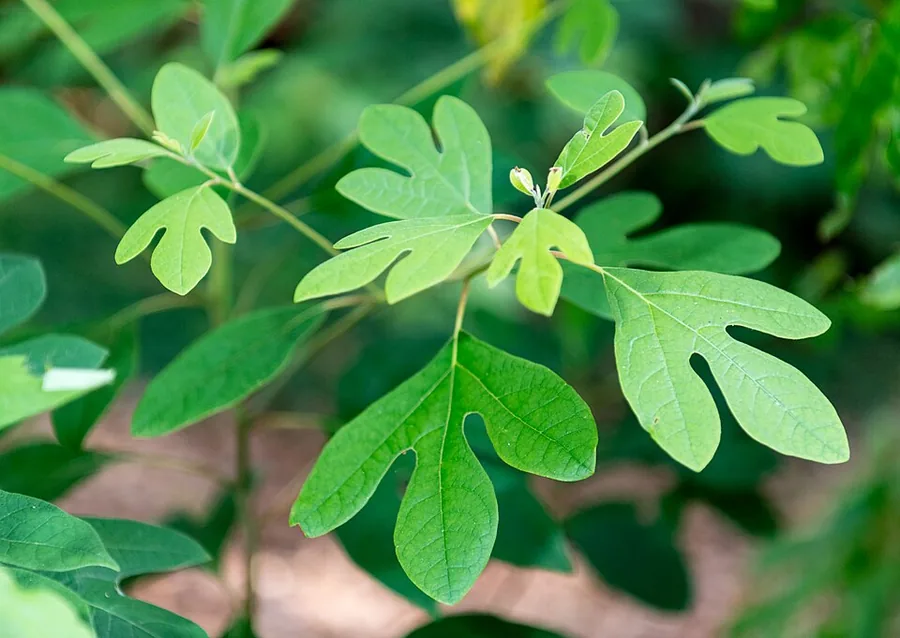
Here's a fun one: sassafras grows three different leaf shapes on the very same branch, from a plain oval to a two-lobed mitten to a three-lobed glove. In fall the leaves light up in orange, red, and deep purple, and if you crush one or scratch the bark you'll catch that warm, spicy smell that made it famous in old kitchens and root beer.
It's a fast grower that just wants full sun to partial shade and moist, acidic, well-drained soil, and it laughs off cold down to zone 4. The thing to know? One tree doesn't stay one tree for long. Its shallow roots send up suckers that fill in a thicket, which is great for a wild corner but a bit of a nuisance in a neat lawn.
There's one catch, and it's an important one. The roots and bark carry safrole, the same stuff behind that lovely scent, and it's a liver toxin the FDA pulled from food back in 1960. So grow sassafras for the color and the birds it feeds, and skip the old homemade root teas.
Care
The short version: hand it full sun to part shade and moist, acidic, well-drained soil, keep it watered while it's young, leave plenty of room for those roving roots, and clip the suckers if you're after a single trunk.
Light
Sassafras loves full sun, and honestly that's where the fall color really pops. It'll get by in partial sun or partial shade too, but a young tree tends to stretch toward the brightest spot, so give it open sky if you can swing it.
Water
While it's young, keep the soil evenly moist and give it a drink every 7 to 14 days until it finds its feet. After that it handles dry spells just fine. It likes moist, well-drained ground and really doesn't enjoy sitting in soggy clay.
Soil
Go for moist, acidic, well-drained loam or sandy soil somewhere around a pH of 6.0 to 7.0. It'll put up with clay and dry patches, no problem. What it won't love is alkaline ground, which can leave the leaves looking yellow and washed out.
Temperature
This tree is genuinely tough. It takes winter lows near -29°F (-34°C) and summer highs up to 100°F (38°C) without blinking, which covers just about the whole temperate eastern US, so the weather really isn't something to stress about.
Humidity
Nothing to manage here, since regular outdoor air is all it asks for. What actually helps is good airflow, because a bit of breeze keeps those minor leaf fungi from getting comfortable.
Feeding
An established sassafras barely wants feeding, which is easy on you. If your soil's on the poor side, a balanced slow-release tree fertilizer in spring does the trick, and a tree in decent ground can skip it altogether.
Pruning
Grab the pruners in late winter to clear out dead or crossing branches and to snip the root suckers if you want one clean trunk. Prefer something shrubbier? You can cut the whole thing to the ground every 2 to 3 years and let it bounce back.
Repotting
This is a ground tree, not a pot plant. Its deep taproot makes container life and moving an established tree really tricky, so pick your spot thoughtfully and then just leave it be.
Size & spacing
Give it some elbow room. A grown sassafras hits 30 to 60 feet (9 to 18 m) tall and spreads 25 to 40 feet (7.6 to 12 m) wide, and that's before the suckers push the whole colony even wider.
When to plant
Sassafras runs on the same clock as the woods it comes from, so it's easy to keep up with. Pop young plants in the ground in spring after the frost, look for greenish-yellow flowers from March to May as the leaves open, and keep an eye out for bluish-black drupes on red stalks from late summer into early fall.
Northern hemisphere
Southern hemisphere
Typical months for a temperate climate: start earlier in warm zones, later where spring frosts linger.
- Sow: Not typical; seed needs cold-moist stratification, so sow outdoors in fall or stratify 2-4 months before spring sowing
- Plant: Spring, after the last frost, using young container or root-sucker plants
- Harvest: Greenish-yellow flowers March to May before or with leaf-out; bluish-black drupes on red stalks ripen late summer to early fall
Hardiness
USDA hardiness zones: 4–9
Temperature: down to -34°C
Troubleshooting
Most sassafras headaches boil down to two things: the tree spreading where you didn't ask it to, or a few bugs snacking on the leaves. Neither is a big deal. The one you really want to watch is laurel wilt if you're in the southeast, so find your symptom below and jump on it early.
Branches wilting fast with dark streaks in the wood
This one's the real deal: laurel wilt, a fungus the redbay ambrosia beetle brings in that clogs the sapwood and can kill a tree once it's in. Look for tiny beetle holes and little toothpick-like tubes of frass on the trunk, plus dark staining under the bark, and get a diagnostic lab to confirm if you're in the southeastern range. There's no cure, sadly, so the only move is to take out and chip or burn the affected tree and never haul untreated wood that could carry the beetle somewhere new.
Fix:
- No effective cure once infected; remove and properly dispose of (chip or burn) dead and dying trees to reduce beetle breeding sites
- Do not move untreated wood that could spread the beetle
A crowd of new shoots popping up around the tree
That's just root suckering, and sassafras is really into it as a way of copying itself across the ground. Poke or slice those shallow roots and you'll only get more shoots, so it's best to leave them alone. Mow or cut the suckers down through the season, dig out the ones you can grab with a bit of root, and set a buried barrier or a mowed strip to fence the colony in.
Fix:
- Mow or cut suckers to the ground repeatedly through the season
- Dig out unwanted suckers with attached root where practical
- Install a root barrier or maintain a mowed strip to contain the colony
Chewed-up leaves with spots and blotches
Chewed leaves usually mean Japanese beetles and other feeders like scale, and the spots are down to leaf spot fungi or powdery mildew. On a grown tree it's pretty much just a looks thing, so don't sweat it. Flick the beetles into soapy water, rake up fallen leaves to cut down the spores, and only break out horticultural oil if scale gets out of hand.
Fix:
- Hand-pick or knock Japanese beetles into soapy water
- Tolerate minor leaf spot; rake and remove fallen leaves to reduce fungal inoculum
- Treat heavy scale infestations with horticultural oil
Toxicity
Simple rule to remember: the roots, bark, and oil aren't for eating. They hold safrole, which is rough on the liver and flagged as a likely carcinogen, and it's been off the food list since 1960. Touching the leaves is no problem, so just keep people and pets from gnawing the woody parts or sipping any homemade tea.
Toxic to
Cats · Dogs · Horses · Rabbits · Livestock · Birds · People
Cats Caution
The aromatic roots and bark carry safrole, which is tough on a cat's liver, so the worry is a cat chewing or licking those parts, not brushing past the leaves. Just keep cut roots, bark, and any sassafras oil somewhere a nosy cat can't get to.
Dogs Caution
A dog that chews bark, digs at the roots, or gets into sassafras oil ends up with safrole, which is hard on the liver over time. The leaves are low-risk, but the woody stuff isn't, so keep fallen branches and stored roots out of reach.
Horses Caution
If a horse browses the bark or roots, it's getting that same liver-toxic safrole. Fence horses off from any tree they can reach, and clear out any prunings that end up in the paddock.
Rabbits Caution
A little rabbit only needs a little dose, so don't let them nibble the bark or roots where safrole builds up. Keep them well away from the trunk and any trimmings.
Livestock Caution
Cattle, goats, and sheep that strip bark or chew exposed roots take in safrole, which loads up the liver. Keep an eye on grazing animals near the tree, and drag any felled wood out of the pasture.
Birds Caution
Wild birds happily eat the ripe bluish-black drupes without any trouble, since the safrole hangs out in the woody roots and bark, not the fruit. Still, don't let caged or backyard birds peck at bits of bark or root.
People Caution
Sure, old teas and file powder come from this tree, but safrole is a liver toxin and a likely carcinogen the FDA banned from food in 1960. Homemade root or bark teas and sassafras oil just aren't safe at any amount, so leave them be and keep kids from chewing the bark.
Foliage contact is low-risk, but do not let people or pets chew or ingest roots, bark, or sassafras oil. Avoid homemade root/bark teas and oil.
Helpline numbers

United States
ASPCA Animal Poison Control: (888) 426-4435 (fee applies)
Poison Control: (800) 222-1222



Canada
Poison Centres: 1-844-764-7669
Varieties
Good news if you hate decisions: there isn't really a lineup here. Sassafras is almost always grown as the plain wild species, so you're basically choosing the one form.
Sassafras albidum (species)
This is just the plain native form, grown for its three leaf shapes and that gorgeous orange-red-purple fall color, and there are almost no named cultivars floating around.
How to propagate
Want more sassafras? The easy way is to let the tree's own roots and suckers do the heavy lifting. If you're the patient type, you can also start it from stratified seed.
SeedModerate
Sow outdoors in fall, or cold-moist stratify 2-4 months and sow in spring · Several months to germinate; 1-2 seasons to establish
Sassafras seed won't wake up until it's been through a cold, damp stretch, so either sow it outdoors in fall or give it 2 to 4 months of cold-moist stratifying and plant in spring. Clean the fleshy pulp off the fruit first. Then settle in for the wait, because it takes several months to sprout and a season or two before the seedling really digs in.
Stem cuttingsDemanding
Dig dormant root pieces or detach rooted suckers in late winter to early spring · One growing season
The easiest route is to dig up dormant root pieces or lift the rooted suckers the tree throws up, doing it in late winter to early spring while everything's asleep. Give them a single growing season and they'll usually settle right in. Moving a bigger plant? That rarely works, thanks to the deep taproot.
LayeringModerate
Spring · One to two seasons
Sassafras basically layers itself through all those spreading root suckers, so come spring you can just sever a small one and move it. Then give it one to two seasons to root down and get going on its own.
Myths
Sassafras root and root-beer flavoring are a harmless natural pick-me-up.
The stuff that gives the root its smell, safrole, is a hepatotoxin and a likely human carcinogen. It caused liver tumors in lab animals, and that's exactly why the FDA banned safrole and sassafras oil from food back in 1960. Natural doesn't automatically mean safe, so those old root tonics really aren't worth the risk.