Tree · Ulmaceae
American Elm
Ulmus americana
A fast-growing vase-shaped shade tree that nearly went extinct and bounced back in resistant form.
Full sun
Every 7–14 days
USDA 2–9
60–80 ft · 18.3–24.4 m
Overview
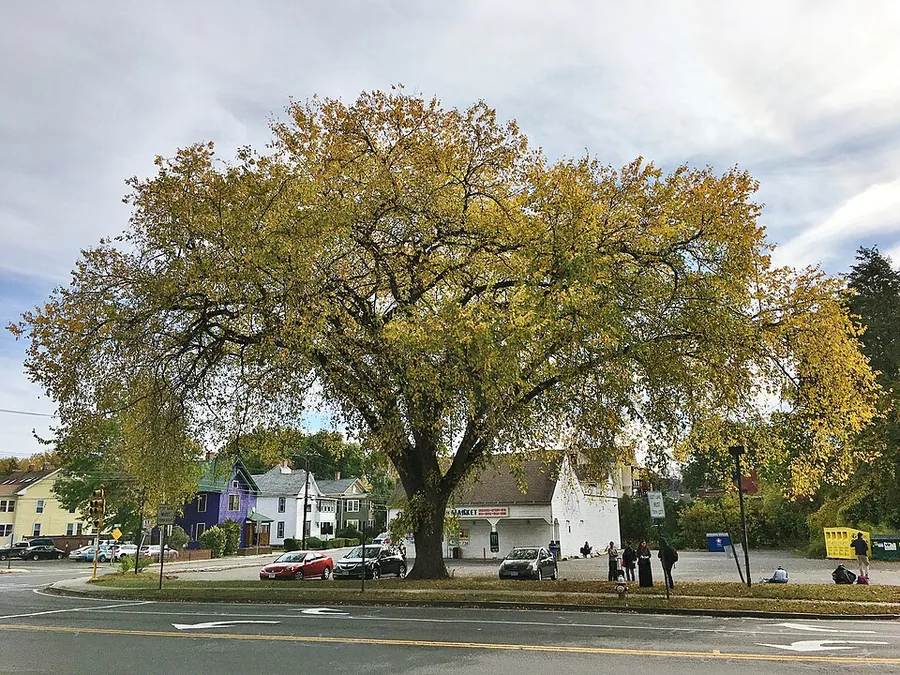
Once upon a time the American elm lined main streets just about everywhere, with its tall, curving branches reaching across the road to meet overhead in one big roof of shade. It grows fast and gets seriously tall, hitting 60 to 80 feet (18 to 24 m) with a crown that's even wider, and it'll settle into pretty much any ground you give it, whether that's a soggy creek bottom or hard, dry city dirt.
Then Dutch elm disease showed up, and that changed everything. This fungal wilt swept through during the 20th century and wiped out elms by the millions, which is exactly why you hardly ever see those huge old ones anymore. But the species itself hung in there, and growers have since brought out cultivars with real resistance, so you can plant one today as long as you know what you're signing up for.
And what do you get for waiting? One of the all-time great shade trees, hardy from zone 2 to zone 9 and not the least bit picky about soil or pH. Just remember it's a big, long-lived tree with brittle wood and shallow roots that push up pavement, so it deserves a spot with plenty of room to spread instead of some tight corner next to the house.
Care
The short version: stick it in full sun to light shade in just about any well-drained soil, water the young ones through dry spells until they root in, prune in late winter so it builds a strong frame, and give this big, fast tree loads of open space.
Light
Give your American elm full sun and you'll get the best, thickest crown out of it, though it'll take partial shade without really complaining. Basically, the more sun it gets, the fuller and stronger it grows.
Water
Keep young trees evenly moist while they're rooting in, which means watering about every 7 to 14 days through any dry stretch. Once it's established, though, the elm is amazingly easygoing, handling both drought and wet ground, so a grown tree hardly ever needs you to lift a finger.
Soil
Honestly, you'd be hard pressed to find a tree that's easier on soil. It does best in an average, medium-moisture, well-drained loam, but it's totally fine with clay, sand, and wet or dry sites, and it copes with a wide pH range from 5.5 to 8.0, acidic right through to alkaline.
Temperature
Cold? Not a problem for this one. The American elm is hardy across zone 2 to zone 9 and puts up with temperatures from roughly -51°F to 100°F (-46°C to 38°C), which is part of how it managed to grow across such a massive range.
Humidity
Regular outdoor air is all it wants, so there's no humidity number for you to chase. Being a tough native, it just takes whatever weather rolls in.
Feeding
Feed young trees in spring with a balanced slow-release tree fertilizer to keep them moving along. Older established trees barely need feeding at all and usually do best when you just leave them be.
Pruning
Do your pruning in late winter while the tree's dormant, taking out any crossing or weak branches to build a strong frame, since the wood snaps easily. The other reason to prune can't wait, though: cut off and destroy any wilting branch the moment you spot it, before Dutch elm disease gets a chance to spread.
Repotting
This isn't a tree you keep potted up long-term, so there's no repotting routine to follow. Just get a nursery sapling into the ground before its roots start circling the pot, and treat roots poking out the drainage holes as your sign to plant it.
Size & spacing
Plan for a big one. The American elm gets 60 to 80 feet (18 to 24 m) tall with a spread of 40 to 70 feet (12 to 21 m), so set it well clear of buildings, walkways, and any paving its shallow roots are going to lift down the road.
When to plant
It runs on the same schedule as any temperate tree, really. Plant it in spring or fall while it's still dormant, watch for tiny reddish-green flowers in March and April, and then those winged samaras drift down as they ripen through April and May.
Northern hemisphere
Southern hemisphere
Typical months for a temperate climate: start earlier in warm zones, later where spring frosts linger.
- Plant: Spring or fall
- Harvest: Tiny reddish-green flowers in late winter to early spring (March-April), followed by flat winged samaras maturing April-May
Hardiness
USDA hardiness zones: 2–9
Temperature: down to -46°C
Troubleshooting
Pretty much all elm trouble comes down to two things, and luckily the scary one tips you off early up in the canopy. Keep an eye out for a single limb wilting when it shouldn't, and get familiar with what beetle-chewed leaves look like. Find your match below and then move fast, because Dutch elm disease really does reward a quick reaction.
One branch suddenly wilts and browns while everything else stays green
So one limb is suddenly wilting, yellowing, and dying back while the rest of the tree looks fine? That's the classic warning of Dutch elm disease, a deadly fungal wilt that bark beetles bring in and that spreads from tree to tree through roots that have grown together. Peel back the bark on a dying limb and you'll usually spot brown streaks in the wood underneath, though elm yellows can look just the same, so it's worth getting a lab to say which one it is. The thing that really helps is speed, so cut infected limbs out well below the streaks the second you notice flagging, break the root connections to nearby elms, and get dead trees gone quickly so the beetles lose their nursery.
Fix:
- Prune out and destroy infected limbs well below visible streaking as soon as flagging appears
- Remove and destroy severely affected or dead trees promptly to eliminate beetle breeding sites
- Sever root grafts between adjacent elms to stop underground spread
- Consult an arborist about fungicide injection for high-value trees
Leaves chewed down to lace with beetles all over them
If the leaves are going brown and getting eaten down to a lacy web of veins, you're almost certainly looking at the elm leaf beetle. The pale little larvae munch the undersides while the striped grown-ups work the tops, and Japanese beetles can leave a similar mess, so it's worth checking who's actually there. Here's the reassuring part: a healthy tree barely notices a bit of nibbling, so let it slide where you can, give the beetle's natural enemies a hand, and only reach for a labeled insecticide if a bad outbreak lands on a smaller tree.
Fix:
- Tolerate light feeding on otherwise healthy trees
- Apply an appropriately labeled insecticide for heavy infestations on smaller trees
- Encourage natural predators
Toxicity
Good news if you've got animals around the place: the American elm is not toxic to pets, livestock, or people. Nothing in the tree is going to poison whatever decides to browse or chew on it. The cautions here are about physical stuff, not chemicals, because it's the brittle limbs and those heaving surface roots that you really need to respect.
Safe for
People · Cats · Dogs · Horses · Rabbits · Livestock · Birds
Cats None
If your cat bats around a fallen leaf or samara and has a chew, there's nothing toxic in it to worry about. The only thing to keep an eye on is the mild tummy trouble any pet can get from eating greenery it isn't really built to handle.
Dogs None
Your dog can grab a stray twig or gnaw a bit of bark and be totally fine, since there's nothing poisonous in either one. So go ahead and let it tear around under the tree.
Horses Safe
Horses grazing near an elm have nothing to fear from the leaves or the bark. It just isn't toxic, and pastured animals nibble it whenever they feel like it.
Rabbits Safe
Rabbits love to gnaw elm bark and buds over winter, and it doesn't hurt them a bit. So one growing near a hutch or a backyard warren is no problem at all.
Livestock Safe
Cattle, goats, and sheep can all browse the foliage without any trouble, and the leaves have actually been used as fodder forever. There's nothing in the tree that'll poison grazing animals.
Birds Safe
Birds happily eat the spring samaras and tuck into the branches to nest, with zero danger involved. To them the elm is just a friendly, safe spot to hang out.
People Safe
There's no poisoning risk to people here either. What you actually want to watch out for is physical, not chemical, since the brittle limbs and the surface roots are the parts that can catch you.
No special handling is required for toxicity, though the tree's large size, surface roots, and falling samaras and limbs are landscape considerations.
Varieties
These days, just about every American elm worth planting is a named cultivar that's been bred to shrug off Dutch elm disease. So here's what to keep an eye out for.
'Princeton'
This one goes all the way back to 1922, and it still has the lovely vase shape plus some genuinely strong resistance to Dutch elm disease.
'Valley Forge'
It's a U.S. National Arboretum release that people rave about for its really high tolerance to Dutch elm disease, even if it isn't completely bulletproof.
'New Harmony'
Another disease-resistant pick from the Arboretum, this one grows with good vigor and handles the cold down to around zone 4.
'Jefferson'
A resistant American elm that was chosen to keep that graceful arching, vase-shaped look everybody loves about the species.
How to propagate
Growing an American elm from seed is easy enough, but if you want a tree that actually resists disease, you'll need to clone a named cultivar by grafting or taking a cutting.
SeedModerate
Sow fresh samaras in late spring soon after they mature · A few weeks to germinate; several years to establish as a tree
Want the easy way in? Pop the winged samaras into the ground while they're still fresh in late spring, right after they ripen, and you'll see sprouts in just a few weeks. Those little seedlings turn into trees over several years, but heads up, anything you grow from seed won't carry the disease resistance that's bred into the named cultivars.
GraftingDemanding
Dormant season · One or more seasons
When nurseries want an exact copy of a named, disease-resistant elm, they graft it during the dormant season. A graft takes a season or more to knit together and really does take a skilled hand, so honestly it's a job for the pros rather than a weekend project.
Stem cuttingsDemanding
Softwood in late spring to early summer · Weeks to root, then years to establish
Take softwood cuttings in late spring or early summer and you can copy a resistant cultivar exactly. They'll root in a few weeks, then need years to fill out into a tree, and getting them to root in the first place takes a bit of know-how.
Myths
The American elm is extinct or no longer worth planting because of Dutch elm disease.
Sure, the disease really did tear through the species back in the 20th century, but the American elm never actually disappeared. You can buy several resistant cultivars these days, like 'Princeton', 'Valley Forge', 'New Harmony', and 'Jefferson', so you can plant one and have every reason to think it'll thrive.