Tree · Anacardiaceae
American Smoketree (Tree Form)
Cotinus obovatus
Give it poor, dry soil and full sun, and this tree puts on a hazy summer smoke show and a knockout fall.
Full sun
Every 7–21 days
USDA 4–8
20–30 ft · 6.1–9.1 m
Overview
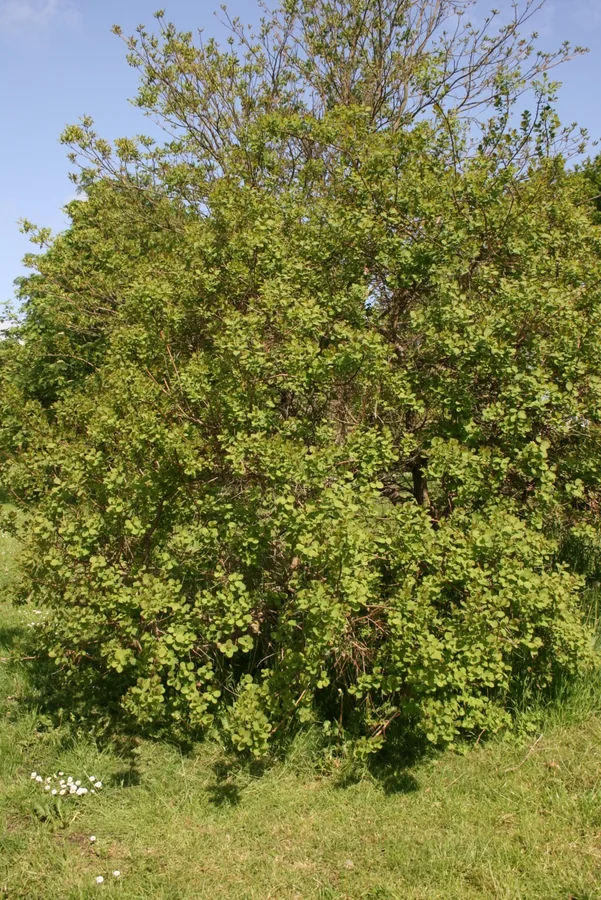
So what's the deal with the American smoketree? It's a tough native, and it gets that name from the soft, smoke-like puffs that seem to float over the branches come early summer. Grow it as a single-trunk tree and it'll reach 20 to 30 feet (6 to 9 m), which is bigger and more upright than the European smokebush a lot of folks know. It's related to cashews and sumacs, and like them, it's happy growing where plenty of other plants just give up.
Here's the thing that makes it so easy to love: it barely asks for anything. Once it's rooted in, it handles dry weather without complaint, settles into poor, rocky, even alkaline limestone soil, and takes cold all the way down to -29°F (-34°C). And get this, going easy on it actually pays off, because the leaner the soil, the better the flowers and the fall color.
The one thing it wants is a little patience. It's a slow grower, but it gives back twice a year, first with that hazy summer bloom and then with leaves that turn orange, red, and purple before they drop. Pop it in full sun, keep the soil draining fast, and it'll be around for decades.
Care
The short version: full sun, lean and fast-draining soil, and regular water only while it's young. Once it's settled it takes care of drought on its own, barely wants feeding, and just needs a light trim to stay in shape.
Light
This tree's happiest in full sun, and that's where you get the most flowers and the brightest fall color. It'll put up with partial sun or a bit of shade, but every hour of shade nibbles away at that smoke show and the autumn color, so why settle if you don't have to?
Water
While it's young and getting its roots down, water it on a regular basis, roughly every 7 to 21 days depending on how hot and dry things get. After that? Ease right off, because it's drought tolerant and only wants water during a long dry spell. Steer clear of soggy soil, though, since that's what leads to disease.
Soil
This one loves lean, well-drained dirt, and it's totally fine with poor, dry, rocky, clay, and alkaline limestone spots that would sink a pickier plant. It handles a big pH range, anywhere from 5.5 to 8.5, so you probably won't need to mess with the soil at all.
Temperature
Cold or hot, this tree rolls with it, holding up from -29°F to 100°F (-34°C to 38°C). That covers a whole lot of places, which is a big reason it's such a reliable pick for the yard.
Humidity
Humidity? Not something you need to worry about, since regular outdoor air is plenty. What actually matters is good airflow and soil that dries out, because when things stay damp and still, leaf fungi and rust move right in.
Feeding
Go light on the fertilizer, or honestly just skip it, because this tree likes it lean. Overdo it and you'll lose flowers and fall color, so if you feed at all, keep it to a light hand in spring.
Pruning
You won't be pruning much here, which is nice. Do your cutting in late winter or early spring to shape it, pull out dead or crossing branches, and coax it into a single trunk. Keep it light, though, because the smoke only shows up on wood from the year before, and a heavy cut takes the display with it.
Repotting
Repotting basically isn't a thing with this tree, since it really wants a permanent spot in the ground. If you're growing a young one in a pot for now, only bump it up a size when you spot roots circling the edge or poking out the drainage holes.
Size & spacing
Heads up, as a tree this gets big, hitting 20 to 30 feet (6 to 9 m) tall and about that wide too. So give it plenty of open space away from the house and other trees, letting the crown spread out and the air move through.
When to plant
When should it go in the ground? While it's dormant, so spring or fall works best, giving the roots a head start before the heat or the cold shows up. The smoky bloom opens in May and June and hangs around as a haze all summer, and then autumn brings the real color.
Northern hemisphere
Southern hemisphere
Typical months for a temperate climate: start earlier in warm zones, later where spring frosts linger.
- Plant: spring or fall
- Harvest: May to June, with the smoky display persisting through summer
Hardiness
USDA hardiness zones: 4–8
Temperature: down to -34°C
Troubleshooting
Good news, this tree hardly ever gives you grief, and when it does it usually comes back to wet soil or a stressed plant. Just keep half an eye on the branches and leaves for the two things below, and jump on them early while it still helps.
Branches wilting and dying off one by one
This one's verticillium wilt, a fungus that lives in the soil, climbs up through the tree's plumbing, and slowly cuts off whole branches. Slice open a sick branch and you'll usually see dark streaks in the wood. There's no fixing it, sadly, so cut the dead wood well below the trouble, keep the tree watered through dry spells, and don't plant another species that catches it in that same spot.
Fix:
- Prune out and destroy affected branches well below symptoms
- Keep the tree vigorous with appropriate water during drought
- Do not replant susceptible species in confirmed infested soil
Spots or little orange bumps on the leaves
These are just leaf spot and rust fungi, and they mostly pick on trees that are already stressed. It's really just a looks thing, so don't stress about it. Rake up the fallen leaves, thin things out so air can move, and sort out whatever was bugging the tree in the first place, whether that's a dry stretch or a too-wet spot.
Fix:
- Rake and remove fallen infected leaves
- Improve air circulation and avoid overhead watering
- Reduce plant stress with proper siting and watering
Toxicity
Got pets? You can breathe easy, because the American smoketree isn't toxic to animals or people and doesn't show up on the ASPCA poison lists. The only heads-up is the sap, which, like a sumac's, can bug sensitive skin a little, so throw on some gloves before you prune.
Safe for
People · Cats · Dogs · Horses · Rabbits · Livestock · Birds
Cats None
A cat can chew on a leaf and be totally fine, since there's nothing in this tree that'll hurt them.
Dogs None
Dogs are all good around it, and munching a leaf or twig won't poison them.
Horses Safe
Got horses? They're fine grazing near this tree, no worries there.
Rabbits Safe
Rabbits are safe too, since the leaves don't carry anything that'd bother them.
Livestock Safe
Goats, sheep, and cattle can graze right alongside it, no problem.
Birds Safe
Birds hanging out or feeding in the branches are in no danger at all.
People Safe
It won't poison you either, though the sap can leave sensitive skin a bit irritated, so wear gloves when it's pruning time.
The plant is in the Anacardiaceae (cashew/sumac) family, and its sap contains urushiol-type compounds that may cause mild contact dermatitis in sensitive people; wear gloves when pruning. This does not affect pet toxicity rating.
Varieties
Smoketrees basically come in two camps, the bigger American native and the flashier European types and their crosses. The ones below? Those are what you'll usually find and can train into a tree.
Cotinus obovatus (American smoketree, species)
The native's the big, tree-like one of the bunch, it lights up orange-red-purple in fall, and it's got a real thing for dry, rocky, alkaline soil that most plants can't stand.
Cotinus coggygria 'Royal Purple'
'Royal Purple' is the purple-leaved European kind, and its leaves go so dark they're nearly black-maroon; it's usually a multi-stem shrub, but you can train it into a little single-trunk tree.
Cotinus x 'Grace'
'Grace' is a vigorous European-American mix with big purple-red leaves and a showy pink smoke, and yep, you can grow it as a small tree too.
How to propagate
Want more smoketrees? You've got three ways to go, seed, cuttings, or layering, and which one fits depends on whether you're after the wild species or a named cultivar kept true to type.
SeedModerate
Fall (sow outdoors) or stratify for spring · 1-2 growing seasons
Seed's doable, but you'll need some patience. The seed's dormant, so it needs a cold spell to wake up, which you get by either sowing it outside in fall or chilling it for a spring start, and that boosts how well it sprouts. The species grows true from seed, and a young one takes about one to two growing seasons to settle in.
Stem cuttingsModerate
Early to mid summer (softwood) · Several weeks to root, then 1-2 seasons
For cuttings, take softwood ones in early to midsummer and root them under mist, where they'll grab hold in several weeks and then need another season or two to really settle. This is how you keep named cultivars going, since cuttings are the only way they stay true to the parent.
LayeringEasy
Spring · 1 growing season or more
Layering's the easy button here. Just bend a low branch down to the soil in spring and pin it, let it root right there over a season or so, then snip it off as its own little plant.
Myths
The smoketree's got to be super poisonous, right, being related to poison ivy and poison sumac?
Nope, same family doesn't mean same problem. Cotinus isn't considered toxic to pets and stays off the ASPCA lists. The only catch is the sap, which can irritate sensitive skin, so glove up before you start pruning.
American smoketree only does well if you give it rich, fertile, damp soil.
Actually, it's the opposite. This tree wants lean, well-drained ground, doesn't mind drought one bit, and does its best on poor, dry, rocky, and alkaline spots. Load it up with water and fertilizer, though, and you'll basically trade the flowers and fall color for nothing.