Shrub · Anacardiaceae
Smoke Bush
Cotinus coggygria
Hand it full sun and sharp drainage, and you'll get summer haze plus knockout fall color.
Full sun
Every 7–14 days
USDA 4–8
10–15 ft · 3–4.6 m
Overview
So what is a smoke bush, really? It's a fast-growing, leaf-dropping shrub in the cashew and sumac family, and honestly it does best when you mostly leave it alone. Give it space, though, because it'll stretch to 10 to 15 feet (3 to 4.5 m) both ways once it's happy.
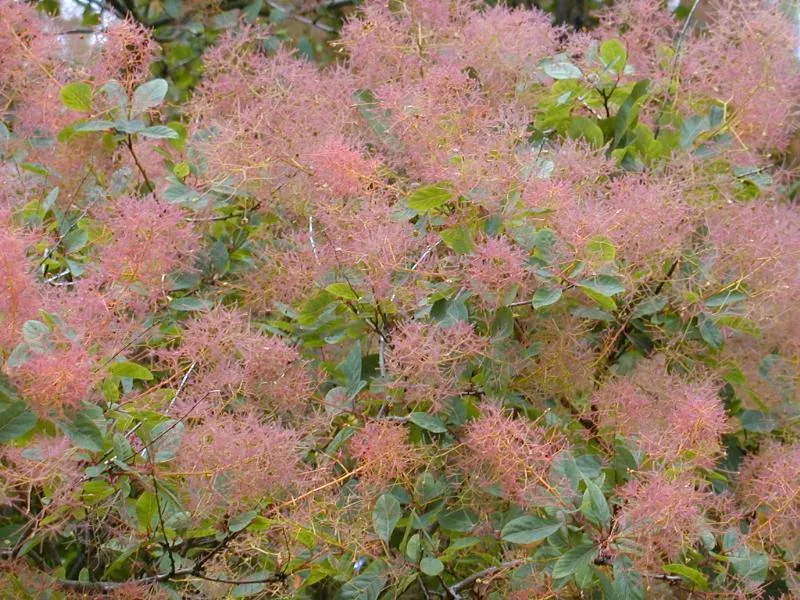
The big draw is the color. Depending on the variety, the leaves go anywhere from easy green to a deep, nearly black purple, and most of them light up orange and red in fall. Then there's the smoke, those airy puffs that float off the old flowers and hang there like haze stuck in the branches.
And the upkeep? Pretty much nothing. Sun, poor soil, and sharp drainage cover it, and once it's rooted in it barely notices a dry spell. The only real deal-breaker is wet feet, so just don't plant it somewhere soggy and you're golden.
Care
The short version: full sun, lean soil that drains fast, and a good soak while it's young. After that it pretty much runs itself, handles drought, hardly ever needs feeding, and just wants you to prune it based on whether you're after smoke or color.
Light
Pop it in full sun and you'll get the boldest leaves and the thickest smoke. It'll deal with partial sun, sure, but the purple types start sliding back to green and the haze goes wispy if it's too shady, so sunnier is the way to go.
Water
While it's still settling in, keep the soil damp so the roots can get comfy. Once it's set, though, it's drought tolerant and would rather have a deep drink every 7 to 14 days than constant little sips. What it can't handle is soggy, badly drained ground, which just rots the roots.
Soil
Here's the thing, it actually likes it rough. Plain, well-drained loam is great, and it's just as happy in poor, rocky soil that would sink a pickier shrub. The pH can swing wide, from 5.5 to 8.0, but the drainage really has to be spot on.
Temperature
Cold snap or heat wave, it takes both in stride, riding out -29°F to 95°F (-34°C to 35°C) without much fuss. That's exactly why you'll find it doing fine in gardens all over the temperate map.
Humidity
Normal outdoor air is totally fine, so there's no humidity dial to worry about. What matters more is airflow, because damp, crowded leaves are where leaf spot and rust like to sneak in.
Feeding
Feeding? Barely, if ever. A light spring sprinkle of balanced fertilizer is all any of them might want, and most won't even need that, because this shrub actually likes poor soil and gets floppy when the ground's too rich.
Pruning
How you cut it decides what you get, simple as that. A light snip in early spring keeps the smoke display, since the haze grows on old wood. Want the richest color on a purple one instead? Coppice it hard in late winter, back to 6 to 8 inches, and you'll swap that year's smoke for punchy new growth.
Repotting
Truth is, smoke bush is a ground shrub and rarely sits in a pot. But if you've got one in a container, only bump it up when the roots start circling or water shoots straight through, which means it's ready for a bigger home.
Size & spacing
Give it room, and then a little more. A grown smoke bush hits 10 to 15 feet (3 to 4.5 m) tall and wide, so keep it well away from paths, walls, and smaller plants right from the start, and you'll dodge a crowded mess later.
When to plant
Smoke bush is tough stuff, good for zones 4 to 8, and it goes in the ground in spring or fall once the hard frosts are done. The smoke ramps up from late spring into summer, and the little flowers show up May to July before fluffing out into that haze.
Northern hemisphere
Southern hemisphere
Typical months for a temperate climate: start earlier in warm zones, later where spring frosts linger.
- Plant: Spring or fall, after the last hard frost
- Harvest: Smoke display from late spring through summer (flowers May to July)
Hardiness
USDA hardiness zones: 4–8
Temperature: down to -34°C
Troubleshooting
Good news, a happy smoke bush doesn't cause much drama. Most of what pops up is easy to catch if you glance at the branches for sudden wilting and the leaves for spots now and then. Spot something? Match it to the list below and jump on it early.
One side of the shrub wilting and dying off
If branches suddenly wilt, yellow, and die back, usually just on one side, you're probably looking at verticillium wilt. It's a soil fungus that clogs the plant's plumbing from the inside, so limbs quit out of nowhere. Slice into a struggling stem and you'll spot dark streaks in the wood under the bark. There's no spray that fixes it, so prune out the dead stuff, clean your tools between cuts, and if a plant's really gone, dig it up instead of planting another one in the same hole.
Fix:
- Prune out and destroy affected branches, disinfecting tools between cuts
- Improve drainage and avoid overwatering
- Remove and destroy severely infected plants; do not replant susceptible species in the same spot
Crusty little bumps stuck on the stems
See those tiny gray-to-brown crusts on the bark? That's San Jose scale, sap-sucking bugs hiding under a hard shell that slowly run the branches down. Scrape one and it pops right off. Cut out the worst branches, then hit the rest with a dormant horticultural oil in late winter, before the bugs wake back up.
Fix:
- Prune out and destroy heavily infested branches
- Apply dormant horticultural oil in late winter to smother overwintering scale
Spotty leaves or rusty patches underneath
When it's damp and crowded, leaf spot and rust move in, dotting the leaves with spots or leaving orange-brown pustules on the undersides. It looks kind of alarming, but it's mostly just cosmetic and won't really hurt a settled shrub. Rake up the fallen leaves and toss them, open the plant up for better airflow, and try to keep water off the foliage.
Fix:
- Rake up and dispose of fallen infected leaves
- Improve air circulation and avoid overhead watering
Toxicity
Got pets or curious kids? You can relax, because smoke bush is not toxic. It's not on the ASPCA's naughty list, and no animal needs to steer clear of it. The one small thing is for people, since the sap can leave a mild rash on anyone who's touchy about poison ivy, so gloves are a good call at pruning time.
Safe for
People · Cats · Dogs · Horses · Rabbits · Livestock · Birds
Cats None
Smoke bush isn't on the ASPCA's toxic list, so if your cat sneaks a bite of a leaf, there's really nothing to stress about.
Dogs None
Dogs can shove through it or chew on a leaf and be totally fine, since there's no toxin in it to bother them.
Horses Safe
Nobody's ever pinned a horse poisoning on smoke bush, so a cheeky grazing mouthful is no big deal.
Rabbits Safe
Rabbits can nibble the low branches all they want and stay just fine, because nothing in the plant hurts them.
Livestock Safe
Cattle, goats, and sheep can hang out in the same pasture as this shrub without any poisoning worries.
Birds Safe
Birds nesting or poking around a smoke bush are totally safe, whether it's the leaves, the stems, or those fluffy seed heads.
People Safe
It's an easy plant to have around, though if you react to poison ivy the sap might give you a mild rash, so throw on gloves before you prune.
As a member of the Anacardiaceae (cashew and sumac family), contact with the sap may cause mild contact dermatitis in sensitive people, especially those allergic to poison ivy. Wear gloves when pruning if you are sensitive.
Varieties
Pretty much every smoke bush at the nursery is a named variety, picked either for its leaf color or for how much smoke it puts on. These are the ones you'll bump into most.
Royal Purple
A tidy purple-leaved pick that starts out maroon-red in spring and settles into a nearly black purple, and it hangs onto that color all summer.
Golden Spirit ('Ancot')
Sunny golden-yellow leaves that turn orange and red in fall, which is a fun switch from the usual green and purple ones.
Young Lady
A compact green-leaved type that's loved for pumping out loads of smoky panicles even while it's still young.
Velvet Cloak
Dark purple leaves plus big pink panicles on a chunkier shrub that can push right up to the top of the size range.
How to propagate
Want more smoke bushes? There are a few ways to go, but the fancy varieties only stay true if you take cuttings or layer them. If you just want an extra plant or two, layering is the easy, low-stress option.
Stem cuttingsModerate
Early to mid summer · Several weeks to root; a full season to establish
Take softwood or semi-hardwood cuttings from this year's growth in early to mid summer. They'll need a few weeks to root and a whole season to really settle, so don't rush them.
LayeringEasy
Spring to early summer · One growing season or more to root
Easiest by far is layering in spring or early summer. Just bend a low, floppy branch down, pin it to the dirt, and let it root over a season or so before you cut it loose from the parent.
SeedModerate
Fall sowing or after cold stratification · Slow; seedlings of cultivars will not come true to type
Seed works best for the plain species, sown in fall or after a cold spell. It's slow going, and seedlings from the named varieties won't look like the parent, so grow those from cuttings or layers instead.
Myths
That pink haze is basically the flowers.
Nope, the real flowers are tiny, yellowish, and easy to walk right past. The smoke is actually the leftover flower stalks, which stretch out into long fuzzy hairs that go from smoky pink to purplish pink as summer rolls on.
Chop it back hard every spring for the most smoke.
Actually the opposite happens, because the smoke grows on old wood, so a hard yearly cut hands you leaves instead of haze. Coppice in late winter and you get great leaf color but zero smoke that season, which is why folks grow the purple ones for their foliage.