Tree · Ulmaceae
Chinese Elm
Ulmus parvifolia
An easygoing, fast shade tree that takes poor soil, drought, and city grit in stride.
Full sun
Every 7–14 days
USDA 5–9
40–50 ft · 12.2–15.2 m
Overview
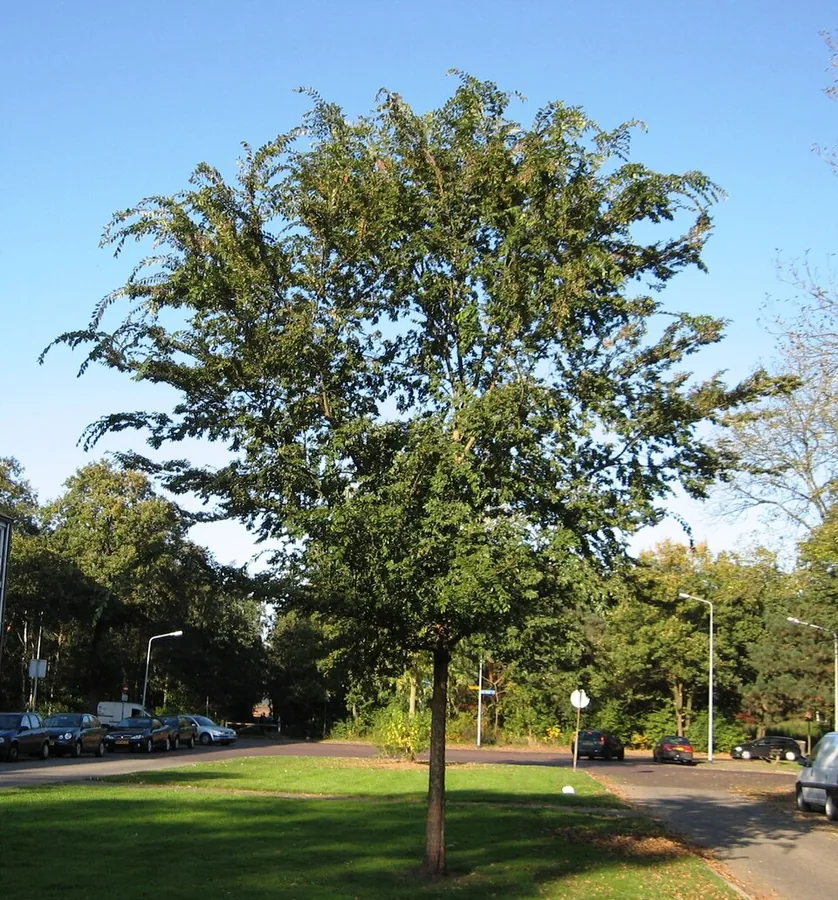
Chinese elm is about as forgiving as shade trees get, which is why so many people plant it. It grows fast, spreads out to a broad 40 to 50 feet, and holds up a rounded crown of small, glossy leaves on branches that tend to arch toward the ground. The thing everyone remembers, though? The bark, which flakes off in patches and leaves behind a mottled lacebark pattern of gray, green, orange, and brown.
Where it really shines is toughness. It's happy in clay, loam, or sand, doesn't mind a pH anywhere from 5.5 to 8.0, and once it's rooted it just shrugs off drought, packed-down ground, and parking-lot heat. It's also got good resistance to Dutch elm disease, the blight that took out so many American elms, and that's a big reason it gets planted in the first place.
It's not totally without quirks, but they're easy to live with. Those long, reaching limbs can snap under snow, ice, or wind if nobody trained them young, and the tree seeds itself enough that you'll find it popping up where you didn't plant it. Give it a little structural pruning early and some elbow room, though, and you'll get decades of shade out of something that asks for almost nothing.
Care
The short version: full sun to part shade in just about any soil, regular water while it's young and then mostly rain, plus a little winter pruning early on to set a strong frame.
Light
It does best in full sun, but partial shade? No problem, it'll take that too. The more sun it gets, the denser the canopy and the stronger the growth, while a shadier spot just leaves the crown a bit thinner.
Water
Water young trees regularly until the roots settle in, and then you can back way off. A grown tree is very drought tolerant and usually only wants a drink during a long dry spell. It even handles the odd soggy patch, so there's lots of wiggle room either way.
Soil
Honestly, few trees are this laid-back about soil. It grows in clay, loam, or sand across a wide pH of 5.5 to 8.0, and while it likes moist, well-drained ground, it'll still cope with poor, dry, compacted city dirt that would stop most shade trees cold.
Temperature
It's hardy across a huge range, somewhere around -20°F to 100°F (-29°C to 38°C), which covers USDA zones 5 through 9. That's exactly why you'll spot it growing in so many different climates.
Humidity
Plain outdoor air is all it needs, so there's no number to keep track of. Dry air, muggy summers? It takes both without missing a beat.
Feeding
A settled tree in decent soil hardly ever needs feeding. If the growth looks weak, just give it a balanced slow-release tree fertilizer in spring and then leave it alone.
Pruning
Do your pruning in winter to build a strong frame and one main leader, since the long limbs can snap under snow, ice, or wind. Take out anything dead, crossing, or barely attached, and try to do this training early while the tree's still young and easy to shape.
Repotting
In the ground it never gets repotted, it just stays where it is. Bonsai versions are the exception, and they like fresh soil every 1 to 2 years in early spring.
Size & spacing
This gets big, reaching about 40 to 50 feet (12 to 15 m) tall with a spread of 25 to 50 feet (7.5 to 15 m). So give it plenty of open room up front, because that wide, arching canopy is going to want the space.
When to plant
Here's the easy part: you plant this as a young tree, not as seed you babysit every season. Pop a balled-and-burlapped or container tree in the ground in spring or fall, then keep an eye out for the quiet little flowers and winged seeds that show up from late summer into fall.
Northern hemisphere
Southern hemisphere
Typical months for a temperate climate: start earlier in warm zones, later where spring frosts linger.
- Plant: Plant balled-and-burlapped or container trees in spring or fall.
- Harvest: Inconspicuous reddish-green flowers in late summer to fall (about August to September), followed by small winged samaras maturing in fall.
Hardiness
USDA hardiness zones: 5–9
Temperature: down to -29°C
Troubleshooting
Good news, because a healthy Chinese elm hardly ever acts up. Its weak spot is structure, not disease, so most of what goes wrong comes down to a broken limb, a few leaf-munching bugs, or a stressed tree picking up a canker. Find what matches below and deal with it while it's still an easy fix.
Branches dying back with sunken cankers or wilt
Sudden wilting, sunken or oozing bark, and dieback usually mean cankers, wood rots, or wilt diseases, often kicked off by drought stress or root damage. The reassuring part? Chinese elm holds up well against Dutch elm disease. Prune the dead and cankered wood well below the trouble, wipe your tools between cuts, then sort out the watering and keep the tree vigorous so it can wall off the rest.
Fix:
- Prune out dead and cankered wood well below the affected area, disinfecting tools
- Correct watering and relieve drought or soil stress
- Maintain overall tree vigor
Limbs splitting or snapping after a storm
When long, spreading branches give out under snow, ice, or wind, the trouble usually starts at a weak crotch where included bark left a narrow, badly attached fork. First thing to do? Cut the broken and hanging limbs back to a sound branch or the trunk. The real fix, though, is structural pruning while the tree's young, training one main leader and well-spaced scaffold branches so this doesn't keep happening.
Fix:
- Prune out broken and hanging limbs back to a sound branch or the trunk
- Develop one dominant leader and well-spaced scaffold branches through structural pruning while young
Leaves chewed, skeletonized, or spotted
Chewing bugs like the elm leaf beetle and Japanese beetle, plus leafminers and lace bugs, are behind most of the ragged leaves, and fungal leaf spots and cankers handle the rest. Here's the thing: Chinese elm shrugs these off better than other elms, even if it isn't totally immune. A little nibbling on a healthy tree doesn't really hurt it, so figure out the pest or disease before you grab any treatment, and clear off the worst of the chewed or spotted leaves.
Fix:
- Tolerate light feeding on an otherwise healthy tree
- Remove and dispose of heavily infested or spotted leaves
- Identify the specific pest or disease before any targeted treatment
Toxicity
Worried about pets? You can let that go. Chinese elm doesn't turn up on the ASPCA toxic plant lists and is treated as safe around cats, dogs, livestock, and people. About the worst that happens is a brief, passing tummy ache if a pet eats a lot of leaves, and honestly that's true of nearly any plant.
Safe for
People · Cats · Dogs · Horses · Rabbits · Livestock · Birds
Cats None
Chinese elm isn't on the ASPCA toxic list, so a nosy cat is totally fine around it. A cat that chews a couple of leaves might drool or get a quick upset stomach, same as it would with any plant.
Dogs None
There's no toxin here for dogs to worry about. A dog that wolfs down a mouthful of leaves might have loose stools or throw up once before settling, and that's just the roughage talking.
Horses Safe
Horses can graze right next to a Chinese elm and be fine. The foliage has no known poison, though stuffing themselves on any tree's leaves can upset their digestion.
Rabbits Safe
Rabbits do great with elm leaves and twigs, and the bark and foliage even get offered as browse sometimes. Just bring in any new green slowly so their gut can adjust.
Livestock Safe
Cattle, goats, and sheep can all hang around this elm safely. Nothing in it is toxic, so the only catch is the mild bloat or scours that come from overeating fresh leaves.
Birds Safe
Birds aren't in any danger from the leaves, seeds, or bark. Plenty of them actually shelter in the canopy and pick at the winged samaras come fall.
People Safe
There's no poisoning risk to people either. It isn't grown to eat, so there's nothing to harvest, but brushing past it or handling cuttings won't do you any harm.
As with any plant, nibbling foliage may cause mild stomach upset in pets simply from ingesting plant material.
Varieties
There aren't many to learn. A handful of named picks covers most of what people plant, from big shade trees all the way down to the dwarf forms that bonsai folks love.
Allee
An upright, arching vase shape that gets to about 50 feet tall and 35 feet wide and brings back the look of the lost American elm.
Drake
A rounded, weeping form that hangs onto its leaves and stays semi-evergreen where the winters are mild.
Seiju
A dwarf, slow grower that tops out between 2 and 10 feet with tiny leaves and corky bark, which is exactly why it's a bonsai favorite.
Frosty
A small tree or shrub to about 8 feet whose little green leaves are edged in white.
How to propagate
Want more of these? How you go about it depends on what you're after. Seed gets you the plain species, while cuttings and grafting are the ways to land a named cultivar that grows up just like its parent.
SeedEasy
Sow seed outdoors in containers as soon as it ripens in fall. · Germinates the following season; seedlings are variable.
Seed is the simple way to grow the plain species. Just sow it outdoors in containers as soon as it ripens in fall, and the seedlings show up the next season, though no two come out quite the same. That's exactly why named cultivars are never grown from seed, and they get propagated vegetatively instead.
Stem cuttingsModerate
Take greenwood/softwood stem cuttings in the growing season under mist. · Several weeks to root under intermittent mist.
Cuttings are the go-to for cultivars and bonsai. Take greenwood or softwood stems during the growing season, set them under intermittent mist, and they'll root in several weeks at roughly a 95 percent take. With odds like that, it's no wonder nurseries lean on this method.
GraftingDemanding
Graft selected cultivars onto seedling rootstock. · One growing season to unite.
Grafting is the tricky one, saved for when a cultivar has to come true to type. You graft selected wood onto seedling rootstock, and it takes about one growing season to unite. It's really just for named selections that won't reproduce any other way.
Myths
Chinese elm is the same brittle, invasive tree as Siberian elm.
So why the bad rap? It comes from a mix-up. People keep slapping the name Chinese elm on Ulmus pumila, the Siberian elm, which really is the fast, brittle, weak-wooded one that seeds itself everywhere. But the true Chinese elm, Ulmus parvifolia, is a tougher and prettier tree with good Dutch elm disease resistance, and it flowers and fruits in late summer to fall instead of spring.