Tree · Sapindaceae
Bloodgood Japanese Maple
Acer palmatum
The classic red maple that's easier to love than to grow from scratch.
Partial shade
Every 5–10 days
USDA 5–8
15–20 ft · 4.6–6.1 m
Overview
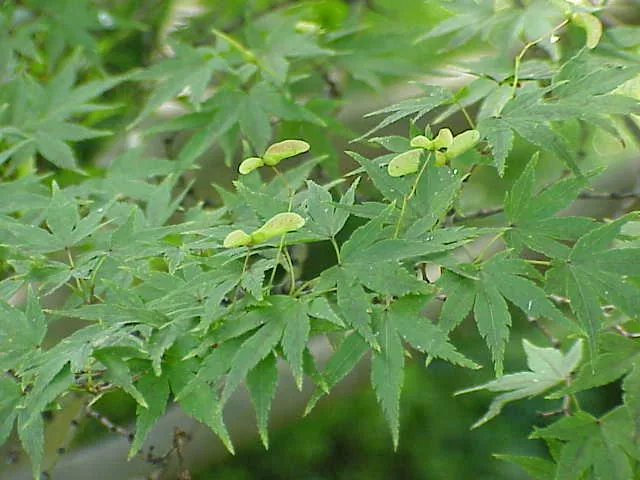
If you've ever stopped to admire a small tree with rich red, hand-shaped leaves, there's a good chance it was a Bloodgood Japanese Maple. It's one of the most popular red-leaf cultivars of Acer palmatum, and for good reason. The color holds well through summer, then it puts on a scarlet show in fall before the leaves drop.
Size-wise, this is a tree you can actually fit into a normal yard. It tops out around 15 to 20 feet tall with a spread of 12 to 20 feet, and since it's a slow grower, you won't be fighting it for space anytime soon. That makes it a nice fit as a focal point near a patio, along a path, or anywhere you want a little drama without a giant shade tree.
It's hardy in USDA zones 5 to 8, handling temperatures from -20°F to 95°F (-29°C to 35°C). The care isn't fussy, exactly, but it does have a few opinions, mainly about steady moisture and a break from harsh afternoon sun. Get those right and it'll reward you for years, since it's a long-lived perennial.
Care
The short version: give this maple part shade with some afternoon protection, keep the soil evenly moist (water every 5 to 10 days and never let it dry out), and plant it in slightly acidic, well-drained loam at pH 5.5 to 6.5. Mulch the roots, feed lightly in spring, prune only when it's dormant, and watch for leaf scorch, verticillium wilt, and the odd aphid. Do that, and you're most of the way there.
Light
This maple is happiest in partial shade, though it'll handle full sun and partial sun too. A few hours of sun actually keep that red color looking its best. The catch? In hot climates it really wants afternoon shade, because too much harsh sun leads straight to scorched, crispy leaf edges.
Water
Steady moisture is the name of the game here. Keep the soil consistently moist but never waterlogged, which usually means watering every 5 to 10 days. This tree isn't drought tolerant, so when things get dry, give it a deep soak to head off leaf scorch. A layer of mulch helps lock in moisture and keeps the roots cool.
Soil
Aim for moist, organically rich, slightly acidic, well-drained loam. The sweet spot for pH is 5.5 to 6.5. Good drainage matters a lot, since soggy roots invite trouble, so if your soil holds water, work in some compost to loosen it up.
Temperature
Cold-hardy and heat-tolerant within reason, this tree shrugs off temperatures from -20°F to 95°F (-29°C to 35°C), which lines up with USDA zones 5 to 8. Outside that range you're pushing your luck, so it's best to stick with the zones it's built for.
Humidity
No need to fuss over humidity with this one. Average outdoor humidity suits it just fine, so there's nothing special to manage on that front.
Feeding
Easy does it on the food. A balanced slow-release fertilizer or some compost in spring is all it asks for, fed seasonally. Just go light on the nitrogen, since too much pushes soft growth that pests love.
Pruning
Less is more here. Keep pruning to a minimum and only take out dead, damaged, or crossing branches. Do it in late fall to mid winter while the tree is dormant, which is gentler on it and easier on you.
Repotting
If you're growing one in a container, plan to repot every 2 to 3 years. Trees out in the landscape don't need it at all. Watch for roots circling the pot or poking out the drainage holes, water running straight through, or slowed growth and wilting between waterings, since those are your cues it's time to size up.
Size & spacing
Give this tree room to be itself. It reaches about 15 to 20 feet tall (180 to 240 inches) and spreads 12 to 20 feet (144 to 240 inches) wide, so plant it where it can stretch out without crowding the house or a walkway down the line.
When to plant
Wondering when to get this tree in the ground? Spring or fall are your windows, once the danger of hard frost has passed. Expect reddish-purple flowers in April, with red samaras ripening September to October.
Northern hemisphere
Southern hemisphere
Typical months for a temperate climate: start earlier in warm zones, later where spring frosts linger.
- Plant: Spring or fall, after danger of hard frost has passed
- Harvest: Reddish-purple flowers in April; red samaras ripen September-October
Hardiness
USDA hardiness zones: 5–8
Temperature: down to -29°C
Troubleshooting
Even an easygoing tree runs into the occasional hiccup. Here are the three issues you're most likely to bump into, what's behind them, and how to set things right before they get worse.
One Side Wilting and Dying Back
If one side of the tree suddenly wilts, yellows, and starts dying off while the rest looks okay, that lopsided pattern often points to verticillium wilt, a soil fungus that's tough to deal with.
Fix:
- Prune out and destroy affected branches
- Keep the tree vigorous with proper watering and avoid overfertilizing
- Improve drainage; there is no chemical cure for verticillium
Sticky Leaves and Tiny Hitchhikers
Sticky leaves, twisted new growth, and little clusters of bugs or bumps along the stems usually mean aphids or scale have moved in, and the good news is they're pretty manageable once you spot them.
Fix:
- Dislodge aphids with a strong spray of water
- Treat with horticultural oil or insecticidal soap
- Encourage natural predators such as lady beetles
Crispy Leaf Edges When Summer Heats Up
When the edges of the leaves go brown and crunchy in hot weather, that's usually leaf scorch, and it tends to be a sign the tree is getting more sun, wind, and dryness than it can comfortably handle.
Fix:
- Water deeply and consistently to keep soil evenly moist
- Apply mulch over the root zone to retain moisture and cool roots
- Provide afternoon shade in hot climates
- Shelter the tree from strong drying winds
Toxicity
Got pets roaming the yard? Here's the reassuring part: this maple isn't considered toxic. The only thing worth keeping an eye on is chewed twigs, which can splinter, so it's smart to steer pets away from gnawing on the branches.
Safe for
People · Cats · Dogs · Horses · Rabbits · Livestock · Birds
Cats Safe
Good news for cat owners, this maple isn't toxic, so a curious nibble shouldn't cause poisoning.
Dogs Safe
Dogs are fine around it too, since the leaves aren't toxic, though a chewed twig could still splinter.
Horses Safe
Horses can graze nearby without worry, as this maple isn't on the toxic lists.
Rabbits Safe
Rabbits aren't at risk from the foliage, so no poisoning concerns here.
Livestock Safe
Livestock can be around it safely, since nothing in the leaves is considered toxic.
Birds Safe
Birds have nothing to fear from this maple, as it's treated as non-toxic.
People Safe
People are safe around it as well, with no toxicity flagged for the leaves.
Although foliage is non-toxic, chewed twigs can splinter and cause choking or digestive upset, so discourage pets from chewing branches.
Varieties
Bloodgood isn't the only red maple on the block, and a few close relatives are easy to mix up. Here's a quick look at what sets the main ones apart.
Bloodgood
This is the upright tree most folks picture, and it hangs onto its deep burgundy to blackish-red leaves through summer better than most red cultivars before turning scarlet in fall and setting red samaras.
Atropurpureum
Here's a seed-grown red-leaf form, so you'll see more variation in color and shape than you get from the grafted, true-to-type 'Bloodgood'.
var. dissectum (Tamukeyama)
Want something different? This is a weeping laceleaf form with finely cut foliage that stays low and mounding instead of growing upright.
How to propagate
Curious how new Bloodgood trees come to be? It's not as simple as sticking a branch in the dirt. Here are the two routes growers take, and why one of them does almost all the heavy lifting.
GraftingDemanding
Late winter to early spring (bench grafting) onto seedling rootstock · Several months for the graft union to take; one or more seasons to establish
Want a 'Bloodgood' that's true to type? Grafting onto Acer palmatum seedling rootstock is the only way, which is exactly why every tree you buy started this way. It's bench grafting from late winter into early spring, the union takes several months to knit, and then the young tree spends a season or more settling in. It's demanding work that's better left to nurseries than tried at home.
Stem cuttingsDemanding
Early summer from softwood growth · Several weeks to months to root, with low success rates
You can give softwood cuttings a shot in early summer, but honestly, expect some disappointment. They take several weeks to months to root and most of them just fail. For this cultivar, grafting stays the reliable choice.
Myths
Japanese maples can't take any sun and have to live in deep shade.
Not quite. These trees handle full sun to part shade, and a few hours of sun actually keep the red color rich. In hot climates, though, they really do want afternoon shade so the leaves don't scorch.
Japanese maple leaves are poisonous to cats and dogs.
That's a common worry, but it's off the mark. Acer palmatum isn't on any ASPCA toxic-plant list, and maples across genus Acer are treated as non-toxic to cats and dogs. The only real hazard is a chewed twig that splinters, not the leaves themselves.