Tree · Sapindaceae
Lychee
Litchi chinensis
Give it heat, acidic soil, and a cool winter rest, and this tropical tree makes the wait worth it.
Full sun
Every 3–7 days
USDA 10–11
20–40 ft · 6.1–12.2 m
Overview
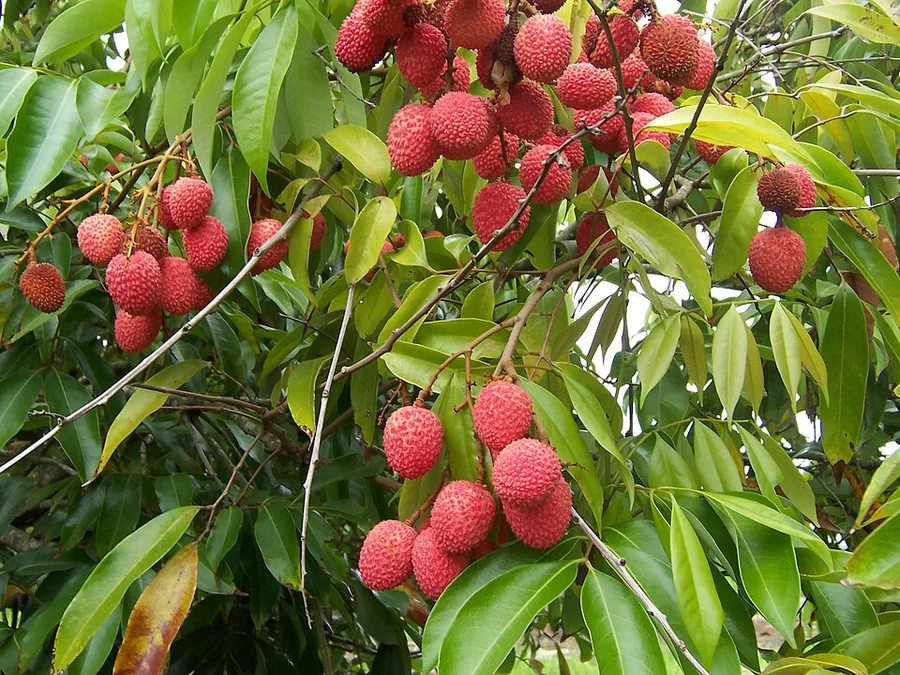
Lychee is an evergreen tropical tree from southern China, and it's grown for that sweet, perfumed flesh sitting inside a rough red shell. It takes its sweet time, growing slowly into a wide, rounded canopy that sticks around for decades, so planting one is more of a long-haul thing than a quick crop. Out in the ground it can hit 20 to 40 feet (6 to 12 m) tall and just about as wide.
Yes, it's a demanding tree, but honestly most of that comes down to climate. It wants genuine warmth and frost-free winters, so it's really only happy in USDA zones 10 and 11 or some sheltered pocket. And here's the thing that trips people up: to set flowers a lychee needs a short cool, dry spell in winter, so a mild winter often just gives you a burst of leaves and no fruit at all.
Where it's content, though? The payoff is well worth it. Trees fruit from May to July, peaking in June, and a settled tree can hold a heavy crop. Just plan for alternate bearing, where a big year tends to be followed by a lighter one.
Care
The short version: full sun, fertile well-drained acidic soil, and steady moisture while it's growing, then a cooler, drier rest in winter to set flowers, plus shelter from frost and wind.
Light
Give your lychee full sun and it'll grow and crop its best, though it'll cope with a bit of partial sun too. A wind-sheltered spot matters just as much as the sun, since that brittle wood snaps in storms.
Water
Keep the soil consistently moist while it's actively growing, and especially when the tree's young or carrying fruit. Then ease right off in late fall and winter for that cool, dry rest that helps set flowers. One thing it won't put up with? Standing water or salty water.
Soil
Plant it in fertile, well-drained acidic sandy loam loaded with organic matter, ideally sitting around a pH of 5.0 to 5.5. It can't handle salt, so salty ground or water will set it right back.
Temperature
Lychee gets by across a span of about 32°F to 95°F (0°C to 35°C), but it's genuinely frost tender, and a freeze browns the leaves and kills branches. A short cool winter spell, on the other hand, is exactly what nudges it into flower.
Humidity
This tree likes its air humid, ideally around 50% to 80%. Dry air really doesn't suit it, which is a big reason it does so well in warm, humid regions.
Feeding
Feed it seasonally through the growing season, roughly March to November, with a complete fertilizer that's got micronutrients in it. Lychee's hungry for manganese, zinc, and iron, so micronutrient foliar sprays while it's growing help keep those leaves from yellowing.
Pruning
Prune it lightly after harvest to shape things up and keep the size in check, taking out any dead, crossing, or weak branches. Once it's established, it really doesn't ask for much more.
Repotting
A young container tree is happy to be potted up every 2 to 3 years until it's ready for the ground. Once it settles in, plant it out, because this is a tree that wants to live in open soil for the long haul.
Size & spacing
Count on a mature tree around 20 to 40 feet (6 to 12 m) tall with a spread of 20 to 30 feet (6 to 9 m). Give it all that open room, well away from buildings, so the wide canopy has space and the wind's got somewhere to go.
When to plant
Lychee runs on the warm season and just won't take frost, so timing matters. Plant in spring once the cold's passed and the soil's warmed up, let the tree flower from late winter into spring, and pick your fruit from May through July, with the biggest crop landing in June.
Northern hemisphere
Southern hemisphere
Typical months for a temperate climate: start earlier in warm zones, later where spring frosts linger.
- Plant: Spring, after all danger of frost has passed and the soil has warmed
- Harvest: Flowers late winter to spring; fruit ripens May to July, peaking in June
Hardiness
USDA hardiness zones: 10–11
Temperature: down to -1°C
Troubleshooting
Most lychee headaches come back to climate and soil, not pests, which is honestly good news. Poor flowering, yellowing leaves, and cold or wind damage cover just about all of it. Find what matches below and step in early, before you lose a whole season's crop.
Browning leaves and dying branches after cold or wind
Lychee really doesn't like the cold, so if the leaves brown or blacken after a chilly night, that's freeze damage talking, and whole branches can give out. Strong wind hurts it the same way, since the wood's pretty brittle. Cover and warm up young trees when frost's on the way, and pick a wind-sheltered spot right from the start.
Fix:
- Protect young trees during frost with covers or added heat
- Relocate or shelter trees from strong wind
Plenty of leaves but barely any flowers or fruit
So the tree looks great but won't flower? Nine times out of ten it just didn't get its cool, dry winter rest, that short chill that tells it to make flower panicles instead of yet more leaves. There's also alternate bearing at play, so a big crop one year can mean a skimpy one the next. Back off the water and nitrogen through late fall and winter, and don't sweat the quiet years.
Fix:
- Provide a cool, dry winter rest by withholding water and nitrogen in late fall and winter
- Avoid heavy nitrogen that drives vegetative growth at the expense of flowers
- Be patient through alternate-bearing cycles
New leaves going yellow between the veins
When the fresh leaves turn yellow between their green veins, or brown at the edges, it usually means the tree can't grab enough iron, zinc, and manganese from the soil. What's behind it? Alkaline or salty ground ties those micronutrients up, and salty water only makes things worse. Hit it with a chelated iron and micronutrient spray, walk the soil back toward a pH of 5.0 to 5.5, and cut out any salty water.
Fix:
- Apply chelated iron and micronutrient foliar sprays
- Acidify the soil and mulch with organic matter
- Stop using saline irrigation water
Toxicity
The ripe lychee flesh is a safe, much-loved fruit, so the tree itself isn't a household hazard. What you do want to watch is the unripe fruit and the seeds, which carry hypoglycin tied to dangerous drops in blood sugar, and that hard seed is a choking risk too. Stick to ripe fruit, toss the seeds, and keep green fruit and pits away from kids and pets.
Toxic to
Cats · Dogs · Horses · Rabbits · Livestock · Birds
Safe for
People
Cats Caution
A little ripe flesh won't bother a cat, so no need to panic there. The seed and any unripe fruit are what to watch, because the hypoglycin in them can drop blood sugar and leave a cat wobbly or sleepy, and that hard pit could easily choke one.
Dogs Caution
Dogs love to snap up a dropped fruit whole, pit and all, don't they? A bit of ripe flesh is fine, but a swallowed seed can get stuck inside, and the toxins in seeds and unripe fruit can leave a dog weak or shaky from low blood sugar.
Horses Caution
A horse isn't likely to bump into a lychee, and the ripe flesh isn't a known issue in small amounts. Even so, it's smart to clear away fallen seeds and green fruit, since nobody's confirmed the hypoglycin behind that hypoglycemia is safe for horses.
Rabbits Caution
It's best to skip lychee for rabbits past the tiniest taste of ripe flesh. All that sugar doesn't sit well with them, and the seed and unripe fruit carry the same hypoglycin that can send blood sugar tumbling.
Livestock Caution
Windfall fruit lying under the tree is usually how grazing animals get into trouble. The ripe pulp's pretty mild, but seeds and unripe fruit carry hypoglycin, so it pays to rake up the drops wherever stock can reach.
Birds Caution
Birds are happy to peck at ripe lychee flesh, and a bit won't do them any harm. The thing to watch is the seed, both because it can choke them and because it holds the same hypoglycin you'll find in unripe fruit.
People Ripe fruit safe
Ripe lychee flesh is a favorite fruit and totally safe to eat in moderation. The danger's in the unripe fruit and seeds, which hold hypoglycin tied to dangerous low blood sugar, especially in undernourished children eating loads of green fruit on an empty stomach. Just stick to ripe fruit, toss the seeds, and keep the pit away from little kids so it can't choke them.
Caution: UNRIPE lychee fruit and the SEEDS contain hypoglycin A and MCPG, toxins linked to dangerous low blood sugar (hypoglycemia), most notably in undernourished children who eat many unripe fruit on an empty stomach; the hard seed is also a choking hazard. Ripe fruit eaten in moderation is safe.
Helpline numbers

United States
ASPCA Animal Poison Control: (888) 426-4435 (fee applies)
Poison Control: (800) 222-1222



Canada
Poison Centres: 1-844-764-7669
Varieties
A few named cultivars do most of the heavy lifting in home and commercial groves, picked for steady cropping and good fruit. These are the ones worth knowing about.
Brewster
This vigorous early import from China carries big red fruit, and it ended up as one of Florida's go-to commercial cultivars.
Mauritius
It's a dependable heavy cropper that growers rely on across warm, humid parts of the world.
Sweetheart
Its big heart-shaped fruit often comes with a small shriveled chicken-tongue seed, which means there's more flesh for you to eat.
How to propagate
Lychee gets propagated mostly by air-layering, since cuttings root poorly and seedlings are slow and kind of unpredictable. Which route you pick decides how true the tree comes out and how long you're waiting for fruit.
Air layeringModerate
Warm growing season, spring into summer · Roots in about 8-12 weeks; trees typically fruit in 3-5 years
Air-layering, which some folks call marcotting, is the main commercial way to make more lychee, mostly because plain cuttings just won't root well. Do it in the warm season from spring into summer, and the layer roots in about 8 to 12 weeks. The nice part? You get a true-to-type tree that fruits in roughly 3 to 5 years, way ahead of a seedling.
SeedModerate
Sow fresh seed immediately, as viability lasts only a few days · Germinates in 1-2 weeks; seedlings may take 7-10+ years to fruit
Lychee seed only lasts a few days, so sow it fresh the second you scoop it out and it'll sprout in 1 to 2 weeks. Here's the catch, though. A seedling can take 7 to 10 years or more to fruit, and what it finally gives you is a bit of a gamble, which is why it's not the route for good fruit.
GraftingDemanding
Growing season · Union forms in weeks; fruiting in 3-5 years
Graft in the growing season and the union knits up within weeks, giving a tree that fruits in about 3 to 5 years. It's handy for keeping a favorite cultivar going, but for lychee most growers just reach for air-layering instead.
Myths
The whole lychee, even the ripe fruit, is dangerously poisonous.
Nope, the ripe flesh is a safe, everyday fruit people enjoy all over. The real worry is the hypoglycin A and MCPG in the unripe fruit and seeds, and even then it mostly causes trouble when undernourished children eat a lot of green fruit on an empty stomach. So enjoy the ripe fruit and just toss the seeds.
It's easy to grow a productive lychee from a seed.
Not really, since seedlings are slow, often taking years to bear, and they're so variable that the fruit hardly ever matches the parent. Air-layering is the way to go if you want a true-to-type tree that fruits a lot sooner.