Tree · Sapindaceae
Red Maple
Acer rubrum
It's fast, it's easy, and every fall it puts on a red and orange show you won't forget.
Full sun
Every 7–14 days
USDA 3–9
39–89 ft · 12–27 m
Overview
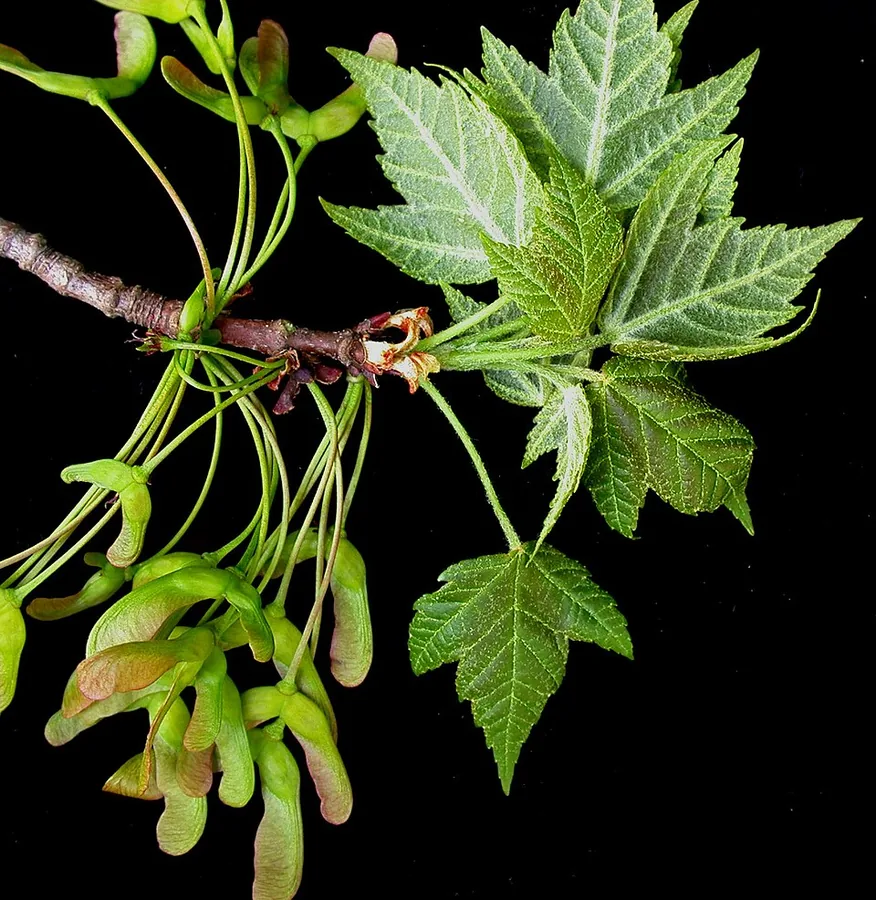
Red maple is everywhere in eastern North America, and honestly, it's easy to see why. It grows fast, it isn't picky about soil whether that's clay or sand, and it laughs off cold right down to -40°F (-40°C). The name? It fits all year long, with red flowers in late winter, red samaras in spring, red leaf stalks in summer, and a big finish of red and orange in fall.
Got a soggy corner where nothing else is happy? This tree won't mind. It handles wet ground and the occasional flood better than just about any shade tree, so you'll spot it in swamps and along streams as often as in someone's yard. The catch is the wood. Red maple is a soft maple, and all that quick growth leaves brittle branches that can snap in a rough storm.
Just give it some elbow room. A full-grown red maple gets well past 40 feet (12 m) tall with a wide crown and shallow roots that like to spread, and those roots can lift a sidewalk or ding a mower if they're too close. Plant it back from the pavement and you're set, because after that it pretty much takes care of itself.
Care
The short version: it's happy in full sun to part shade, likes moist and slightly acidic soil, and wants regular water while it's young. It barely needs feeding, but it does need some early structural pruning so those brittle limbs can stand up to storms.
Light
Red maple does its best in full sun, though it's totally fine with partial shade too. More sun usually means better fall color and a fuller crown, so give it an open spot if you've got one.
Water
It's a fan of moist soil, and unlike most shade trees it doesn't mind wet ground or the odd flood one bit. Keep young and street trees watered when things get dry, but once a tree's established it's pretty easygoing and handles medium-to-wet ground on its own.
Soil
Regular well-drained soil works just fine. It'll adapt to clay, loam, or sand, but what it really loves is moist, slightly acidic ground at pH 4.5 to 6.5. Go much past pH 6.5 and the leaves start yellowing because the manganese and iron get locked up.
Temperature
This one's a tank when it comes to cold. It's comfortable anywhere from -40°F to 100°F (-40°C to 38°C), which covers USDA zones 3 through 9, so a hard winter is rarely what trips it up.
Humidity
No need to think about humidity at all. Regular outdoor air is plenty, since what this tree actually cares about is moisture down at the roots, not up in the air.
Feeding
An established red maple in decent soil hardly ever needs feeding. If you do want to feed it, go with a balanced or low-nitrogen, higher-potassium mix in spring. And if your soil's alkaline, manganese chlorosis might call for acidifying the soil or a micronutrient treatment instead.
Pruning
Prune in late summer or fall so you skip the heavy spring sap bleeding maples are famous for, and take out anything dead, weak, or crossing while you're at it. Since the wood's brittle, aim your early cuts at those narrow, weak branch angles a storm would love to snap.
Repotting
none
Size & spacing
Heads up, this is a big tree, usually 40 to 70 feet (12 to 21 m) tall with a crown spreading 30 to 50 feet (9 to 15 m). Give it plenty of room and keep it well back from sidewalks and driveways, because those shallow roots will buckle pavement over time.
When to plant
Since red maple sticks around for decades, there's not much to the planting season. Pop young trees in the ground in spring or fall while it's mild, and the tree takes it from there. Then just keep an eye out for red flowers in late winter, samaras in spring, and that famous color in fall.
Northern hemisphere
Southern hemisphere
Typical months for a temperate climate: start earlier in warm zones, later where spring frosts linger.
- Plant: Spring or fall
- Harvest: Red flowers late winter to early spring (roughly January-April); red to yellow samaras mature in spring; brilliant red-orange-yellow foliage in fall.
Hardiness
USDA hardiness zones: 3–9
Temperature: down to -40°C
Troubleshooting
A happy red maple won't give you much grief, but a few things are worth spotting early. Most of the time it comes down to soil that's gone too alkaline, a fungus in the ground, or the tree's own soft wood. Find your symptom below and deal with it before it turns into something bigger.
Branches wilting and dying off on one side
This is verticillium wilt, a soil fungus that sneaks into the tree's water pipes and shuts down whole branches. Peel back the bark on a wilting limb and you'll usually spot green-to-black streaks in the sapwood, along with small leaves and a ton of seed. There's no cure, so cut out and destroy the dead wood, wipe your tools between cuts, and keep the tree watered so it can push through.
Fix:
- Prune out and destroy (burn or landfill) dead branches; do not compost
- Disinfect tools with 10 percent bleach or 70 percent alcohol between cuts
- Water and fertilize with low-nitrogen, higher-potassium fertilizer to support recovery
Fresh leaves going pale yellow between green veins
That's manganese chlorosis, and it turns up when the soil pH drifts above pH 6.5 to 7.0 and locks up the iron and manganese the tree's after. Usually it's limestone, concrete, or too much lime near a foundation or pavement doing it. Test the soil, nudge it back toward acidic with elemental sulfur, and hit it with chelated manganese or iron if the yellowing's really bad.
Fix:
- Test and lower soil pH toward slightly acidic with elemental sulfur
- Apply chelated manganese or iron as a soil or foliar treatment
- Mulch and improve drainage to reduce nutrient stress
Limbs snapping after ice, snow, or wind
Red maple's a soft maple with brittle wood, and all that fast growth leaves it full of narrow, weak crotches that tear apart when a storm rolls in. Clean up any broken or hanging limbs right away with proper cuts, and call an arborist for the big or overhead stuff. Your best bet long-term? Structural pruning while it's young, training one strong leader and wide branch angles so storms have less to grab onto.
Fix:
- Remove broken and hanging limbs promptly with clean cuts
- Structurally prune young trees to favor strong, wide branch angles
- Consult an arborist for large or hazardous limbs
Toxicity
Got cats or dogs? No worries here, since red maple's safe for them. The one you really have to watch out for is horses, and this part's serious: wilted or dried red maple leaves wreck a horse's red blood cells and can kill in a matter of days. So never let horses get at fallen branches, raked leaves, or prunings.
Toxic to
Horses · Rabbits · Livestock · Birds
Safe for
People · Cats · Dogs
Horses Severe
Here's the scary one. Wilted or dried red maple leaves destroy a horse's red blood cells, and the first things you'll notice are weakness, a poor appetite, and a dull, down mood. Keep an eye out for brown or blue gums, red-brown urine, colic, and laminitis, and call a vet right away, because death can hit within 18 hours to 10 days and pregnant mares can lose the pregnancy.
Rabbits Caution
There's no safe-feeding info for rabbits, and that same blood-cell toxin could hurt them, so keep red maple leaves and prunings out of the hutch.
Livestock Caution
Cattle, sheep, goats, and other grazers ought to stay off wilted maple leaves and fallen branches, since the toxin that floors horses can get to related animals too.
Birds Caution
Not much is known about how birds handle it, so play it safe, treat the wilted leaves as a risk, and don't let poultry or pet birds pick through raked clippings.
Cats None
The ASPCA says red maple's non-toxic to cats, so if yours sneaks a nibble, it's really nothing to stress about.
Dogs None
Dogs are totally fine with red maple. It's not toxic to them, and a dog chewing on a fallen leaf or samara won't end up sick.
People None
Red maple's no real danger to people. It isn't a food plant, but handling the tree, the leaves, and the seeds won't hurt you.
Horse owners must keep horses away from red maples and, critically, from fallen branches and raked or wilted leaves, which are the deadly form. Do not dump maple prunings or leaves where horses can reach them. The tree poses essentially no toxicity risk to cats or dogs.
Helpline numbers

United States
ASPCA Animal Poison Control: (888) 426-4435 (fee applies)

United Kingdom
Animal PoisonLine: 01202 509000 (fee applies)

Australia
Animal Poisons Helpline: 1300 869 738
Varieties
Most red maples you'll find at the nursery are named cultivars, bred for reliable fall color and a nice clean shape. Here are the ones you're most likely to run into.
October Glory
A crowd-pleaser for its steady red-to-orange fall color that hangs on for weeks and shows up late in the season.
Red Sunset (Franksred)
One of the most planted maples around, loved for its strong orange-red fall color on a vigorous, tidy upright tree.
Brandywine
A seedless male tree that lights up bright scarlet in fall before mellowing into a deep reddish purple.
Red Rocket
A skinny column of a tree, around 40 feet (12 m) tall but only about 15 feet (5 m) wide, perfect when space is tight.
How to propagate
Red maple grows from seed no problem, but here's the thing: seedlings are a bit of a coin toss on fall color. Want a cultivar's exact look? Then it's cuttings or grafting.
SeedEasy
Sow fresh samaras in late spring to early summer as they ripen; some seed lots benefit from cold stratification. · 1 to 2 growing seasons
Seed's the laid-back option. Sow the winged samaras fresh in late spring to early summer as they drop, give any stubborn ones a cold-stratification chill, and let them settle in over one to two growing seasons. Just know seedlings are all over the place, especially on fall color, so a named cultivar won't come true this way.
Stem cuttingsModerate
Take softwood cuttings in early summer. · Several weeks to root, then a season or more to establish.
Softwood cuttings can do the job, though results are kind of hit or miss. Take them in early summer, then hang tight, because roots take several weeks to show and the young tree needs a season or more to really get going.
GraftingDemanding
Bench graft or bud in the dormant or growing season onto seedling rootstock. · 1 or more seasons
Grafting is how the nurseries keep a cultivar true, since it never comes true from seed. Bench graft or bud onto seedling rootstock in the dormant or growing season, and give it a season or more for the union to catch and grow on. It's fiddly work, so it's better left to folks who've done it before.
Myths
Red maple's a bad idea around cats and dogs.
Nope, the ASPCA lists it as non-toxic to both. The real, sometimes deadly danger is all about horses eating wilted or dried leaves, so if it's just cats or dogs at home, there's nothing to worry about with this tree.
It's only the seeds or bark of red maple that hurt horses.
Actually, the toxin builds up in the leaves, not the seeds or bark. Wilted or dried fallen leaves are the most dangerous form there is, while fresh green leaves still on the tree are a lot less of a threat.