Tree · Sapindaceae
Dwarf Japanese Maple
Acer palmatum
Hand it dappled shade, steady moisture, and a spot out of the wind, and a dwarf Japanese maple keeps its shape and color for decades.
Partial shade
Every 3–7 days
USDA 5–8
2–6 ft · 0.6–1.8 m
Overview
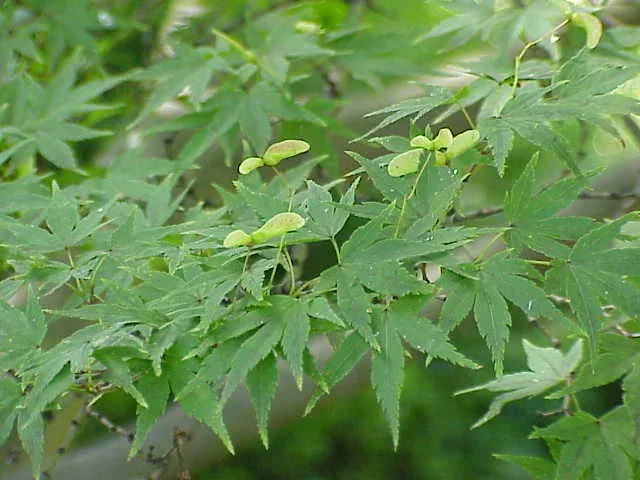
Want the look of a full Acer palmatum without giving up half the yard? That's the whole appeal of a dwarf Japanese maple, which packs the same grace into a size that fits a small bed, a courtyard, or a big pot. These are slow growers, so they stay compact for years while the species form would be towering over your head. You're growing them for the leaves, really, and those leaves change through the season before finishing in bold fall color.
Here's the thing about the named ones: they're clones, a set form rather than a roll of the dice from seed. That's why growers graft them instead of sowing seed, and it's why a 'Shaina' or a 'Kiyohime' turns out the same in everyone's garden. The catch? Patience. Slow growth is just part of the package, and these trees like to take their time settling in.
They're hardy through USDA zones 5 to 8, so a temperate garden with a bit of shade and shelter suits them fine. Pick a good spot and the tree pretty much looks after itself. Stick it in blazing sun and dry wind, though, and the leaves will let you know within a few weeks.
Care
The short version: put it in dappled or part shade with afternoon shade where summers get hot, keep the slightly acidic soil evenly moist under a layer of mulch, keep it out of drying wind, and prune only a little in late fall to mid winter.
Light
Dappled light or part shade is what a dwarf Japanese maple really wants, and afternoon shade is a must where summers turn hot. It'll take more sun in cooler northern gardens, and it often colors up better that way, but only if you don't let the soil dry out.
Water
Keep the soil evenly moist without letting it get soggy, because this tree just isn't built for drought. Water it through dry spells and put down mulch to hold the moisture and keep the roots cool. Soil that bounces between wet and dry, especially in sun or wind, is exactly what scorches the leaf edges.
Soil
Plant it in moist, organically rich, well-drained loam with plenty of organic matter, though sandy loams work just as well. Shoot for a slightly acidic pH of 5.5 to 6.5, which is where these maples are happiest.
Temperature
They're tougher than they look, hardy from about -20°F to 95°F (-29°C to 35°C), which covers USDA zones 5 through 8. Heat bothers them more than cold does, so the trick is just to skip the hottest, most exposed corners.
Humidity
Regular outdoor humidity is fine, and there's no number you need to hit. What matters way more is shelter from drying wind, since wind pulls moisture from the leaves faster than the roots can keep up.
Feeding
A light feeding in spring before the leaves emerge is plenty, using a balanced slow-release tree and shrub fertilizer once a season. These are slow growers that don't eat much, so going heavy does more harm than good.
Pruning
Prune as little as you can get away with, and do it in late fall to mid winter. Cut in spring or summer and the tree bleeds sap, which you'd rather avoid. Just take out the dead, crossing, or crowded branches to keep that tidy compact shape.
Repotting
If it's in a container or trained as bonsai, repot it every 2 to 3 years. How do you know it's time? Roots circling the pot or poking out the drainage holes, water running straight through, or growth slowing down with smaller leaves than usual.
Size & spacing
These stay nice and small, running 2 to 6 feet (60 to 180 cm) tall with a spread of 2 to 5 feet (60 to 150 cm). Give one a bit of open room so air can move around the canopy and the shape has space to show off.
When to plant
Get a dwarf Japanese maple in the ground in spring or fall, once the soil's workable and the hard frost is behind you. There's nothing to harvest here, so don't go looking for it. The payoff is the foliage, which flushes in spring, deepens over summer, and lights up before the leaves fall.
Northern hemisphere
Southern hemisphere
Typical months for a temperate climate: start earlier in warm zones, later where spring frosts linger.
- Plant: spring or fall when soil is workable and frost risk has passed
- Harvest: Small reddish-purple flowers in spring (April); grown for foliage, not bloom
Hardiness
USDA hardiness zones: 5–8
Temperature: down to -29°C
Troubleshooting
With a dwarf Japanese maple, trouble almost always turns up in the leaves first, whether that's scorch, disease, or bugs. Spot those early signs and you've usually got time to help before things spread. Find what matches what you're seeing below, then jump in while it still does some good.
Odd branches going limp and dying one by one
When just a few branches wilt and die back, instead of the whole canopy at once, the likely cause is verticillium wilt, a soil fungus that clogs the tree's plumbing from the inside. There's no cure once a tree's got it, unfortunately. Prune out and destroy the affected wood, keep the tree strong with steady water and mulch, and never reuse chips from an infected tree.
Fix:
- Prune out and destroy affected branches and improve plant vigor with proper watering and mulching
- Do not use chips from a Verticillium-infected tree as mulch or potting medium
- Where the disease is established, replant only resistant species; there is no cure for an infected tree
Crispy brown edges showing up on one side of the tree
Those dry, browned edges? That's leaf scorch, and it comes from too much sun, drying wind, or soil that keeps swinging from wet to bone dry. The good news is it sticks to the exposed margins while the roots stay perfectly fine. Move the tree into dappled shade, get it out of the wind, and keep the soil evenly moist under some mulch.
Fix:
- Provide afternoon shade and shelter from drying winds
- Keep soil evenly moist and apply mulch to retain moisture and cool roots
- Water deeply during dry spells
Gummy leaves, warped fresh growth, and little critters
Sticky honeydew and curled-up new leaves usually mean aphids on the soft new shoots, or scale, including Japanese maple scale, stuck to the bark. A hard jet of water knocks the aphids right off, and tougher cases give way to horticultural oil or insecticidal soap. And honestly, lady beetles and other predators handle light infestations for you.
Fix:
- Dislodge aphids with a strong spray of water
- Treat heavy infestations with horticultural oil or insecticidal soap, following label directions
- Encourage natural predators such as lady beetles
Toxicity
Got pets? Good news, because the dwarf Japanese maple is not toxic. The ASPCA doesn't list Acer palmatum as poisonous, so it counts as safe around cats, dogs, and everyone else in the house. If a pet chews a leaf, the worst that happens is a little stomach upset from the plant matter, and there's no actual poison to worry about.
Safe for
People · Cats · Dogs · Horses · Rabbits · Livestock · Birds
Cats None
It's safe around cats. A curious cat that nibbles a leaf might get a touch of stomach upset, same as with any houseplant, but nothing in the maple is poisonous to it.
Dogs None
No worries with dogs. They can share a garden with this maple, and the worst a leaf-chewer faces is a brief tummy ache from the roughage, not a toxic reaction.
Horses None
Horses are fine, since Acer palmatum is safe for them. The species behind those equine cases is the unrelated red maple, so a Japanese maple in or near the paddock is no threat.
Rabbits None
Rabbits can graze nearby without harm, because the leaves carry no toxin that affects them.
Livestock None
Cattle, goats, and sheep are in no danger from this maple, since its foliage holds nothing that would poison a grazing animal.
Birds None
Backyard and pet birds are safe around the tree, which gives them welcome perching and shelter rather than any hazard.
People None
Handling it is perfectly safe, and even small kids come to no harm from brushing against it. It's grown for the foliage, not for eating, so there's no edible part to single out.
Generally safe to handle and to keep around cats and dogs; as with any plant, discourage pets from chewing foliage to avoid mild stomach upset.
Varieties
There are dozens of named dwarf Japanese maples out there, and each one is its own clone with a particular size, leaf, and color. Here are a few that are worth knowing by name.
Sharp's Pygmy
It's one of the shortest Japanese maples you can buy, a slow dwarf that tops out around 2 to 4 feet with small green leaves that flush orange-red in fall.
Shaina
This one's a compact 4 to 5 foot witches'-broom sport of 'Bloodgood', and its dark maroon summer leaves bunch into tufted masses before blazing red in autumn.
Mikawa yatsubusa
It's a really dense dwarf, about 4 to 6 feet tall and 4 feet wide, and people grow it for the shingled, layered foliage and strong fall color.
Kiyohime
A low, wide-spreading dwarf that's grown for its mounding, spreading shape rather than for any height.
How to propagate
Want more of these trees? There are two ways to go, and they give you pretty different results. Grafting copies a named dwarf exactly, while seed hands you the wild species and a bit of a guessing game with the seedlings.
GraftingDemanding
Late winter to early spring (bench grafting) onto dormant rootstock · Several months to one growing season for the graft union to establish
Named dwarf cultivars won't come true from seed, so growers bench-graft scion wood onto Acer palmatum seedling rootstock in late winter to early spring while the stock's still dormant. It's demanding work, and the union takes anywhere from a few months to a full growing season to knit together.
SeedModerate
Sow in fall or stratify and sow in spring · One to two growing seasons for seedlings
Seed gives you the species, but the seedlings vary and none of them will copy the parent dwarf. Sow in fall, or stratify the seed and sow in spring, then give the young plants one to two growing seasons to find their feet.
Myths
You have to keep a Japanese maple in total shade.
They're happiest in dappled or part shade, with afternoon shade where summers run hot, so deep gloom isn't what they're after. In cooler northern zones they'll actually take more sun and color up better for it, as long as the soil stays evenly moist. What really matters is moisture and heat, not the sun by itself.
Cats and dogs shouldn't be anywhere near a Japanese maple because its leaves are toxic.
Acer palmatum isn't on the ASPCA toxic list, and it's treated as non-toxic to cats and dogs. Sure, a pet that chews the leaves might get a mild stomach ache from the plant matter, the same as with most greenery, but there's no poison at work.